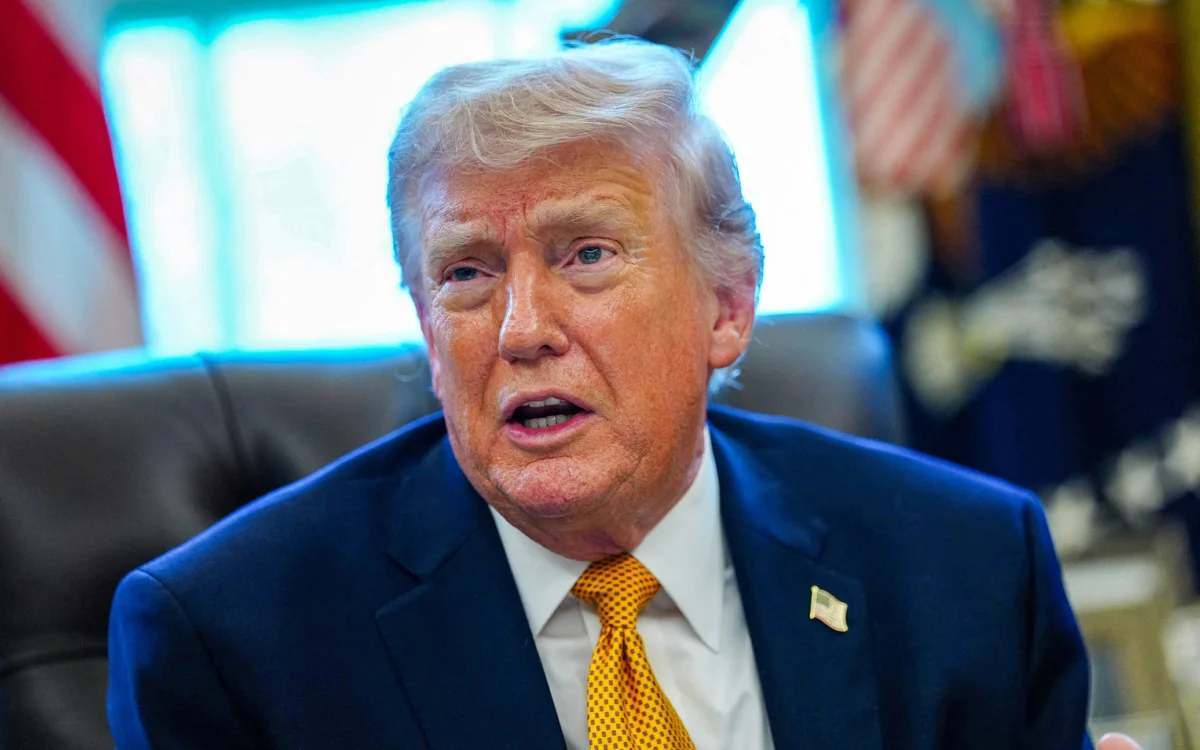
Former President Donald Trump has ignited a significant controversy with his repeated assertions that individuals with learning disabilities should be barred from holding the office of President of the United States. These comments, primarily directed at California Governor Gavin Newsom, have drawn sharp criticism from disability advocacy groups, political observers, and even within the political sphere, raising critical questions about intelligence, leadership, and the persistent stigma surrounding learning differences.
Escalating Rhetoric and Targeted Criticism
The latest volley of remarks came on Monday, when Trump, speaking to reporters in the Oval Office, stated, "Honestly, I’m all for people with ‘learning disabilities,’ but not for my president. I don’t want, I think a president should not have ‘learning disabilities,’ okay?" This statement directly targeted Governor Newsom, who has publicly disclosed his diagnosis of dyslexia, a common learning disability that affects reading and language processing. Newsom is widely considered a potential contender for the presidency in the 2028 election cycle.
Trump has consistently referred to Governor Newsom with a derogatory nickname, "Newscum," and during this particular exchange, he characterized the governor as "low IQ." He elaborated on his stance, acknowledging the controversial nature of his statements: "I know it’s highly controversial to say such a horrible thing. The president of the United States Gavin Newscum admitted that he has learning disabilities, dyslexia. Everything about him is dumb."
These recent comments are not isolated incidents. They build upon remarks Trump made just the previous week during an interview with Brian Kilmeade on Fox News, also in reference to Newsom. In that interview, Trump stated, "He admitted he had learning disabilities. Somebody said, ‘Well, what’s wrong with that?’ I said, ‘That’s okay, but not for the president.’ President can’t have learning disability. If you have that, that’s ‘not a good thing.’"
Official Responses and Advocacy Group Condemnation
The National Center for Learning Disabilities (NCLD) has been a vocal critic of Trump’s rhetoric. In a strong statement, the organization declared his comments "both factually and morally incorrect," asserting that such pronouncements serve only to perpetuate harmful and inaccurate stereotypes about individuals with learning disabilities. The NCLD emphasized that while learning disabilities affect how an individual’s brain processes information, they "do not reflect a person’s intelligence, judgment or ability to lead."
Jackie Rodriguez, CEO of the NCLD, further underscored this point, stating, "In fact, people with learning disabilities have risen to the upper echelon of every public office in the United States, including former presidents." This assertion directly challenges Trump’s premise that such disabilities inherently disqualify someone from the nation’s highest office.
Rodriguez also highlighted the broader societal implications of Trump’s statements, noting their impact far beyond the political arena. "For decades, students with learning disabilities have been told, directly or indirectly, that they should lower their expectations about what they can achieve," she said. "Many people still do not disclose a learning disability due to fear of negative reactions, such as the ones made by the president today. They perpetuate the very same stigma that families, educators and advocates have been working tirelessly to dismantle."
Political Backlash and Counter-Attacks
The ongoing political rivalry between Donald Trump and Gavin Newsom has intensified in the wake of these remarks. Following Trump’s comments on Monday, Newsom’s press office responded via a post on the social media platform X (formerly Twitter), stating, "the media needs to start reporting on Donald Trump’s mental decline." In a separate post, Newsom offered a pointed comparison, suggesting that having a "dyslexic president instead of a brain-dead one" would represent a "big upgrade."
This exchange underscores the highly charged political climate in which these discussions are taking place. Both figures are known for their aggressive communication styles, and the debate over learning disabilities has become another battleground in their ongoing political conflict.
Understanding Learning Disabilities: Data and Context
Learning disabilities are neurological differences that affect how individuals acquire, process, and retain information. They are not indicative of overall intelligence or cognitive capacity. According to the Centers for Disease Control and Prevention (CDC), approximately 1 in 5 children in the United States have a learning disability. Common examples include dyslexia, dysgraphia (difficulty with writing), and dyscalculia (difficulty with math).
It is crucial to distinguish between learning disabilities and intellectual disabilities. While intellectual disabilities are characterized by significant limitations in intellectual functioning and adaptive behavior, learning disabilities specifically impact one or more academic areas. Many individuals with learning disabilities possess average or above-average intelligence and excel in various fields when provided with appropriate support and accommodations.
Historical Precedents and Leadership Capabilities
The claim that a learning disability disqualifies someone from leadership is directly contradicted by historical evidence. While specific diagnoses of past leaders are often debated or unconfirmed due to the lack of diagnostic tools or public disclosure during their eras, many prominent figures throughout history have exhibited traits consistent with learning disabilities and achieved remarkable success.
For instance, Albert Einstein, widely considered one of the most brilliant minds in history, is believed by some to have had dyslexia. Winston Churchill, the iconic British Prime Minister, reportedly struggled with a stutter and had difficulties with reading and writing in his youth. These individuals, despite facing challenges related to their learning profiles, demonstrated exceptional leadership, strategic thinking, and communication skills during times of immense crisis.
The ability to lead effectively is multifaceted and encompasses qualities such as vision, resilience, empathy, strategic planning, decision-making, and the capacity to inspire others. While specific cognitive processes might be affected by a learning disability, these other leadership attributes are not inherently diminished. In fact, some argue that individuals with learning disabilities may develop unique strengths, such as heightened creativity, problem-solving abilities, and perseverance, precisely because they have learned to navigate challenges and find alternative pathways to success.
The Broader Impact: Stigma and Opportunity
The persistent stigma surrounding learning disabilities remains a significant barrier for many individuals. Trump’s comments, coming from a figure with considerable public influence, can inadvertently reinforce negative perceptions and discourage individuals from seeking help or disclosing their learning differences. This can have a detrimental effect on educational attainment, career progression, and overall self-esteem.
Advocates like Jackie Rodriguez emphasize that public figures have a responsibility to use their platforms constructively. By perpetuating myths and prejudices, they risk alienating and marginalizing a significant portion of the population. Conversely, leaders who are open about their own experiences with learning disabilities, or who advocate for greater understanding and inclusion, can serve as powerful role models and inspire hope.
The debate also highlights the evolving understanding of neurodiversity. As society increasingly recognizes that human brains are wired in diverse ways, the notion that a single, rigid definition of "normal" cognitive function is required for leadership becomes outdated. The focus is shifting towards valuing a range of cognitive styles and abilities, recognizing that different strengths can contribute to a more robust and effective leadership team.
Analyzing the Implications for Future Discourse
Trump’s remarks have undeniably amplified the conversation around learning disabilities and their perceived relevance to presidential fitness. This heightened attention, while originating from a controversial stance, presents an opportunity for a more nuanced and informed public discussion.
The implications extend beyond the immediate political context. They challenge educational systems to continue improving their support for students with learning disabilities and encourage employers to foster more inclusive work environments. Furthermore, they prompt a broader societal reflection on how we define intelligence and capability, and whether our criteria for leadership are sufficiently adaptable to embrace the full spectrum of human talent.
As the 2024 election cycle and beyond unfold, the impact of these statements will likely continue to be felt. Disability advocacy groups will undoubtedly continue to push back against misinformation and work to ensure that individuals with learning disabilities are not unfairly excluded from any aspect of public life, including the highest echelons of government. The discourse initiated by Trump’s comments, while contentious, has undeniably placed a critical issue at the forefront of public consciousness, demanding a more informed and compassionate response.