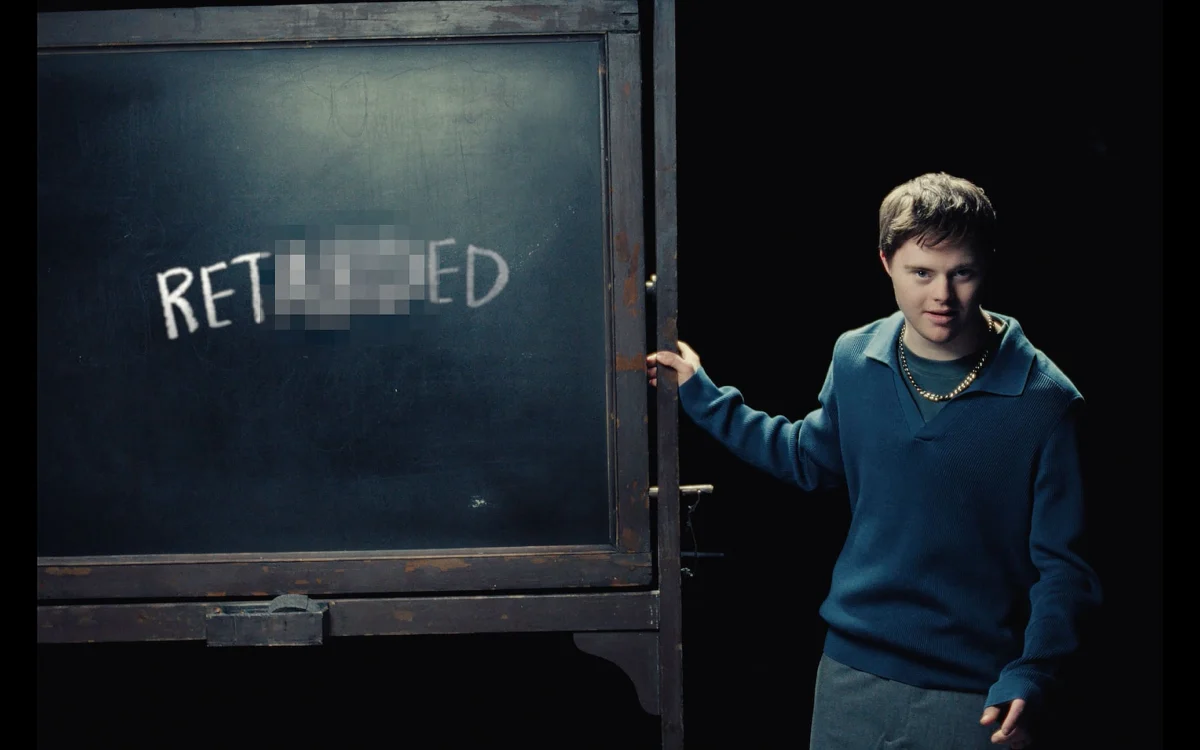
A powerful new advertising campaign, launched just ahead of World Down Syndrome Day, is making a compelling case for the public to abandon the use of the offensive "r-word," framing its continued prevalence as akin to clinging to other outdated and harmful societal practices. The initiative, spearheaded by CoorDown, an Italian Down syndrome organization, and amplified by a global coalition of disability advocates, aims to dismantle the lingering stigma associated with the term by highlighting its detrimental impact on individuals with intellectual disabilities and their families.
The campaign, aptly titled "Just Evolve," features a poignant public service announcement starring British actor Noah Matthews Matofsky, who himself has Down syndrome. In the ad, Matofsky draws a stark parallel between the modern rejection of practices such as washing clothes with urine, carelessly discarding garbage from balconies, and even the historical, though abhorrent, act of selling wives, and the imperative to stop using the r-word. He asserts, "Today we don’t do these things anymore because we learned they’re absurd, unhygienic or simply harmful to someone. Well, the r-word is harmful to us." This direct and personal testimony underscores the core message: just as society has evolved beyond these demonstrably negative behaviors, it must also evolve beyond the use of language that perpetuates discrimination and prejudice.
Matofsky, who gained wider recognition as the first actor with a visible disability to be cast in a lead role by Disney in their 2023 adaptation of "Peter Pan & Wendy," brings a unique perspective and undeniable gravitas to the campaign. His successful career trajectory serves as a living testament to the capabilities and inherent worth of individuals with Down syndrome, directly challenging the dehumanizing stereotypes that the r-word often reinforces.
The Pervasive Harm of a Single Word
The "Just Evolve" campaign emphasizes that the problematic nature of the r-word extends beyond its direct application to individuals with disabilities. Even when used casually or without malicious intent, the term contributes to a broader cultural narrative that devalues and marginalizes people with intellectual disabilities. "It’s still harmful because it reinforces the stereotype that we’re good for nothing and worthless," Matofsky explains in the ad. He powerfully reiterates the campaign’s central analogy: "If you keep using it, it’s like you’re still washing your clothes with urine." This comparison, while provocative, effectively conveys the idea that continuing to use such language is not only outdated but also fundamentally unsanitary in a social and ethical sense, polluting the environment of inclusivity.
Martina Fuga, president of CoorDown, further elaborates on the organization’s motivations. "We are aware that 90% of the time people use these words and it is not to directly offend people with disabilities," Fuga stated. "But their use contributes to creating a cultural context that associates disability with inability, failure and marginality. The words we choose shape reality. We want every person who still uses these harmful expressions to stop today. Not because ‘you can’t say anything anymore,’ but because they belong to the past." This nuanced understanding acknowledges the often unconscious nature of language use while firmly advocating for a conscious shift towards more respectful terminology. The campaign’s premise is not about policing speech for its own sake, but about fostering a deeper understanding of how language constructs and perpetuates social attitudes.
A Global Effort for Linguistic Evolution
The "Just Evolve" campaign is a collaborative endeavor, uniting CoorDown with prominent organizations such as the National Down Syndrome Society and the Global Down Down Syndrome Foundation, along with numerous other international partners. This broad coalition lends significant weight and reach to the initiative, aiming to create a unified global message against the use of the r-word.
To support this mission, a dedicated website, "Just Evolve," has been launched. This digital hub features an innovative AI agent designed to provide guidance on inclusive language. The AI is trained to advise individuals, educational institutions, corporations, media outlets, and other entities on identifying and rectifying the use of language that can be hurtful to people with disabilities. This tool offers practical resources and actionable insights, empowering users to make informed choices about their communication.
The Resurgence of the R-Word and its Implications
The timing of the "Just Evolve" campaign is particularly prescient, given recent trends that have seen an alarming resurgence in the use of the r-word. Reports indicate that prominent public figures, including former President Donald Trump and tech mogul Elon Musk, have contributed to this uptick. A study released late last year highlighted a significant surge in the r-word’s usage on the social media platform X, with a reported increase of 225.7% following a post by Trump in November. This surge persisted for several days, underscoring the powerful influence that public discourse, especially from influential figures, can have on language normalization.
The implications of this linguistic trend are far-reaching. Kandi Pickard, CEO of the National Down Syndrome Society, emphasized the critical role of language in shaping perceptions. "The language we use matters," Pickard stated. "Words shape how people are perceived and valued, and choosing respectful language is an important step in building a more inclusive society." The continued, and in some cases, amplified, use of the r-word actively undermines efforts to create a society where individuals with disabilities are fully accepted, respected, and integrated. It creates a climate where their inherent worth is questioned, and their contributions are overlooked, simply because of outdated and offensive linguistic habits.
Historical Context and Societal Progress
The "Just Evolve" campaign’s strategy of drawing parallels to other discarded societal practices is rooted in a historical understanding of social progress. For centuries, many behaviors that are now considered abhorrent were commonplace. The practice of public executions, the widespread acceptance of slavery, and the blatant sexism that limited women’s rights are all examples of societal norms that have been progressively challenged and dismantled. This evolution has often been driven by a combination of scientific understanding, moral awakening, and persistent advocacy from marginalized groups and their allies.
The use of the r-word, which historically served as a clinical term for intellectual disability, became pejorative and deeply offensive as societal understanding of disability evolved. What was once a diagnostic label, albeit one rooted in a deficit model, transformed into a slur used to demean and insult. The shift from clinical terminology to a term of abuse reflects a societal failure to adapt its language to reflect a more humane and informed perspective on intellectual diversity.
The Power of Language to Shape Reality
The campaign’s central argument that "words shape reality" is a well-established principle in sociology and linguistics. The Sapir-Whorf hypothesis, for instance, suggests that the structure of a language affects its speakers’ worldview or cognition. While the extent of this influence is debated, it is undeniable that the language we use influences how we think about ourselves, others, and the world around us. By using derogatory terms, we not only express negative attitudes but also reinforce those attitudes within ourselves and within our communities. Conversely, adopting inclusive and respectful language can foster more positive attitudes, challenge stereotypes, and ultimately contribute to a more equitable and just society.
The "Just Evolve" campaign, therefore, is not merely about avoiding a single word; it is about a broader cultural imperative to critically examine our language and its impact. It calls for a conscious and ongoing process of linguistic evolution, where outdated, harmful, and stigmatizing terms are systematically retired and replaced with language that reflects our commitment to dignity, respect, and inclusion for all.
Looking Ahead: The Future of Inclusive Communication
The success of the "Just Evolve" campaign will depend on sustained public engagement and a willingness from individuals and institutions to embrace the proposed linguistic evolution. The campaign’s reliance on a relatable and inspiring spokesperson like Noah Matthews Matofsky, coupled with the innovative use of AI-powered guidance, suggests a forward-thinking approach to disability advocacy.
As society continues to grapple with issues of prejudice and discrimination, the power of language remains a crucial battleground. By urging the public to "Just Evolve" their vocabulary, this campaign offers a clear and actionable path towards a more inclusive future, one where the hurtful echoes of the past are finally silenced by the conscious and compassionate choices of the present. The initiative serves as a powerful reminder that true progress is not only measured by societal advancements but also by the evolution of our shared language, a testament to our collective growth and our commitment to valuing every human being.