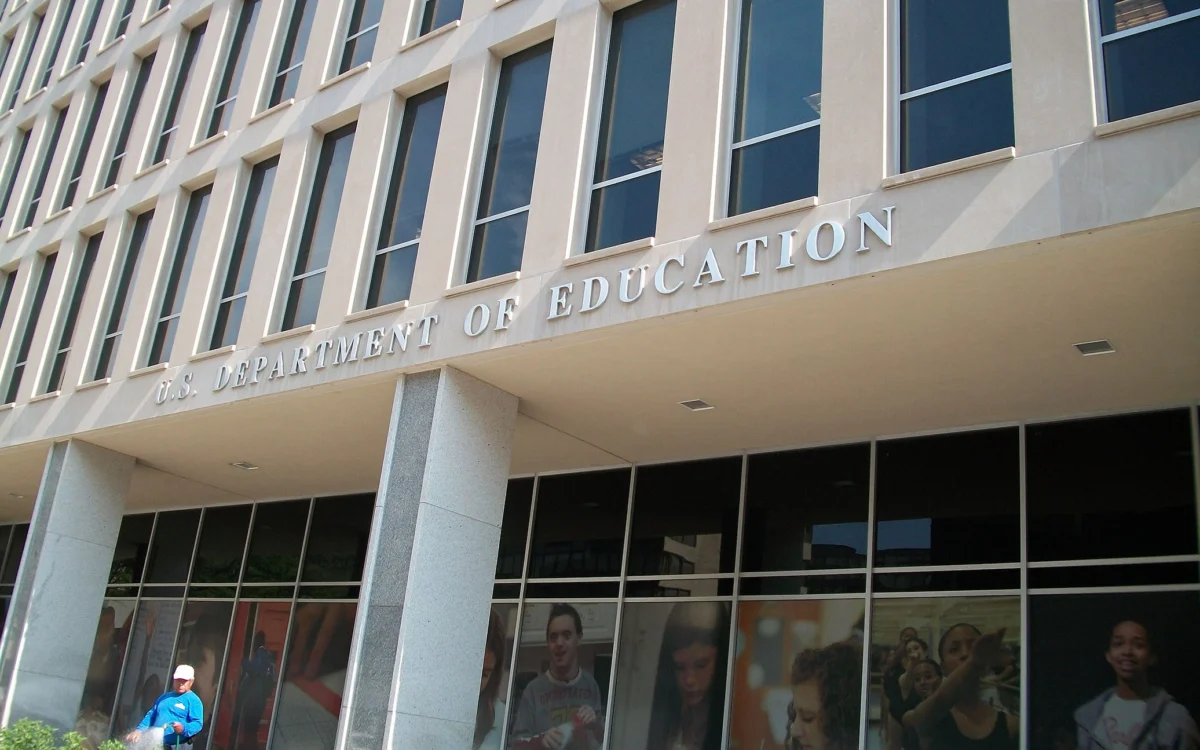
The U.S. Department of Education is reportedly considering significant shifts in its oversight of special education programs, sparking concern among disability advocates who fear a potential transfer of responsibilities to other federal agencies. This potential move comes as the Department of Education has engaged in a series of interagency agreements (IAAs) over the past year to delegate management of various programs to different government bodies.
Recent developments indicate that the Office of Special Education and Rehabilitative Services (OSERS), a critical division within the Department of Education, along with its sub-offices including the Office of Special Education Programs (OSEP) and the Rehabilitative Services Administration (RSA), could be among the next to be reassigned. The OSEP is instrumental in implementing the Individuals with Disabilities Education Act (IDEA), the cornerstone federal legislation guaranteeing free appropriate public education (FAPE) to eligible children with disabilities. The RSA, meanwhile, oversees vocational rehabilitation services, a vital component in supporting individuals with disabilities in their pursuit of employment and independent living.
H2: A Pattern of Program Transfers and Growing Apprehension
The latest purported IAA, announced last week, involves the Department of Treasury taking over the management of student loans. This agreement marks the tenth such transfer initiated by the Department of Education within the past year, signaling a broader trend of program redistribution. While the specifics of each transfer vary, the cumulative effect has been a reduction in the scope of the Department of Education’s direct operational responsibilities.
This ongoing restructuring has fueled speculation in Washington D.C. regarding the future of OSERS. Advocacy groups, including the National Down Syndrome Congress, have issued urgent alerts to their constituents, urging them to contact their congressional representatives to voice opposition to potential changes. These alerts cite "urgent information" suggesting discussions between Health and Human Services Secretary Robert F. Kennedy Jr. and Education Secretary Linda McMahon concerning the relocation of OSERS.
H3: Potential Destinations and Underlying Rationale
One of the primary discussions reportedly revolves around moving OSERS to the Department of Health and Human Services (HHS). This idea appears to be predicated on the notion that special education has a significant "medical" component. This perspective echoes a sentiment previously expressed by former President Donald Trump, who, during his last term, stated his intention to shift oversight of "special needs" programs away from the Department of Education. While Trump’s administration had considered HHS as a potential destination, current reports suggest that Secretary McMahon has also indicated the Department of Labor as another possible agency for the transfer.
The National Down Syndrome Congress has highlighted that "reliable sources" indicate the White House Office of Management and Budget (OMB) is poised to make a decision regarding the ultimate destination of these programs. The organization has strongly argued against such a transfer, asserting that these proposed actions bypass congressional intent and could violate federal law.
H2: Concerns Over the "Medical Model" and Fractured Systems
Disability advocates express deep concern that relocating special education oversight to HHS could lead to a resurgence of an outdated "medical model" of disability. This model, they argue, tends to view students with disabilities primarily as patients requiring "cures" rather than as learners with unique educational needs that require tailored support and accommodations.
Stephanie Smith Lee, co-director of policy and advocacy at the National Down Syndrome Congress, articulated these concerns in a letter to the White House budget office. She and her colleague, Heather Sachs, warned that such a shift would:
- Risk reviving an outdated medical model of disability: This could frame students as patients needing to be "cured" rather than as individuals with rights to equitable education.
- Weaken coordination between special and general education: The seamless integration of special education services within the broader educational framework is crucial for student success.
- Fracture the connection between education and workforce preparation: The RSA’s role in vocational rehabilitation highlights the link between education and future employment.
- Place special education within a broad health bureaucracy: This could dilute the focus on educational outcomes and introduce complexities unrelated to learning.
The IDEA, enacted in 1975, was a landmark piece of legislation that fundamentally reshaped how students with disabilities are educated in the United States. It established a legal framework for ensuring that all children with disabilities receive a free, appropriate public education, tailored to their individual needs, in the least restrictive environment. The law mandates that schools develop Individualized Education Programs (IEPs) for eligible students, outlining specific goals, services, and accommodations. The administration of IDEA and related programs has historically resided within the Department of Education, aligning with the primary mission of an educational institution.
H3: Expert Opinions and Calls for Caution
Chad Rummel, executive director of the Council for Exceptional Children (CEC), an organization representing educators and advocates for students with disabilities, echoed the sentiments of caution. He stated that while any initiative aimed at improving the lives of children with disabilities would be welcomed, the administration has yet to demonstrate how the considerable time, energy, and resources required to move OSERS would ultimately benefit students.
"Bringing down a system built over 50 years is not going to be easy to fix," Rummel commented. "Parents and educators should be concerned about where we are headed and what education experts are leading and supporting this change."
The Council for Exceptional Children has historically advocated for strong federal oversight and consistent implementation of special education law. They emphasize that any changes should prioritize the educational needs and outcomes of students, ensuring that the principles of IDEA are upheld.
H2: Official Response and Ongoing Evaluation
When approached for comment, Savannah Newhouse, a spokesperson for the Department of Education, stated that the agency is continuing to evaluate its options.
"We are continuing to evaluate potential partnerships for special education programs," Newhouse said. "As we have said again and again: statutorily-mandated federal functions – such as civil rights enforcement and special education services – will continue."
This statement, while reassuring that core functions will persist, does not definitively rule out the possibility of programmatic or structural changes. The Department’s acknowledgement of "potential partnerships" suggests that the evaluation process is ongoing and that various avenues are being explored.
The implications of such a transfer are far-reaching. A move of OSERS to HHS, for instance, could necessitate a significant reorientation of the programs to align with the overarching mission of the health agency. This could involve redefining the metrics of success, the professional expertise required, and the regulatory framework governing these services. Similarly, a transfer to the Department of Labor might emphasize vocational outcomes and workforce integration, potentially at the expense of broader educational development and early intervention services.
H3: Broader Impact and the Role of Congress
The current process, which appears to be driven by interagency agreements rather than explicit legislative action, has drawn criticism for potentially circumventing the role of Congress. Lawmakers are responsible for appropriating funds and setting policy for federal agencies. Significant structural changes to programs established by federal law, such as IDEA, are often seen as requiring legislative deliberation and approval.
Disability advocacy organizations are calling for transparency and robust public engagement in any decision-making process that could impact special education services. They emphasize that the continuity and quality of education for millions of students with disabilities depend on stable and well-supported federal oversight. The coming weeks are expected to be critical as the administration’s plans for the future of OSERS and its constituent offices become clearer, and as advocates and stakeholders mobilize to ensure the continued protection and advancement of special education in the United States.