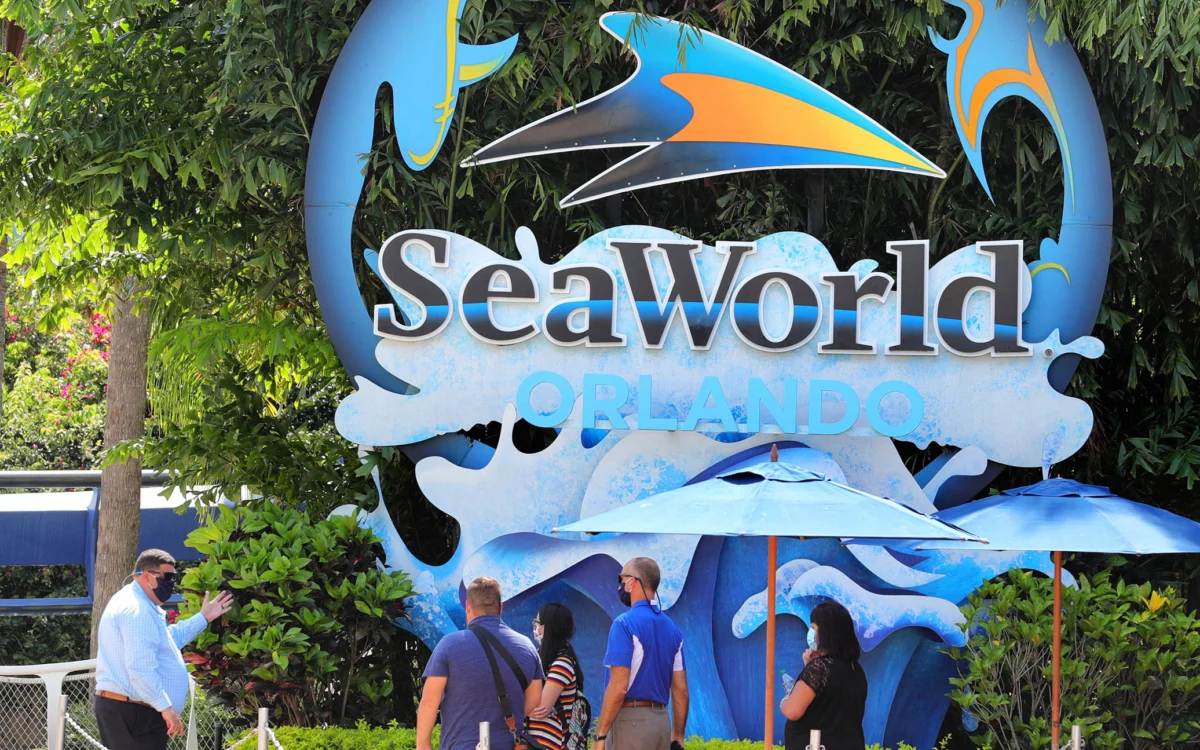
The U.S. Department of Justice has initiated legal action against United Parks & Resorts Inc., a prominent theme park operator, alleging a systemic failure to accommodate individuals with disabilities in direct contravention of the Americans with Disabilities Act (ADA). The lawsuit centers on a controversial policy implemented by the company that prohibits the use of rollators and other wheeled walkers equipped with seats within its parks. United Parks & Resorts oversees a portfolio of popular attractions, including SeaWorld, Busch Gardens, Aquatica, and Sesame Place, among others.
The legal challenge, filed in the U.S. District Court for the Middle District of Florida, asserts that the ADA mandates theme parks to permit individuals with disabilities to utilize mobility aids, such as walkers, within pedestrian areas. The Justice Department contends that United Parks’ policy, which began affecting operations at some of its properties in November 2025, effectively bars individuals with disabilities, including children, from accessing these entertainment venues.
Escalating Concerns and Formal Investigation
The Justice Department’s involvement was precipitated by a series of complaints lodged by individuals with disabilities who encountered the walker ban at prominent United Parks locations, including SeaWorld Orlando, Busch Gardens Tampa Bay, and Aquatica Orlando. These guests reported that their chosen mobility devices were disallowed, and the only alternative offered was the rental of mobility aids that were deemed unsuitable for their specific needs. This prompted the agency to launch a formal investigation into United Parks’ practices in late 2025.
Evidence presented in the lawsuit suggests that around the time the investigation commenced, the walker ban was extended to Discovery Cove Orlando. Simultaneously, policies at SeaWorld Orlando and Aquatica Orlando were updated to acknowledge the availability of complimentary rollators without seats and wheelchairs for guests whose personal mobility devices were deemed non-compliant.
United Parks’ Stated Rationale and Ongoing Disagreements
United Parks & Resorts has defended its policy, citing safety concerns as the primary driver for the restriction on rollators with seats. The company’s updated policies indicated that "Rollators with seats can pose a safety concern when not used properly, particularly when someone is seated and the device is pushed by another person. Despite reminders and previous steps, including requiring signed waivers, we continued to see misuse and safety-related incidents. For these reasons, rollators with seats are not permitted."
However, the Justice Department’s lawsuit asserts that the policy remains in effect at SeaWorld Orlando, Aquatica Orlando, and Discovery Cove Orlando. While Busch Gardens Tampa Bay reportedly removed the wheeled walker ban from its website in the current month, the Justice Department maintains that the broader issue persists across the company’s operations.
The Human Impact: A Child’s Experience
Illustrating the profound impact of this policy, the Justice Department highlighted a recent complaint from the mother of an 8-year-old child. The child’s physician-recommended pediatric posterior walker was denied by SeaWorld Orlando. Instead, the child was offered an adult-sized rollator without a seat or a wheelchair, neither of which were deemed appropriate for the child’s specific mobility requirements and developmental stage. This incident underscores the critical need for individualized accommodation rather than a blanket prohibition.
Legal Framework and Department of Justice’s Objectives
The Americans with Disabilities Act, enacted in 1990, is a landmark civil rights law that prohibits discrimination based on disability. It mandates that public accommodations, including theme parks, provide equal access to goods, services, and facilities for individuals with disabilities. The ADA’s provisions regarding mobility aids are designed to ensure that people with disabilities are not excluded from public life due to their need for assistive devices.
U.S. Attorney Gregory W. Kehoe for the Middle District of Florida, who spearheaded the lawsuit, emphasized the department’s commitment to upholding these principles. "The ADA requires theme park companies like UPR to provide guests with equal access, regardless of ability," Kehoe stated. "This complaint reinforces our commitment to holding public accommodations in the Middle District of Florida accountable when they engage in disability discrimination."
The Justice Department is seeking a court order that would compel United Parks & Resorts to amend its policies, implement comprehensive ADA training for its staff, and pay civil penalties and damages to individuals who have been adversely affected by the challenged policy.
United Parks’ Counterposition and Commitment to Inclusivity
In response to the lawsuit, United Parks & Resorts has issued a statement expressing its disagreement with the Justice Department’s claims. The company reiterated its stance that the policy was enacted "to address repeated safety incidents involving misuse of rollators with seats and was designed to enhance guest safety while continuing to provide accessible options for all guests."
The company further stated, "We offer alternative mobility devices at no cost to ensure guests can fully enjoy our parks. We believe our approach is consistent with the requirements of the ADA and reflects our commitment to providing a safe and inclusive experience." This assertion suggests a fundamental difference in interpretation between United Parks and the Justice Department regarding what constitutes reasonable accommodation under the ADA.
Broader Implications and Industry Precedents
This legal action against United Parks & Resorts is part of a broader trend of increased enforcement of disability rights laws in the public accommodations sector. Theme parks, by their nature, involve extensive walking and require patrons to navigate large, complex environments. Therefore, the accessibility of these venues is a critical component of ensuring equal participation in recreational activities.
The outcome of this lawsuit could have significant implications for other theme park operators and public venues. A ruling in favor of the Justice Department could set a precedent, compelling other companies to review and potentially revise their own policies regarding mobility aids. Conversely, if United Parks successfully defends its position, it might embolden other businesses to implement similar restrictions, potentially leading to further legal challenges.
The core of the dispute lies in balancing safety concerns with the fundamental right to access. While safety is a legitimate consideration for any public venue, the ADA requires that such considerations do not result in discrimination or the exclusion of individuals with disabilities. The Justice Department’s stance suggests that a blanket ban on a type of mobility aid, even with stated safety reasons, may not meet the ADA’s requirements if it disproportionately impacts individuals with disabilities and if less restrictive alternatives are not adequately explored or provided.
The timeline of events, from initial complaints to the formal lawsuit, highlights a multi-stage process involving investigation and legal deliberation. The recurring nature of complaints, even after the company began offering alternative devices, indicates a potential disconnect between the company’s perception of compliance and the lived experiences of guests with disabilities.
As the legal proceedings unfold, stakeholders will be closely watching for how the court interprets the balance between operational safety and the imperative of inclusive access. The case serves as a stark reminder of the ongoing need for vigilance and proactive compliance with disability rights legislation to ensure that all members of society can fully participate in public life and enjoy recreational opportunities.