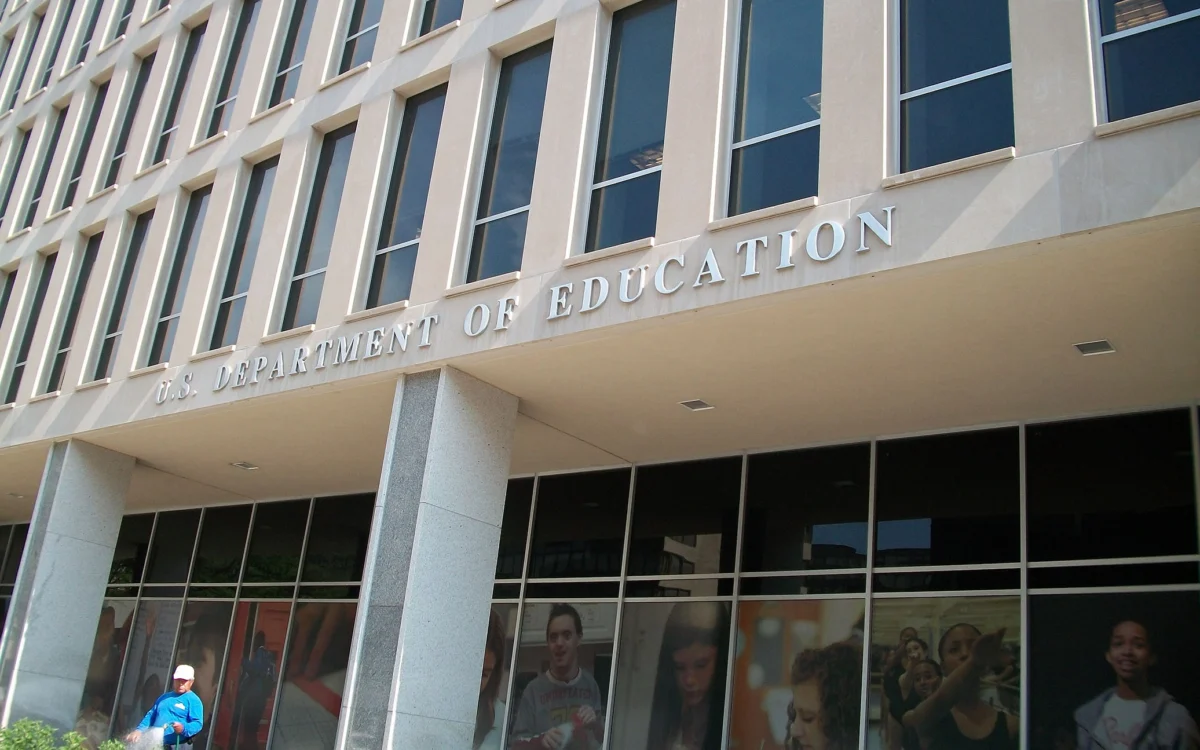
Millions of dollars earmarked by Congress for critical research into best practices in special education face the significant risk of remaining unspent this year, according to a stark new analysis. The U.S. Department of Education’s Institute of Education Sciences (IES), the primary federal agency tasked with funding such endeavors, has reportedly failed to allocate a substantial portion of its budget for special education research, raising alarms among advocacy groups and researchers about the potential loss of vital evidence-based insights.
The review, conducted by Knowledge Alliance, a consortium of leading education organizations dedicated to advocating for federal investment in education research, reveals a troubling pattern of slow fund dispersal. Publicly available data indicates that a staggering 84% of the money budgeted for special education research through the IES has yet to be committed. With the federal fiscal year concluding on September 30th, a mere $11 million out of a total of $77 million designated for the special education research and evaluation program has been allocated. This leaves the remaining $66 million in jeopardy of lapsing, a consequence that could have far-reaching implications for students with disabilities, their educators, and policymakers.
This alarming situation is not isolated to special education research. The analysis highlights a broader trend of IES struggling to distribute its funds efficiently. Across the agency’s entire budget, approximately 36%, or $289 million, is at risk of expiring at the end of September. This widespread slowdown in fund allocation has already led to the unfortunate halt of long-standing studies that track the progress of students with disabilities as they transition into higher education and the workforce.
The Critical Need for Evidence-Based Practices
The potential lapse in funding for special education research is particularly concerning given the unique and complex needs of students with disabilities. These students often require tailored educational approaches, individualized support, and specialized interventions to ensure they receive a Free Appropriate Public Education (FAPE) as mandated by federal law. Research plays an indispensable role in identifying which of these approaches are most effective, for which students, and under what specific circumstances.
"IES research is critical to identifying what truly works, for whom, and under what conditions – ensuring that limited resources are used in ways that measurably improve educational outcomes," stated Stephanie Smith Lee, co-director of policy and advocacy at the National Down Syndrome Congress. Smith Lee, who previously served as the director of the Department of Education’s Office of Special Education Programs under President George W. Bush, emphasized the profound importance of this work. "For students with disabilities, the stakes are simply too high not to rely on what works."
Without robust research, educators and policymakers are left to make decisions based on anecdotal evidence or outdated information, potentially leading to ineffective interventions and hindering the progress of students who depend on specialized support. The implications of stalled research extend to critical areas such as developing effective strategies for inclusive classrooms, understanding the impact of school choice programs on students with disabilities, exploring the burgeoning role of artificial intelligence in special education, and enhancing parent involvement in decision-making processes.
A Chronology of Underfunding Concerns
The funding that is now at risk was originally appropriated by Congress in Fiscal Year 2025. Unlike many other federal agencies, the IES is granted a two-year window to obligate its budget, providing ample time for strategic allocation and distribution. This flexibility, however, does not appear to be translating into timely action.
In addition to the FY2025 funds, Congress also approved a substantial $93 million increase for special education research, studies, and evaluation for the current fiscal year, which is available through September 2027. Worryingly, Knowledge Alliance’s analysis found that none of this newly appropriated money has been allocated to date.
"It is alarming that, with only five months left in a two-year spend down period for the fiscal year 2025 research dollars, there appears to be a significant amount of funding still on the table," expressed Chad Rummel, executive director of the Council for Exceptional Children, an organization dedicated to advocating for special education professionals.
Rummel further articulated the frustration felt by his organization and others in the field. "Despite the flexibility and authority to maintain funding for special education research, the Department of Education has publicly stated that it intends to cut FY 2025 research dollars by nearly a third."
This stated intention to reduce spending is reflected in the Education Department’s recently released budget request for IES for Fiscal Year 2027. This request indicates that the agency has reached an agreement with the White House Office of Management and Budget (OMB) to cap spending on the Research in Special Education program at $45.3 million for FY2025, even though Congress had originally appropriated $64.3 million. This represents a significant discrepancy between congressional intent and administrative action.
Official Response and Broader Implications
In response to inquiries from Disability Scoop, an Education Department spokesperson stated, "The department is committed to using appropriated funds to meet our statutory obligations and supporting high-quality research." While this statement expresses a commitment to fulfilling its duties, it stands in contrast to the data presented by Knowledge Alliance and the concerns raised by advocacy groups.
Meghan Burke, a professor of special education at Vanderbilt University, underscored the unique and indispensable role of the IES. "There were no grant competitions in special education last year. So, unless there is an impending research grant competition with a very quick timeline for submission and reviews, it would be difficult to see how this money could be allocated and dispensed in a timely manner," Burke commented. She added that without such funding, researchers are prevented from exploring pressing issues such as the ethical and effective integration of AI in special education, the nuanced impact of school choice policies on students with disabilities, and the crucial role of parental engagement in educational decision-making.
The IES is not only the largest federal funder of special education research but also the only entity specifically focused on education and disability research. This concentration of expertise and funding makes the IES’s operational efficiency and commitment to allocation paramount. The potential loss of these funds represents a significant setback for the field, jeopardizing the development of innovative solutions and evidence-based practices that could dramatically improve the educational experiences and life outcomes for millions of students with disabilities across the nation.
The implications of this funding shortfall extend beyond the immediate loss of potential research projects. It risks undermining the continuous improvement cycle that is essential for special education. Research informs policy, which in turn guides practice. A disruption in the flow of research findings can lead to stagnation, hindering the ability of the education system to adapt to evolving student needs and societal changes. Furthermore, the delay in funding could discourage researchers and institutions from pursuing grants in this critical area, potentially leading to a long-term decline in the pipeline of expertise and innovation in special education.
As the September 30th deadline looms, the education community watches closely, hoping for a swift and decisive action from the Department of Education to ensure that these vital research funds are utilized to their full potential, thereby upholding Congress’s intent and advancing the educational well-being of students with disabilities. The future of evidence-based practices in special education may well depend on it.