Anthony Bouyer has become a prolific litigant in the San Fernando Valley, filing hundreds of lawsuits alleging violations of the Americans with Disabilities Act (ADA). Bouyer, 55, an internet marketer, has reportedly filed at least 231 cases in Los Angeles County alone this year. His litigation targets a wide range of businesses, from small Mexican restaurants and convenience stores to liquor stores and even a laundromat made famous by the film "Everything Everywhere All At Once." These lawsuits often stem from alleged accessibility barriers such as difficult-to-reach counters, produce scales placed out of reach, cracked parking lots, and cumbersome door hardware.
The surge in ADA lawsuits in California is fueled, in part, by a unique state law that allows for financial payouts for various infractions. Advocates argue that these financial incentives are crucial for compelling businesses to comply with the ADA, a landmark federal civil rights law designed to ensure equal access for Americans with disabilities. However, many small business owners contend that they are being overwhelmed by a barrage of lawsuits filed by a small group of serial plaintiffs, many of whom are represented by a single law firm.
Manning Law, an Orange County-based firm, has emerged as a prominent player in this legal landscape, representing many of these serial ADA plaintiffs, including Bouyer. Court filings reveal that in the past year, seven regular clients of Manning Law collectively filed over 1,000 lawsuits against businesses across Southern California. This aggressive litigation strategy has attracted significant scrutiny from legal authorities. Joseph Manning, the owner of Manning Law, recently faced a suspension of his law license by the State Bar of California. The suspension was reportedly due to allegations of making false statements concerning billable hours in numerous ADA lawsuits. The firm has denied any wrongdoing, stating that its billing practices have been "modified" to the satisfaction of the bar. Manning himself had previously asserted that all billing was "true and correct."
The Financial Stakes of ADA Litigation
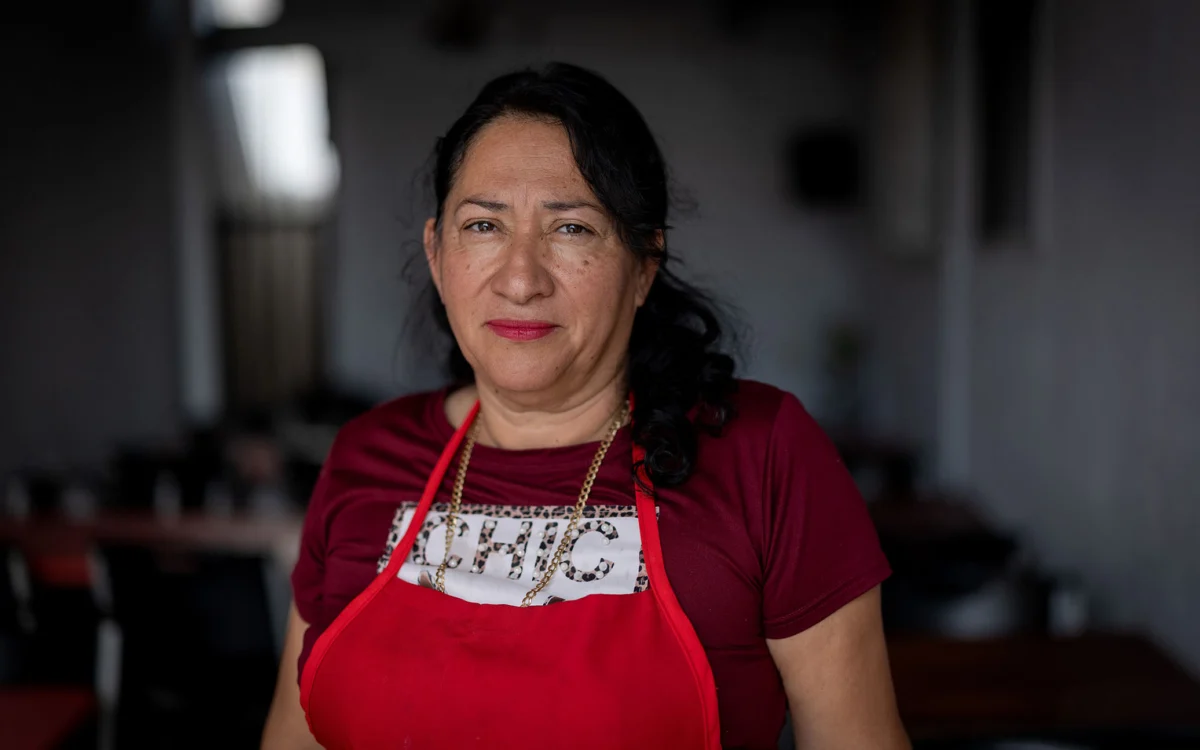
The financial implications of these lawsuits are substantial for small businesses. The Barraza family, owners of El Huarachito Casero, a Mexican restaurant, reported being served with a lawsuit the day before the mother’s 53rd birthday. According to the family, a lawyer representing Bouyer initially demanded $25,000. This sum represents several months of profit for their establishment, which has seen its margins squeezed by recent immigration raids and a decline in its lunchtime construction worker clientele. The Barraza family eventually negotiated a settlement for $10,000.
Similarly, Zuheir Nakkoud, the manager of a Sylmar liquor store, recounted an encounter with Bouyer in October. Nakkoud observed Bouyer meticulously measuring the width of his store’s handicapped parking space before entering to purchase a bottle of water. Nakkoud stated that patients from a nearby dialysis center navigated his aisles without issue. However, he calculated that fighting the subsequent lawsuit would incur greater costs than settling. His store ultimately agreed to pay $14,000 to resolve Bouyer’s claim, which marked Bouyer’s 232nd lawsuit of the year in Los Angeles County. Nakkoud expressed his frustration, stating, "This money’s for my kids, not for him." Bouyer also filed lawsuits against a produce market and another establishment on the same block on the same day, both of which were subsequently handled by Manning Law.
Bouyer himself has been difficult to reach for comment, and he did not respond to a letter left at his residence. In legal depositions, he has characterized himself as a disability advocate, driven by a desire to improve accessibility for individuals with disabilities. He explained that he became paralyzed about a decade ago following surgery to remove a spinal cord tumor. Since then, he has dedicated himself to "improving the lives of disabled people." To this end, he reportedly travels the county armed with a 12-inch level gauge, which he uses to measure the slopes of store aisles and parking spaces. In a 2023 deposition, Bouyer stated, "Everywhere I go, if I see something that doesn’t look correct, I measure it."
California’s ADA Landscape and the Unruh Civil Rights Act
California’s legal framework, particularly the Unruh Civil Rights Act, plays a significant role in the prevalence of ADA lawsuits. This state law allows individuals to receive damages, often starting at $4,000, if they encounter a business that violates the strict requirements of the ADA. These violations can include issues such as excessively steep slopes, narrow aisles, or uneven parking lots. The intent behind the Unruh Act is to encourage businesses to proactively address the needs of their customers with disabilities. However, critics argue that a small number of professional plaintiffs are exploiting these provisions, turning minor infractions into a lucrative source of income through a constant stream of lawsuits.
Past Legal Challenges and Firm Responses
The legal strategies employed by firms like Manning Law have not been without precedent or challenge. In 2019, the Riverside County District Attorney filed a lawsuit against the founder of Manning Law and three other attorneys, alleging they had filed over 100 ADA suits using false information on behalf of a plaintiff who prosecutors claimed had exaggerated the severity of his disability. This case was ultimately dismissed "with prejudice" after the judge ruled that the communications at the center of the lawsuit were protected by privilege. Mike Manning, an attorney with the firm, described the Riverside D.A.’s lawsuit as "misguided" and asserted that the firm conducts a thorough vetting and inspection process for every case it undertakes. He further stated in an email that "Unfortunately, the most common practice today is to wait to get sued and only then take action," adding that no court has ever deemed one of the firm’s disability cases frivolous.
Another prominent plaintiff, Brian Whitaker, who has been represented in hundreds of ADA suits, was previously associated with the law firm Potter Handy. In 2022, this firm faced a lawsuit from the district attorneys of Los Angeles and San Francisco for allegedly filing a large number of ADA lawsuits based on purported fake claims. That suit was also dismissed, with a judge ruling that litigation privilege protected the firm. Rene Potter, a former lead attorney at Potter Handy, has since shifted his focus and is now representing over 700 plaintiffs in recent sex abuse claims against Los Angeles County.
Legislative Stalemate and Defense Strategies
Lawmakers in California, across both political parties, acknowledge that the current legal environment surrounding ADA litigation has become problematic. However, efforts to reform the system have faced obstacles. A bipartisan bill proposed by Senator Roger Niello (R-Fair Oaks) last year, which aimed to provide businesses with more time to rectify violations before penalties were imposed, failed to advance beyond committee. Senator Niello has stated that his bill is being "held hostage" by Assemblyman Ash Kalra (D-San Jose), who chairs the California Assembly Judiciary Committee. A spokesperson for Kalra indicated that the Assemblyman prefers a "more balanced" bill that has broader support from disability and civil rights organizations.
The majority of businesses facing ADA claims opt for out-of-court settlements. However, a growing number of business owners are choosing to fight these lawsuits, often enlisting the services of defense attorneys like Ara Sahelian. Sahelian, who has litigated more than 100 cases against Manning Law, has made it his mission to take these cases to trial. "Four years ago, I had a fuse trip, and I said I’m not settling these cases anymore," Sahelian stated.
The Rise of Website Accessibility Lawsuits
Sahelian, who is 69 and uses a wheelchair due to polio contracted in infancy, maintains detailed records of serial plaintiffs in his home office. He devotes multiple binders to individuals like Anthony Bouyer and Perla Mageno, another Manning Law plaintiff who has filed hundreds of ADA lawsuits concerning website accessibility. Mageno’s claims often revolve around websites she alleges are not compatible with her screen-reading software. The Supreme Court’s 2019 decision in a case involving Manning Law suing Domino’s Pizza on behalf of a blind client paved the way for a significant increase in website accessibility lawsuits. This ruling established that websites must be coded to ensure their features can be converted into audio for visually impaired users.
In one notable trial, Sahelian faced Mageno in a Pasadena courthouse. Mageno testified about her frustration that a picture on the website of a Tustin burger shop failed to convey descriptive information, such as "this is an amazing burger" or "this is a graphic of a cheeseburger that has lettuce, tomato sauce coming out of the side." Mageno sued the shop for failing to make its website navigable for a screen reader. The case, which hinges on whether Peter’s Gourmade Grill violated her civil rights, remains pending, with a jury slated to make a decision. Sahelian questioned the necessity of such litigation, asking the judge, "Why are we here? I’m just asking for common sense." He argues that basic logic is often disregarded in many of these cases.
Sahelian pointed out that while many businesses with physical barriers—such as a tuxedo store with a staircase entrance or a French bistro with low fold-out tables—may legitimately fall under ADA scrutiny, a small burger joint striving to make its website screen-reader friendly should not. He speculates that AI chatbots may eventually render website accessibility lawsuits less prevalent, as these tools can readily read website text aloud. Sahelian noted that during an interview, a chatbot easily provided menu options for a restaurant on a set budget.
However, Sahelian predicts that lawsuits targeting physical accessibility issues will continue to generate substantial revenue for both plaintiffs and their attorneys. This lucrative aspect has led some defense attorneys to closely monitor court dockets for filings by Manning Law. They then proactively send letters to business owners offering their services to defend against ADA lawsuits, sometimes even before the business has been officially served. One such letter, sent to a Sylmar laundromat that was sued by Bouyer, warned of "LOW PRICED LAWYERS" and touted their own superior, albeit more expensive, services.
Small Businesses Under Pressure
The laundromat, which gained local fame as a filming location for "Everything Everywhere All At Once," has been sued twice for ADA violations, according to its owner, Kenny Majers. Majers, half-jokingly suggesting that the film’s production company A24 might offer assistance, has resorted to taking on side work as a handyman at neighboring laundromats. He lamented, "All the money’s going to lawyers. It’s not fair." The financial strain and emotional toll on small business owners underscore the complex and often contentious nature of ADA enforcement in California, highlighting the ongoing debate between ensuring accessibility and protecting the viability of small enterprises.