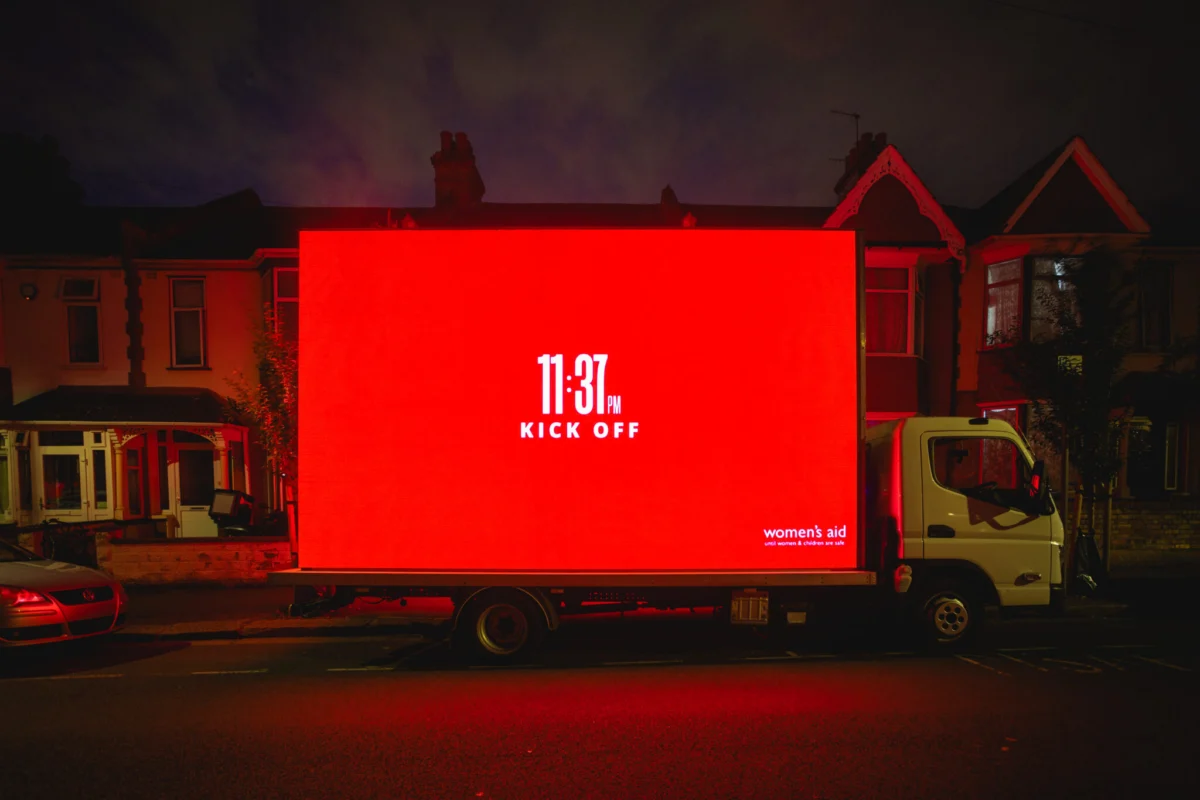
London, 17th June 2026 – As England prepares to embark on its journey in the highly anticipated World Cup, a stark and vital new campaign has been launched by the national domestic abuse charity, Women’s Aid. Titled "The Other Kick Off," this initiative seeks to cast a sobering light on a grim reality often overshadowed by national sporting euphoria: the estimated time domestic abuse incidents are predicted to escalate after England’s games. While millions of fans eagerly await the official 9 PM kick-off for England’s opening match, Women’s Aid points to a more sinister "kick-off time" – 11:37 PM – a moment that, for many women and children, signals the onset of heightened fear and potential danger as abusive partners return home.
The Shadowy ‘Other Kick Off’: 11:37 PM
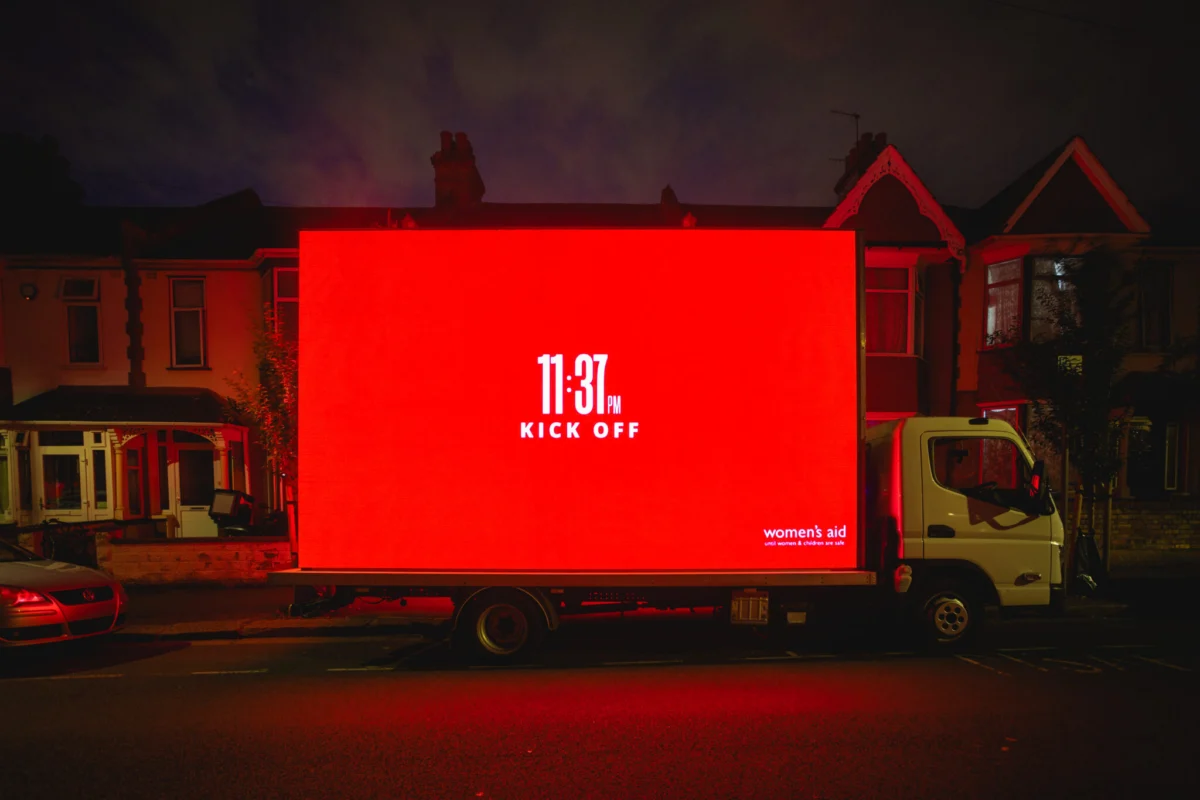
The campaign strategically hijacks the ubiquitous pre-match question, "What time is kick-off?", redirecting public attention from the celebratory start of the game to the distressing aftermath for countless individuals. The precise time of 11:37 PM is not arbitrary; it has been meticulously calculated to represent the average duration of a football match, including half-time and any additional injury time, followed by a period for post-match drinking and the journey home. This calculation underscores the specific window when survivors often face increased risk, creating an atmosphere of dread that intensifies with the late-night timing of this year’s World Cup matches. For those living in abusive environments, the final whistle of the game, far from being a moment of relief or celebration, becomes a harbinger of potential violence and isolation.
Amplifying the Message: A Multi-Channel Awareness Drive
To ensure its critical message resonates widely, Women’s Aid has deployed "The Other Kick Off" campaign across a diverse range of public platforms. Digital billboards, mobile vans, and strategically placed fly posters have appeared near major fan zones and prominent football hotspots throughout London. These striking visuals are designed to arrest public attention, prompting reflection on a hidden issue that persists beneath the surface of national excitement. Each piece of campaign material features a prominent QR code, offering an immediate pathway for the public to access Women’s Aid’s website. This digital gateway provides vital resources for support, information on recognizing the signs of domestic abuse, opportunities to donate, and actionable steps for those concerned about themselves or their loved ones.
This multi-faceted approach builds upon the impactful legacy of Women’s Aid’s previous campaigns, notably the 2022 "He’s Coming Home" initiative, which similarly leveraged the cultural prominence of major football tournaments to highlight the often-ignored link between these events and domestic abuse. By consistently placing this issue in the public consciousness during periods of national focus, Women’s Aid aims to normalize conversations around domestic abuse and reinforce the message that help is available. The visibility of these campaigns in high-traffic areas serves as a constant, albeit grim, reminder that while the nation unites in support of its team, a significant portion of the population faces a starkly different and terrifying reality.
The Troubling Link: Football, Alcohol, and Domestic Abuse
The foundation of "The Other Kick Off" campaign rests upon longstanding and robust research illuminating a concerning correlation between major football tournaments and an increase in domestic abuse incidents. A seminal study by Kirby and Francis (2014), cited by Women’s Aid, demonstrated a significant rise in domestic abuse cases around these events. Specifically, incidents were found to increase by a staggering 38% when England suffers a defeat, and by 26% even when the team secures a victory. This data unequivocally illustrates that the outcome of the match, whether triumph or disappointment, does not negate the risk; rather, the heightened emotional climate surrounding the tournament itself appears to be a critical factor.
While it is crucial to emphasize that football itself does not cause domestic abuse, the confluence of intense emotions, increased alcohol consumption, and the gathering of individuals in homes and public venues can exacerbate pre-existing patterns of abusive behaviour. For perpetrators, the emotional volatility of a match, coupled with intoxication, can lower inhibitions and escalate aggression, turning homes into battlegrounds rather than havens. This phenomenon is not unique to football but is observed across various high-stakes sporting events globally, where the pressure, excitement, and potential for collective elation or frustration can create a volatile environment. The consistent pattern of increased reported incidents during these periods underscores the urgent need for targeted awareness and support mechanisms.
Voices from the Frontline: Empathy and Advocacy

Farah Nazeer, CEO of Women’s Aid, articulates the charity’s mission with profound clarity: "The World Cup is a wonderful opportunity for us to come together and cheer on our team. However, for women and children living with domestic abuse, ‘kick-off’ has a different meaning. For those living with abuse, the final whistle of the game signals the beginning of something frightening and potentially life-threatening." Her statement powerfully conveys the dichotomy of the national experience, contrasting widespread joy with isolated terror. Nazeer further elaborates, "While we know that domestic abuse isn’t caused by football, we also know that heightened emotions and alcohol consumption can lead to a rise in domestic abuse frequency and severity. Whether England wins, loses, or draws, no woman or child should live in fear of that final whistle blow. We hope that our campaign helps raise awareness of this heinous crime, while also signposting people to support, not only for themselves, but for loved ones they’re concerned about." Her words underscore the campaign’s dual objective: to highlight the problem and to provide tangible solutions and support pathways.
Echoing this sentiment, Women’s Aid Ambassador Charlie Webster, a survivor herself, lends her influential voice to the cause. "The World Cup is one of those rare moments when the whole country holds its breath together – united, hopeful, alive! That joy is real, and it’s precious. But for women and children living with domestic abuse, tournament time brings something very different: heightened fear, and heightened danger. That is a reality we cannot look away from." Webster’s personal connection to the issue adds a layer of authenticity and urgency, reminding the public that behind the statistics are real people enduring unimaginable suffering. She continues, "Football is our game. It belongs to all of us, and it should be a place of safety. I am proud to be raising awareness to change that, and make sure that when England plays, every woman at home is safe." Her powerful advocacy calls for a collective responsibility to ensure the safety and well-being of all, asserting that the spirit of football should encompass inclusivity and protection.
Government’s Commitment: A Multi-pronged Approach
The gravity of the issue has also drawn a response from governmental figures. Minister for Safeguarding and Violence Against Women and Girls, Natalie Fleet, affirmed the government’s commitment, stating, "Nobody should live in fear because of a football match. As a Mum and a Nana, I find it heartbreaking that while many families come together to enjoy the World Cup, some women and children are left dreading the final whistle. The latest Women’s Aid campaign shines a powerful light on this reality." Minister Fleet’s personal reflection adds a compassionate dimension to the official response, highlighting the human cost of domestic abuse during these periods.
She further detailed the proactive measures being taken: "We know domestic abuse can escalate during major sporting events, and there is never any excuse for it. Tackling this is central to our VAWG Strategy – including placing domestic abuse specialists in 999 control rooms through Raneem’s Law, rolling out Domestic Abuse Protection Orders, and working with partners to challenge harmful behaviours." This robust governmental strategy underscores a multi-pronged approach to combating domestic abuse, ranging from immediate emergency response enhancements to long-term preventative measures and legal protections. The Domestic Abuse Protection Orders (DAPOs), for instance, offer flexible, wide-ranging powers to safeguard victims and survivors, preventing perpetrators from continuing their abuse. Raneem’s Law, named in honour of a victim, aims to ensure police control rooms are equipped with specialist knowledge to identify and respond effectively to domestic abuse calls. Minister Fleet concluded with a firm declaration: "We are clear that enough is enough. We will deploy the full power of the state to halve violence against women and girls in a decade." This ambitious target signifies a profound commitment to systemic change and victim protection.
The Calculus of Fear: Deconstructing 11:37 PM
The specificity of the 11:37 PM "other kick-off" time is a deliberate and powerful rhetorical device. It transforms an abstract statistic into a concrete, relatable moment of dread. The calculation incorporates the standard 90 minutes of football, plus potential extra time and half-time intervals, leading to an approximate end of the match around 10:45 PM. Adding to this, an estimated period for post-match socialising, potentially involving alcohol consumption in pubs or at home, followed by travel time, pushes the moment of increased risk to around 11:37 PM. This precise timing is designed to resonate with those who live with this reality, making the invisible visible and providing a tangible reference point for public discourse. It personalizes the issue, allowing people to envision the scenario and understand the specific fear that settles in many households as the national celebrations wind down.
Broader Societal Implications and a Call for Sustained Change
The "The Other Kick Off" campaign, amplified by generous billboard placements from leading out-of-home media partners like The Outernet and Ocean Outdoor, serves as more than just a temporary awareness drive. It is a critical intervention designed to provoke introspection within society about the often-unseen consequences of national events. While the World Cup unites a nation in shared passion, it also exposes the fractures within society where domestic abuse continues to thrive. The campaign challenges the notion that these events are purely celebratory, forcing a confrontation with their darker side.
The long-term implications of such campaigns extend beyond immediate support for survivors. They aim to foster a cultural shift, encouraging greater bystander intervention, promoting healthier attitudes towards masculinity and emotional regulation, and dismantling the societal norms that enable domestic abuse to persist. The message is clear: football, or any sport, should never be an excuse for violence. The responsibility to address this issue lies not only with charities and government bodies but with every individual who witnesses or suspects abuse.
By providing clear pathways to support through its website – womensaid.org.uk – the campaign empowers individuals to seek help, whether for themselves or for others. It reinforces the message that no woman or child should fear what happens after the match ends, irrespective of the score. The ongoing effort to raise awareness, provide support, and advocate for policy change is crucial in working towards a future where major sporting events are truly a source of joy and unity for everyone, free from the shadow of domestic abuse. This year’s World Cup, therefore, becomes not just a contest of nations on the pitch, but a pivotal moment for collective action against a pervasive societal ill off it.