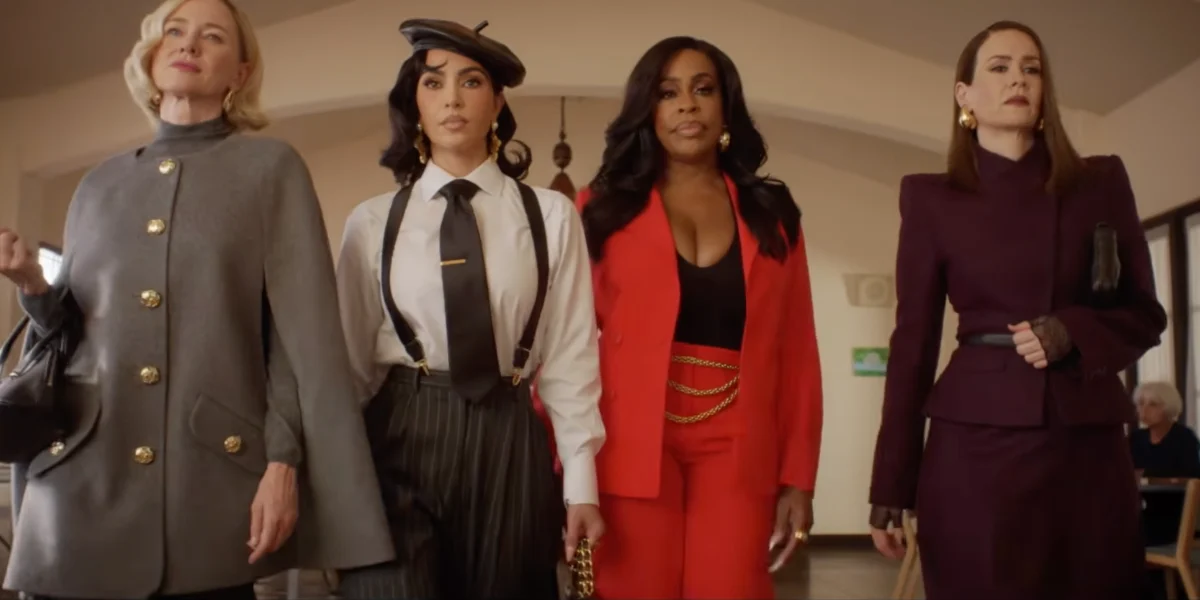
The landscape of mainstream American cinema in 2026 has witnessed an unprecedented shift in the depiction of female pleasure, specifically regarding the act of cunnilingus. In the opening sequences of Boots Riley’s latest satirical work, I Love Boosters (2026), the protagonist Corvette, played by Keke Palmer, finds herself captivated by a male model portrayed by Lakeith Stanfield. The scene is marked by a stylistic "shaky cam" and soft-focus eroticism, signaling a cinematic preoccupation with female desire that has historically been relegated to the margins or used as a narrative warning sign. This trend is not isolated to Riley’s work; it represents a broader cultural and industrial pivot that challenges decades of censorship, double standards, and the "orgasm gap" that has long characterized both Hollywood and American society.

The 2025-2026 Cinematic Shift: From Taboo to Center Stage
The current surge in explicit depictions of male-to-female oral sex follows a record-breaking year for adult-oriented storytelling. Ryan Coogler’s Sinners (2025), a Black vampire horror epic, shattered industry records by becoming the most Oscar-nominated film in history. Beyond its technical achievements, the film garnered significant attention for its frank dialogue regarding sexual intimacy. In one pivotal scene, the character Stack, played by Michael B. Jordan, instructs his younger cousin on the importance of prioritizing a woman’s pleasure, using direct, unvarnished language.
This thematic focus was echoed across various genres during the 2025 summer blockbuster season. In the horror sequel 28 Years Later, the narrative pauses to depict a moment of raw intimacy involving Aaron Taylor-Johnson’s character, while the period drama Marty Supreme features Timothée Chalamet in a scene of public cunnilingus in Central Park. These depictions represent a departure from the "erotic ambivalence" that has historically defined American media, where fellatio was often implied or joked about in PG-13 teen comedies, while cunnilingus was either ignored or coded as a sign of perversion.

A Century of Suppression: The Legal and Social Chronology
To understand the significance of these modern depictions, one must examine the historical suppression of oral sex in the United States. For centuries, consensual oral sex was classified under "sodomy" statutes, derived from 17th-century English common law. These laws were not merely social taboos but carried severe legal consequences.
- Late 18th Century: Thomas Jefferson proposed a bill in Virginia that would have replaced the death penalty for sodomy with castration for men and facial disfigurement for women, highlighting the extreme state-sanctioned violence associated with non-procreative sex.
- 1953: The Kinsey Report on female sexuality revealed a significant disparity between the sexual practices of American couples and the "official" moral standards of the time, documenting that women received oral sex far less frequently than they performed it.
- 1961: Illinois became the first state to legalize consensual oral sex between married couples, beginning a slow, state-by-state process of decriminalization.
- 1970: Anne Koedt published "The Myth of the Vaginal Orgasm," a radical feminist text that challenged the Freudian notion of female sexuality and centered the clitoris as the primary site of pleasure.
- 2003: The Supreme Court ruling in Lawrence v. Texas finally overturned remaining sodomy laws nationwide, though such statutes remains dormant on the books in approximately a dozen states today.
- 2024-2026: Medical science finally caught up to the cultural conversation. While the nerves of the penis were fully mapped in 1998, the complete network of clitoral nerves was only fully mapped in early 2026, a delay that researchers attribute to systemic gender bias in medical funding and interest.
The "Too Good to Be True" Trope in Erotic Thrillers
Historically, when cunnilingus did appear in mainstream film, it was often framed through the lens of the "erotic thriller," a genre where sexual pleasure is frequently a precursor to danger or deception. This "too good to be true" trope suggests that a man who prioritizes a woman’s pleasure must have a hidden, often nefarious, agenda.

In Adrian Lyne’s 9 ½ Weeks (1986), Mickey Rourke’s character is initially presented as a dream lover who introduces Kim Basinger to new heights of ecstasy. However, the film eventually reveals that his focus on her pleasure is a tool for psychological manipulation and the erosion of her autonomy. This pattern persisted into the 2020s. In Olivia Wilde’s Don’t Worry Darling (2022), a much-publicized scene of oral sex between Harry Styles and Florence Pugh is later revealed to be a component of a digital simulation designed to keep the female protagonist enslaved in a patriarchal fantasy.
Similarly, in Saltburn (2023), a scene involving cunnilingus during menstruation is used to establish the protagonist’s role as a social "vampire," someone willing to cross any boundary to secure power and status. These films reinforce a cultural subtext: that male-initiated oral sex is a "head game" or a tactical maneuver rather than a simple act of intimacy.

Comedy as a Gateway for Normalization
While the thriller genre associated cunnilingus with danger, the comedy genre provided a different, albeit complicated, space for its depiction. Comedy often serves as the "safe" venue for addressing social discomforts. In the 1970s, films like Annie Hall used humor to address the "jaw pain" of the male giver, turning the act into a relatable, if slightly neurotic, romantic hurdle.
By the late 1990s, "bro comedies" like American Pie (1999) began to frame the act of giving a woman an orgasm as a rite of passage for young men. While these films often leaned into casual misogyny, they also began to valorize the "giver" as a specific type of masculine ideal. Actors like Seth Rogen and Adam Sandler have frequently incorporated themes of female pleasure into their work, using self-deprecating humor to strip away the "Sopranos-style" stigma that viewed cunnilingus as a sign of weakness or "un-masculine" behavior.

Industry Double Standards and Official Responses
Despite the increasing frequency of these scenes, the Motion Picture Association (MPA) has long been criticized for a perceived double standard in its rating system. Scenes depicting cunnilingus have historically been more likely to receive an NC-17 rating than scenes of fellatio or extreme graphic violence.
In 2013, actress Evan Rachel Wood publicly criticized the MPA and the producers of Charlie Countryman for cutting a scene of oral sex to avoid a more restrictive rating. Wood argued that the decision was a symptom of a society that wants to "shame women for enjoying sex" while accepting the blowing off of heads in the same film. Her statement sparked a wider industry conversation about "sexual frankness" and the need for the ratings board to evolve alongside contemporary social values.

The Broader Impact: Music, Rap, and the "Sex Recession"
The shift in cinema cannot be decoupled from broader trends in popular music and digital culture. Over the past decade, female rappers—including Doja Cat, Megan Thee Stallion, and Cardi B—have moved the conversation around cunnilingus from a "hush-hush" activity to a standard expectation in modern dating. The public shaming of figures like DJ Khaled for refusing to reciprocate oral sex demonstrated a significant shift in social accountability.
Recent sociological data suggests that while "Gen Z" may be experiencing a "sex recession"—defined by a lower frequency of sexual encounters overall—the quality and equity of those encounters have shifted. Studies published in late 2025 indicate that when younger couples do engage in sex, women report higher rates of receiving oral sex than previous generations. This change is reflected in the demand for films that depict sex not just as a procreative act or a male-centric fantasy, but as a reciprocal and communicative exchange.

Future Implications for the Artform
As cinema moves further into the 2020s, the "taboo" nature of female pleasure is likely to continue its decline. Directors like Boots Riley and Ryan Coogler are integrating these themes into their narratives not for shock value, but as a reflection of a more erotically literate audience. The success of Sinners at the Academy Awards signals that the industry is ready to reward films that treat human intimacy with the same complexity and seriousness as political or social conflict.
The transition from the "shameful" acts described in the 1976 Hite Report to the "Jedi-like" status of the giver in modern comedy, and finally to the nuanced portrayals in contemporary drama, represents a significant maturation of the American artform. While tropes of danger and deception remain, they are increasingly being replaced by a cinematic language that acknowledges women as autonomous sexual beings entitled to their own satisfaction. As Keke Palmer’s character suggests in the final act of I Love Boosters, the modern "dream lover" is no longer defined by mystery or wealth, but by a genuine commitment to reciprocal pleasure—a sentiment that the movies are finally learning to voice.