For decades, professionals and advocates have championed DEBI work, often articulating its principles in abstract terms, assuming a common understanding that rarely exists. This disconnect leads to a fragmented landscape where individuals interpret "diversity," "equity," and "inclusion" through the lens of their unique experiences, biases, and fears. The result is often a mix of apathy, confusion, and even active resistance, manifesting in reactions ranging from an exasperated "Uhhh!" to a dismissive "Blah blah blah!" These responses are not arbitrary; they are deeply rooted in the unconscious associations, memories, and mental constructs that words activate. Understanding these triggers is paramount to dismantling the "hidden trip wires" that impede progress and to cultivating a genuinely inclusive norm.
The Unintended Consequences of Ambiguous DEBI Terminology
Consider the common patterns of thought and sentiment that emerge when individuals encounter DEBI terminology within organizational contexts. Many immediately perceive diversity initiatives as "not my issue," believing they apply exclusively to "minority groups" or "women," thereby absolving themselves of responsibility. This narrow interpretation often leads to a dangerous "us versus them" mentality. For instance, some individuals from majority groups might feel targeted, viewing DEBI as a zero-sum game where their own advancement or opportunities are diminished. Conversely, members of minority groups might feel burdened by the expectation to "fix" the problem, resenting the implied responsibility for systemic issues that are not of their making.
This semantic ambiguity fosters a pervasive sense of detachment, where DEBI is relegated to a specialist’s portfolio rather than being integrated into the daily fabric of operations. Statements like "Diversity and inclusion are not my day job, so I don’t really have time for that" are symptomatic of this organizational siloing. Furthermore, the language used to articulate goals can inadvertently reinforce stereotypes or create exclusionary narratives. Referring to "diversity talent" often implicitly means "minority or women," reducing individuals to a demographic characteristic rather than valuing their full contributions. Similarly, the fear that promoting women and minorities "means we have to exclude others" (often implying white men) highlights a deep-seated misunderstanding of equity as a compensatory measure rather than a systemic rebalancing for universal fairness.
These reactions are not born of malice but are often a direct consequence of how DEBI efforts have been historically positioned. Many strategies have focused on setting diversity targets for specific demographic groups, or creating programs designed to "help the minority," inadvertently making DEBI about "fixing the difference" or "fixing women." This approach often overlooks the fundamental need to engage all people—majority and minority alike—in changing implicit norms and redesigning systems that perpetuate discriminatory practices. When DEBI initiatives are framed in ways that divide rather than unite, they inadvertently work against their own intentions, fostering assimilation over genuine inclusion and reinforcing existing biases. The abstract nature of these terms, ungrounded in common understanding or clear calls to action, creates a "stuck pattern" that severely limits achieving desired outcomes.
The Psychological Architecture of Word Power: Why Definitions Matter
The notion that mere "words" and "definitions" can act as significant impediments to deeply felt change initiatives might seem counterintuitive. However, extensive scientific research underscores the profound power of language in shaping human perception, behavior, and culture. Language is a cornerstone of human cognition, influencing not just what we think, but how we think and act.
One critical mechanism is the priming effect, where exposure to certain words or images unconsciously influences subsequent thoughts and behaviors. Classic studies, such as those demonstrating that participants exposed to words associated with the elderly (e.g., "wrinkle," "forgetful") subsequently walked slower, illustrate this powerful subconscious influence. In the context of DEBI, words carrying negative connotations or stereotypes can prime individuals to react with skepticism or disengagement, even if they consciously espouse inclusive values. For example, language that inadvertently suggests a deficit model for underrepresented groups can reinforce harmful stereotypes, making it harder to foster genuine belief in their capabilities. Research has shown that even well-intentioned statements like "girls are as good as boys at math" can backfire by inadvertently strengthening the underlying (false) stereotype that boys are naturally better at math.
Beyond cognitive priming, words are potent triggers of emotion, which significantly drives unconscious thinking, decision-making, and behavior. One of the most significant emotional barriers in DEBI work is the fear of loss. When DEBI is perceived as a zero-sum game—one group’s gain necessitating another’s loss—it activates a deep-seated loss-aversion bias. Humans are instinctively more motivated to avoid losses than to acquire equivalent gains. Consequently, if equality is framed as requiring a relinquishing of power or privilege, individuals will unconsciously resist change and fight to maintain the status quo, perceiving DEBI as a threat to their current advantages.
Another potent emotional trigger is tribalism, rooted in our innate fear of the "unknown" and our tendency to favor "in-groups." When DEBI initiatives require interaction with or prioritization of "out-group" members, it can activate an unconscious, irrational fear or anxious reaction. This tribal mentality influences behavior by leading individuals to unintentionally exclude knowledge or information shared by "out-group" members, while simultaneously trusting and processing more readily what is shared by familiar "in-group" members. This deeply impacts how information (words and content) is sorted and how mental models of DEBI are formed, reinforcing existing divisions.
Finally, the unspoken, yet powerful, emotional impact of shame often creates a significant impediment to change. Individuals may experience shame when DEBI language makes them feel blamed for past discriminatory actions (even if unintentional) or when confronted with their own privilege in the face of inequality without knowing how to contribute positively. This feeling can lead to defensive behaviors, including unconscious micro-aggressions or passive resistance, even when individuals consciously desire to be supportive. Clearly, the words we choose, and how we use them, have a profound impact on engaging others in DEBI initiatives, shaping their reception and ultimately their success.
Beyond Abstraction: Towards Actionable and Inclusive DEBI Definitions
Given the profound psychological impact of language, it becomes evident that a lack of formally articulated and commonly understood definitions for DEBI terms is a critical oversight. In the absence of a shared framework, individuals within an organization are left to their own interpretations, leading to vastly divergent mindsets and inconsistent engagement. The unspoken assumption that everyone shares the same frame of reference is a major impediment. For some, "diversity" might exclusively mean "women"; for others, "inclusion" might be limited to social events or "diversity networks"; and "equity" might be reduced to "minority hiring targets." While these aspects may be part of the larger picture, they do not encompass the full scope, and such narrow interpretations lead to an "absurd reality" where aligned action is impossible, and progress inevitably stalls.
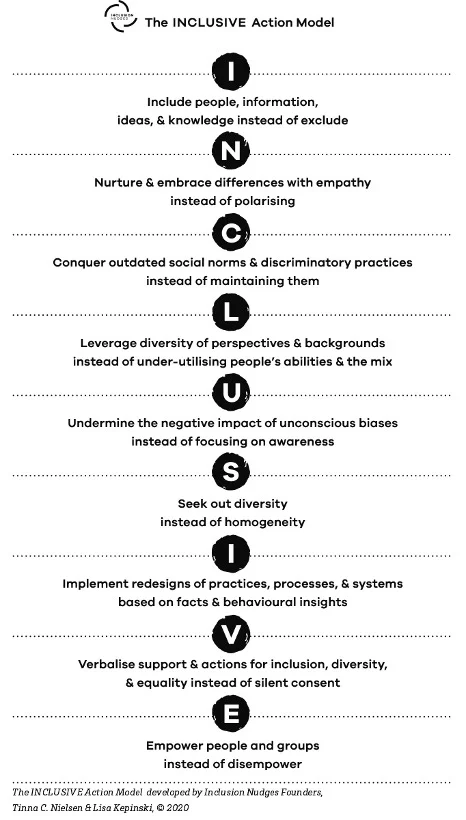
To counteract these pervasive issues, frameworks like the Inclusion Nudges global initiative advocate for a deliberate, inclusive approach to defining these terms. The aim is to establish "guiding stars" that align actions, behaviors, systems, and cultures towards genuine inclusivity. The proposed definitions are designed to be comprehensive, actionable, and universally applicable:
- Diversity: The Mix of All of Us. This definition broadens diversity beyond specific demographic characteristics to encompass all people, their demographic differences, backgrounds, multiple identities, unique experiences, perspectives, knowledge, abilities, and ideas. It explicitly rejects the notion that diversity refers only to "the minority," ensuring that everyone sees themselves as part of the "mix."
- Equity: The Fairness Frame for the Mix. Equity is defined as ensuring that all people have equal access to opportunities and fair treatment, actively working to eliminate discriminatory practices, systems, laws, policies, social norms, and cultural traditions. It emphasizes balancing power, correcting existing inequalities, and addressing behavioral patterns and processes that perpetuate disparities. The core intent is universal fairness.
- Belonging: I Feel Valued as a Part of the Mix. Belonging focuses on the individual’s lived experience within a setting—feeling welcomed, safe, seen, heard, and valued, and being able to be their full, authentic self without having to "cover" or downplay personal traits. It is presented as the natural outcome when diversity, equity, and inclusion are successfully implemented.
- Inclusion: Welcoming and Applying the Mix. Inclusion is centered on fostering the structures, systems, processes, culture, behaviors, and mindsets that embrace and respect all people and their diversity. It actively seeks out diverse knowledge, perspectives, information, and ideas, challenging excluding norms and stereotypes, encouraging openness, and empowering everyone to participate and contribute to their fullest. Inclusion is about actively "welcoming and applying the mix of all of us."
Translating Definitions into Tangible Actions and Culture Change
While articulating clear definitions is a vital first step, a purely rational understanding is insufficient to drive inclusive behaviors, which primarily originate from the unconscious mind. To bridge this gap, the most effective approach is to move beyond abstract definitions and engage "the people it’s about" in co-creating inclusive definitions of inclusive actions.
This involves inviting all stakeholders to identify and articulate the specific actions and behaviors they perceive as inclusive, inviting, respectful, empathetic, and that make them feel included, belonging, valued, growing, and empowered. This process not only yields context-specific definitions but also fosters immediate engagement and ownership, effectively onboarding individuals into the change initiative from its inception. It leverages the diversity within the group and grants people a stake in the outcome.
Once these inclusive behaviors are identified, the next crucial step is to make them highly visible and normalized. Rather than compiling them into dense documents or spreadsheets, these real-life, practical examples and personal stories should be shared creatively and consistently across communication channels. Displaying them prominently in physical spaces—factories, offices, meeting rooms, public areas—illustrates the multifaceted nature of inclusion in tangible ways. When communicating, focus on sharing one example at a time, emphasizing that these are actions taken by "peers and similar others." Leveraging social proof by stating, for instance, that "8 out of 10 of your colleagues are doing XX," can significantly influence behavior.
This strategic communication aims to achieve "inclusion without talking about inclusion" directly all the time. By shifting the perception from the word itself to the action, organizations can avoid buzzword fatigue. Phrases like "it’s how work gets done here" or "it’s how people experience being in the group" can replace the direct use of "inclusion," while framing desired outcomes like "we need the thinking from everyone for new solutions" or "we need our systems designed to enable our most objective decision making" clearly link DEBI to organizational success. This deliberate linguistic stewardship, championed by leadership, cultivates positive associations and normalizes inclusive behaviors as an intrinsic part of the organizational culture, rather than a standalone initiative.
The Broader Impact: Cultivating Resilient and Innovative Environments
The deliberate and inclusive framing of DEBI terminology has profound implications beyond simply facilitating change initiatives. Organizations that successfully navigate this linguistic challenge often experience significant benefits, including enhanced employee engagement, improved innovation, and greater talent attraction and retention. When employees feel truly valued, respected, and heard—the hallmarks of belonging and inclusion—they are more likely to contribute their full capabilities, leading to higher productivity and creativity. Studies consistently show that companies with clearly defined and communicated DEBI goals report higher employee satisfaction and reduced turnover rates among diverse groups.
Furthermore, a culture where diversity is genuinely welcomed and applied leads to more robust decision-making and problem-solving. By actively seeking and integrating a "mix of all of us"—diverse perspectives, knowledge, and experiences—organizations can better anticipate challenges, develop innovative solutions, and adapt to rapidly changing market conditions. This resource-oriented perception of diversity, with positive associations embedded in the collective mindset, transforms DEBI from a compliance exercise into a strategic imperative for resilience and competitive advantage.
On a broader societal level, the principles of clear, inclusive language for DEBI have a ripple effect. As organizations become more adept at fostering inclusive environments, they contribute to the normalization of these values in the wider community. This cultivates a more just, equitable, and cohesive society where individuals from all backgrounds can thrive. The challenge of translating definitions into reality for thousands of people, aligning their diverse understandings and reactions towards a common goal, is indeed complex. However, by adopting a strategic, behaviorally informed approach to language—like the Inclusion Nudges methodology—organizations and communities can move beyond the "headache of change" and collaboratively make inclusion the norm everywhere, for everyone.
Conclusion: A Call for Deliberate Language and Collective Action
The journey towards genuine Diversity, Equity, Belonging, and Inclusion is fundamentally a journey of human connection and collective action. At its heart lies the often-underestimated power of language. The words we choose, the definitions we embrace, and the stories we tell shape our collective reality. By moving away from abstract, potentially divisive language and towards clear, actionable, and inclusively co-created definitions, organizations can unlock unprecedented levels of engagement and foster cultures where every individual feels valued, heard, and empowered to contribute. This deliberate linguistic shift is not merely an academic exercise; it is a strategic imperative for building resilient, innovative, and equitable environments that truly reflect the richness of "the mix of all of us." It is an invitation to join forces, apply these transformative approaches, and collectively make inclusion the universal norm.