The rapid proliferation of artificial intelligence (AI) data centers across the United States has ignited a complex and urgent debate within Native American communities, raising critical questions about environmental sustainability, cultural integrity, and the very definition of digital sovereignty. As these massive facilities demand immense resources and reshape landscapes, Tribes find themselves at a crossroads, grappling with potential benefits versus the looming threat of what some are calling "digital colonization." This burgeoning issue has spurred intense discussions on how to regulate the data, infrastructure, and networks that are increasingly defining our digital future.
Data centers, the physical backbone of the internet, are indispensable for the modern digital economy. They house the servers, storage systems, and networking equipment necessary to process, store, and distribute the colossal amounts of data generated by everything from cloud computing to the rapidly advancing field of AI. With AI’s capabilities expanding exponentially, so too does the demand for data centers, creating a growing concern for their environmental footprint, particularly for Tribal Nations who often bear disproportionate environmental burdens.
Within Indian Country, a spectrum of opinions exists. Some envision data centers as potential engines for economic development and technological advancement for Tribes, offering opportunities for self-determination and control over their digital destinies. Others view their expansion with profound skepticism, fearing a repetition of historical patterns of exploitation and environmental degradation. The core of the debate centers on the immense energy consumption, water requirements, and the potential for cultural appropriation and intellectual property theft inherent in AI technologies, all of which disproportionately affect Indigenous communities.
The Insatiable Energy Demands of AI
The United States is currently a global hub for data centers, housing approximately one-third of the world’s facilities. These centers are power-hungry behemoths, requiring vast quantities of electricity to operate and significant amounts of water for cooling. On average, a single data center can consume up to 2 megawatt-hours (MWh) of electricity per hour – a figure comparable to the power needs of a small town. In 2023, data centers accounted for over 4% of the total electricity consumption in the U.S., with projections indicating this figure could surge to an alarming 12% by 2028.
This surge in demand has had a tangible impact on energy costs. A January 2026 report by Bloomberg News highlighted a staggering 267% increase in monthly electricity costs in areas surrounding AI data centers over the past five years. This escalation is largely attributed to the necessity of expanding existing regional power grids to accommodate these facilities. The costs of these upgrades are frequently passed on to consumers, including urban Native communities, many of whom already face economic challenges. According to the U.S. Census Bureau, over 70% of the Native American population resides in urban and suburban areas, where poverty rates are often higher.
To meet this escalating demand, utility companies are increasingly opting for new natural gas plants and delaying the retirement of existing fossil fuel infrastructure. In Virginia, a state that leads the nation in data center concentration, a major energy provider is constructing a 1,000-megawatt gas plant in Chesterfield County, simultaneously abandoning plans to transition to renewable energy sources. Global Energy Monitor data reveals that the U.S. is now responsible for nearly a quarter of the world’s new gas-powered energy development, with more than a third of this energy specifically earmarked for data centers.
Beyond fossil fuels, there is also a significant push toward nuclear energy to power these burgeoning data centers. Meta, the social media and technology giant, has emerged as one of the largest corporate purchasers of nuclear energy in U.S. history. The company has entered into multiple agreements with major energy providers to secure up to 6.6 gigawatts of nuclear power by 2035.
In a particularly controversial development, there are ongoing discussions about reopening the Three Mile Island (TMI) nuclear power plant in Pennsylvania. The defunct facility, which experienced a partial meltdown in 1979, currently stores a significant amount of high-level radioactive waste. If successful in its bid to restart operations by 2027, the site, ominously renamed the Crane Clean Energy Complex, would power Microsoft’s data centers. This proposed reactivation occurs in a region already grappling with the environmental and health consequences of a boom in natural gas fracking in the Marcellus and Utica Shales. Communities in this area have experienced documented increases in cancer rates, damage to local water supplies, and a devaluation of property values. Activists and residents have a history of opposing numerous pipelines, petrochemical plants, and related infrastructure projects in the region, which spans Central Appalachia and extends into New York, near Native reservations such as the Onondaga.
Despite claims from the U.S. Department of Energy’s Office of Nuclear Energy that radiation exposure from the TMI incident was limited and had no resulting fatalities or adverse health impacts, research from Penn State College of Medicine has suggested a correlation between the TMI accident and an increase in thyroid cancers. Researchers observed a shift in cancer mutations among individuals who lived near TMI at the time of the accident, indicating a potential link to radiation exposure. This scientific evidence lends credence to the concerns of those who argue that government and industry are downplaying the long-term consequences of nuclear energy, including its environmental ramifications.
The expansion of nuclear power also directly impacts Native lands, as the largest uranium deposits in the U.S. are located on reservations like the Navajo Nation. Globally, the most substantial uranium reserves are found on Indigenous lands in Australia. Communities in these areas often face significantly higher rates of cancer and have less access to healthcare resources compared to other populations within these colonizing nations.
The Military-Industrial Complex and AI
The expansion of AI data centers is also intertwined with the U.S. military-industrial complex. In December 2024, the University of Michigan announced an $850 million investment in partnership with Los Alamos National Laboratory, the institution historically responsible for developing nuclear weapons. University officials claim they are building the "biggest, baddest, fastest computer in the world," with over 90% of its computational power designated for Los Alamos National Laboratory’s classified warfare projects. U.S. Secretary of Energy Chris Wright has publicly referred to the nation’s build-up of AI infrastructure as the "Second Manhattan Project," a declaration that raises profound concerns about the potential for escalating global conflict, with local communities and taxpayers bearing the brunt of these developments. This echoes historical injustices, such as the 928 nuclear tests conducted by the U.S. government on Western Shoshone lands between 1951 and 1992.

Cheyenne Morgan, Coalitional Coordinator for Stop Data Colonialism, highlighted concerns regarding Project Clydesdale, a proposed data center project slated for the Cherokee Nation reservation near Owasso, Oklahoma. Morgan observed a significant discrepancy between public-facing information about the project and the details found in industry and government documents. Her advice to communities is to "Talk to your neighbors about data centers, find out what they know, file open records requests with your local, county, and state governments."
AI’s Thirst: Water Consumption and Scarcity
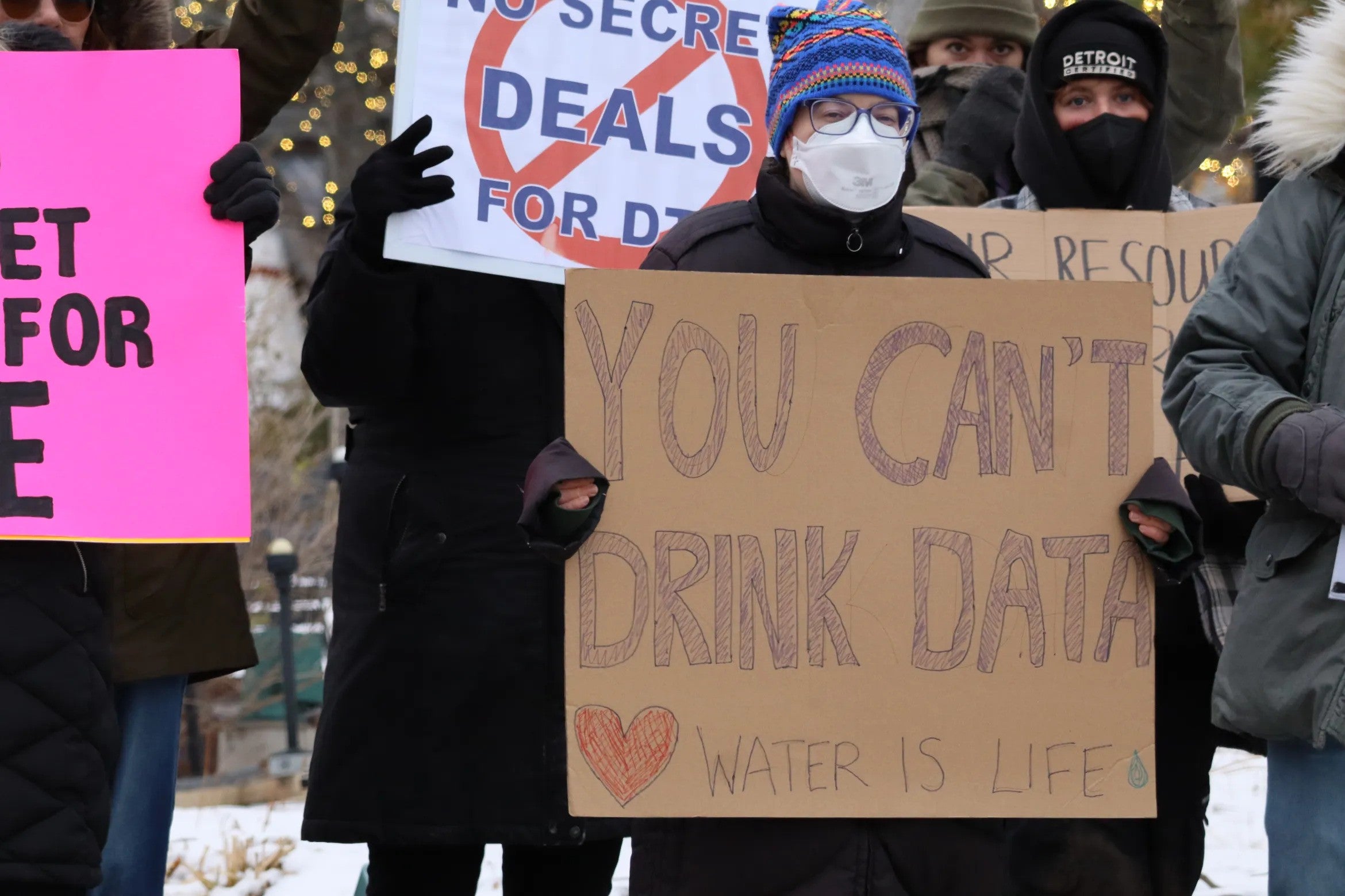
A July 2025 study by the University of Michigan underscored the critical role of water in cooling high-density data centers, noting that 22% of such facilities currently utilize water-based cooling systems. Many data centers consume over 10 million gallons of water annually, with some exceeding hundreds of millions of gallons per year. Google’s data center in Council Bluffs, Iowa, for instance, uses approximately 980 million gallons of water annually, a quantity equivalent to the yearly water consumption of over 4 million households.
This immense water usage stands in stark contrast to the persistent lack of clean water access on many reservations. According to the Navajo Water Project, as of 2019, 30% of residents on the Navajo Nation, the largest reservation in the U.S., lacked running water. The U.S. Supreme Court’s 2023 ruling that the federal government owes no "affirmative duty" to the Navajo Nation to secure water further exacerbates this critical issue.
However, sustainable alternatives exist. Matthew Rantanen, Director of Technology for the Southern California Tribal Chairman’s Association and a leading voice in Tribal digital sovereignty, suggests that data centers can be constructed with a significantly reduced environmental impact. He points to underground construction methods that leverage the Earth’s natural cooling and alternative airflow systems that can eliminate the need for water entirely. Rantanen notes that while concerns about water usage and power grids are paramount in Indian Country’s opposition to data centers, "the generative AI versions of data centers, such as those by Google, Facebook, Apple, Microsoft, and Amazon, these types of data centers use the most resources, but they don’t all have to be built this way."
Bridging the Digital Divide: Internet Access and Data Sovereignty
A persistent challenge for Tribes is the disparity in internet access, a gap that data centers, while ostensibly promoting digital advancement, do not necessarily bridge. A 2020 Government Accountability Office (GAO) report estimated that 18% of individuals living on Tribal lands lacked access to broadband service, compared to just 4% in non-Tribal areas. Broadband access is defined as speeds of 25 Mbps download and 3 Mbps upload or greater, excluding satellite service.
The GAO has also found that the Federal Communications Commission (FCC) has potentially overreported broadband availability on Tribal lands, as the data it relies upon is self-reported by broadband carriers. Rantanen explains that carriers may count an entire census block as covered if they can provide service to just one household, a practice he states, "is not coverage, affordability, or reality."

While the Executive Office of the President initiated efforts in 2021 to coordinate federal Tribal broadband initiatives, the GAO has reported that these efforts lack a cohesive national strategy with clearly defined roles, goals, and performance measures. The American Broadband Initiative (ABI), an intergovernmental effort, has been criticized for not having a framework specifically designed to address the unique barriers faced by Tribal communities.
Many Indigenous communities are increasingly vocal about the risks of cultural appropriation and data theft associated with AI. In response, some Tribes are exploring the development of their own data centers. Rantanen suggests that these smaller, localized facilities can operate with minimal power consumption, enabling Tribes to exert greater control over their data. This approach could prevent sensitive information, such as enrollment records, from being stored on external cloud servers, thus mitigating risks of data theft, unauthorized use in AI training, and potential surveillance by federal agencies like ICE or the FBI.
The establishment of Tribal-controlled data centers holds the potential not only to enhance the security and privacy of Tribal members but also to contribute to environmental protection. Rantanen cautions, however, that "making big blanket statements about data centers can harm some of those smaller, very effective uses of the term." He emphasizes the critical need for Tribes to develop robust policies concerning data sovereignty and AI, encompassing data storage and transmission protocols, to ensure best practices are implemented for their respective communities. The conversation surrounding AI data centers on Native lands is far from over, demanding careful consideration of technological advancement alongside the imperative to protect cultural heritage, environmental resources, and the fundamental right to self-determination.