Under the relentless pressure to process vast quantities of information rapidly, the human cognitive system frequently diverts our thinking from deeply held intentions of open-mindedness, respect, and inclusion. This often occurs due to the pervasive influence of our automatic, intuitive "System 1" thinking, which governs the vast majority of our daily mental operations. Operating on autopilot, System 1 can lead to swift, often faulty judgments rooted in immediate feelings, superficial observations, past experiences, ingrained stereotypes, prevailing societal norms, and deeply held beliefs assimilated from our upbringing. However, a growing body of behavioral science research suggests that conscious reframing – deliberately altering what we perceive and how we articulate it – offers a potent mechanism to recalibrate these mental shortcuts, aligning them more closely with our aspirations for genuine self-acceptance and respectful interactions with others. This strategic intervention, often termed "inclusion nudges," represents a critical frontier in fostering environments of true diversity, equity, and inclusion (DEI).
The Subtlety of System 1: How Unconscious Bias Shapes Our Reality
The concept of System 1 and System 2 thinking, popularized by Nobel laureate Daniel Kahneman and his collaborator Amos Tversky, provides a foundational understanding of how our minds operate. System 1 is fast, intuitive, emotional, and largely unconscious, responsible for immediate reactions and decisions. System 2, by contrast, is slow, deliberative, logical, and conscious, engaged in complex problem-solving and reasoned judgment. While System 1 is incredibly efficient, allowing us to navigate the world without constant mental effort, its reliance on heuristics—mental shortcuts—makes it susceptible to a wide array of cognitive biases. These biases, often unconscious, can profoundly impact our perceptions, decisions, and interactions, frequently undermining our conscious intentions for fairness and equity.
Common cognitive biases that derail inclusive intentions include:
- Affinity Bias: A tendency to favor people who are similar to us, leading to exclusion of those who are different.
- Confirmation Bias: The inclination to seek out, interpret, and remember information in a way that confirms one’s pre-existing beliefs or hypotheses.
- Halo Effect: The tendency for an impression created in one area to influence opinion in another area. For instance, if someone is perceived as attractive, they might also be unconsciously judged as more intelligent or trustworthy.
- Availability Heuristic: Overestimating the likelihood of events based on their availability in memory, often leading to reliance on readily recalled but potentially unrepresentative examples.
- Stereotyping: Attributing characteristics to individuals based on their membership in a group, often oversimplifying and leading to inaccurate judgments.
The cumulative effect of these biases is not merely theoretical; it has tangible, measurable consequences in society and organizations. Research consistently demonstrates how unconscious biases contribute to disparities in hiring, promotions, performance evaluations, and even everyday social interactions. For example, studies have shown that identical résumés submitted with traditionally "ethnic" names receive significantly fewer callbacks than those with "white-sounding" names. Gender bias in performance reviews often sees women described with communal terms (e.g., "supportive," "helpful") while men are praised with agentic terms (e.g., "leader," "assertive"), impacting career progression. A 2019 report by the World Economic Forum highlighted that achieving gender parity could take over 100 years at the current rate, partly due to entrenched biases. Understanding these systemic impacts underscores the urgency of developing effective interventions.
Societal Blueprints: The Formation of Normative Perceptions
Throughout our lives, we are immersed in a constant, often imperceptible, process of internalizing societal messages about what constitutes "good," "attractive," "smart," "trustworthy," "a leader," "friendly," "caring," "strong," or "talented." These normative patterns, deeply ingrained through myriad social channels—family, friends, educators, media, cultural influencers, reward systems, and organizational structures—powerfully reinforce snap mental associations. From the narratives we consume in entertainment to the subtle cues in advertising and the explicit lessons in schooling, these perceptions shape not only our views of others but also our self-concept and the design of the systems we create and inhabit.
The pervasive nature of these reinforced perceptions can have profoundly discriminatory impacts, leading to the systemic exclusion of individuals who do not conform to dominant, often narrow, normative patterns. This motivates considerable effort in the field of diversity, equity, and inclusion, aiming to dismantle these barriers.
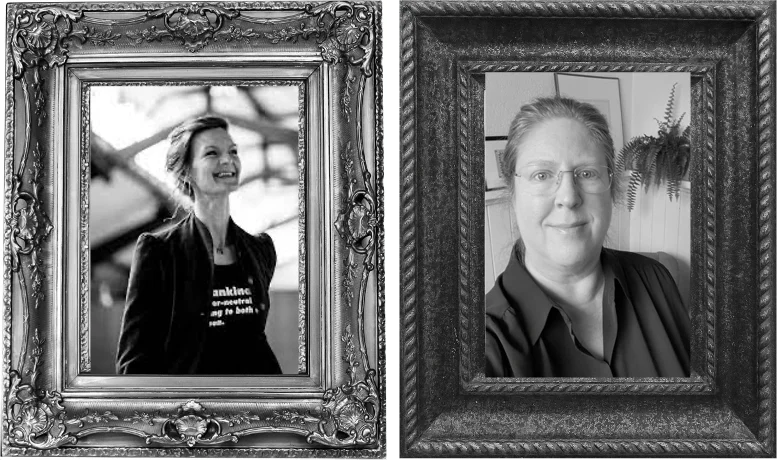
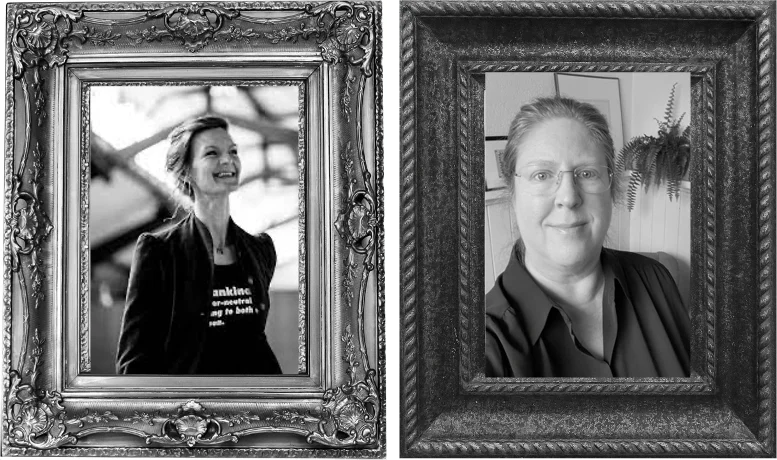
Beyond external perceptions, these normative patterns equally affect our internal dialogue. Many individuals internalize negative associations about themselves, struggling to align their self-perception with their rational self-beliefs. A contemporary manifestation of this internal struggle has emerged with the widespread adoption of video-based online work, particularly during the recent global lockdowns. This phenomenon, dubbed "Zoom dysmorphia," describes a negative fixation on one’s appearance, often exacerbated by constant self-viewing on screens and the idealized images prevalent online. This unconscious self-judgment, frequently at odds with one’s rationally held positive self-beliefs, highlights the deep-seated nature of these internalized norms. Individuals like Tinna and Lisa, the pioneers behind Inclusion Nudges, have openly shared their own experiences of feeling like "outliers" throughout their lives for various reasons, emphasizing the personal resonance of this challenge.
Pioneering Personal Change: The "That’s a Human…" Initiative
As behavioral change designers, Tinna C. F. Kepinski and Lisa Kepinski, co-founders of Inclusion Nudges, frequently apply their methodologies to themselves to interrupt and reshape internalized negative messages, biases, and exclusionary behaviors. This personal commitment to behavioral science led to the development of a specific reframing design they call "That’s a human…"
Lisa’s personal journey with this experiment began during the extended periods of lockdown, offering an opportune moment to confront negative self-perceptions regarding her appearance. She recounts a common habit of taking quick, functional glances in the mirror, only to find negative thoughts creeping in when her gaze lingered "too long." This internal conflict, a "waste of energy between the critical and the confident parts" of herself, spurred her to seek a deliberate redirection of that mental energy.
Inspired by an existing Inclusion Nudge example, "Re-Frame ‘Migrant’ to ‘Human’," which encourages the active reframing of dehumanizing labels in social discourse, Lisa adapted the principle to self-perception. In the original "Migrant to Human" design, members of the South African non-profit organization PASSOP intentionally comment on social media posts using terms like "refugee crisis" or "migrant crisis" by interjecting with "human crisis." This linguistic shift aims to refocus perspectives on the inherent humanity of individuals, emphasizing that "to see and treat people as humans" often begins with the language we use.
Applying this insight, Lisa developed a personal reframing exercise:
- Conscious Mirror Gazing: Instead of quick glances, she would intentionally look at her face or body in the mirror for a full three seconds.
- Immediate Verbalization: As soon as a negative thought about her appearance arose, she would immediately say to herself, "That’s a human face" or "That’s a human body."
- Mindful Breath: She would then take a deep breath, consciously letting go of the judgment.
- Positive Affirmation (Optional but Recommended): Following the reframe, she would sometimes add a positive affirmation, such as "I am a beautiful human being" or "I am a strong human being."
This practice quickly evolved into a regular habit, extending beyond self-perception to observations of others. Lisa found herself spontaneously thinking, "That’s a human face" or "That’s a human body" when encountering other people. This internal statement served as an interruptive cue, prompting her to reflect on any preceding unconscious judgments. The dissonance between her inclusive intentions and her automatic thoughts, once recognized, became a powerful motivator to continue practicing this reframing technique. As behavioral science posits, bias may never be entirely eradicated, but effective designs can consistently interrupt its influence, create space for more conscious thought, and literally alter how we perceive the world.
Tinna was profoundly inspired by Lisa’s experiment and adopted a similar practice, using the phrase "There’s a human being" when observing people in public spaces. She recognized her own tendency towards judgmental thoughts about others’ appearances—e.g., "she is skinny," "he is overweight," "ugly shoes." This self-awareness, coupled with a desire to change, led her to embrace the reframing technique. The default statement "there is a human being" effectively interrupted her judgmental thought patterns, replacing negative energy with a more positive internal state. A notable personal outcome for Tinna, who is 185 cm tall, was a reduced feeling of being an "outlier," reinforcing the understanding that "I am also just a human being among others."
The Science of Reframing: Behavioral Insights for Inclusivity
The absurdity of allowing judgments based on body shape, appearance, or voice to dominate our self-perception, despite a strong sense of self-worth, accomplishment, and value, underscores the powerful grip of unconscious bias. The challenge in mitigating bias lies in the fact that it cannot simply be wished away; it "creeps in" despite our best intentions. This is precisely why behavioral insights are crucial for designing interventions that reshape harmful mental messages. Framing Perceptions Inclusion Nudges offer an effective methodology for this.
As defined in "The Inclusion Nudges Guidebook" by Kepinski & Nielsen, "Framing Perceptions Inclusion Nudges are designs that alter perceptions to help the brain perceive issues related to inclusion, diversity, equality in a resource discourse. The designs also prime specific associations and counter stereotypes. Altering the framing of an issue or message and changing the anchor of a thought process helps to promote inclusive behaviour because it influences the reactions in the automatic, stereotyped, and unconscious mind."
This approach leverages fundamental principles of cognitive psychology, particularly cognitive restructuring and priming. Cognitive restructuring involves identifying and challenging maladaptive thoughts, replacing them with more balanced and realistic ones. Priming, on the other hand, subtly influences subsequent thoughts and behaviors by exposing individuals to certain stimuli. By consciously reframing thoughts and language, individuals can effectively "prime" themselves for more inclusive thinking, interrupting the automatic, often biased, pathways in System 1.
The efficacy of such simple yet powerful interventions is supported by extensive research in behavioral economics and social psychology. Studies on mindfulness and cognitive-behavioral therapies (CBT) demonstrate that consistent practice in observing and reframing thoughts can lead to significant changes in emotional regulation and self-perception. The "That’s a human…" experiment exemplifies a micro-intervention that, when consistently applied, can shift deeply ingrained cognitive patterns.
Beyond personal reframing, Tinna and Lisa consistently employ other Framing Perceptions designs in their professional work. A notable example is the "Ask Flip Questions to Change Your Perceptions in the Moment" Inclusion Nudge, detailed across their guidebooks. This design encourages individuals to deliberately challenge their initial assumptions by asking questions that force them to consider alternative perspectives, thereby expanding thinking, information gathering, and decision-making processes. The widespread positive feedback on this particular nudge highlights its significant impact in fostering more inclusive outcomes in daily work and life.
Expert Perspectives and Organizational Adoption
The integration of behavioral science into diversity, equity, and inclusion strategies has gained significant traction across sectors. Behavioral economists and organizational psychologists consistently advocate for "nudge"-based interventions, recognizing that traditional diversity training, while valuable, often falls short in changing deeply ingrained unconscious biases. Dr. Iris Bohnet, author of "What Works: Gender Equality by Design," emphasizes the importance of de-biasing organizations through systemic changes and behavioral design rather than solely focusing on de-biasing individuals, acknowledging the persistent nature of implicit bias.
Many forward-thinking organizations are now implementing behavioral insights to create more inclusive workplaces. For instance, companies are redesigning job descriptions to remove gender-coded language, implementing blind résumé reviews to mitigate name-based biases, and structuring interview processes to standardize questions and scoring, thereby reducing the influence of affinity bias. These initiatives are not merely about compliance; they are increasingly recognized as strategic imperatives. A 2018 McKinsey & Company report, "Delivering Through Diversity," found that companies in the top quartile for gender diversity on executive teams were 21% more likely to outperform on profitability, and those in the top quartile for ethnic and cultural diversity were 33% more likely to outperform. This data underscores the direct link between effective DEI strategies, often informed by behavioral science, and tangible business benefits, including enhanced innovation, employee retention, and market performance.
The "That’s a human…" experiment, while seemingly simple, resonates with these broader efforts by providing individuals with a practical, actionable tool to begin their own internal bias mitigation journey. It empowers individuals to take ownership of their cognitive processes, fostering a more self-aware and ultimately more inclusive mindset.
Beyond the Individual: Systemic Implications of Reframing
While individual reframing exercises like "That’s a human…" might seem small in isolation, their cumulative effect can contribute significantly to broader cultural and systemic change. When individuals consistently challenge their own biases and reshape their perceptions, it fosters a more empathetic and understanding interpersonal environment. This individual shift, propagated across a community or organization, can gradually erode the foundations of systemic discrimination.
The long-term vision is a society where the default mode of interaction is one of respect and inclusion, where individuals are seen and valued for their inherent humanity rather than being categorized and judged by superficial characteristics or pre-conceived notions. This requires continuous, conscious effort, as bias, in its various forms, remains an enduring challenge. However, by leveraging the insights of behavioral science and empowering individuals with practical tools like reframing, we can steadily build more equitable and inclusive societies. The journey towards true inclusion is ongoing, demanding vigilance and a willingness to consistently question and adjust our automatic responses.
Call to Action and Further Resources
The personal experiments shared by Tinna and Lisa offer a compelling invitation to explore the power of reframing. Readers are encouraged to try the "That’s a human…" practice or other similar reframing techniques to lessen the influence of negative biases and stereotypes in their own lives.
To delve deeper into the methodologies and designs discussed, various resources are available:
- The Inclusion Nudges Guidebook: Provides comprehensive insights into behavioral designs for inclusion.
- Re-Frame ‘Migrant’ to ‘Human’: A specific Inclusion Nudge design detailed in The Inclusion Nudges Guidebook.
- Images Framing Immigrants as One of Us: Another powerful framing design found in The Inclusion Nudges Guidebook and "Inclusion Nudges for Motivating Allies."
- Interrupt Gender Caregiver Stereotypes with Images: A design to challenge entrenched stereotypes, also in The Inclusion Nudges Guidebook and "Inclusion Nudges for Motivating Allies."
- Ask Flip Questions to Change Your Perceptions in the Moment: A widely impactful Framing Perceptions design described across all Inclusion Nudges Action Guide books.
Further insights into reframing designs can be found in related articles such as "Reframe Language on How We Work Today," "Diversity Is About People, Not Flowers, Candy, or Pencils," and "Don’t Set Targets for Women – But for Max 70% of the Same Gender."
The authors are keen to hear from individuals who have experimented with reframing to mitigate negative biases and stereotypes. Feedback and experiences can be shared via email at [email protected], contributing to a growing understanding of effective behavioral interventions for a more inclusive world.