The Narrative Framework of Intentional Celibacy
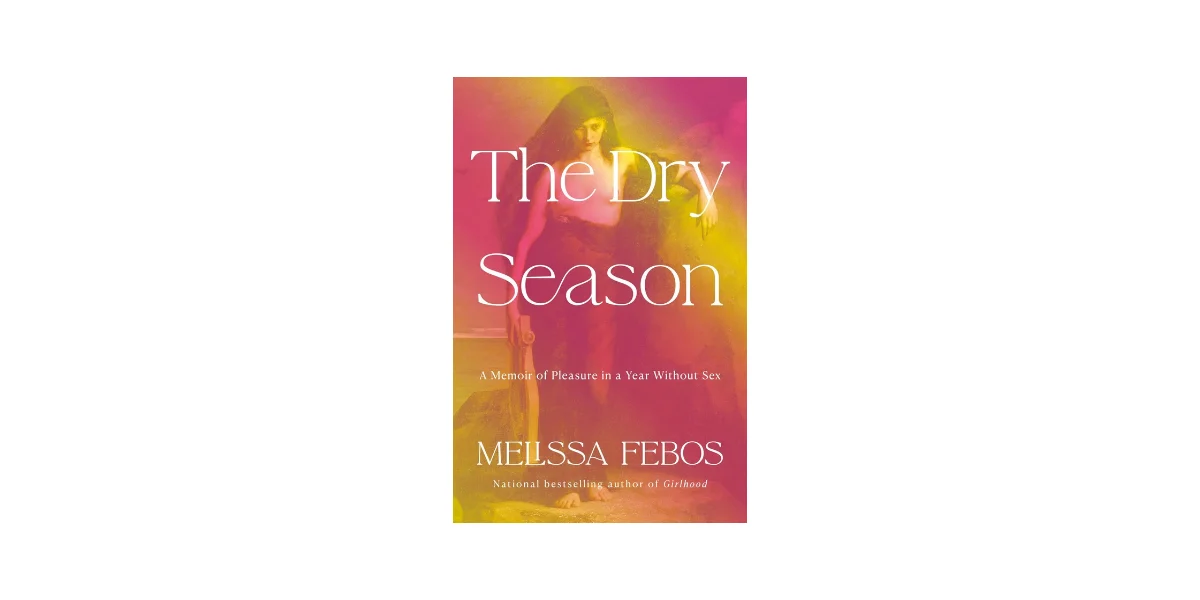
The central premise of the memoir revolves around Febos’s decision to practice celibacy following the conclusion of a tumultuous two-year relationship. This decision was not intended as a permanent lifestyle change but as a "reset" for a behavioral pattern she identifies as "daisy-chaining"—the practice of moving immediately from one committed monogamous relationship to the next without periods of solitude. Febos notes that she had maintained this cycle since the age of fifteen, a trajectory common in contemporary social structures that prioritize the nuclear family and romantic partnership as the primary indicators of adult success.
What began as a three-month commitment eventually extended into a full year. During this timeframe, Febos reports a significant shift in her relationship with her own body and her creative faculties. By removing the "funnel of romantic obsession," she describes a redistribution of energy toward other facets of life, including teaching, writing, and non-romantic friendships. This narrative arc provides a case study in how the cessation of romantic labor can lead to an increase in professional efficacy and emotional stability.
Historical and Scholarly Context of the "Chosen Teacher"
A critical component of the memoir is Febos’s research into the historical precedents of celibacy among women. She situates her personal experience within a broader lineage of "desert mothers," saints, warriors, and artists who utilized celibacy as a tool for self-ownership and the acquisition of social or spiritual power. This historical context reframes celibacy not as a lack or a void, but as an active, political choice.
Historically, for many women, the rejection of marriage and domesticity was the only available path to intellectual pursuit or religious leadership. By invoking these "ancestors," Febos connects modern psychological "people-pleasing" to ancient struggles for autonomy. This scholarly approach elevates the memoir from a personal account to a broader analysis of how gendered expectations have historically constrained the time and energy of women. The book argues that "taking the work of freedom" is often synonymous with the ability to say no to the societal demand for romantic availability.
The Performance of Service and Emotional Labor
Febos draws a compelling parallel between her past professional experiences in the service industry—specifically as a sex worker and a server—and the way individuals are conditioned to perform for the benefit of others. In the journalistic tradition of analyzing labor, the memoir examines how tipping cultures and service-oriented roles necessitate a form of "seduction" or "performance" to ensure financial stability and physical safety.
This "other kind of work," as Febos terms it, often bleeds into personal relationships. The expectation for women and queer individuals to perform happiness or availability is a recurring theme. The memoir posits that the inability to set boundaries in a professional service context often mirrors an inability to set boundaries in romantic ones. By practicing celibacy, Febos highlights the possibility of exiting this performance entirely, allowing for a more authentic engagement with the world that is not predicated on the "earn" of a tip or the validation of a partner.
Statistical Trends in Modern Singleness and Dating Fatigue
The themes explored in the memoir are reflected in current sociological data. According to the General Social Survey (GSS) and research conducted by the Pew Research Center, the number of American adults who are unpartnered has seen a steady increase over the last decade. Furthermore, "dating app fatigue" has become a documented phenomenon, with a 2023 study indicating that nearly half of all users feel overwhelmed or frustrated by the process of digital matchmaking.
Data suggests that younger generations, particularly Millennials and Gen Z, are increasingly prioritizing career stability and personal mental health over traditional relationship milestones. The "sex recession"—a term popularized by social scientists to describe the decline in sexual frequency among young adults—is often attributed to a variety of factors, including economic stress, increased digital consumption, and a higher value placed on "intentional singlehood." Febos’s work provides a narrative backbone to these statistics, suggesting that the decline in partnership may, for some, be a necessary response to the exhaustion of modern dating.
Impact on Professional and Educational Environments
The implications of the "dry season" extend into the professional realm, particularly within the field of education. The memoir recounts how the author found more "consistent energy" for her students during her period of celibacy. This sentiment is echoed by many professionals in high-intensity fields like teaching, where emotional labor is a core requirement of the job.
When romantic obsession is siphoned off, the resulting surplus of energy can be redistributed into communal and professional investments. For educators, this might manifest as increased bandwidth for student mentorship, curriculum development, and extracurricular involvement. The narrative suggests that the "quiet studio apartment" and the "4 a.m. writing sessions" are not signs of isolation, but are instead the infrastructure of a highly productive and fulfilled professional life.
Societal Reactions and the "Bell Jar" of Prioritization
Public and critical reaction to the memoir has highlighted a tension in contemporary society: the difficulty of feeling "fulfilled" without a romantic partner in a world that heavily prioritizes the nuclear family. Febos describes this as living under a "bell jar" of prioritization. The societal assumption of a heterosexual marriage and children remains a dominant narrative, often beginning in childhood and continuing through adulthood under the pressures of capitalism.
Critics have noted that Febos’s work challenges the "people-pleasing" inherent in these narratives. By admitting to past behaviors—such as being disingenuous about happiness or losing interest in people overnight—Febos provides a candid look at the collateral damage caused by pursuing relationships for the sake of societal validation rather than genuine readiness. The book suggests that the "spectacular thing" is not necessarily finding a partner, but building a life that matches one’s own priorities, whether that includes a partner or not.
Conclusion and Broader Implications
The memoir concludes with a reflection on the author’s eventual meeting with her wife, poet Donika Kelly. However, the significance of this meeting is predicated on the fact that it occurred only after the "dry season" had concluded and Febos was "ready." This distinction is vital; it shifts the focus from the relationship as a goal to the relationship as a choice made by a whole and self-sufficient individual.
The broader implications of The Dry Season suggest a shift in how we might view periods of solitude. Rather than being seen as "lonely" or "transitional," these periods can be viewed as essential phases of professional and personal development. The work argues for a world where a relationship is not a requirement for a "beautiful, full life," but is instead one of many possible investments of a person’s energy. As the book gains traction in its paperback release, it continues to serve as a manual for those seeking to redefine their understanding of love, labor, and the power of the word "no."