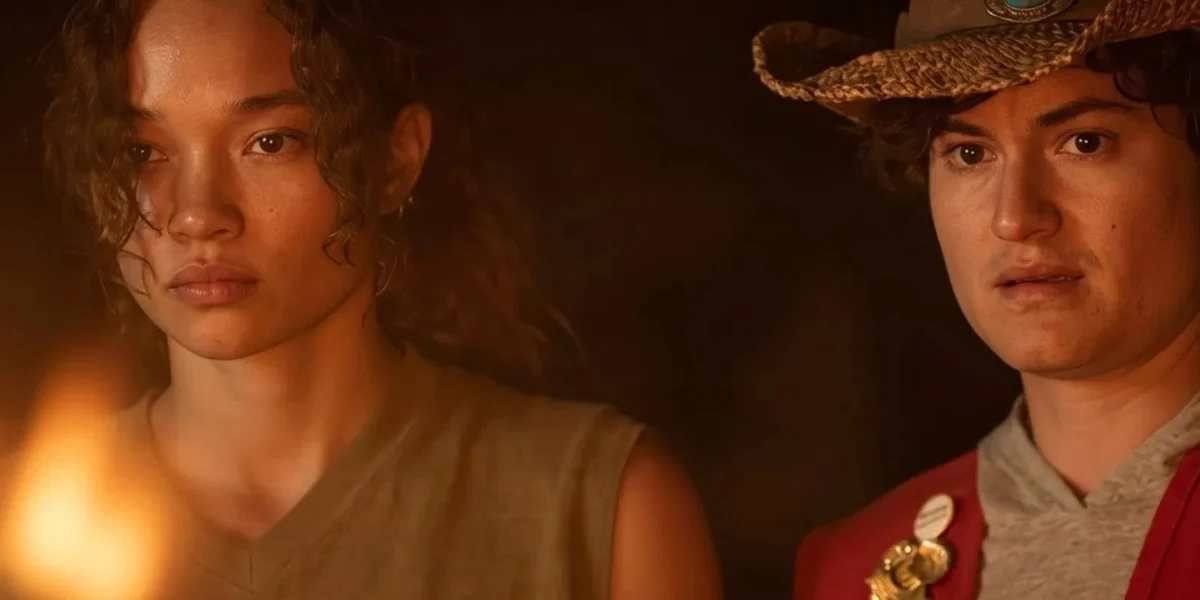
Millicent Hailes makes her feature directorial debut with the film Perfect, a production that attempts to navigate the complex intersection of speculative post-apocalyptic fiction and intimate romantic melodrama. Starring Ashley Moore and Julia Fox, the film introduces a narrative set against the backdrop of an environmental collapse, specifically a world grappling with severe water contamination and scarcity. While the premise suggests a high-stakes survivalist drama, the narrative trajectory shifts significantly toward a character-driven exploration of a burgeoning, albeit volatile, relationship between two women. The film, co-written by Hailes and Kendra Miller, utilizes its science-fiction elements as a framework for a story that ultimately focuses on the psychological and emotional dynamics of its central protagonists.
Production Background and Cinematic Context
The release of Perfect comes at a time when independent cinema frequently experiments with genre-blending to explore social and interpersonal themes. Millicent Hailes, previously recognized for her work in music videos and visual arts, brings a distinct aesthetic sensibility to the project. Her transition to feature filmmaking follows a trend of visual-first directors moving into long-form storytelling. The casting of Julia Fox and Ashley Moore further highlights the film’s positioning within the contemporary indie landscape.
Julia Fox, who gained widespread recognition for her breakout performance in the 2019 film Uncut Gems, has since become a prominent figure in both the fashion and film industries. Her involvement in Perfect marks a continued effort to diversify her filmography with roles that challenge traditional archetypes. Ashley Moore, known for her roles in television series such as I Know What You Did Last Summer, takes on the lead role of Kai, providing the emotional anchor for the film’s narrative. Additionally, the inclusion of Lío Mehiel, who received critical acclaim for the film Mutt, adds a layer of depth to the supporting cast.
Narrative Chronology and Plot Development
The story follows Kai (Ashley Moore), a cold and emotionally distant vagrant who navigates a desolate landscape in a car that serves as her primary residence. The world is defined by a catastrophic water crisis where the majority of natural resources have been contaminated, leaving the population in a state of perpetual survival. Kai’s journey brings her to a settlement known as Breakwater, a pivotal location that serves as the setting for the film’s primary interpersonal developments.
In Breakwater, Kai encounters Sunny (Lío Mehiel), a kind-hearted gas station clerk who offers a sense of normalcy and warmth amidst the surrounding desolation. Through Sunny, Kai is introduced to the local community, but her focus is soon diverted by the arrival of Mallory (Julia Fox). Mallory is depicted as an enigmatic and persuasive pregnant woman who resides in a series of resort cabins. The initial encounter between Kai and Mallory establishes a tension that quickly evolves into a central plot point.
The narrative reaches a turning point when Kai discovers her car has been vandalized and rendered inoperable. This event strands her in Breakwater and forces a closer reliance on Mallory. The two enter into a passionate romance, and Kai begins to integrate herself into Mallory’s life, assisting with the maintenance of the resort. However, as the relationship progresses, the initial romantic fervor is tested by the emergence of secrets from Mallory’s past. These revelations disrupt the stability Kai sought to find, leading to a climax that explores the fragility of trust in a world already stripped of its structural foundations.
Character Analysis and Performance Evaluation
The performances in Perfect have been noted for their ability to convey complex emotional states within a minimalist script. Ashley Moore’s portrayal of Kai focuses on the character’s internal struggle between self-preservation and the desire for human connection. Kai’s initial stoicism is gradually peeled back as she becomes more involved with Mallory, though the character remains defined by her history of heartbreak and displacement.
Julia Fox’s portrayal of Mallory is characterized by a "sensual whimsy" and a commanding presence. The character is written as someone who is accustomed to getting what she wants, using her charisma to navigate the challenges of the post-apocalyptic environment. Fox’s performance captures the duality of Mallory—a woman who is both a source of comfort and a catalyst for conflict.
Lío Mehiel’s performance as Sunny provides a naturalistic contrast to the heightened drama of the central pair. Critics have observed that Mehiel brings a genuine emotional weight to the role, serving as a surrogate for the audience’s need for stability and kindness. The interactions between Kai and Sunny represent the potential for a different kind of life, one based on mutual respect and community rather than the intense, often toxic, attraction found in Kai’s relationship with Mallory.
Genre Analysis: From Sci-Fi to Melodrama
A significant point of discussion regarding Perfect is its handling of the post-apocalyptic genre. Traditionally, films set in a world of environmental collapse—such as Mad Max or Children of Men—utilize the setting to drive the plot through external conflict and survivalist stakes. In Perfect, the "water-endangered" world serves primarily as a backdrop for the first act. Once the relationship between Kai and Mallory is established, the survivalist elements are largely sidelined in favor of "slice-of-life" melodrama.
This shift in focus has led to observations that the film follows the tropes of generic indie romantic dramas. The use of frequent sex scenes, often set to a soundtrack featuring artists like FKA Twigs, serves as the primary method of depicting the bond between the leads. However, some analysts argue that the script lacks the substantive dialogue necessary to explore the deeper psychological motivations behind the characters’ actions. The question of what connects Kai and Mallory beyond physical intimacy remains a central ambiguity of the film.
The "toxic lesbian" trope, a recurring theme in independent queer cinema, is also present in Perfect. This trope typically involves a relationship characterized by manipulation, secrets, and emotional volatility. While the film engages with these elements, it has been noted for taking a relatively safe approach to the narrative, leading to a predictable progression of events regarding Mallory’s "mysterious secret."
Technical Execution and Visual Style
As a director with a background in visual media, Millicent Hailes emphasizes the aesthetic quality of the film. The cinematography captures the stark beauty of the deserted roads and the contrast of the resort cabins against the barren landscape. The visual storytelling often takes precedence over narrative exposition, a choice that aligns with the film’s focus on atmosphere and mood.
The auditory landscape of the film is heavily influenced by contemporary music, with "needle drops" serving to heighten the emotional intensity of specific scenes. The reliance on music and visual cues to convey character development is a hallmark of Hailes’ style, though it has resulted in critiques regarding the film’s pacing and the "flatness" of the written script. The collaboration with Kendra Miller on the screenplay sought to balance these visual elements with a structured narrative, though the final product leans heavily toward the former.
Broader Implications and Industry Trends
The production and reception of Perfect reflect broader trends in the film industry, particularly concerning the representation of LGBTQ+ relationships and the evolution of the "eco-thriller." By casting high-profile figures like Julia Fox, the film attracts a wider audience to a niche genre, potentially opening doors for more diverse storytelling in the future.
Furthermore, the film’s exploration of a water crisis mirrors real-world concerns regarding climate change and resource scarcity. While Perfect uses these themes as a secondary layer, its existence contributes to a growing body of work that utilizes speculative fiction to comment on contemporary anxieties. However, the film’s decision to pivot away from these themes may also suggest a challenge in balancing grand environmental narratives with personal, character-driven stories.
In terms of representation, the inclusion of Lío Mehiel is a significant step for transmasculine visibility in film. Following Mehiel’s success at the Sundance Film Festival, their role in Perfect reinforces the demand for authentic and varied portrayals of gender and identity in mainstream and independent cinema alike.
Conclusion and Critical Consensus
Perfect stands as a visually evocative debut for Millicent Hailes, showcasing the talents of its primary cast while highlighting the difficulties of genre integration. The film’s transition from a high-concept sci-fi premise to a localized romantic drama offers a unique, if sometimes polarizing, viewing experience. While the chemistry between Ashley Moore and Julia Fox provides a compelling center, the narrative’s reliance on established tropes and its abandonment of its environmental stakes have been identified as areas where the film struggles to achieve its full potential.
Ultimately, Perfect serves as a case study in the current state of independent filmmaking, where visual style and star power often intersect with experimental narrative structures. As the industry continues to navigate the demand for both spectacle and intimacy, films like Perfect provide valuable insight into the creative choices and challenges faced by new directors in the modern cinematic landscape. The film remains a notable entry in the year’s independent releases, particularly for those interested in the evolution of Julia Fox’s career and the ongoing development of queer narratives in film.