The creative architects behind the critically acclaimed and long-running animated series Big Mouth have officially transitioned from the tumultuous halls of middle school to the unpredictable wilderness of adult dating with their latest venture, Mating Season. Developed by the established quartet of Nick Kroll, Andrew Goldberg, Mark Levin, and Jennifer Flackett, the series marks a significant pivot in thematic focus. While their previous work meticulously dissected the biological and emotional upheaval of puberty through the lens of "Hormone Monsters," Mating Season utilizes anthropomorphic animals to explore the complexities, neuroses, and often abrasive realities of modern companionship. This shift represents a maturation of the creators’ signature style, blending high-concept absurdity with a grounded, often uncomfortable examination of human—or in this case, animal—vulnerability.
Conceptual Framework and Narrative Premise
Mating Season is positioned as a hybrid of genres, described by critics and industry observers as a cross between the ensemble-driven domesticity of Friends, the romantic idealism of Nora Ephron’s filmography, and the wilderness-based comedy of Open Season. However, this mixture is filtered through the "certified freak" aesthetic that has become the hallmark of the Kroll-Goldberg partnership. The series follows a group of four forest-dwelling best friends who are navigating the "suburban-like" dynamics of their woodland environment while contending with the standard milestones of adult life: breakups, career stagnation, and the pursuit of intimacy.
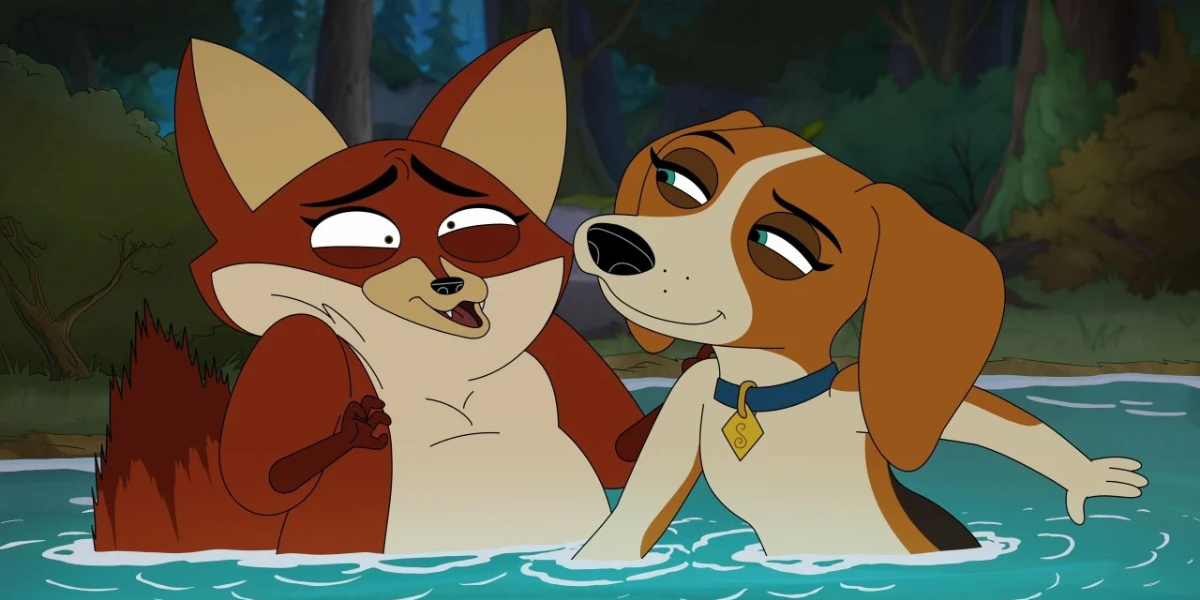
The narrative center of the series is Josh, voiced by Zach Woods, a bear whose life is upended when his long-term partner ends their relationship. This catalyst forces Josh to move back into his parental den, a metaphor for the delayed adulthood often experienced by the millennial demographic. Contrasting Josh’s neuroticism is Ray, voiced by Nick Kroll, a self-absorbed, sneaker-wearing raccoon whose primary motivation is primal gratification. The female perspectives are provided by Fawn, a sarcastic deer voiced by June Diane Raphael, who embodies the sharp-tongued, disillusioned archetype often found in contemporary dramedies, and Penelope, an endearingly awkward red fox voiced by Sabrina Jalees.
Chronological Context and the Evolution of the "Kroll-verse"
To understand the emergence of Mating Season, it is necessary to examine the timeline of its creators’ success within the adult animation sector. The journey began in September 2017 with the premiere of Big Mouth on Netflix. The show quickly became a cornerstone of the platform’s adult animation strategy, praised for its "radical honesty" regarding sexuality and mental health.
In 2022, the team expanded their narrative universe with Human Resources, a workplace comedy spin-off that shifted the focus from the children to the creatures (Logic Rocks, Lovebugs, and Shame Wizards) that manage human emotions. By the time Big Mouth was renewed for its eighth and final season—making it the longest-running original scripted series in Netflix history—the creative team had already begun conceptualizing a successor that would address the next stage of life. Mating Season serves as this logical progression, moving from the onset of hormones to the eventual, often chaotic, application of those instincts in the adult dating market.
Character Analysis and LGBTQ+ Representation
A distinctive element of the production team’s portfolio has been a commitment to diverse representation, a trend that continues in Mating Season with the character of Penelope. Penelope, the red fox, is portrayed as a lesbian navigating her own set of social anxieties and "gay panic." The character is voiced by Sabrina Jalees, a queer comedian and writer who also served as a creative consultant for the series. This dual role allowed Jalees to infuse the character with an authenticity that has been highlighted as the show’s strongest asset.
The episode titled "The Truth About Canada" serves as a narrative peak for the first season. It offers a subverted, queer-coded reimagining of the classic Disney film The Fox and the Hound. In this iteration, Penelope’s interaction with a hound named Summer (voiced by Abbi Jacobson) provides a complex exploration of identity and attraction. Furthermore, the show explores the nuances of the LGBTQ+ community through Penelope’s attempts to find a "chosen family," such as her involvement with a lesbian mushroom-foraging group. These arcs are frequently punctuated by guest appearances from Big Mouth alumni, such as Lena Waithe, who voices a boar named Alex, further cementing the interconnected nature of these creative projects.
Industry Trends and Supporting Data in Adult Animation
The launch of Mating Season coincides with a period of sustained growth in the global adult animation market. According to industry reports from Grand View Research, the global animation market was valued at approximately $394 billion in 2022 and is expected to expand at a compound annual growth rate (CAGR) of 5.2% through 2030. Within this broader market, adult animation has seen a surge in demand as streaming platforms compete for the 18-34 age demographic.
Netflix, in particular, has utilized adult animation as a key retention tool. Data suggests that adult animated series often have higher "rewatchability" scores than live-action dramas. The success of Big Mouth provided a blueprint for how raunchy, "gross-out" humor could be paired with sophisticated emotional intelligence to maintain a loyal audience. Mating Season is designed to capture the "aging up" of the original Big Mouth audience—viewers who were in their late teens or early twenties in 2017 and are now approaching their thirties, facing the very dating and domesticity issues depicted in the new series.
Official Creative Philosophy and Institutional Response
While official statements from Netflix regarding specific viewership metrics for Mating Season remain proprietary, the creative philosophy of the showrunners has been well-documented through industry panels and press junkets. Nick Kroll and Andrew Goldberg have frequently discussed their intent to "normalize the freaky." Their objective is to peel back the layers of social politeness to reveal the messy, often embarrassing realities of human desire.
By using anthropomorphic animals, the creators are able to push the boundaries of "crass" humor further than live-action would permit, while paradoxically making the emotional stakes feel more universal. Critics have noted that beneath the "chaotic, gross-out hyperbolic insanity," the show frequently delivers "uncomfortably realistic" depictions of relationship impasses. This "uncomfortable realism" is a deliberate creative choice intended to resonate with a generation of viewers who feel that traditional romantic comedies fail to capture the cynicism and complexity of the digital dating era.
Broader Impact and Future Implications
The arrival of Mating Season signifies a potential shift in how adult animated sitcoms are structured. Moving away from the traditional family unit (seen in The Simpsons or Family Guy) or the workplace (seen in Archer), Mating Season focuses on the "chosen family" of the modern single adult. This reflects a broader societal shift in the West, where marriage rates are declining and the period of "emerging adulthood" is lengthening.
The series also addresses a perceived "staleness" in sexual representation in modern media. By leaning into the "freaky nature" of its characters, Mating Season challenges the sanitized versions of romance often found on major networks. If the series achieves the longevity of its predecessor, it could pave the way for more "niche" adult animation that targets specific life stages rather than broad demographics.
In conclusion, Mating Season is more than a spiritual successor to Big Mouth; it is a calculated expansion of a creative brand that has redefined the boundaries of adult animation. By combining the biological imperatives of the animal kingdom with the psychological neuroses of the millennial generation, Kroll and his team have created a series that is as analytically sharp as it is aggressively vulgar. For an audience that has grown up with the Hormone Monsters, the transition to these "critters in heat" offers a familiar, albeit more mature, mirror to their own lives. As the series progresses, it will likely serve as a benchmark for how streaming platforms can evolve their content alongside the aging demographics of their most loyal viewers.