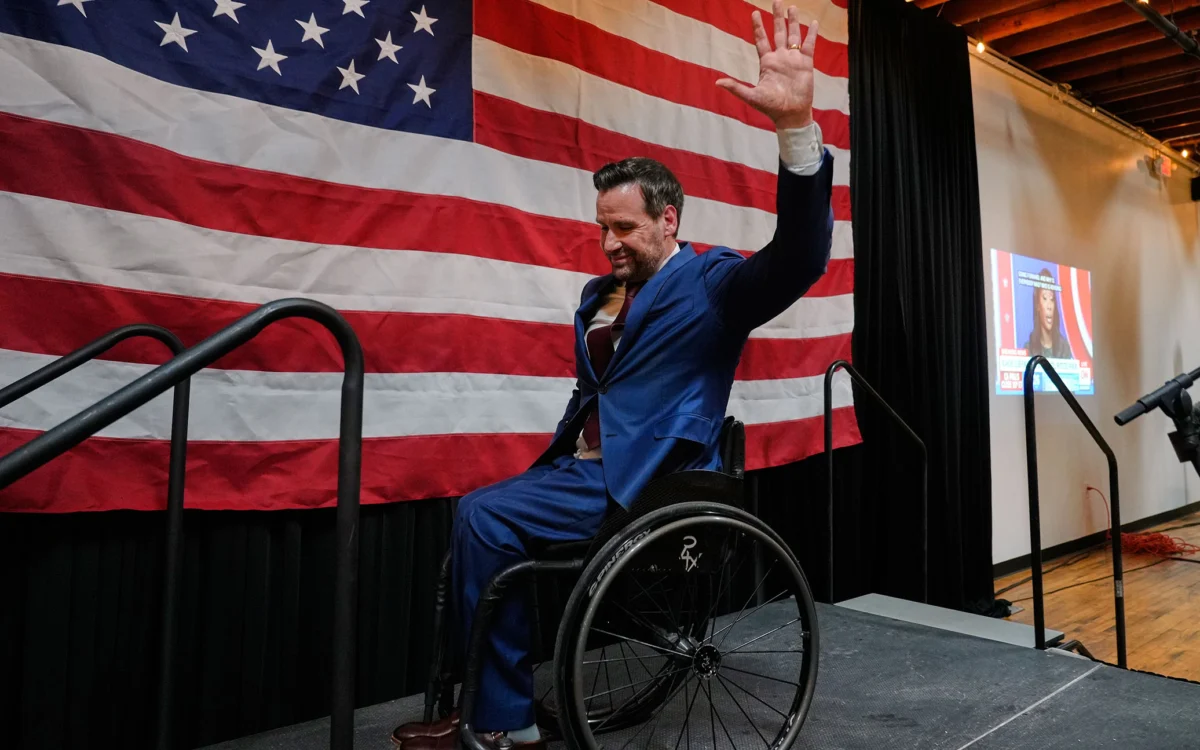
Iowa state Rep. Josh Turek, a decorated Paralympic gold medalist and advocate for individuals with disabilities, has achieved a significant milestone in his political career, securing the Democratic nomination for the U.S. Senate in Iowa. The victory in Tuesday’s primary election positions Turek to potentially unseat incumbent Republican Senator Joni Ernst, who is retiring from the seat. Turek’s journey to this point is marked by a profound personal narrative and a commitment to advancing disability rights, echoing the legacy of a pivotal figure in disability advocacy.
The primary contest saw Turek, who has spina bifida, emerge victorious over state Sen. Zach Wahls in a closely watched race. This win catapults Turek into a general election showdown against Republican Congresswoman Ashley Hinson. The seat itself carries historical weight, having been held for three decades by Senator Tom Harkin, a Democrat who was instrumental in the passage of the Americans with Disabilities Act (ADA). Turek has explicitly linked his candidacy to Harkin’s legacy, seeing his potential election as a poetic continuation of the fight for disability inclusion.
Turek’s personal story, as articulated in his victory speech, resonates deeply with themes of the American dream and overcoming adversity. He attributes his spina bifida to his father’s exposure to Agent Orange during his service in Vietnam. Turek’s athletic achievements include competing in four Paralympic Games and earning two gold medals in wheelchair basketball, a testament to his resilience and dedication. Beyond his athletic prowess, Turek has been an active participant in Iowa’s political landscape as a state representative.
His motivation for entering politics stems from his experiences working in the healthcare field, where he witnessed firsthand the increasing challenges faced by individuals with disabilities and chronic conditions, particularly concerning denials and delays in accessing essential services. He has attributed these issues to the privatization of Medicaid, a system he believes needs reform to better serve vulnerable populations.
The general election in November is expected to be a closely contested battle. While Iowa is often characterized as a Republican stronghold, political analysts suggest Turek has a viable path to victory. The influential Cook Political Report, a non-partisan publication that analyzes U.S. elections, has already adjusted its outlook on the race, shifting it from "likely Republican" to "leans Republican" following Turek’s primary win. This recalibration underscores the potential impact of Turek’s candidacy and his ability to connect with a broad range of voters.
Turek’s Political Trajectory and Campaign Strategy
Josh Turek’s path to the Senate nomination is rooted in his commitment to public service and his unique perspective as a Paralympic athlete and a legislator. His campaign has been characterized by a pragmatic approach, positioning him as a moderate Democrat. A notable aspect of his campaign trail presence has been his consistent effort to connect with constituents, often by navigating stairs with his wheelchair to reach voters, a powerful visual demonstration of his determination and accessibility.
His victory speech highlighted his humble beginnings in Council Bluffs, Iowa, emphasizing his upbringing in a working-class family. He spoke of overcoming financial hardships, sharing clothes, and facing the challenges associated with his disability, including undergoing 21 surgeries before the age of 12. This narrative of resilience and achievement, he contends, embodies the American dream and forms the core of his promise to protect it for future generations.
Turek’s political awakening, as he has described it, was significantly influenced by his observations within the healthcare sector. The increasing instances of denied or delayed care for individuals with disabilities and other health conditions fueled his desire to enter public service. He has been a vocal critic of what he perceives as the detrimental effects of Medicaid privatization on patient access and quality of care. His policy proposals are expected to focus on strengthening healthcare access, ensuring equitable treatment for individuals with disabilities, and addressing economic disparities.
The Legacy of Tom Harkin and the ADA
The significance of Turek’s candidacy is amplified by its connection to the legacy of former Senator Tom Harkin. Harkin, who represented Iowa for three decades, was a towering figure in the disability rights movement and the chief architect of the Americans with Disabilities Act (ADA), signed into law in 1990. The ADA is landmark civil rights legislation that prohibits discrimination based on disability and has profoundly transformed access and opportunities for millions of Americans.
Turek has frequently invoked Harkin’s work, stating that the ADA provided a crucial "on-ramp to society" for him and countless other disabled Americans. His campaign has embraced the narrative that he, a direct beneficiary of Harkin’s legislative efforts, could be the one to reclaim the Senate seat once held by the disability champion. Harkin himself has publicly endorsed Turek, further cementing this symbolic link. This endorsement, made prior to the primary, signaled a significant boost for Turek’s campaign, drawing a direct line from past advocacy to future representation.
Broader Implications for Disability Representation and Policy
Turek’s potential election to the U.S. Senate carries significant implications for disability representation and policy at the federal level. His presence would bring a direct lived experience of disability to the nation’s highest legislative body, offering a unique perspective on issues that affect millions of Americans. Advocates and disability rights organizations view his candidacy as a crucial step forward in ensuring that the voices and concerns of people with disabilities are more effectively represented in policy debates and decision-making processes.
The ADA, while transformative, continues to face implementation challenges and requires ongoing legislative attention. A Senator with Turek’s background would be uniquely positioned to champion policies that strengthen civil rights protections, improve accessibility, and ensure equitable access to education, employment, healthcare, and housing for individuals with disabilities. His focus on healthcare access, particularly concerning Medicaid, could also lead to significant policy shifts aimed at bolstering the social safety net and ensuring comprehensive care for vulnerable populations.
The political landscape of Iowa, while historically leaning Republican, is not monolithic. Turek’s moderate stance and his ability to articulate a compelling personal narrative, coupled with the strategic importance of the retiring Senator Ernst’s seat, create a dynamic electoral environment. His campaign’s ability to mobilize voters, particularly those who may feel disenfranchised or underserved, will be critical to his success in November.
The race also highlights a growing trend of individuals with disabilities seeking and achieving elected office. This increasing visibility and participation are crucial for challenging stereotypes, fostering greater understanding, and advancing the principle of inclusion in all facets of American society. Turek’s campaign serves as an inspiring example of how personal resilience, athletic achievement, and a dedication to public service can converge to create a powerful force for change.
The Road to November: A Competitive General Election
As the general election approaches, Turek and Hinson will engage in a campaign that is likely to be closely scrutinized. Hinson, a two-term Congresswoman, represents Iowa’s 1st Congressional District and has a voting record that generally aligns with the Republican party platform. Her campaign will likely focus on traditional Republican themes, such as economic growth, fiscal conservatism, and national security.
The contest between Turek and Hinson will present voters with a clear choice in policy and representation. Turek’s campaign will emphasize his commitment to healthcare access, disability rights, and a more inclusive economic vision, while Hinson will likely highlight her experience in Congress and her alignment with conservative principles. The shifting outlook from "likely Republican" to "leans Republican" by the Cook Political Report suggests that Turek’s candidacy is being taken seriously as a potential game-changer in Iowa politics.
The campaign will also likely involve extensive debate on national issues, including the economy, healthcare, and social policies. Turek’s background and his focus on issues directly impacting individuals with disabilities and working families could resonate with a significant segment of the electorate. His ability to articulate a vision for Iowa that transcends partisan divides will be a key factor in his success.
The race for the Iowa U.S. Senate seat is shaping up to be one of the most compelling contests of the 2026 election cycle, with a Paralympic champion vying to represent his state and potentially bring a powerful new voice to the national dialogue on disability rights and social justice. His journey from the Paralympic arena to the halls of the U.S. Senate is a narrative of aspiration, perseverance, and the enduring power of the American dream.