Fon remembers what it felt like to keep moving, even when his body was exhausted, and his future was uncertain. His arduous journey to the United States was marked by immense hardship, crossing 13 countries on foot, including the perilous Darién Gap, a region notorious for its dangers and the significant risk of loss of life. He navigated this path while living with a disability, relying on a wheelchair and crutches to manage each day. The trauma of what he endured, the grief for what he lost, and the pervasive fear of what lay ahead were constant companions.
"The pain in my country was scarier than the Darién Gap," Fon recounted. "On my way to the U.S., I was conscious I could die on the journey. I didn’t come to the U.S. looking for a new life. I came looking for safety."
Fon’s arrival in the United States in 2023 marked the beginning of a protracted process of seeking protection. The following year, he was granted asylum, a pivotal moment that offered him the chance to remain in the U.S. without the threat of being returned to danger. However, as is often the case for individuals who have spent years in uncertainty, Fon soon discovered that obtaining legal status was merely the initial step in a complex journey of rebuilding a life.
"Rebuilding a life in the U.S. often means navigating systems that are confusing even for citizens and nearly impossible when you are recovering from trauma, living with a disability, and separated from your family," explained Beyenech Taye, Fon’s HIAS Clinical Case Manager. This sentiment underscores the multifaceted challenges faced by many who arrive seeking refuge, highlighting that legal status alone does not erase the deep-seated needs for integration and support.
The Shadow of Separation and Systemic Hurdles
While Fon found a measure of safety in the U.S., his wife and children remained in Cameroon. His wife, an activist who championed the rights of people with disabilities, had become a target due to her advocacy work and was forced into hiding. The legal team at HIAS (Hebrew Immigrant Aid Society) immediately began assisting Fon with the process of petitioning for his wife and children to join him in the U.S., a critical step toward family reunification.
For Fon, the separation from his family was a constant source of anguish. He had reached safety, but his loved ones had not. As he awaited progress on their reunification, life in the U.S. presented its own formidable challenges. He was referred to HIAS’s social services team due to significant financial and emotional stress. Having become disconnected from initial refugee resettlement services, he struggled to access the support he needed. Compounding his difficulties, his Supplemental Nutrition Assistance Program (SNAP) benefits were reduced, and he faced the daunting prospect of being unable to afford rent. Furthermore, an administrative error on his immigration documents created a cascade of problems, preventing him from renewing his driver’s license or applying for essential healthcare.
Perhaps the most immediate and pressing concern was the condition of his wheelchair. The battery had died, and at a cost of several hundred dollars, Fon could not afford the replacement. This essential mobility aid was critical for him to get to work. Missing work meant a loss of income, which in turn threatened his ability to pay rent.
"This is the reality many asylees face: the moment protection is granted, the world expects you to be ‘fine.’ But the barriers don’t disappear; they multiply," Beyenech Taye observed. Her statement sheds light on the often-overlooked complexities of post-asylum integration, where the cessation of immediate danger does not signify the end of challenges.
HIAS, renowned for its robust legal services for asylum seekers and those in need of protection, distinguishes itself by offering support that extends far beyond legal representation. "For people like Fon, the greatest threats to safety often come from the gaps between systems: between immigration paperwork and healthcare access, between a work permit and stable housing, between surviving trauma and having the tools to keep going," Beyenech elaborated. This holistic approach is crucial for individuals navigating the intricate and often fragmented social support landscape in the United States.
Bridging the Gaps: Comprehensive Support in Action
In July 2024, Fon began working closely with HIAS’s social services team. Together, they embarked on addressing the crises that jeopardized his stability and future. Beyenech Taye provided Fon with vital resources for food and other basic necessities, offered Lyft vouchers to facilitate transportation to appointments, and connected him with the ENDependence Center of Northern Virginia, a valuable community resource and advocacy center for individuals with disabilities.
In close collaboration with HIAS’s legal team, Beyenech acted as an advocate for Fon and guided him through the process of resolving errors on his important immigration documents. Through persistent effort and dedicated support, Fon was eventually able to correct his paperwork, obtain a state-issued ID card, and enroll in health insurance. With HIAS’s assistance, he also applied for financial aid to repair his wheelchair. Additionally, HIAS’s Asylee Outreach Project Manager played a key role in helping Fon reconnect with refugee resettlement services, providing crucial employment support and assistance with renewing benefits.
"These steps may sound small," Beyenech noted. "But for people navigating the immigration system, small steps can be the difference between stability and collapse." This perspective highlights the profound impact of seemingly minor interventions when they address critical needs for individuals facing significant systemic barriers.
The emotional toll of his situation was immense. The constant stress of managing his life in the U.S., navigating complex systems, and worrying about his family’s safety in Cameroon weighed heavily on him. Then, a devastating call arrived: his wife had been kidnapped in Cameroon. This news amplified Fon’s existing anxieties and fears. In this moment of crisis, HIAS connected him with a HIAS social work student who provided essential emotional support and equipped him with coping mechanisms to manage his fear, anxiety, and distress.
"Waiting for papers while taking care of my family back home was scary," Fon recalled. His experience is not unique; it reflects the profound challenges many refugees, asylum seekers, and asylees encounter in the United States. Their journey often does not conclude upon arrival or even upon receiving legal protection.
HIAS’s U.S. programs are designed to provide a comprehensive suite of support services that empower displaced individuals to transition from crisis to stability. This includes vital immigration legal services, pro bono representation, personalized case management, accessible mental health support, and specialized programs aimed at assisting families in securing housing, accessing employment services, and obtaining essential benefits.
For Fon, this wraparound approach meant that he was not alone in navigating the most challenging chapters of his life. It meant having someone to help him rectify an administrative error that threatened to derail his entire future. It meant having support to reach crucial appointments, access necessary healthcare, and, most importantly, to continue moving forward even while his family remained in peril.
The Joy of Reunion and the Path Forward
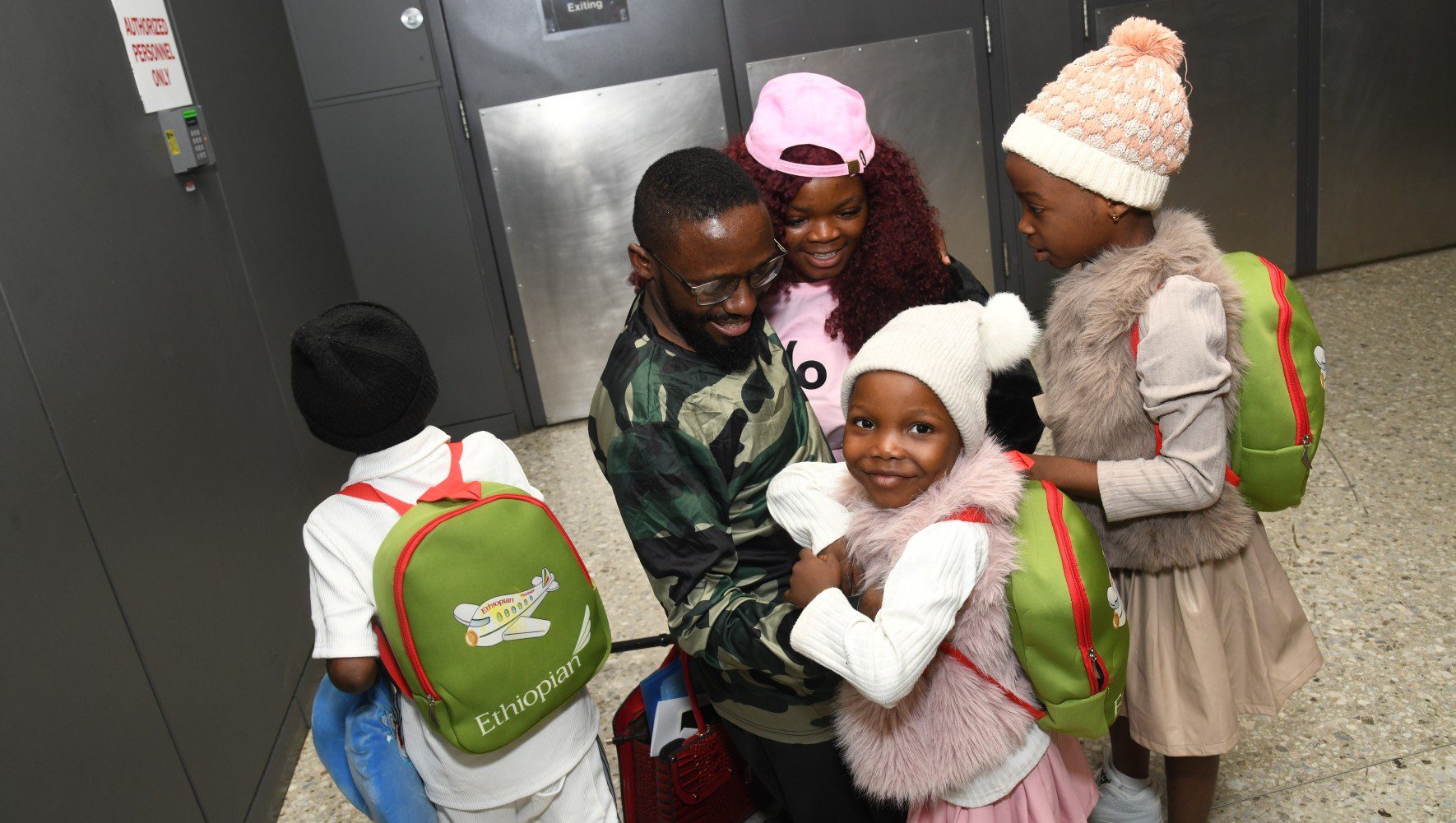
In early December 2025, after years of separation and agonizing uncertainty, Fon was finally reunited with his wife and children in the United States. The image of their reunion, captured on December 5, 2025, in Washington, D.C., symbolizes the culmination of an extraordinary journey and the profound impact of sustained support.
"Getting [my family] here clears all my pain," Fon expressed with profound relief. "Facing immigration challenges while having HIAS support me is a shoulder I won’t forget." His words underscore the deep gratitude he feels for the organization that stood by him through immense adversity.
Today, HIAS continues to support the family as they embark on the process of rebuilding their lives. This includes assisting with school enrollments for the children, identifying essential resources, and ensuring they can access the benefits that are critical for families to heal and achieve long-term stability.
Beyenech Taye offers a crucial perspective on the concept of safety for displaced individuals. "There is a misconception that once someone reaches the U.S., they are safe. But safety is not just the absence of danger. It is housing. It is healthcare. It is legal protection. It is community. It is the ability to keep your family together," she stated. This comprehensive definition of safety highlights the interconnectedness of various support systems and the importance of addressing all facets of a person’s well-being.
Fon’s story, while deeply personal, resonates with the experiences of countless individuals seeking refuge and a better future. It is a testament to the resilience of the human spirit and the transformative power of comprehensive, compassionate support that recognizes the multifaceted needs of those fleeing persecution and seeking a new beginning. It is also a powerful reminder that when the ground shifts beneath one’s feet, the presence of a steadfast ally can make all the difference in navigating the path forward.
Supporting Data and Context:
- Global Displacement Crisis: As of mid-2023, the United Nations High Commissioner for Refugees (UNHCR) reported that over 110 million people worldwide were forcibly displaced due to persecution, conflict, violence, human rights violations, and events seriously disturbing public order. This figure underscores the immense scale of global displacement and the ongoing need for humanitarian assistance.
- Asylum Seekers in the U.S.: The United States receives a significant number of asylum claims each year. While specific numbers fluctuate, the process is often lengthy, with backlogs in the asylum system contributing to extended periods of uncertainty for applicants. In fiscal year 2023, USCIS reported receiving over 170,000 affirmative asylum applications.
- Challenges for Asylum Seekers with Disabilities: Individuals with disabilities often face compounded challenges in seeking asylum and integrating into a new society. These can include accessibility issues, specialized healthcare needs, and potential discrimination. Organizations like HIAS play a vital role in addressing these specific vulnerabilities.
- The Darién Gap: The Darién Gap is a notoriously dangerous stretch of jungle between Colombia and Panama, serving as a key transit point for migrants traveling from South America to North America. Migrants face extreme risks, including treacherous terrain, dangerous wildlife, armed groups, and exploitation. Data from the International Organization for Migration (IOM) consistently highlights the high mortality and vulnerability rates associated with this route.
- Importance of Comprehensive Services: Research by organizations such as the Migration Policy Institute (MPI) consistently shows that successful integration of refugees and asylum seekers is significantly enhanced by access to a range of services, including legal aid, housing assistance, employment services, language training, and mental health support. This "wraparound" approach addresses the holistic needs of individuals and families.
Analysis of Implications:
Fon’s story exemplifies the critical need for multi-faceted support systems for asylum seekers beyond the initial granting of legal status. The challenges he faced – financial instability, administrative errors, health concerns, and the urgent need for family reunification – are common hurdles that can derail even those with a strong will to rebuild their lives.
The article highlights that "safety" is not a singular state but a complex ecosystem of interconnected needs. For individuals like Fon, achieving true safety and stability requires not only legal protection but also access to healthcare, housing, employment, and the reunification of families. The gaps between different service sectors can become formidable barriers, underscoring the importance of organizations like HIAS that offer integrated and comprehensive support.
The successful reunification of Fon’s family, facilitated by HIAS’s dual focus on legal and social services, demonstrates the profound impact of this holistic approach. It not only resolves immediate crises but also lays the foundation for long-term integration and well-being. This case serves as a powerful case study for policymakers and service providers, emphasizing that investment in comprehensive support services is essential for empowering asylum seekers and refugees to thrive and contribute to their new communities.