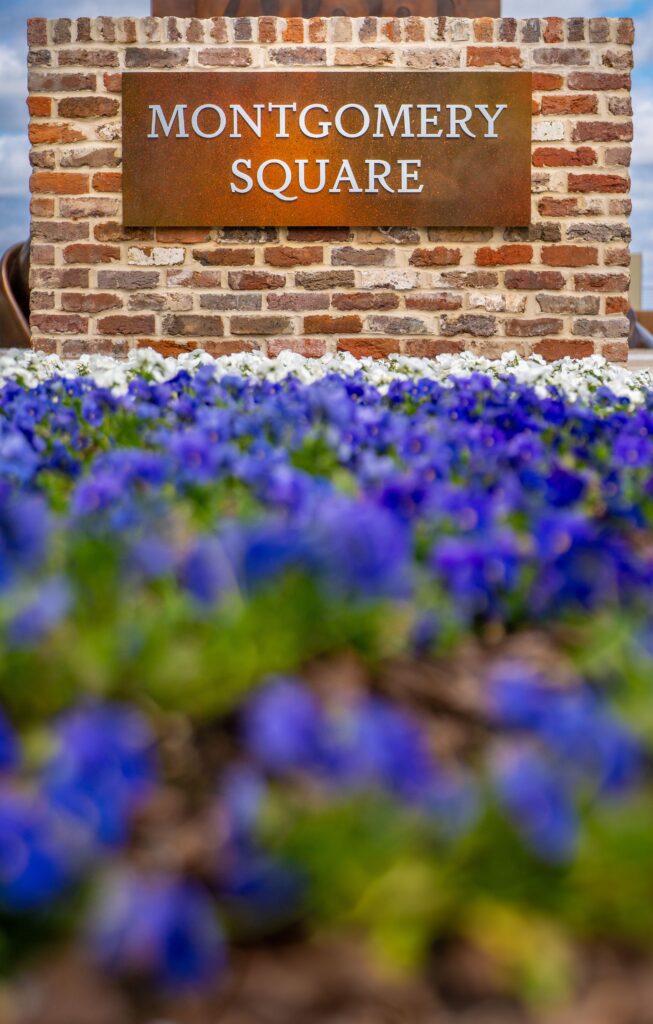
Montgomery, Alabama – The Equal Justice Initiative (EJI) has officially opened Montgomery Square, a powerful new outdoor site dedicated to chronicling the decade between 1955 and 1965, a period that profoundly reshaped the landscape of democracy and justice in America and ignited a global movement for human rights. This immersive historical experience, located at the summit of Montgomery Street, invites visitors to walk in the footsteps of the courageous Black residents whose unwavering determination in the face of systemic racial injustice catalyzed monumental change.
The new site stands as a testament to the extraordinary courage of Montgomery’s Black community, whose defiance against segregation and disenfranchisement sparked a movement that resonated far beyond the city limits, ultimately transforming the nation and influencing human rights struggles worldwide. Situated adjacent to the Elevation Convening Center and Hotel, Montgomery Square occupies a symbolically potent location – the very street where tens of thousands of people converged on March 25, 1965, marking the triumphant conclusion of the historic Selma to Montgomery March.
A New Chapter in EJI’s Legacy Sites
Montgomery Square expands upon EJI’s acclaimed network of Legacy Sites, which include the Legacy Museum: From Enslavement to Mass Incarceration, the National Memorial for Peace and Justice, and the Freedom Monument Sculpture Park. Like its predecessors, Montgomery Square is animated by the profound "power of place," drawing visitors into the physical spaces where pivotal historical events unfolded. Bryan Stevenson, EJI Director, articulated the organization’s excitement, stating, "We are extremely excited to open this site, which explores how Montgomery created a new chapter for democracy and justice in America. The movement birthed by Montgomery’s residents in 1955, culminating in a triumphant march in 1965, changed the cultural, legal, social, and economic landscape of this nation."
The site’s design thoughtfully integrates art, photography, and deeply researched historical narratives to illuminate Montgomery’s central role in fostering an era of greater democracy and opportunity in the United States. Visitors are guided through a multi-sensory experience that combines visual storytelling with direct engagement with the stories of those who lived and fought during this critical era.
Immersive Journey Through History: The Visitor Experience
A visit to Montgomery Square is an active engagement with history. The mostly outdoor site encourages contemplation and reflection, literally positioning visitors on the ground where history was made. Central to the experience is "Heroes Hall," an indoor space where new documentary films are screened, featuring powerful testimonies from the leaders and unsung heroes of the movement. These films bring to life the stories of figures such as Claudette Colvin, Rosa Parks, E.D. Nixon, Jo Ann Robinson, Fred D. Gray, John Lewis, Jo Ann Bland, Sheyann Webb Christburg, Amelia Boynton Robinson, and Lynda Blackmon Lowery. Their personal accounts are interwoven with interviews and speeches from the Rev. Dr. Martin Luther King Jr., providing a comprehensive and deeply human perspective on the struggle for justice.
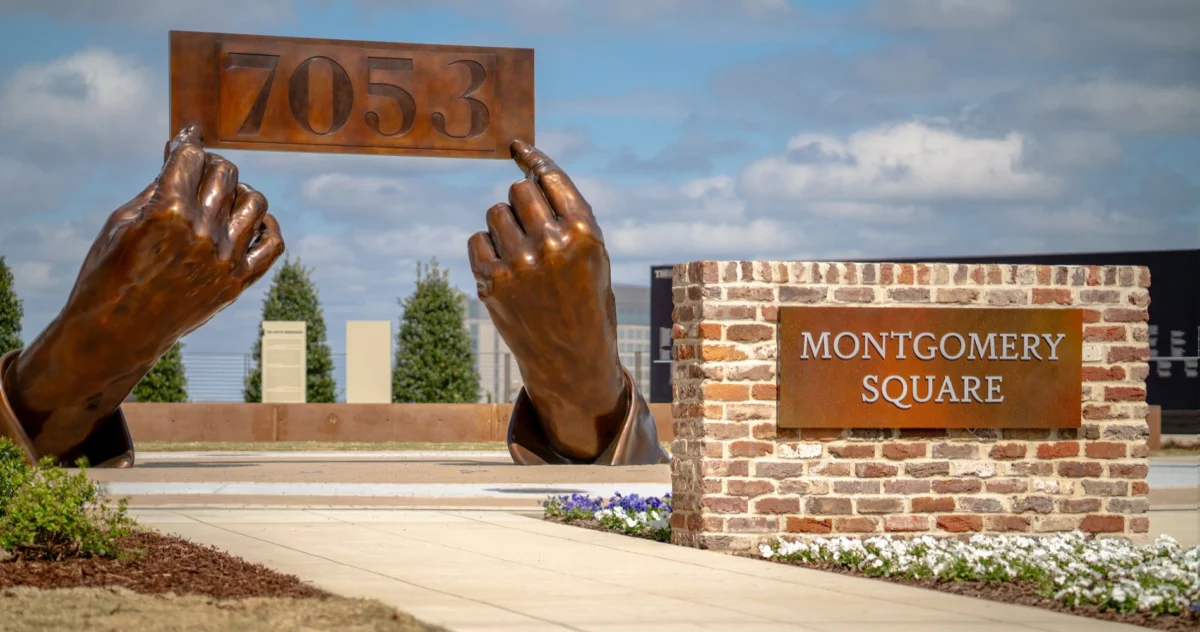
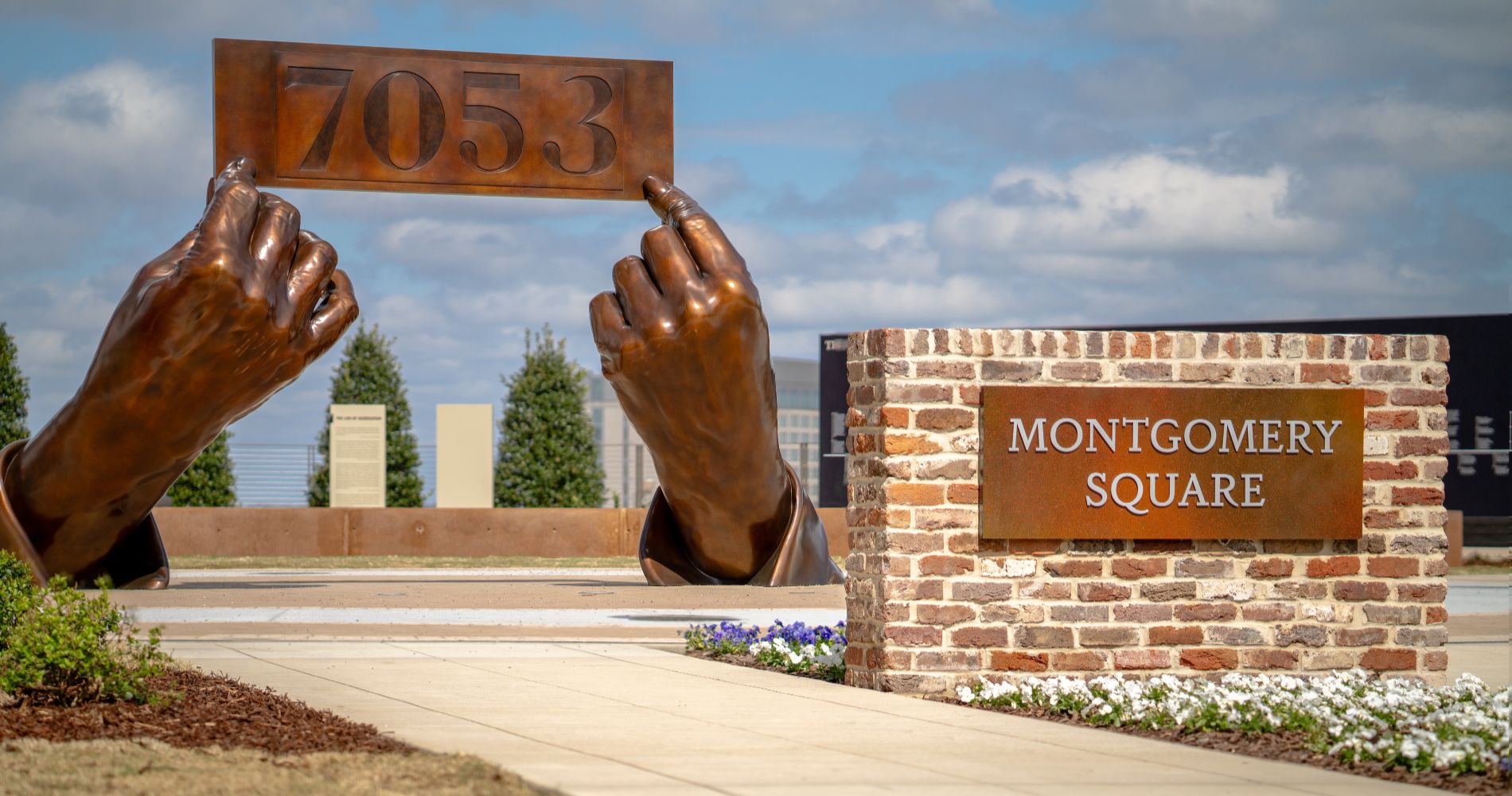
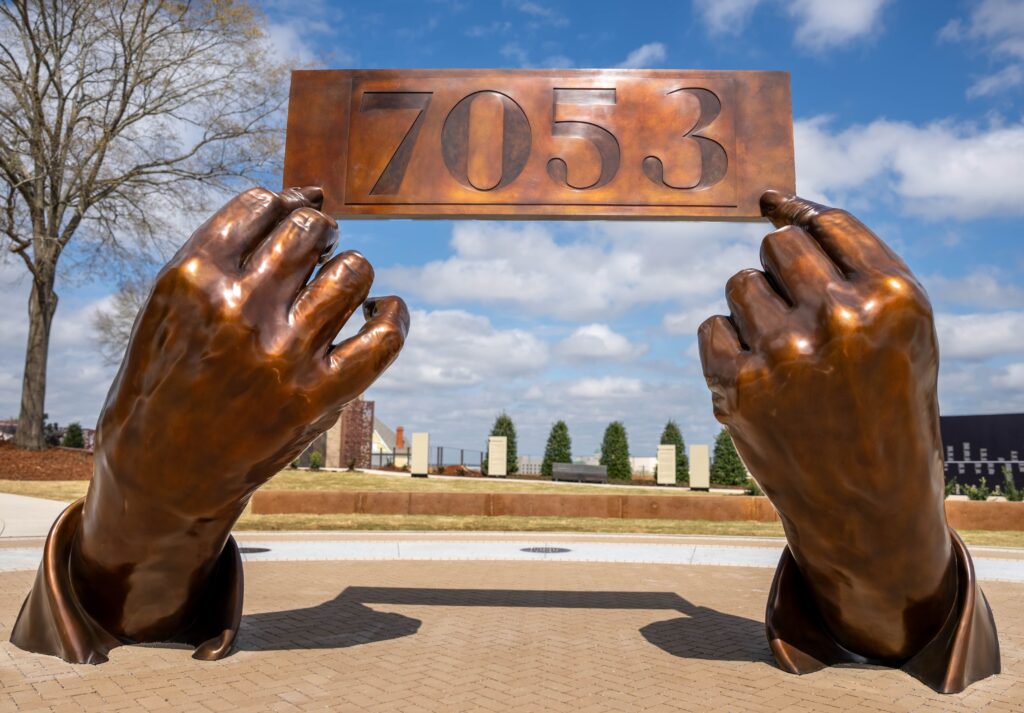
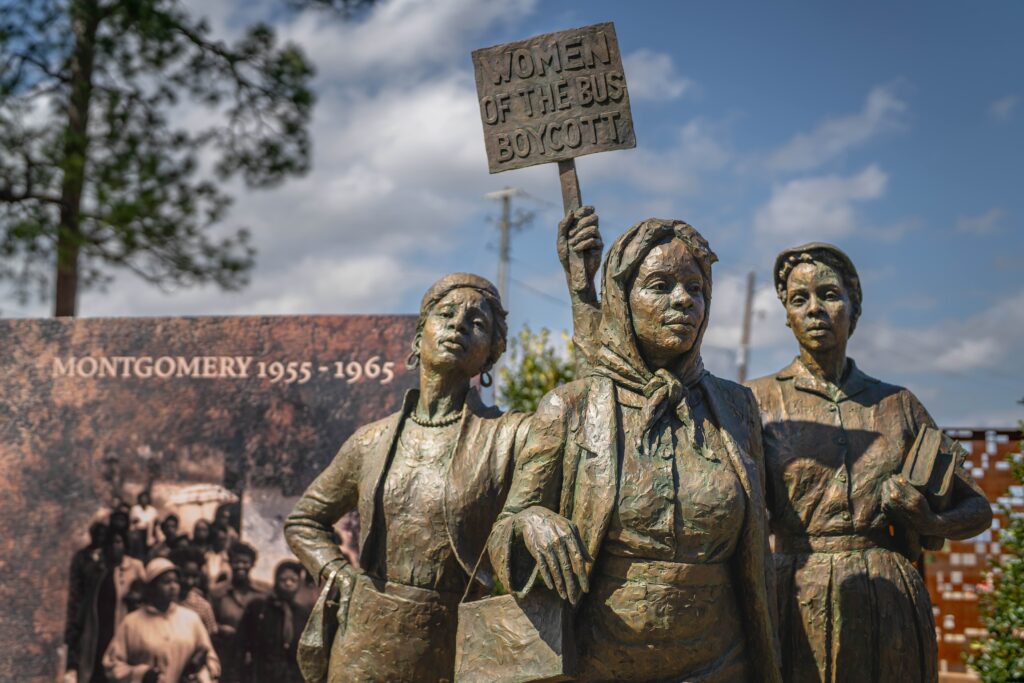
Throughout the square, artistic installations and historical markers enrich the narrative. Sculptures by acclaimed artists Hank Willis Thomas and Basil Watson provide powerful visual interpretations of the era’s struggles and triumphs. One notable piece by Hank Willis Thomas transforms an arrest number into a badge of honor, symbolizing the defiant courage of those who faced incarceration for their activism. Basil Watson’s sculpture vividly depicts proud participants in the Montgomery Bus Boycott, capturing the spirit of a community united in protest for over a year. Authentic photography from the period further illustrates the narrative, grounding the visitor’s experience in the visual realities of the time.
A massive timeline meticulously details this momentous decade, beginning with the pervasive and dehumanizing humiliation and threats of violence that Black residents of Montgomery endured daily on segregated city buses for decades prior to the boycott. This crucial context helps visitors understand the immense pressure and profound courage required to initiate and sustain the movement.
Pillars throughout the square display actual segregation laws, starkly revealing the institutionalized nature of racial discrimination. These laws created one of the most rigid and extensive systems of racial segregation in the world, dictating every aspect of public life, even prohibiting Black and white people from engaging in simple activities like playing checkers together. This tangible display of legal segregation underscores the profound injustice that permeated society.
The site also unflinchingly documents the relentless and often violent opposition from tens of thousands of white residents who organized to uphold racial segregation in Montgomery. Visitors can read the chilling words of faith leaders, elected officials, journalists, and prominent members of the Montgomery establishment who publicly vowed to "forever stand like a rock against social equality, intermarriage, and mixing of the races in the schools." This provides essential context for understanding the fierce resistance the Civil Rights Movement encountered.
The Genesis of a Movement: Montgomery’s Pivotal Decade (1955-1965)
The decade honored by Montgomery Square began in earnest on December 1, 1955, when Rosa Parks, a seamstress and NAACP secretary, refused to give up her seat to a white passenger on a city bus. Her arrest, preceded by similar acts of defiance by figures like 15-year-old Claudette Colvin nine months earlier, ignited the Montgomery Bus Boycott. For 381 days, from December 5, 1955, to December 20, 1956, over 40,000 African Americans in Montgomery collectively boycotted the city’s segregated bus system. This unprecedented act of nonviolent civil disobedience was meticulously organized by local leaders, including Jo Ann Robinson of the Women’s Political Council and E.D. Nixon, a Pullman porter and civil rights activist. The Montgomery Improvement Association (MIA) was formed to coordinate the boycott, with the then-young Rev. Dr. Martin Luther King Jr. elected as its president, catapulting him onto the national stage.
The boycott faced fierce opposition, including violence, arrests, and economic retaliation against participants. Despite these hardships, the community remained unified, organizing carpools and walking for miles daily. The struggle culminated in a landmark Supreme Court ruling in Browder v. Gayle on November 13, 1956, which declared Alabama’s and Montgomery’s bus segregation laws unconstitutional. This victory, effective December 20, 1956, marked a significant turning point, demonstrating the power of collective action and nonviolent protest.
A decade later, Montgomery again became a focal point for the struggle, this time for voting rights. The Selma to Montgomery Marches in March 1965, initiated by activists in Selma to protest discriminatory voter registration practices, drew national attention. The brutal attacks on peaceful marchers on "Bloody Sunday" (March 7, 1965) at the Edmund Pettus Bridge shocked the nation and galvanized public opinion. Following federal intervention and a court order, thousands of marchers, led by Dr. King and other prominent civil rights leaders, successfully completed the 54-mile march, arriving in Montgomery on March 25, 1965. Their arrival on Montgomery Street, the very location of the new Square, symbolized the culmination of years of struggle and sacrifice.
Legislative Triumphs and Enduring Challenges
The events of this pivotal decade directly contributed to the passage of monumental civil rights legislation. The Civil Rights Act of 1964 outlawed discrimination based on race, color, religion, sex, or national origin, ending segregation in public places and banning employment discrimination. The Voting Rights Act of 1965, signed into law just months after the Selma to Montgomery Marches, directly addressed the systemic disenfranchisement of Black Americans by prohibiting discriminatory voting practices. Historical data indicates that immediately following the passage of the Voting Rights Act, Black voter registration rates in Southern states, including Alabama, saw dramatic increases, profoundly altering the political landscape. Before the act, in some parts of Alabama, Black voter registration was as low as 10%; afterward, it surged to over 50% in many areas.
The influence of the Montgomery movement extended beyond legislation, inspiring civil rights movements globally and fundamentally altering America’s moral conscience. It highlighted the moral imperative of equality and justice, laying groundwork for future struggles for LGBTQ+ rights, disability rights, and other social justice movements.
The Power of Place: Connecting Past and Present
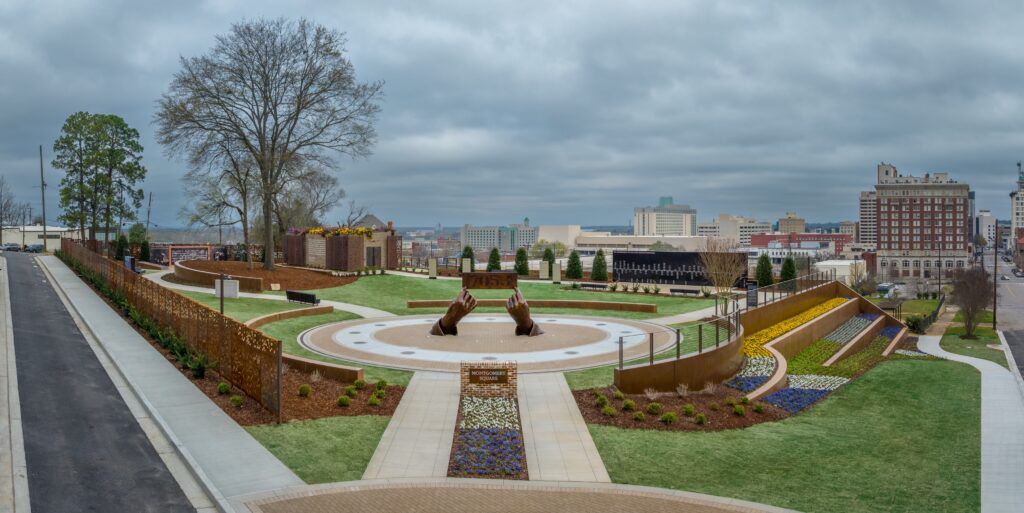
The physical site of Montgomery Square is intentionally designed to evoke the spirit of the era. Built around a giant oak tree, the Square features a living witness to history. This majestic tree stood silently as thousands of Black people walked the city’s streets to end segregation in 1955 and as tens of thousands risked their lives to end Black disenfranchisement in 1965. Its presence serves as a powerful, enduring symbol of the continuity of history and the resilience of the human spirit. The location on Montgomery Street itself, the final leg of the Selma to Montgomery March, reinforces the profound connection between the physical space and the historical narrative. This deliberate placement helps visitors grasp the tangible reality of the sacrifices made.
The site’s strategic location next to the Elevation Convening Center and Hotel underscores EJI’s broader vision to transform Montgomery into a national hub for exploring civil rights history and fostering dialogue about justice. The integration of historical sites with modern amenities encourages sustained engagement and deeper reflection among visitors.
Educational Outreach and Research
The foundation of Montgomery Square’s narrative is built upon hundreds of hours of meticulous research. This extensive scholarship is also presented in EJI’s new report, The Montgomery Decade That Changed the World: 1955 to 1965, and on the accompanying Montgomery Square website. These resources delve into the often-overlooked historical context and shine a light on the unsung heroes of this pivotal decade in Montgomery, many of whom are not widely known.
These comprehensive resources are designed to serve as invaluable tools for educators, students, historians, local residents, and visitors, providing deeper insight into Montgomery’s historic role in championing human rights and launching a worldwide movement towards racial justice. Bryan Stevenson emphasized the educational imperative: "This history needs to be studied and understood by every American. We are proud to make learning about this critical decade more accessible to everyone at Montgomery Square."
Historians and civil rights advocates consistently emphasize the importance of understanding this period, not merely as a historical event but as a foundational chapter in the ongoing struggle for equality. They note that the strategies of nonviolent resistance, community organizing, and legal challenges perfected in Montgomery continue to inform contemporary social justice movements. The site serves as a vital educational platform, ensuring that the lessons of courage, perseverance, and the fight against systemic injustice are not forgotten but actively learned and applied.
Community and Access
Montgomery Square is now open to the public from 9 am until 6 pm, Wednesday through Monday. In line with EJI’s commitment to accessibility and widespread education, admission to Montgomery Square is free, and no ticket is required. This open-door policy ensures that this vital history is available to everyone, regardless of economic status.
EJI expresses a profound hope that visitors will join them in Montgomery to experience the power of confronting injustice in this sacred place, a journey fueled by the deep knowledge gained through all of the Legacy Sites. The establishment of Montgomery Square represents more than just the opening of a new historical attraction; it is a reaffirmation of the enduring power of history to inform, inspire, and challenge us to continue the pursuit of a more just and equitable world. It stands as a powerful reminder that the struggle for civil rights, while achieving monumental victories, is a continuous endeavor requiring constant vigilance and renewed commitment.