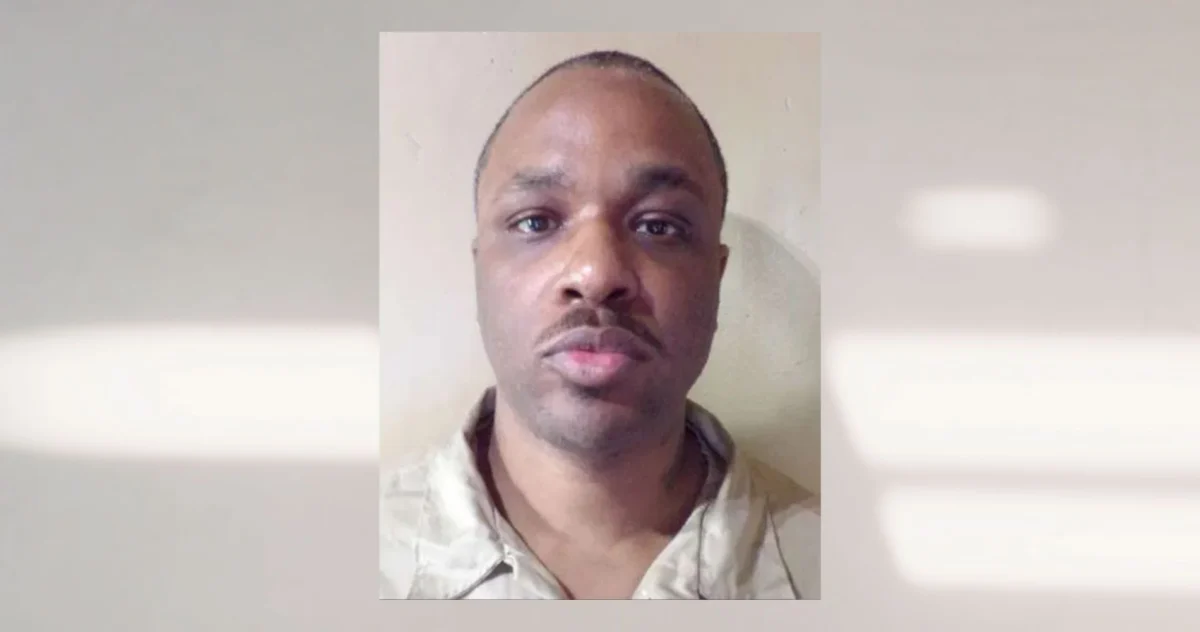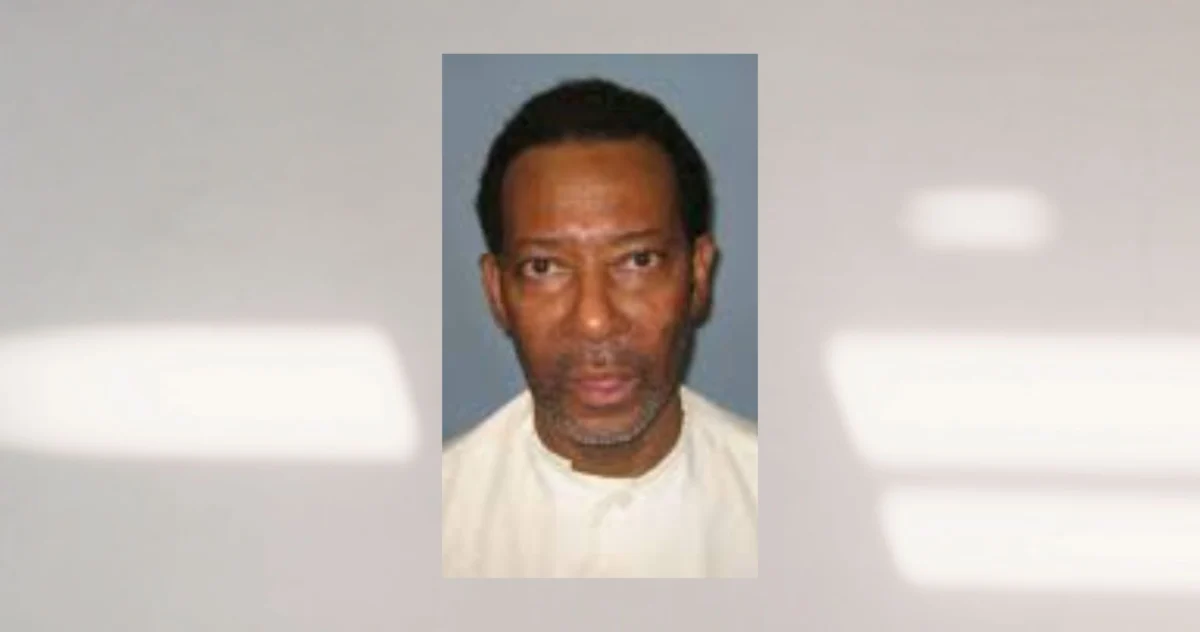
Montgomery, AL – In a landmark decision that underscores persistent questions about fairness and consistency in capital punishment, Alabama Governor Kay Ivey today commuted the death sentence of Charles "Sonny" Burton to life imprisonment without parole. The commutation brings an end to a more than three-decade legal ordeal for Burton, 75, who had been on Alabama’s death row since 1992 for a 1991 robbery and murder, despite never having pulled the trigger or even witnessing the fatal shot. This executive action prevents an execution that had drawn significant criticism for exemplifying the arbitrariness often cited in the application of Alabama’s death penalty, especially given that the actual shooter in the case had previously been resentenced to life without parole.
The decision from Governor Ivey came just weeks before Burton’s scheduled execution by nitrogen suffocation on March 12, a method recently introduced and heavily scrutinized in Alabama. Burton’s case had garnered widespread attention, not only from legal advocates and human rights organizations but also from an unusual source: a majority of the living jurors who had originally sentenced him to death. These jurors publicly expressed grave concerns about the justice of executing Burton, particularly when the individual directly responsible for the killing had received a lesser sentence.
A Crime, A Conviction, and Decades of Disparity
The tragic events that led to Charles Burton’s conviction unfolded on September 19, 1991, at an auto parts store in Talladega, Alabama. Burton was one of six men involved in the robbery. During the commission of the crime, after Burton had already exited the store, Derrick DeBruce, another participant, shot and killed customer Doug Battle. The prosecution charged all six men with capital murder, leveraging Alabama’s accomplice liability laws, which allow individuals to be held responsible for a murder committed during the course of a felony, even if they were not the direct perpetrator.
While all six faced capital charges, the State of Alabama entered into agreements with four of the co-defendants, allowing them to avoid the death penalty. Derrick DeBruce, the man who indisputably fired the fatal shot, was initially sentenced to death. However, in 2014, a federal court overturned DeBruce’s death sentence, citing violations of his constitutional rights during his trial. Subsequently, the State agreed to resentence DeBruce to life without parole. This critical development left Charles Burton as the sole individual still facing execution for a crime in which he did not kill anyone, nor did he instruct anyone else to do so. His legal team emphasized that he did not even witness the shooting take place, having already left the premises. This stark disparity in sentencing became a central pillar of the clemency campaign.
The Evolving Conscience of Jurors
One of the most compelling aspects of Charles Burton’s case was the vocal opposition to his execution from the very individuals who had, decades prior, voted to send him to death row. Priscilla Townsend, one of three jurors who explicitly wrote to Governor Ivey urging clemency, articulated a sentiment shared by many: "It’s absolutely not fair. You don’t execute someone who did not pull the trigger." Townsend, while still believing in the death penalty for "the worst of the worst," firmly stated that Burton did not fit that description. In a poignant op-ed, she expressed deep disappointment in how the case had "slipped through the cracks" and voiced concern about the integrity of Alabama’s justice system if Burton’s execution were to proceed.
The clemency petition submitted to Governor Ivey revealed that six of the eight living jurors from Burton’s 1992 trial expressed no opposition to his sentence being commuted. Juror James Cottongim, in his letter to the governor, acknowledged the gravity of the crime but found it "very unjust" for Burton to be executed. He stated, "since Mr. Burton was not the man who pulled the trigger, it just seems wrong that he should be put to death when the shooter was resentenced to life. Our original sentence of death is just no longer appropriate given the circumstances." These extraordinary statements from jurors highlight the evolving understanding of justice and culpability, particularly when new information or disparate outcomes emerge long after a trial. It speaks to the psychological burden jurors carry and their profound desire to ensure true justice is served.
A Victim’s Plea for Grace, Not Revenge
Adding another powerful dimension to the clemency plea was the intervention of Tori Battle, the daughter of the victim, Doug Battle. Tori was just nine years old when her father was killed. In a moving letter to Governor Ivey, she urged clemency for Burton, stating, "I do not see how this execution will contribute to my healing." She spoke of her father’s values, noting that he "valued peace" and "did not believe in revenge," qualities she believes she inherited. Her request for "grace" for Mr. Burton underscored a growing trend among some victims’ families who advocate for alternatives to the death penalty, focusing on restorative justice or the preservation of life rather than retributive measures. Her statement resonated deeply, challenging the conventional narrative that executions are necessary for victims’ families to achieve closure.
An "Extreme Outlier" in Capital Punishment Jurisprudence
Legal experts and defense counsel consistently characterized Charles Burton’s case as an "extreme outlier" within the realm of capital punishment. Matt Schulz, Burton’s lawyer, emphasized the stark facts: "Not only did he not kill anyone, but he didn’t order anyone to kill anyone. He didn’t hire anyone to kill anyone. He didn’t tell anyone to kill anyone. He literally did not even see anyone kill anyone." The argument was compelling: executing an individual with such limited culpability, especially when the actual shooter received a life sentence, fundamentally undermined the principle that the death penalty should be reserved for the "worst of the worst" offenders.
The concept of "felony murder" in capital cases, where participation in a felony that results in death can lead to a capital conviction, is legally complex. While established, its application to impose the ultimate penalty on a non-triggerman, particularly when co-defendants, including the principal, receive lesser sentences, raises significant concerns about proportional justice and prosecutorial discretion. This discretion, coupled with factors such as the quality of legal representation, jury composition, and evolving legal standards, often contributes to the arbitrariness cited in death penalty cases. Burton’s case, where the "triggerman" was resentenced to life, stands as a stark illustration of how these variables can lead to vastly different outcomes for individuals involved in the same crime, questioning the very notion of equal justice under the law.
Alabama’s Capital Punishment Landscape and Gubernatorial Action
Governor Kay Ivey’s decision is particularly noteworthy given Alabama’s robust history of capital punishment. During her nine years as governor, Ivey has presided over 25 executions, a record number for any state executive since the death penalty was reinstated in 1976. Alabama has also been at the forefront of implementing new, often controversial, execution methods, including nitrogen hypoxia, which was the scheduled method for Burton’s execution. The state’s capital punishment system has faced scrutiny for various reasons, including its past practice of judicial override (where judges could override a jury’s life sentence recommendation to impose death), and concerns about disproportionate application based on race and socio-economic status.
Against this backdrop, clemency remains an executive power rarely exercised. Its use typically signals profound doubt about guilt or the appropriateness of the sentence. Governor Ivey has previously commuted a death sentence, notably in 2023 for Robin "Rocky" Myers, citing "considerable questions about his guilt." While the grounds for Burton’s commutation focused more on the arbitrariness of the sentence given the co-defendant’s outcome rather than outright innocence, both cases highlight the critical role of executive clemency as a final safeguard against potential injustices within the capital system. This decision aligns Alabama with other states where Republican governors, such as Oklahoma’s Kevin Stitt (who commuted Julius Jones’ sentence), have granted clemency in similar high-profile cases, indicating a bipartisan recognition of the need for executive review in exceptional circumstances.
Health and Humanity on Death Row
Beyond the legal and ethical arguments, the issue of Charles Burton’s deteriorating health also played a significant role in the clemency petition. At 75 years old, Burton is frail and suffers from debilitating rheumatoid arthritis, which causes him immense pain and largely confines him to a wheelchair. His attorney noted he frequently falls and requires a state-issued helmet. His sister, Eddie Mae Ellison, had spoken publicly about his declining condition. The prospect of executing an elderly, infirm man, particularly one whose culpability was so fiercely debated, raised humanitarian concerns and questioned the state’s capacity for compassion within its justice system. The advanced age and poor health of death row inmates often factor into clemency considerations, reflecting a societal discomfort with executing individuals who are no longer perceived as a significant threat or who are suffering profoundly from natural causes.
Implications for Alabama’s Justice System and Beyond
Governor Ivey’s commutation of Charles Burton’s death sentence carries significant implications for Alabama’s capital punishment system and the broader national debate on the death penalty. It sends a clear signal that extreme disparities in sentencing among co-defendants, particularly when the non-triggerman faces a harsher penalty than the actual killer, will not be tolerated without executive intervention. This decision may encourage further scrutiny of other "felony murder" cases in Alabama where individuals received death sentences without directly causing the victim’s death. It reinforces the argument that the death penalty must be reserved for the "worst of the worst" and applied consistently, an ideal that cases like Burton’s challenge.
The commutation also highlights the growing influence of juror remorse and victim family perspectives in capital cases. As public opinion on the death penalty continues to shift, with declining support and fewer executions nationwide, the willingness of jurors to reconsider their past decisions and the advocacy of victims’ families for mercy can exert powerful pressure on governors. This case could serve as a precedent, encouraging greater scrutiny of older death penalty cases, particularly those involving complex accomplice liability scenarios or where new information has emerged casting doubt on the proportionality of the sentence.
While this decision offers a measure of relief for Charles Burton and his supporters, it does not fundamentally alter Alabama’s commitment to capital punishment. However, it does underscore the critical role of clemency as a necessary check on a system prone to human error and evolving understandings of justice. The "outlier" status of Burton’s case, as described by his lawyers, serves as a stark reminder that even within established legal frameworks, the path to justice can be arbitrary and require courageous interventions to ensure fairness and uphold the moral integrity of the state. The debate over the death penalty’s application in Alabama and across the nation will undoubtedly continue, with Charles Burton’s case now a significant chapter in that ongoing conversation.