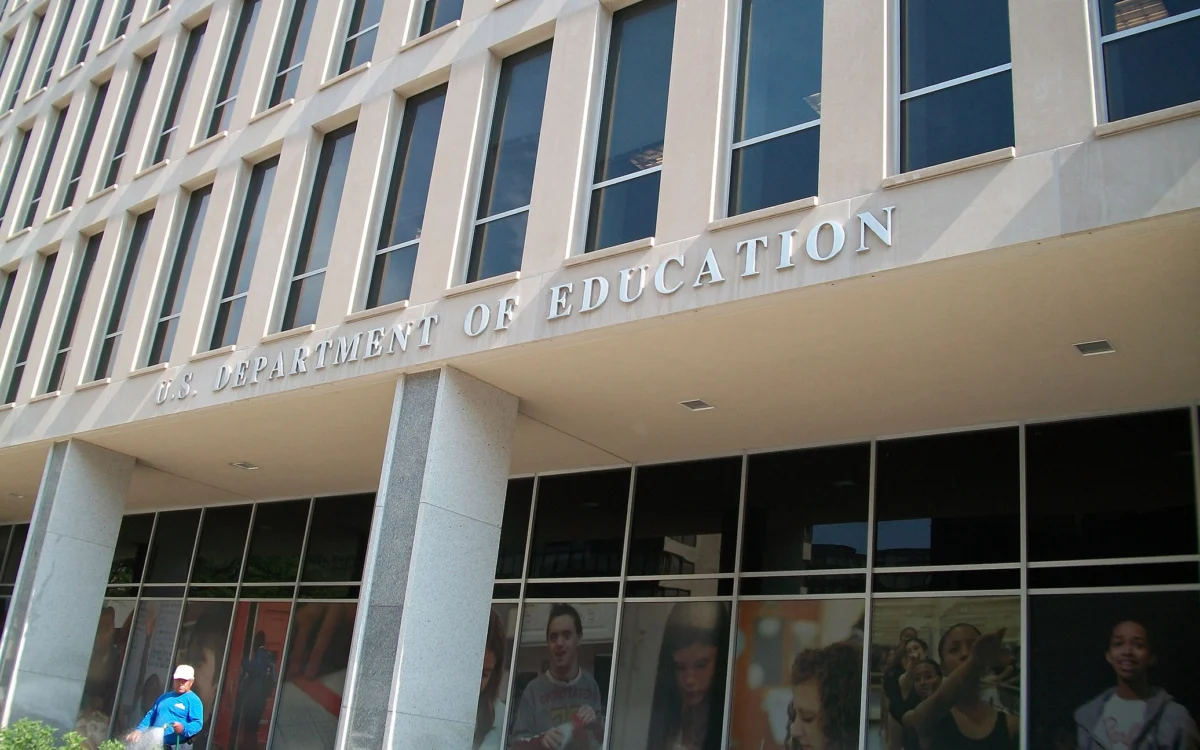
The landscape of federal education oversight is undergoing significant shifts, sparking apprehension among disability advocates who fear that crucial special education programs may be the next to be transferred from the U.S. Department of Education to other federal agencies. This concern follows a recent interagency agreement (IAA) that saw the management of student loans move to the Department of the Treasury, marking the tenth such transfer of programs initiated by the Education Department within the past year. The accelerating trend of divestment has fueled speculation and urgent calls for action regarding the future of the Office of Special Education and Rehabilitative Services (OSERS), a key division within the department.
Escalating Trend of Interagency Agreements
The recent agreement between the Department of Education and the Department of the Treasury to manage student loans is a tangible manifestation of a broader strategy to streamline federal operations by reassigning programmatic responsibilities. While the stated goals of such agreements often center on efficiency and improved service delivery, their cumulative effect is prompting close scrutiny from stakeholders deeply invested in the programs being moved. For disability advocates, the potential transfer of OSERS represents a particularly sensitive development, given the specialized nature of special education services and their historical grounding within an educational framework.
The Department of Education has not been forthcoming with explicit details regarding specific future transfers, but the frequency of these agreements suggests a deliberate, ongoing initiative. The establishment of these IAAs bypasses traditional legislative processes, raising questions about congressional intent and oversight. Advocates argue that such fundamental shifts in program management should be subject to robust public debate and legislative review, rather than being executed through administrative agreements.
Rumors Swirl Around OSERS Future
Whispers in Washington D.C. have intensified regarding the potential relocation of OSERS, which encompasses vital sub-offices like the Office of Special Education Programs (OSEP) and the Rehabilitative Services Administration (RSA). OSEP is the primary federal entity responsible for implementing the Individuals with Disabilities Education Act (IDEA), the landmark legislation guaranteeing free appropriate public education (FAPE) for children with disabilities. RSA, on the other hand, oversees vocational rehabilitation services, playing a critical role in supporting individuals with disabilities in their pursuit of employment and independent living.
The National Down Syndrome Congress (NDSC) has been particularly vocal, issuing an urgent action alert to its constituents, urging them to contact their congressional representatives. The alert explicitly states that "Additional IAAs are expected very soon and may include transferring the programs of the Office of Special Education and Rehabilitative Services (OSERS)… out of the Department of Education to another federal agency." This proactive advocacy highlights the perceived immediacy and gravity of the situation.
Potential Destinations and Rationale
Reports, though unconfirmed by official channels, suggest that discussions have taken place between Secretary of Health and Human Services Robert F. Kennedy Jr. and Education Secretary Linda McMahon concerning the potential move of OSERS to HHS. A key, and controversial, rationale reportedly being considered is the notion that special education is fundamentally a "medical" issue. This perspective is deeply concerning to many in the disability community.
This potential move echoes a statement made by former President Donald Trump last year, who publicly expressed his intention to shift oversight of "special needs" programs away from the Department of Education. At that time, the proposed destination was also HHS. However, current reports indicate that Secretary McMahon has also considered the Department of Labor as a potential recipient for OSERS programs. The ultimate decision on which agency will assume responsibility is reportedly imminent, with the White House Office of Management and Budget (OMB) expected to make the final determination, according to "reliable sources" cited by the NDSC.
Advocacy and Concerns Over Shifting Models
The potential relocation of OSERS to HHS has ignited significant opposition from disability advocacy groups. The NDSC, in its communication to members, has emphasized that "These programs should not be moved anywhere. These actions bypass Congress and violate clear congressional intent and conflict with federal law." Their argument is rooted in the belief that such a move undermines the foundational principles of special education as an educational right, not a medical treatment.
Stephanie Smith Lee and Heather Sachs, co-directors of policy and advocacy at the NDSC, articulated these concerns in a letter to the White House budget office. They warned that transferring oversight of IDEA from an education agency to a health agency risks a regression to an "outdated medical model of disability." This model, they contend, can lead to students being viewed as patients requiring a "cure" rather than individuals with unique learning needs best addressed within an educational context. Furthermore, they expressed apprehension that such a shift would disrupt the crucial coordination between special education and general education services, weaken the vital link between education and workforce preparation, and embed special education within a broader, potentially less specialized, health bureaucracy.
The Council for Exceptional Children (CEC), a professional organization representing educators of students with disabilities, has also voiced its reservations. Chad Rummel, executive director of the CEC, urged families to remain vigilant. "The administration should be focusing on how to improve the lives of kids with disabilities, and any changes needed to do that would be welcomed," Rummel stated. "However, no one can show us how the time, energy and resources needed to move OSERS will benefit kids, so we must continue to be guarded." He further emphasized the long-standing nature of the current special education system, built over five decades, and cautioned that dismantling and rebuilding such a structure could be immensely disruptive and difficult to rectify. "Bringing down a system built over 50 years is not going to be easy to fix; parents and educators should be concerned about where we are headed and what education experts are leading and supporting this change," he added.
Department of Education’s Stance
When approached for comment, a spokesperson for the Department of Education, Savannah Newhouse, offered a measured response. "We are continuing to evaluate potential partnerships for special education programs," Newhouse stated. She reiterated the department’s commitment to maintaining essential services, assuring that "statutorily-mandated federal functions – such as civil rights enforcement and special education services – will continue." This statement, while aiming to allay fears, does not definitively rule out programmatic transfers or provide clarity on the future structure of OSERS oversight. The department’s ongoing evaluation suggests that the process of reassessing program responsibilities is active and ongoing.
Historical Context of Special Education Oversight
The establishment of federal oversight for special education was a hard-won victory for disability rights advocates. Prior to the passage of the Education for All Handicapped Children Act in 1975 (which later evolved into IDEA), many children with disabilities were excluded from public schooling or received inadequate services. The Act mandated that public schools provide FAPE to all eligible children with disabilities, regardless of the nature or severity of their disability. This legislation fundamentally shifted the paradigm, recognizing education as a civil right for students with disabilities and placing its administration within the purview of educational institutions.
The Department of Education, established in 1979, became the primary federal agency tasked with ensuring the implementation of IDEA and other disability-related legislation. Its role has been to provide guidance, enforce civil rights protections, and disburse federal funding to states and school districts to support special education services. The Office of Special Education Programs (OSEP) within the Department has been instrumental in developing regulations, offering technical assistance, and monitoring compliance with federal law.
Implications of a Potential Move
The potential transfer of OSERS to HHS or the Department of Labor carries significant implications for the delivery and philosophy of special education.
Philosophical Shift: From Education to Healthcare
The most profound concern is the potential reorientation of special education from an educational model to a healthcare model. Historically, the disability rights movement has fought to de-medicalize disability, advocating for inclusion and equal opportunity within societal structures, including education and employment. Shifting special education to HHS could inadvertently reinforce a view of disability as a medical condition requiring treatment rather than a difference requiring appropriate educational support and accommodations. This could lead to a focus on deficits and remediation rather than on strengths and potential, potentially undermining the principles of inclusive education that have been championed for decades.
Fragmentation of Services and Coordination Challenges
Moving OSERS to a health agency could create significant coordination challenges between special education and general education. IDEA emphasizes the integration of special education services within the broader educational system. A fragmented approach could lead to a disconnect between the services provided to students with disabilities and the general curriculum and instructional practices of their schools. This could result in duplicated efforts, missed opportunities for collaboration, and a less seamless educational experience for students.
Impact on Vocational Rehabilitation
The Rehabilitative Services Administration (RSA) plays a critical role in connecting individuals with disabilities to vocational training, employment services, and support for independent living. While the Department of Labor also deals with workforce development, the current integrated structure within the Department of Education ensures that vocational rehabilitation services are closely aligned with educational pathways. A transfer to the Department of Labor might create a stronger emphasis on immediate job placement, potentially at the expense of long-term career development and educational attainment, depending on how the agency prioritizes these services.
Undermining Congressional Intent
Advocates argue that the current structure of OSERS within the Department of Education reflects clear congressional intent established through decades of legislation. Bypassing Congress through IAAs to fundamentally alter the locus of control for these programs is seen as a circumvention of the democratic legislative process and a disregard for the will of lawmakers who have consistently supported the federal role in special education.
Legal and Administrative Complexities
The legal and administrative ramifications of such a transfer are also considerable. IDEA and related statutes contain specific provisions and definitions tied to the Department of Education. Reassigning these functions would necessitate complex legal interpretations and administrative restructuring, potentially leading to confusion and legal challenges. The existing infrastructure, regulations, and established relationships within the Department of Education have been built to support special education. Replicating this within a different federal agency would be a monumental undertaking.
The Path Forward: Advocacy and Uncertainty
As the situation unfolds, disability advocates are urging continued engagement with elected officials and federal agencies. The emphasis remains on preserving the established framework of special education as an integral component of the nation’s educational system. The coming weeks and months will be critical in determining the future of OSERS and, by extension, the federal commitment to ensuring that all children with disabilities receive a quality education tailored to their unique needs. The ongoing uncertainty underscores the importance of transparency and public consultation in any significant reorganization of federal programmatic responsibilities.