In celebration of the 20th anniversary of The Gordon Parks Foundation, a powerful solo exhibition by the incomparable photographer Gordon Parks, titled Gordon Parks: We Shall Not Be Moved, has been meticulously curated by renowned civil rights attorney and advocate Bryan Stevenson. Presented by Alison Jacques in partnership with the Foundation, the exhibition stands as a profound testament to the power of art in the relentless pursuit of social justice, offering a crucial dialogue on American history and its contemporary resonance.
A Landmark Exhibition Commemorates Gordon Parks’ Enduring Legacy
The exhibition, a pivotal event in the cultural calendar, spotlights a quarter-century of Gordon Parks’ seminal work, spanning from 1942 to 1967. This period encompasses some of the most transformative decades in American history, particularly concerning race relations and the nascent and burgeoning Civil Rights Movement. Bryan Stevenson, the visionary behind the Equal Justice Initiative (EJI) and author of the critically acclaimed "Just Mercy," brought his deep understanding of America’s racial landscape to the curation. His selection of photographs underscores "the struggle, resilience, and constant striving of Black Americans," as he articulated, providing a comprehensive visual narrative that transcends mere documentation to offer profound insight into the human condition under duress and defiance.
The collaboration between The Gordon Parks Foundation, Alison Jacques, and Bryan Stevenson for this milestone exhibition underscores the ongoing relevance of Parks’ legacy. The Foundation, established to preserve and disseminate the work of Gordon Parks, uses his art to foster understanding of issues ranging from social justice to the arts. Its 20th anniversary serves not just as a retrospective, but as a renewed commitment to Parks’ mission, amplified by Stevenson’s curatorial prowess. Alison Jacques, a gallery known for its commitment to presenting challenging and significant contemporary and modern art, provides a prominent platform for Parks’ powerful images, ensuring their message reaches a broad and engaged audience.
The Curatorial Vision: Bryan Stevenson’s Deep Dive into Parks’ Social Justice Lens
Bryan Stevenson’s unique perspective as an African American survivor of racial injustice, who has dedicated his career to challenging systemic inequality, informed every aspect of his curation. He noted that Parks was "keenly aware of race and class in America, and this palpably informed his work." This awareness allowed Parks to capture the nuances of Black life with an authenticity and empathy rarely seen in mainstream media of his era. Stevenson’s selection emphasizes Parks’ unwavering commitment to exposing and confronting the racial hierarchies that defined much of 20th-century America.
Among the exhibition’s highlights are some of Parks’ most iconic and emotionally resonant works. American Gothic, Washington, D.C. (1942), is a cornerstone of the collection. This powerful image, featuring Ella Watson, a Black cleaning woman working for the Farm Security Administration, standing stiffly with a broom and mop in front of an American flag, recontextualizes Grant Wood’s famous painting. Parks’ photograph immediately became a potent symbol of racial inequality and the stark realities faced by Black Americans, challenging the idealized vision of American life. It marked a pivotal moment in Parks’ career, signaling his intent to use his camera as a tool for social commentary.
The exhibition further includes photographs from the historic 1963 March on Washington for Jobs and Freedom, a landmark event that saw over 250,000 people converge on the National Mall, culminating in Dr. Martin Luther King Jr.’s immortal "I Have a Dream" speech. Parks’ portrait of King delivering this transformative address captures a moment of both profound hope and unwavering determination, encapsulating the spirit of a movement on the cusp of significant legislative victories. These images serve as historical markers, reminding viewers of the collective struggle and the aspirational vision for a more equitable nation.
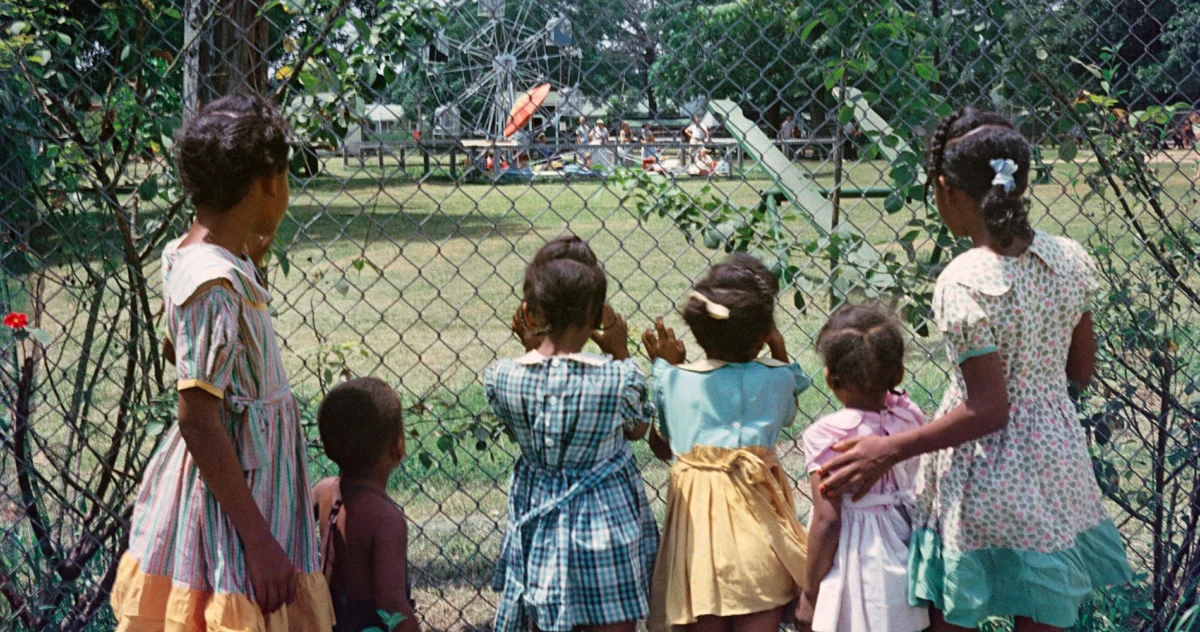
Another critical component of the exhibition is Parks’ Segregation Story series, commissioned by Life Magazine and published under the title "The Restraints: Open and Hidden" in 1956. This series features works such as Outside Looking In, Department Store, and Mr. and Mrs. Albert Thornton. These photographs offered an unprecedented look into the daily lives of Black families in segregated Alabama, humanizing the devastating effects of Jim Crow laws. At a time when mainstream media often perpetuated stereotypes or ignored the realities of segregation, Parks’ work presented a starkly contrasting narrative. The Gordon Parks Foundation has previously highlighted that Parks often wrote his own articles, "allowing him to inject his personal perspective and challenge stereotypes." This practice ensured that the visual narrative was complemented by an authentic textual voice, creating "narratives that consistently expressed the dignity and complex humanity of his subjects, starkly contrasting with mainstream representations."
A Chronology of Struggle and Resilience: The Historical Canvas of Parks’ Work
Gordon Parks (1912-2006) was born into a nation grappling with the enduring legacy of slavery and the systemic oppression of Jim Crow. His life and work spanned a period of immense upheaval and change, from the nadir of racial segregation to the triumphs and subsequent challenges of the Civil Rights era.
-
The Post-Emancipation Betrayal and the Rise of Jim Crow
The foundation of Parks’ visual commentary lies in the historical context of Black America following the Civil War. After 246 years of brutal enslavement, where an estimated ten million Black people were forcibly brought to what would become the United States, four million were emancipated in 1865. Stevenson notes the "remarkable decision to commit to creating a more just America," as formerly enslaved people chose citizenship, seeking to build a nation that had so profoundly wronged them. They established churches, schools, and families, embracing freedom with "extraordinary fortitude."
However, this commitment was swiftly betrayed. Just over a decade after the war, protections for African Americans were withdrawn. The period of Reconstruction (1865-1877) was violently overthrown by white supremacists, former enslavers, and those committed to racial hierarchy. Congress and the Supreme Court abandoned their constitutional commitments to equal protection and voting rights for emancipated Black people, paving the way for the institutionalization of Jim Crow laws. These laws enforced racial segregation, denying Black Americans basic rights and subjecting them to economic exploitation, social humiliation, and terror through mob violence and lynching. Gordon Parks was born into this brutal reality in the early 20th century, witnessing and enduring "the stress and degradation of racial hierarchy." Yet, he also understood "the strength, resilience, artistry, resolve, and beauty that animated Black life." -
Parks’ Camera as a "Weapon of Choice" Against Injustice
Amidst this struggle, Parks picked up a camera, famously calling it his "weapon of choice." He consciously decided to document the story of America, focusing specifically on the lives of Black people. His lens illuminated the "pain and humiliation of segregation, the despair of poverty, the violence of abusive law enforcement officers, and the appalling hypocrisy of an America globally on the rise—preaching democracy and equality abroad while mired in racial bigotry at home." His early work for the Farm Security Administration and later for Life Magazine provided him with unparalleled platforms to expose these truths to a national audience. For instance, his extensive photo essays on the daily lives of Harlem gangs in the 1940s and the plight of impoverished sharecroppers brought unseen realities into public discourse, forcing a confrontation with uncomfortable truths. -
Illuminating the Civil Rights Movement and Black Empowerment
As the Civil Rights Movement gained momentum in the 1950s and 60s, Parks was "energized and excited by resistance to oppression and creativity within the Black community." He captured the raw emotion of protests, the quiet dignity of activists, and the emergent spirit of "Black power." He also celebrated the triumphs of Black athletes, musicians, and artists, presenting "counter-narratives to racial discrimination that Parks brilliantly brought to life." His art played a crucial role in challenging the legitimacy of racial caste, visually dismantling the psychological and social structures that upheld Jim Crow. Through his powerful imagery, Parks helped "a new generation of Black and white leaders to tear down the architecture of Jim Crow laws," fostering an environment where a more hopeful future, less burdened by racial bigotry and violence, could be imagined. His work resonated with the call of Black poet Langston Hughes, to "America be America," urging the nation to live up to its stated ideals.
The Gordon Parks Foundation at 20: Preserving a Visionary’s Impact
The 20th anniversary of The Gordon Parks Foundation is not merely a commemoration but a vital reaffirmation of its mission. The Foundation is dedicated to permanently preserving the work of Gordon Parks, making it available to the public through exhibitions, books, and digital platforms, and to creating educational initiatives that advance his legacy. Its programs foster a new generation of artists, photographers, and filmmakers, echoing Parks’ commitment to using art for social good. The partnership with Alison Jacques for this exhibition exemplifies the Foundation’s strategic approach to expanding Parks’ reach and ensuring his messages remain relevant.
A representative from The Gordon Parks Foundation, in a statement released for the anniversary, emphasized the Foundation’s pride in this collaboration: "To see Bryan Stevenson, a modern-day champion of justice, curate Gordon’s work for our 20th anniversary is incredibly fitting. It highlights the timeless nature of Gordon’s commitment to truth and dignity, and the urgent need for his voice in today’s world. This exhibition is a powerful way to honor his vision and inspire continued action." Alison Jacques, for her part, added, "It is an immense privilege to host Gordon Parks: We Shall Not Be Moved. Gordon Parks’ photographs are not just historical documents; they are living testaments to human resilience and the enduring fight for equality. We believe this exhibition will deeply resonate with our audience and reinforce the critical role art plays in societal change."
Contemporary Echoes: Parks’ Art as a Bulwark Against Historical Erasure
Stevenson’s essay for the exhibition powerfully connects Parks’ historical work to contemporary challenges. He warns of "a moment when there is an intense and active effort of erasure, retreat from civil rights and silencing of Black voices and history in the United States." In this climate, Parks’ images "provide insight and relevance to our current discourse," with Stevenson asserting that "His work absolutely suggests resistance to bigotry and oppression."
Today, as Stevenson meticulously details, "many in the United States are retreating from a full commitment to equality and justice for all." There are concerted efforts by "powerful people" to "rewrite history, minimizing the harms of slavery, lynching, segregation and racial bigotry." Concurrently, "People of color are being demonized and castigated because of their race, ethnicity or national origin." The implications of this are dire, leading many Black Americans to recognize that "their struggle is still unfinished." This manifests in a "reinforced presumption of dangerousness, guilt or incompetence" assigned to many based on their color, and the "sabotage of Black political power through a multitude of schemes that the Supreme Court seems ready to legitimate."
The current landscape sees "the gains of the civil rights movement being taken away, as censorship and the whitewashing of history are on the rise and even artistic freedom is being attacked." This climate fosters a sense of despair, making "it’s easy to understand why many people might want to escape, retreat and once again become silent. To many, silence seems safer."
However, Gordon Parks was an artist who "absolutely rejected silence or retreat." His profound understanding of "the persistence and strength of the human spirit" meant he would not put down his camera, even "in the face of cruel and abusive power." His art, therefore, takes on "renewed significance" today, serving as "a retort to those who want to force Americans back to some earlier era of perceived greatness when racial and gender hierarchy reigned."
Conclusion: A Continuing Imperative for Justice
The exhibition Gordon Parks: We Shall Not Be Moved is far more than a collection of photographs; it is, as Bryan Stevenson concludes, "history, education and protest." It offers a powerful, visual argument against complacency and a compelling call to action. The artistry of Gordon Parks makes it clear that society "cannot turn back, we cannot remain silent and we cannot retreat from advancing true justice." His work provides a voice for what "many of us are prepared to say, and we will say it. We shall not be moved." In an era where foundational principles of equality and historical truth are under siege, Parks’ enduring legacy, illuminated by Stevenson’s expert curation, serves as an indispensable guide and an unwavering source of inspiration for the ongoing fight for justice and human dignity.