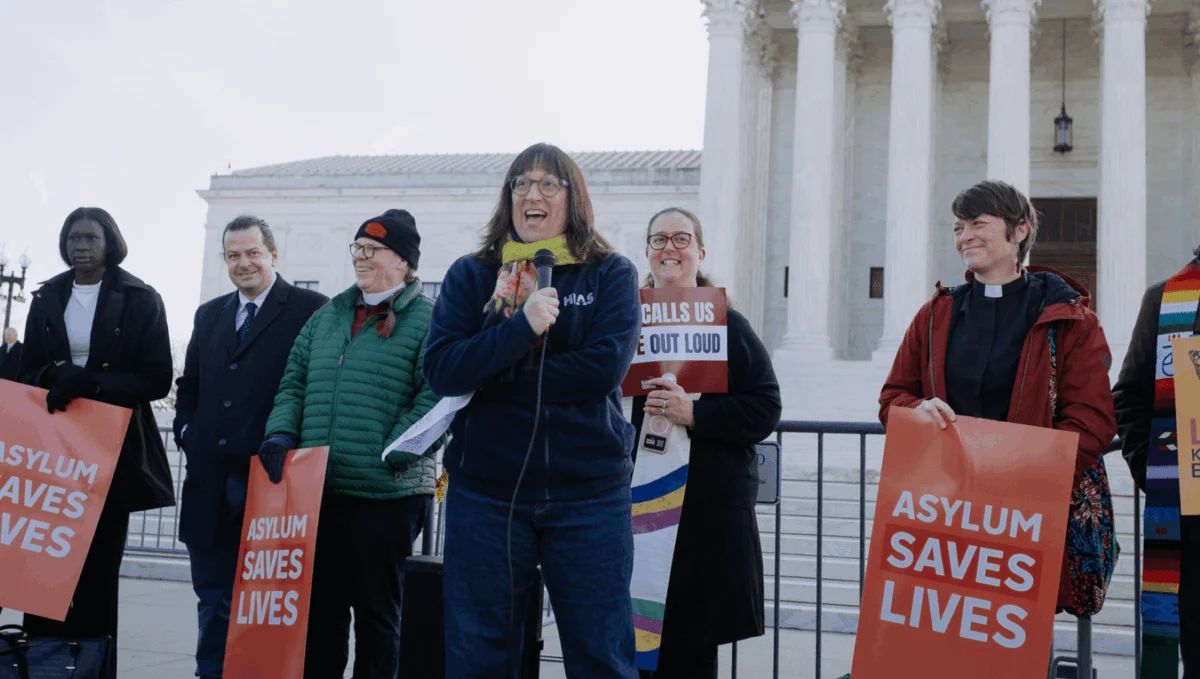
HIAS CEO Beth Oppenheim recently appeared on NBC San Diego’s "Politically Speaking" program to address a growing concern: new policies that threaten to subject resettled refugees to arrest and detention. Oppenheim issued a fervent call for the protection of individuals who have been welcomed into the United States through the U.S. Refugee Admissions Program (USRAP), a program historically recognized for its bipartisan support and humanitarian mission. The interview, which also featured a video, underscored the personal commitment Oppenheim brings to her work, stating, "Whatever is in the headlines today, it involves the lived experience of people who have been refugees in the past. And for me, that’s what carries my passion and my work forward… We have to keep reminding people that that really is the story of America." This appearance signals a critical moment for refugee advocacy, as organizations like HIAS work to safeguard the rights and well-being of vulnerable populations.
The Shifting Landscape of Refugee Resettlement
The U.S. Refugee Admissions Program has historically served as a cornerstone of American humanitarian policy, offering refuge to individuals fleeing persecution, war, and natural disasters. Established in 1980, the program has evolved over decades, adapting to geopolitical shifts and evolving global humanitarian needs. Under its framework, individuals are vetted through a rigorous multi-agency process, including security checks by intelligence agencies, health screenings, and interviews with Department of Homeland Security officers, before being granted entry and offered support for resettlement in communities across the United States.
However, recent policy shifts and pronouncements from various levels of government have introduced a new layer of uncertainty and potential vulnerability for those who have successfully navigated this system. The specific policies that Oppenheim referenced on NBC San Diego likely pertain to broader immigration enforcement initiatives that may inadvertently, or intentionally, impact individuals who were admitted under the refugee program. This could include changes in how past refugee status is viewed in the context of new enforcement priorities, or the potential for detention or arrest based on evolving interpretations of immigration law or national security concerns.
Historical Context: A Legacy of Welcome and Shifting Tides
The United States has a long, albeit not always consistent, history of offering refuge. Following World War II, the U.S. played a significant role in resettling displaced persons. The Refugee Act of 1980 formalized the nation’s commitment, establishing a clear definition of a refugee and a process for admission, separate from the general immigration system. This bipartisan legislation was a landmark achievement, reflecting a national consensus on the moral imperative to assist those fleeing persecution.
Throughout the Cold War and beyond, the U.S. resettled significant numbers of refugees from various regions, including Vietnam, Cambodia, Laos, the Soviet Union, and later, from countries experiencing conflict or political upheaval such as Bosnia, Iraq, and Syria. Organizations like HIAS (formerly the Hebrew Immigrant Aid Society), founded in 1881, have been instrumental in this process, providing vital resettlement services, including housing, legal assistance, language training, and job placement, to help refugees integrate into American society.
The narrative of America as a "nation of immigrants" and a haven for the persecuted has been a recurring theme. However, this commitment has often been tested by political shifts, economic anxieties, and national security concerns. Periods of increased immigration or perceived national threats have often led to stricter policies and a more contentious public discourse surrounding refugee resettlement. The current environment, characterized by a complex interplay of humanitarian concerns, border security challenges, and political polarization, represents one such period of intense debate and policy evolution.
Oppenheim’s Appeal: Protecting the Vulnerable
Beth Oppenheim’s appearance on NBC San Diego serves as a crucial intervention in this evolving landscape. By highlighting the potential for arrest and detention of individuals already granted refugee status, she is drawing attention to a fundamental contradiction: the U.S. has long welcomed these individuals, yet new policies could undermine their safety and stability.
The U.S. Refugee Admissions Program involves an extensive vetting process designed to ensure that those admitted are not a security risk. This process can take years and involves multiple government agencies. Refugees are admitted for humanitarian reasons, and their resettlement is intended to provide them with a chance to rebuild their lives in safety. The prospect of them facing arrest or detention after successfully integrating into communities raises serious questions about due process and the reliability of the U.S. commitment to those it has granted asylum.
Oppenheim’s statement, "Whatever is in the headlines today, it involves the lived experience of people who have been refugees in the past. And for me, that’s what carries my passion and my work forward," underscores the human element at the heart of refugee policy. It is a reminder that policies do not affect abstract numbers, but individuals and families who have endured immense hardship and are seeking safety and opportunity. Her assertion that "We have to keep reminding people that that really is the story of America" is a direct appeal to the nation’s founding ideals and its historical role as a sanctuary.
Supporting Data and the Scale of the Issue
To understand the scope of Oppenheim’s concern, it’s important to consider the numbers. While refugee admissions have fluctuated significantly over the years, the USRAP has historically resettled hundreds of thousands of individuals. For instance, in fiscal year 2016, the U.S. resettled over 84,000 refugees. In fiscal year 2020, this number dropped to just over 11,000, reflecting policy changes. While recent administrations have sought to increase admissions, the program’s capacity and the number of individuals admitted remain sensitive to political will and resource allocation.
The concern about new policies potentially targeting resettled refugees is not about new arrivals, but about those who have already been processed, admitted, and are in the process of building lives. These individuals are often law-abiding members of their communities, contributing to the economy and social fabric. The implication of them facing arrest and detention could lead to:
- Family Separation: If individuals are detained, their families, including U.S. citizen children, could be separated.
- Economic Disruption: Detention removes individuals from the workforce, impacting their ability to support their families and their contributions to the local economy.
- Psychological Trauma: For individuals who have already experienced trauma and persecution, the prospect of detention can re-traumatize them, exacerbating mental health challenges.
- Undermining Trust: Such policies can erode trust in the U.S. government and its commitment to protecting vulnerable populations, potentially discouraging future asylum seekers and refugees.
Chronology of Evolving Policies and Advocacy
The concerns raised by Oppenheim are not isolated incidents but are situated within a broader context of evolving immigration and refugee policies in recent years. While a precise timeline of the specific "new policies" can be complex due to the piecemeal nature of regulatory changes and executive actions, several key periods and developments are relevant:
- Post-9/11 Era: Following the September 11, 2001, terrorist attacks, national security concerns led to increased scrutiny of all immigration processes, including refugee admissions. Vetting procedures were enhanced, and the pace of admissions sometimes slowed.
- Trump Administration (2017-2021): This period saw significant shifts in refugee policy. The refugee admissions cap was drastically lowered, and stricter vetting measures were implemented. Executive orders also led to increased immigration enforcement and a focus on border security, which some argued had a chilling effect on asylum seekers and potentially on the perception of those already resettled.
- Biden Administration (2021-Present): The Biden administration has aimed to restore and strengthen the USRAP, increasing the admissions cap and emphasizing humanitarian values. However, the administration also faces significant challenges at the southern border, and broader immigration enforcement remains a priority. It is within this context that concerns about how existing refugee populations might be affected by enforcement priorities or new legal interpretations have emerged.
- Recent Advocacy Efforts: Organizations like HIAS have been actively engaged in advocacy throughout these periods, working to inform policymakers, mobilize public support, and provide legal and social services to refugees and asylum seekers. Oppenheim’s interview is part of this ongoing effort to raise awareness and push for protective policies.
Potential Reactions from Related Parties
Oppenheim’s statement on NBC San Diego is likely to elicit a range of reactions from various stakeholders:
- Refugee Resettlement Agencies: Organizations like HIAS, Catholic Charities, and Lutheran Immigration and Refugee Service, which directly assist refugees, would likely echo Oppenheim’s concerns and express their commitment to advocating for the protection of their clients. They are on the front lines, witnessing the impact of policy changes on the lives of resettled individuals.
- Government Agencies: Officials from the Department of Homeland Security (DHS) and the State Department, which oversee refugee admissions and immigration enforcement, might respond by emphasizing the government’s commitment to both national security and humanitarian principles. They would likely highlight the rigorous vetting process and the legal frameworks governing immigration enforcement. Specific responses would depend on the precise nature of the policies being questioned.
- Immigration Advocacy Groups: A broad coalition of immigration advocacy organizations would likely support Oppenheim’s call for protection, framing it as a matter of human rights and upholding American values.
- Civil Liberties Organizations: Groups like the American Civil Liberties Union (ACLU) might express concerns about due process and the potential for overreach in immigration enforcement, particularly if policies could lead to arbitrary detention or arrest.
- Policymakers: Members of Congress, both supportive and critical of current immigration policies, would likely engage with the issue. Those who advocate for stricter enforcement might see such policies as necessary for national security, while those who champion humanitarian causes would likely align with Oppenheim’s position.
- The Public: Public reaction would likely be diverse, influenced by individual perspectives on immigration, national security, and humanitarian responsibility. Media coverage of Oppenheim’s interview could spur further public discussion and debate.
Broader Impact and Implications: Upholding American Values
The implications of policies that could target resettled refugees are far-reaching. At its core, this issue touches upon the integrity of the U.S. Refugee Admissions Program and the nation’s commitment to humanitarian ideals.
- Erosion of Trust: If individuals admitted under a formal, vetted program face arrest or detention, it erodes trust in the U.S. government’s promises and creates a climate of fear and uncertainty for vulnerable populations. This could have a chilling effect on future refugee admissions and on the willingness of individuals to seek asylum.
- Economic and Social Integration: Successful resettlement relies on stability and security. Policies that introduce the threat of detention can disrupt the integration process, hindering refugees’ ability to find employment, access education, and become self-sufficient members of their communities. This can lead to increased reliance on social services and a less cohesive society.
- U.S. Global Standing: The United States has historically been a leader in humanitarian efforts. Policies that are perceived as turning away from those seeking refuge or revoking protections for those already welcomed can damage the nation’s international reputation and its influence on global humanitarian policy.
- The Narrative of America: As Oppenheim powerfully stated, the story of America is intertwined with the experiences of immigrants and refugees. Policies that contradict this narrative risk undermining a fundamental aspect of the nation’s identity and its capacity for compassion and inclusion.
In conclusion, Beth Oppenheim’s appearance on NBC San Diego is a significant moment in the ongoing dialogue about refugee resettlement in the United States. Her call for protection highlights the critical need for policies that uphold the integrity of the U.S. Refugee Admissions Program and safeguard the rights and dignity of those who have sought refuge and have been welcomed by America. The situation underscores the complex challenges of balancing national security with humanitarian responsibilities, and the imperative to ensure that the lived experiences of vulnerable individuals remain at the forefront of policy decisions. The broader implications for American values, global standing, and the well-being of resettled communities depend on how these concerns are addressed.