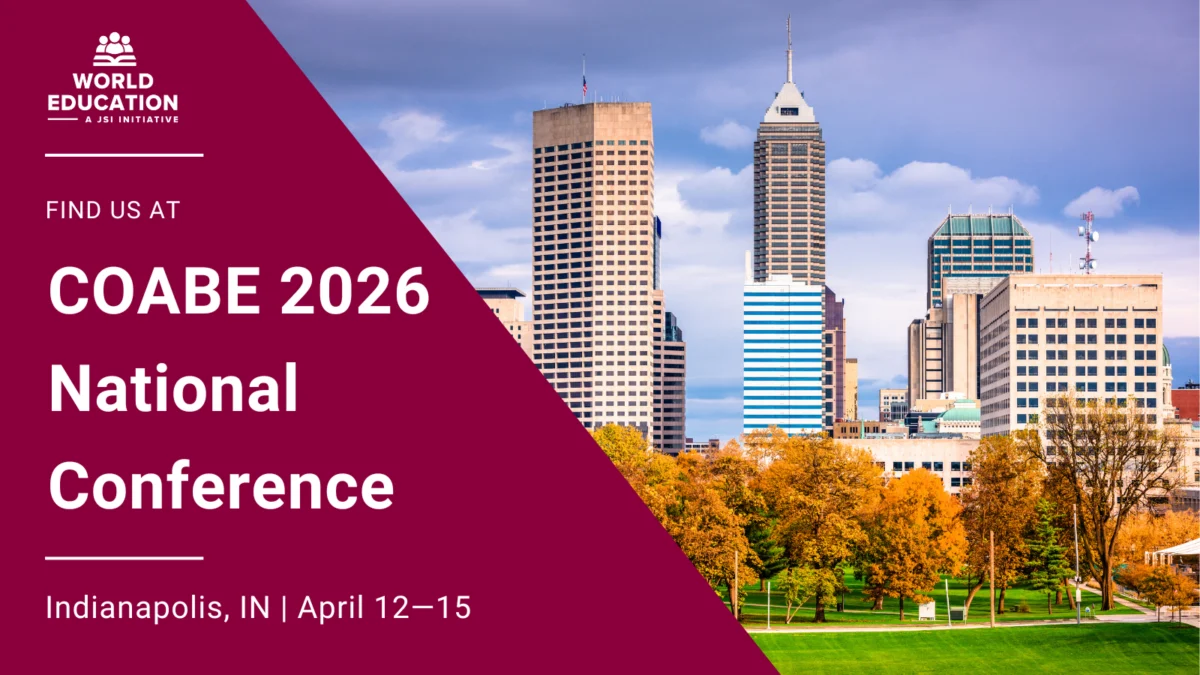
World Education, a prominent initiative of JSI, has announced its extensive participation in the upcoming Commission on Adult Basic Education (COABE) 2026 National Conference, scheduled to take place in Indianapolis, Indiana, from April 12 to April 15. As the landscape of adult education undergoes a rapid transformation driven by technological advancement, World Education experts are prepared to present a comprehensive suite of sessions focused on digital literacy, professional development, and the strategic integration of Generative Artificial Intelligence (AI). The organization’s presence at this premier national forum underscores its commitment to closing the digital divide and enhancing pedagogical frameworks for adult learners across the United States.
The COABE National Conference serves as a critical nexus for educators, administrators, and policymakers dedicated to adult foundational education. With the 2026 event hosted in Indianapolis, a city increasingly recognized as a Midwestern hub for innovation, the conference aims to address the urgent need for modernized educational practices. World Education’s involvement comes at a time when digital proficiency is no longer an optional skill but a fundamental requirement for workforce participation and civic engagement. By sharing insights gleaned from field research and practical implementation, the organization seeks to provide attendees with scalable solutions for diverse educational contexts.
The Strategic Importance of Digital Literacy in 2026
The focus of World Education at COABE 2026 reflects broader national trends in the adult education sector. According to data from the Program for the International Assessment of Adult Competencies (PIAAC), a significant portion of the American adult population continues to struggle with the digital skills necessary to navigate the modern economy. As industries increasingly adopt automated systems and AI-driven workflows, the "digital floor" for entry-level employment has risen. World Education’s sessions are designed to meet this challenge head-on, offering tools that help educators assess and build these essential competencies.
The conference agenda highlights World Education’s leadership in several key areas, including the development of digital skills checklists, the implementation of municipal literacy initiatives, and the exploration of AI’s role in resource creation. These efforts are part of a larger strategy to ensure that adult learners are not left behind in the transition to a digital-first society. By partnering with organizations such as the American Institutes for Research (AIR) and various academic institutions, World Education is bridging the gap between high-level research and classroom practice.
Chronology of Sessions and Expert Presentations
The organization’s contributions to the COABE 2026 program are distributed across three days of intensive learning and networking. Each session is tailored to address specific hurdles faced by practitioners in the field.
Monday, April 13: Bridging Policy and Practice
The first day of the conference focuses on foundational frameworks and local implementation strategies. At 8:00 AM, Jeff Goumas will lead a session in the JW Grand Ballroom 2 titled "Using BRIDGES Skills Checklists to Drive Digital Skills Development in Any Context." This session, available to both in-person and virtual attendees, introduces a standardized approach to tracking and fostering digital growth, ensuring that learners have a clear roadmap for their skill acquisition.
Later in the morning, Sandy Goodman and Catalina González will present "From Policy to Practice: Implementation Lessons from Boston’s Digital Literacy Initiative." This session (11:50 AM, JW Grand Ballroom 4) provides a case study of how urban centers can coordinate resources to address literacy at scale. The presentation is expected to offer valuable insights for municipal leaders looking to replicate Boston’s success in their own jurisdictions.
The afternoon concludes with a research-heavy session at 3:50 PM in Room 205. "Practical Solutions from Research: Digital Tools to Support Teaching and Learning from the CREATE Network" will feature Jen Vanek and Jeff Goumas alongside teams from the American Institutes for Research. This in-person-only session will translate complex research findings into actionable classroom tools, emphasizing evidence-based instruction.
Tuesday, April 14: The AI Frontier and Open Resources
The second day shifts the focus toward the cutting edge of educational technology. Rachel Riggs will open the day at 8:00 AM in the JW Grand Ballroom 3 with "Aligning AI Literacy with Learning and Work Goals in Adult Ed." As Generative AI becomes ubiquitous, this session will explore how educators can teach students to use these tools ethically and effectively to achieve their professional objectives.
At 11:50 AM, Jen Vanek and Jeff Goumas, joined by Stephen Sireci of UMass Amherst, will present "Free and Open Online Literacy Curriculum: Leveraging SkillBlox and ASAP for Adult Readers." This session addresses the persistent issue of resource scarcity by highlighting high-quality, open-access materials that can be customized for literacy-level learners.
The afternoon (2:00 PM) offers a dual track of sessions. In Room 206, Jen Vanek and Jeff Goumas will collaborate with Stephanie Cronen and Neha Nanda from AIR to present "Practitioner-Friendly Findings: How to Leverage Free Research-based Resources to Teach In-Demand Skills." Simultaneously, in JW Grand Ballroom 3, Rachel Riggs will host "Generative AI and the EdTech Maker Space: Leveraging GenAI to Fill Learning Resource Gaps," focusing on how instructors can use AI to create bespoke educational content rapidly.
Wednesday, April 15: Maximizing Impact and Online Engagement
The final day of the conference emphasizes professional development and the nuances of online instruction. Dani Scherer will present "Maximum Impact Professional Development: A Three-Pronged Approach" at 11:50 AM in Room 209. This session outlines a holistic model for educator growth, ensuring that teachers are as well-supported as their students.
The afternoon sessions, led by Eliana Stanislawski, focus on the practicalities of digital delivery. "EdTech in Action: Structuring a Digital Literacy Learning Series for Adult Educators" (1:30 PM, Room 209) provides a blueprint for professional learning communities. The conference for World Education concludes with "Engaging Strategies for Online Instruction of Literacy-Level Adults" at 3:00 PM in JW Grand Ballroom 4, addressing the specific pedagogical challenges of teaching foundational skills in a virtual environment.
Supporting Data and the Research Context
The initiatives presented by World Education are backed by a growing body of data regarding the effectiveness of technology-integrated instruction. Recent studies from the CREATE Network indicate that when digital tools are integrated into adult education with proper scaffolding, learner retention and goal attainment rates increase significantly. Furthermore, the use of Open Educational Resources (OER), such as those featured in the SkillBlox session, has been shown to reduce the financial burden on community-based organizations while maintaining high instructional standards.
The focus on AI literacy is particularly timely. A 2025 industry report suggested that nearly 60% of middle-skill jobs now require some level of interaction with AI or automated data systems. By introducing these concepts in the adult education classroom, World Education is directly contributing to the economic mobility of its target populations.
Perspectives from the Field
While official statements from the conference organizers emphasize the collaborative nature of the event, the sentiment among adult education practitioners is one of urgent adaptation. "The transition to AI-integrated learning environments is the most significant shift we have seen since the introduction of the internet in the classroom," noted one prospective attendee. "Having organizations like World Education provide a structured, research-based path forward is essential for those of us working on the ground."
World Education’s leadership has consistently advocated for a "human-in-the-loop" approach to educational technology. By focusing on professional development and teacher-led AI implementation, the organization ensures that technology serves to enhance, rather than replace, the critical relationship between educator and learner.
Broader Impact and Future Implications
The long-term implications of the strategies showcased at COABE 2026 extend beyond the classroom. By strengthening education systems and fostering enduring partnerships across sectors, World Education and JSI are influencing national policy. Their work in capacity development and applied research provides a foundation for more inclusive education policies that recognize the diverse needs of adult learners, including immigrants, refugees, and those transitioning from the justice system.
As the conference concludes, the insights shared in Indianapolis are expected to inform the next generation of adult education programs. The emphasis on "maximum impact" professional development suggests a shift toward more sustainable, scalable models of teacher training. Moreover, the focus on accessible learning opportunities ensures that the benefits of the digital revolution are distributed more equitably.
World Education continues to invite stakeholders to partner with them in these efforts. By offering services in program design, evaluation, and policy development, the organization remains at the forefront of the movement to advance education outcomes for all. For those unable to attend the conference in person, the inclusion of virtual sessions ensures that these vital resources remain accessible to the global community of adult educators. Through continued innovation and collaboration, World Education is not only responding to the current technological landscape but is actively shaping the future of adult foundational education.