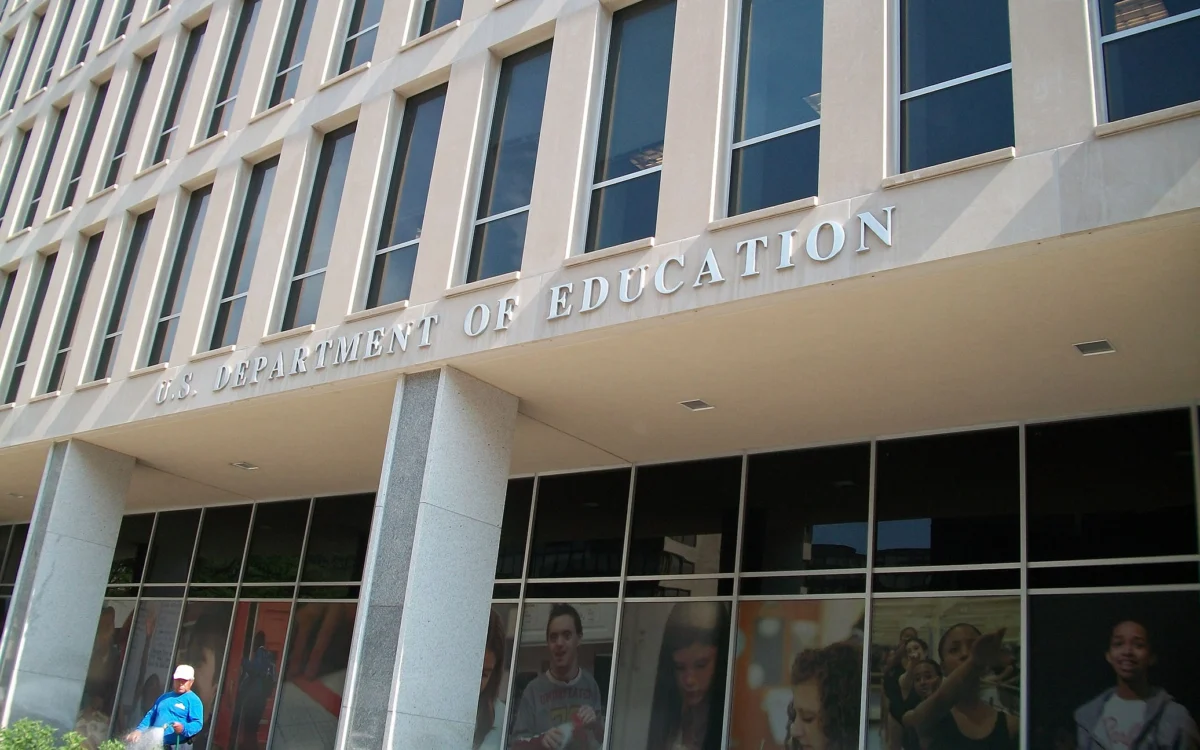
The U.S. Department of Education is undergoing a significant restructuring, transferring a number of its core responsibilities to other federal agencies. This trend has ignited alarm among disability advocates, who fear that the crucial domain of special education may be the next to be reassigned, potentially disrupting decades of established policy and practice. The latest development involves an agreement with the Department of Treasury to manage student loans, marking the tenth such interagency agreement (IAA) executed by the Education Department in the past year to offload programs.
A Pattern of Program Transfers
The recent agreement with the Treasury Department to assume management of student loans is not an isolated incident but rather the latest in a series of strategic realignments within the federal government. Over the past twelve months, the Education Department has progressively divested itself of various programs, a process that has raised eyebrows and prompted urgent calls for transparency and continued advocacy from stakeholders invested in the future of education and support services for vulnerable populations.
Whispers of Change for Special Education
Amidst this backdrop of agency consolidation and program relocation, significant speculation has emerged regarding the fate of the Education Department’s Office of Special Education and Rehabilitative Services (OSERS). OSERS encompasses critical sub-offices, including the Office of Special Education Programs (OSEP), which oversees the implementation of the Individuals with Disabilities Education Act (IDEA), and the Rehabilitative Services Administration (RSA), responsible for vocational rehabilitation services that aid individuals with disabilities in securing employment.
An alert issued by the National Down Syndrome Congress (NDSC) highlighted these concerns, stating, "Additional IAAs are expected very soon and may include transferring the programs of the Office of Special Education and Rehabilitative Services (OSERS), which includes the Office of Special Education Programs (OSEP) and the Rehabilitative Services Administration (RSA) that oversees vocational rehabilitation, out of the Department of Education to another federal agency." This alert urged members of Congress to engage with the issue, signaling the gravity with which the organization views the potential shift.
Potential Relocation and Underlying Rationale
The NDSC’s alert also pointed to "urgent information" suggesting discussions between Secretary of Health and Human Services Robert F. Kennedy Jr. and Education Secretary Linda McMahon regarding the transfer of OSERS to the Department of Health and Human Services (HHS). The purported rationale for this potential move is reportedly rooted in the perception that special education is fundamentally a "medical" issue, a perspective that disability advocates vehemently contest.
This potential relocation echoes past pronouncements. In March 2025, former President Donald Trump indicated his intention to transfer oversight of "special needs" programs from the Department of Education to HHS. While Secretary McMahon has reportedly suggested that OSERS could be moved to either HHS or the Department of Labor, reliable sources within the National Down Syndrome Congress suggest that the White House Office of Management and Budget (OMB) is poised to make a final determination on which agency will assume responsibility for these vital programs.
Advocacy Groups Raise Red Flags
Disability advocacy organizations have been vocal in their opposition to these potential transfers, emphasizing the potential negative consequences for students with disabilities and their families. The National Down Syndrome Congress, in its urgent communication, stressed the bypass of congressional intent and potential violations of federal law through these interagency agreements. "While these reports have not been officially confirmed, this is a critical moment for advocacy," the group stated. "These programs should not be moved anywhere. These actions bypass Congress and violate clear congressional intent and conflict with federal law."
Stephanie Smith Lee, co-director of policy and advocacy at the NDSC, elaborated on these concerns in a letter to the White House budget office. She and her colleague, Heather Sachs, articulated that transferring IDEA oversight from an educational agency to a health agency would be particularly detrimental. "Moving IDEA oversight from an education agency to a health agency risks reviving an outdated medical model of disability, which treats students as patients needing to be ‘cured’," they warned. Furthermore, they cautioned that such a move would likely weaken the crucial coordination between special education and general education, disrupt the vital link between education and workforce preparation, and ensnare special education within the broad and often complex bureaucracy of the health sector.
Chad Rummel, executive director of the Council for Exceptional Children, echoed these sentiments, urging families to remain vigilant. "The administration should be focusing on how to improve the lives of kids with disabilities, and any changes needed to do that would be welcomed. However, no one can show us how the time, energy and resources needed to move OSERS will benefit kids, so we must continue to be guarded," Rummel stated. He further emphasized the potential disruption: "Bringing down a system built over 50 years is not going to be easy to fix; parents and educators should be concerned about where we are headed and what education experts are leading and supporting this change."
Historical Context of Special Education Oversight
The Individuals with Disabilities Education Act (IDEA) was signed into law in 1975, stemming from a growing awareness of the educational needs of children with disabilities and a recognition that they were often excluded from public education. Prior to IDEA, many children with disabilities received little to no formal education, and those who did often attended segregated institutions. The landmark legislation mandated that all eligible children with disabilities receive a Free Appropriate Public Education (FAPE) in the Least Restrictive Environment (LRE). The establishment of the Office of Special Education Programs (OSEP) within the Department of Education in 1977 was instrumental in implementing and overseeing IDEA, ensuring a consistent national framework for special education services.
The subsequent decades have seen continuous refinement of IDEA and its supporting regulations, with the Department of Education playing a central role in interpreting federal law, providing technical assistance to states and school districts, and ensuring compliance. The close relationship between special education and general education, fostered under the Department of Education, has been crucial for integrating students with disabilities into the broader school environment and promoting their academic and social development.
The Implications of a Shift to HHS
A move of OSERS to the Department of Health and Human Services, while ostensibly driven by a "medical" framing of disability, carries significant implications. HHS is a vast department with responsibilities spanning Medicare, Medicaid, the Centers for Disease Control and Prevention (CDC), and the Food and Drug Administration (FDA), among many other health-related agencies. While health is undeniably a component of a child’s overall well-being, framing special education primarily through a medical lens risks reducing educational interventions to a series of treatments or therapies, rather than focusing on comprehensive educational access, learning, and development.
This shift could inadvertently lead to a de-emphasis on pedagogical strategies, curriculum adaptation, and the development of individualized education programs (IEPs) that are grounded in educational best practices. Furthermore, the coordination between special education services and the broader school system, including general education classrooms, extracurricular activities, and post-secondary transition planning, could be fragmented. This fragmentation might hinder the seamless integration of students with disabilities into the educational fabric and complicate efforts to prepare them for future employment and independent living.
The Rehabilitative Services Administration (RSA), currently under OSERS, plays a critical role in connecting individuals with disabilities to vocational training, job placement, and support services aimed at fostering economic self-sufficiency. Its integration into a health-focused agency might dilute its emphasis on employment outcomes and its established partnerships with businesses and workforce development agencies.
Official Statements and Ongoing Evaluation
When pressed for comment, a spokesperson for the Department of Education, Savannah Newhouse, stated that the agency is still actively evaluating its options. "We are continuing to evaluate potential partnerships for special education programs," she said. "As we have said again and again: statutorily-mandated federal functions – such as civil rights enforcement and special education services – will continue." This assurance, while intended to be reassuring, does not fully address the specific concerns raised by advocates regarding the location of these functions and the potential impact of their relocation on their efficacy and philosophical underpinnings.
The Department of Education’s ongoing evaluation of potential partnerships suggests a commitment to exploring avenues for program efficiency and effectiveness. However, the lack of definitive clarity and the continued reliance on interagency agreements for significant program shifts have fueled anxiety within the disability community. The statutory mandates for special education services are indeed robust, but the administrative structure and departmental oversight play a crucial role in how these mandates are interpreted, implemented, and enforced on the ground.
Broader Impact and Future Considerations
The ongoing reevaluation of the Department of Education’s structure and program responsibilities raises critical questions about the future of federal support for education and disability services. The trend of offloading programs through interagency agreements, while potentially streamlining certain administrative processes, risks diluting the original intent and specialized focus of these programs.
For special education, a domain built upon decades of advocacy, research, and legislative commitment to educational equity, any significant structural change warrants careful scrutiny. The potential transfer of OSERS from the Department of Education to an agency with a primary focus on health could fundamentally alter the philosophical underpinnings and operational framework of special education in the United States. Disability advocates will undoubtedly continue to monitor these developments closely, engaging with policymakers to ensure that the rights and educational needs of students with disabilities remain paramount. The coming weeks and months are likely to be pivotal in determining the future administrative landscape of special education in the United States.