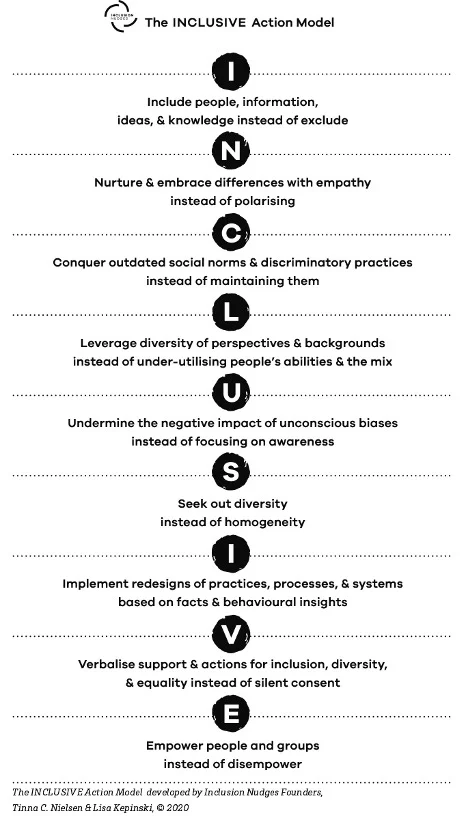
The widespread adoption of unconscious bias awareness (UBA) training as a primary response to systemic discrimination and inequality has emerged as a global trend, fueling a multi-billion dollar industry built on the promise of achieving equity and inclusion. However, growing evidence suggests that this ubiquitous approach is, at best, ineffective, and at worst, actively counterproductive, potentially exacerbating the very issues it seeks to resolve. This critical examination delves into why UBA training falls short and advocates for a fundamental shift towards designing systemic solutions for a truly equitable society.
The Rise and Pervasiveness of Bias Awareness Training
In recent years, organizations globally have gravitated towards UBA training as a seemingly straightforward antidote to workplace discrimination and exclusionary practices. This surge can be contextualized against a backdrop of intensified social justice movements and increasing calls for accountability. Following the emergence of the #MeToo movement, which brought widespread attention to issues of sexual harassment and gender inequality, many corporations responded by implementing or expanding UBA programs. Similarly, the global resonance of the #BlackLivesMatter movement, highlighting systemic racial injustice, prompted another wave of organizations to mandate bias training, often framed as a crucial step towards fostering diversity, equity, and inclusion (DEI).
This pattern extends beyond large-scale social movements. Individual employee grievances related to unfair treatment, or a general desire to demonstrate commitment to DEI principles, frequently trigger the knee-jerk reaction of deploying organization-wide bias training. The prevailing mindset often assumes that such training will "fix" deep-seated issues by making individuals aware of their implicit prejudices. For many leaders, offering UBA training serves as a defensive shield, a visible token of compliance and an assurance that "things are going to change here." This performative aspect allows organizations to signal progressive values without necessarily committing to fundamental structural reforms. The market for DEI consulting, heavily featuring bias training, has exploded, with estimates placing its value in the tens of billions of dollars annually, indicating the scale of investment in these solutions.
The Cognitive Fallacy: Why Awareness Alone Fails
The fundamental flaw in the UBA training paradigm lies in a misunderstanding of human cognition and behavior. Proponents of UBA training often operate under the assumption that intellectual awareness of biases will naturally lead to behavioral change. This appeals to our rational, conscious mind, often referred to as "System 2" thinking – the deliberate, analytical, and effortful processing system. However, the vast majority of our cognitive functioning, including the operation of unconscious biases and stereotypes, occurs within the realm of the "System 1" mind – the intuitive, automatic, and largely unconscious processing system.
Training that is predominantly knowledge-based and aims to "convince" individuals to be more inclusive by making them aware of their unconscious biases fundamentally appeals to the wrong cognitive system if lasting behavioral change is the objective. Knowing about a bias in an abstract, intellectual sense does not automatically reduce its impact on automatic decision-making or snap judgments. The gap between conscious intent and unconscious action remains a significant hurdle that UBA training largely fails to bridge.
The Counterproductive Outcomes: When Training Backfires
Far from being merely ineffective, extensive research and real-world experiences demonstrate that UBA training can have several detrimental, counterproductive effects:
Mental Overload and Enhanced Bias
Attempting to maintain conscious awareness of unconscious biases in real-time situations creates significant cognitive load. This mental overload can ironically strengthen the impact of System 1 biases. When individuals are overwhelmed or fatigued, they are more likely to revert to automatic, heuristic-driven thinking, which is precisely where unconscious biases reside. Furthermore, possessing knowledge about biases without the practical tools or systemic support to act on that knowledge can lead to a sense of paralysis, pushing individuals back towards default, biased behaviors and creating a self-reinforcing vicious cycle.
Strengthening Stereotypes and Biased Thinking
Several studies have indicated that UBA training can inadvertently reinforce the very stereotypes it aims to dismantle. By explicitly naming and discussing stereotypes, the training can make them more salient in participants’ minds, potentially leading to their greater activation and use. Research published in journals like Psychological Science has shown that merely being exposed to information about stereotypes, even in the context of debunking them, can sometimes solidify their presence in memory, making them more accessible for unconscious use.
Reinforcing Misconceptions of Inequality
New research, including studies published in 2020, suggests that making individuals in privileged positions aware of racial prejudice and societal inequality does not necessarily shift their perception of society as largely fair. Instead, it can strengthen their belief in the fairness of the system and even lead to a more optimistic, and often inaccurate, perception of past inequalities. This "awareness backfire" implies that simply highlighting disparities without providing concrete, actionable strategies for systemic change can lead to complacency or even denial among those who benefit from the status quo.
Moral Licensing
Perhaps one of the most insidious effects of UBA training is the phenomenon of "moral licensing." Attending such training can create a self-perception of being "one of the good people" who are not biased or discriminatory. This positive self-image can unconsciously grant individuals permission to subsequently act in non-inclusive or even discriminatory ways. Studies have demonstrated that individuals who explicitly denounce sexist or racist statements are sometimes more likely to later engage in biased behavior (e.g., hiring a man over a woman for a traditionally male role, or making subtly prejudiced comments) because their initial "moral credentialing" provides a psychological buffer against feeling guilty. The act of receiving training becomes a substitute for actual behavioral change, rather than a catalyst for it.
Activating Shame and Fear
The very terminology "Unconscious Bias Awareness Training" or even "Inclusion & Diversity Training" can trigger counterproductive emotional responses. Terms like "bias" can be perceived as an accusation, activating defensiveness, shame, or anxiety. Participants may feel they are being singled out to be "fixed," leading to feelings of inadequacy or resentment. This can also trigger "loss aversion" – the fear of losing privilege, status, or power – which can manifest as resistance or even hostility towards DEI initiatives. In some cases, it can even activate a desire for "revenge" against perceived accusers or those advocating for change.
Limited Positive Effects and Wasted Resources
While UBA sessions might occasionally generate "aha moments" and shared insights, leading to self-reflection and the identification of previously unseen patterns of discrimination, these positive effects are often fleeting. Studies consistently show that any positive behavioral changes resulting from such training typically dissipate within days or weeks. The creation of a shared language around bias can indeed facilitate conversations about root causes, but without tangible, systemic interventions, these conversations rarely translate into sustained organizational change. The financial and human resources invested in these programs, therefore, largely represent a significant misallocation of funds that could otherwise be directed towards proven, impactful strategies.
A Path Forward: Designing for Inclusion Through Nudges
Given the limitations and potential harms of traditional UBA training, a more effective path to de-biasing organizations and fostering true inclusion lies in working with, rather than against, our inherent cognitive systems. This involves shifting from an awareness-based approach to a design-based approach, leveraging insights from behavioral science to make inclusive behaviors automatic and default.
This is where "Inclusion Nudges" offer a powerful alternative. An Inclusion Nudge is an action deliberately designed to influence the unconscious mind, making it effortless and automatic to behave inclusively in daily actions. These interventions are practical applications of behavioral economics, social psychology, and nudge theory, specifically tailored to address hidden barriers to inclusion. Unlike training that relies on rational arguments or conscious effort, Inclusion Nudges steer the unconscious mind towards inclusive choices without resorting to threats, punishments, or compromising freedom of choice. They align behavior with stated values and intentions, often at minimal cost.
The Power of Systemic Design: An Illustrative Example
A compelling example of an Inclusion Nudge is the anonymous audition process adopted by many symphony orchestras since the 1970s. Initially prompted by internal questions regarding the predominant composition of white male musicians, these orchestras began conducting auditions behind screens, preventing selection committees from seeing the candidates. The results of pilot programs were striking: the number of women selected increased by approximately 50%, and the ethnic diversity of successful candidates also saw a radical shift. This evidence led to the permanent implementation of anonymous auditions in most major symphony orchestras worldwide, ensuring that evaluations are based solely on merit, free from biases related to gender, ethnicity, or appearance. Some orchestras have even gone to the extent of placing a carpet behind the screen to muffle the sound of shoes, recognizing that even subtle cues can unconsciously prime biases and skew listening perception.
This example highlights several key principles of Inclusion Nudges:
- Contextual Change: Instead of trying to "fix" the minds of the committee members, the design of the audition process was changed.
- Unconscious Influence: The screen directly mitigates visual biases that operate at an unconscious level.
- Automaticity: Inclusive behavior (judging solely on performance) becomes the default, requiring no conscious effort to overcome bias.
- Effectiveness: It yields measurable, sustained results in diversifying the workforce.
The Broader Application of Inclusion Nudges
The principle of anonymizing candidates, as seen in the orchestra example, is slowly gaining traction in various organizational contexts, aided by technological platforms that facilitate blind CV reviews, anonymized coding challenges, and structured interview processes. However, the slow pace of adoption for such a demonstrably effective strategy, despite decades of evidence, underscores the prevailing reliance on less effective "awareness" solutions.
Inclusion Nudges encompass a wide range of design interventions, such as:
- Structured Interview Protocols: Standardizing questions and evaluation criteria to reduce interviewer bias.
- De-biasing Language in Job Descriptions: Using gender-neutral language and inclusive terms to attract a broader candidate pool.
- Default Settings for Inclusive Choices: Making inclusive options the default in processes like meeting scheduling or team assignments.
- Transparency and Accountability Mechanisms: Creating systems where decisions are transparent and biases can be challenged objectively, without shaming individuals.
- Peer-to-Peer Feedback Loops: Designing mechanisms for constructive, de-biased feedback that fosters growth rather than defensiveness.
Implications for a Just World
The shift from individual awareness to systemic design has profound implications. Firstly, it redirects valuable resources from ineffective training programs to actionable, evidence-based interventions that yield measurable results. Secondly, it fosters genuine progress towards equity by addressing the root causes of discrimination embedded in processes and environments, rather than placing the onus solely on individuals to "manage" their biases. Thirdly, it moves beyond performative gestures to create intrinsically inclusive systems where equitable outcomes become the default, benefiting everyone within the organization or community.
Ultimately, while awareness might be a preliminary step, it is insufficient to dismantle deeply entrenched biases. We cannot fundamentally redesign how the human mind works, but we can redesign the environments, processes, and systems that influence it. By leveraging the power of Inclusion Nudges, organizations can transform cognitive barriers into strengths, making inclusion the automatic norm rather than an aspirational ideal requiring constant, exhausting conscious effort. It is time to accelerate the adoption of these proven change designs to build a more just and equitable world for all.