Weeks into the U.S. military campaign against Iran, a significant majority of Americans express disapproval of the decision to engage in military action and President Donald Trump’s handling of the escalating conflict, according to a new poll by the Pew Research Center. The survey, conducted from March 16 to March 22, 2026, involving 3,524 U.S. adults, indicates a deep partisan divide on the issue, with starkly contrasting views between Democrats and Republicans.
Key Findings from the Pew Research Center Survey:
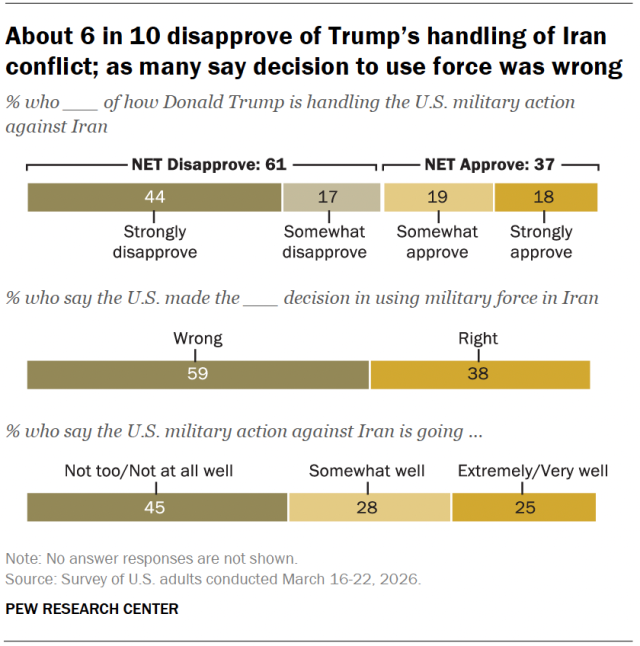
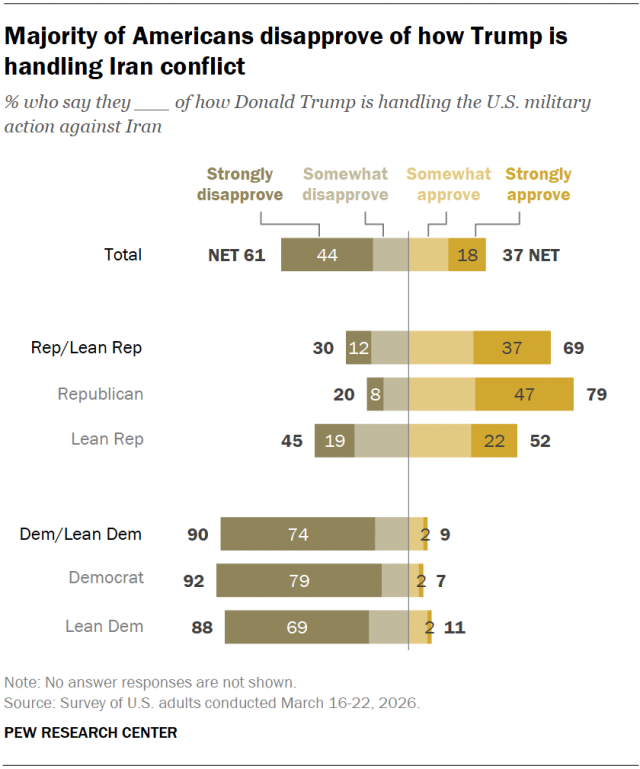
- Overall Disapproval: Six-in-ten Americans (61%) disapprove of President Trump’s handling of the conflict, while only 37% approve.
- Decision to Use Force: A majority of Americans (59%) believe the U.S. made the wrong decision in initiating military action against Iran, with 38% considering it the right decision.
- Conflict Progress: Nearly two-to-one, more Americans perceive the military action as not going well (45%) compared to those who believe it is progressing extremely or very well (25%).
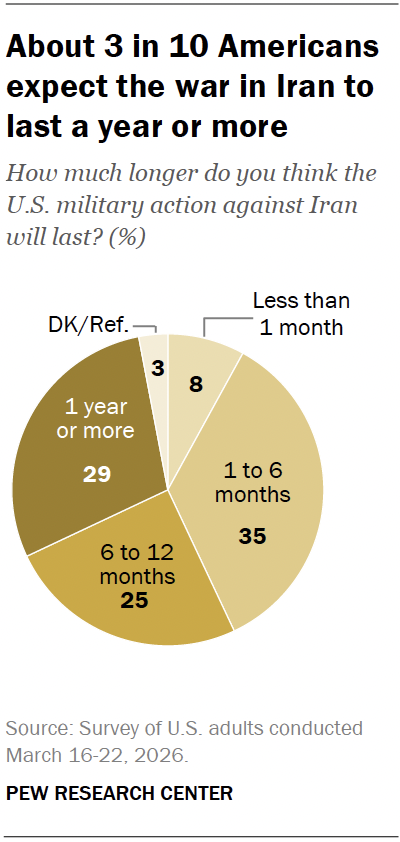
- Duration of Conflict: A majority of Americans (54%) anticipate the military action to continue for at least six more months, with 29% expecting it to last a year or longer.
- Safety Concerns: A substantial portion of Americans (40%) believe the military action will make the U.S. less safe in the long run, while 22% think it will enhance national security. Globally, 33% believe the action will make the world less safe, compared to 27% who believe it will make the world safer.
Background and Context of the Military Action

The U.S. military campaign against Iran, commencing in February 2026, followed a period of heightened geopolitical tension. While the specific immediate triggers for the escalation remain a subject of ongoing analysis, regional security experts have pointed to a confluence of factors, including alleged Iranian destabilization activities in the Middle East, concerns over its nuclear program, and a series of retaliatory actions and counter-actions between the two nations in the preceding months. The decision to employ military force marked a significant shift in U.S. foreign policy and has immediately drawn intense scrutiny both domestically and internationally.
Timeline of Developments (Inferred based on poll timing)
- February 2026: U.S. military action against Iran commences.
- March 16-22, 2026: Pew Research Center conducts a nationwide survey of 3,524 U.S. adults.
- March 25, 2026: Pew Research Center releases its analysis of the survey findings, detailing public opinion on the conflict.
Deep Partisan Divides Emerge
The survey results underscore the profound polarization in American public opinion regarding the conflict. Democrats and Democratic-leaning independents overwhelmingly reject the administration’s course of action. Nine-in-ten Democrats (90%) disapprove of President Trump’s handling of the conflict, and 88% believe the U.S. made the wrong decision in striking Iran. Similarly, 69% of Democrats view the military action as not going well.
In stark contrast, Republicans and Republican-leaning individuals express strong support for the president’s policies. Approximately seven-in-ten Republicans (69%) approve of Trump’s management of the conflict, and 71% believe the decision to use military force was correct. A significant 46% of Republicans perceive the military action as going "extremely" or "very well."
This partisan chasm is further illuminated by views on the longevity of the conflict. While 58% of Republicans anticipate the war concluding within the next six months, a substantial 68% of Democrats foresee it extending for six months or longer, with 40% expecting it to persist for a year or more.
Nuances Within Partisan Groups
While the broad strokes show a clear partisan divide, closer examination reveals some internal variations. Among Republicans, self-identified Republicans express higher approval of President Trump’s handling of the conflict (79%) compared to Republican-leaning independents (52%). This suggests that while the Republican base is largely unified, there is a segment of independent voters who lean Republican but hold reservations about the administration’s strategy.
Age also plays a role within the Republican demographic. Older Republicans (ages 50 and older) are more likely to affirm the decision to strike Iran as the correct one (85%) than their younger counterparts (18-49 years old), where 58% hold this view. This generational difference could reflect varying perspectives on foreign policy, risk tolerance, and the perceived threats posed by Iran.
Conversely, Democratic views appear more uniform across partisan affiliations and age groups. The strong disapproval of President Trump’s handling of the conflict and the assessment of the initial decision as wrong are consistently high among all segments of the Democratic electorate.
Broader Implications for U.S. Foreign Policy and Global Standing
The public’s perception that the military action may make the U.S. less safe raises significant questions about the long-term strategic implications of the conflict. A majority believing the action will diminish national security suggests a potential lack of public confidence in the administration’s strategy for achieving its objectives or in its ability to manage the fallout. This sentiment could translate into increased domestic pressure for de-escalation or a reassessment of the conflict’s goals and duration.
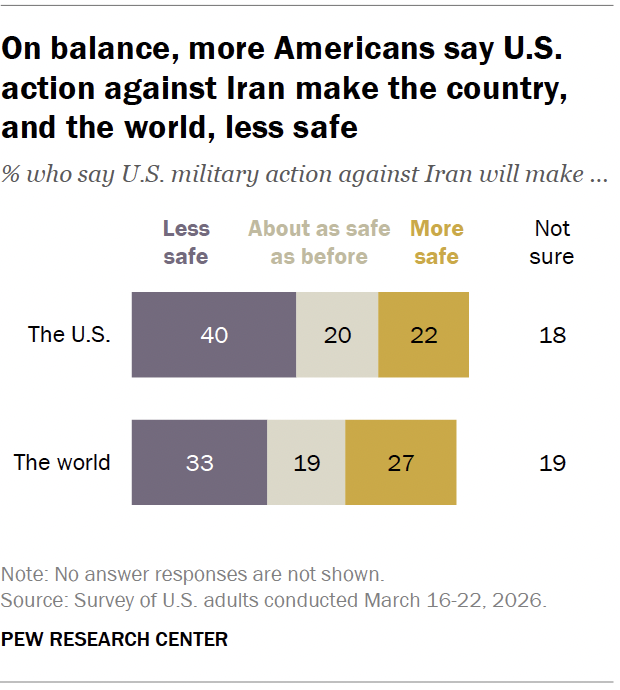
The more divided opinion on the impact on global safety, with a slight plurality believing it will make the world less safe, indicates a complex international dynamic. The U.S. faces the challenge of navigating a volatile geopolitical landscape where its actions can have far-reaching consequences, potentially influencing alliances, regional stability, and international perceptions of American leadership.
The stark partisan divisions also highlight the difficulty for any administration to forge a cohesive national consensus on foreign policy in an era of intense political polarization. The findings suggest that public opinion on such critical foreign policy decisions is deeply entrenched along party lines, making bipartisan cooperation and sustained public support for prolonged military engagements increasingly challenging.
Official Responses and Analysis
While the Pew Research Center’s report focuses on public opinion, it is important to note that government officials and military leaders typically offer justifications for such actions, emphasizing national security interests, deterrence, and the protection of allies. Official statements during such periods often highlight the perceived necessity of the military intervention to counter specific threats and restore regional stability. However, the current poll indicates that these justifications have not resonated with a significant portion of the American public.
The survey’s methodology, drawing from the Pew Research Center’s American Trends Panel, a nationally representative online survey, lends credibility to its findings. The panel comprises individuals recruited through random sampling methods, ensuring that the results reflect the views of the broader U.S. adult population. The detailed questionnaire and methodology, made available by the Pew Research Center, allow for transparency and further scrutiny of the data.
Future Outlook and Analysis
As the military campaign in Iran continues, public opinion is likely to remain a critical factor influencing policy decisions and public discourse. The findings of this Pew Research Center survey suggest that President Trump’s administration faces a significant public relations challenge in justifying the ongoing military engagement. The deep partisan fissures, coupled with widespread concerns about the conflict’s effectiveness and safety implications, indicate a volatile public sentiment that could evolve as events unfold. The duration of the conflict, the success or failure in achieving stated objectives, and any unforeseen consequences will undoubtedly shape future public attitudes and political responses. The upcoming weeks and months will be crucial in determining whether the administration can shift public opinion or if the current trend of disapproval and skepticism will persist.