For the better part of a decade, most Americans have held unfavorable views of China. This sentiment persists, but a recent Pew Research Center survey conducted in March 2026 reveals a notable uptick in the share of Americans holding a favorable opinion of the People’s Republic of China. This shift, while modest, marks a departure from a prolonged period of predominantly negative perceptions and suggests a subtle recalibration in the American public’s outlook on the global superpower.
The data, compiled from surveys conducted between March 23-29, 2026, indicates that 27% of U.S. adults now possess a positive view of China. This figure represents a significant increase of six percentage points from the previous year and nearly a doubling since 2023. This trend aligns with a broader, albeit gradual, softening of American opinions concerning China across multiple dimensions, suggesting a complex interplay of geopolitical events, economic factors, and evolving public discourse.
Shifting Perceptions: A Decade in Review
For years, American public opinion towards China has been characterized by a consistent majority holding unfavorable views. This trend was particularly pronounced in the years leading up to and during periods of heightened trade tensions and geopolitical friction. For instance, in Spring 2019, only 26% of Americans held a favorable view of China, while a substantial 60% expressed an unfavorable one. This sentiment deepened further by Summer 2020, with favorable views plummeting to 22% and unfavorable views soaring to 73%, likely influenced by the initial stages of the COVID-19 pandemic and ongoing trade disputes.
The trajectory of public opinion has seen a gradual, yet discernible, shift in recent years. While unfavorable views remain dominant, the proportion of Americans expressing a positive outlook has been steadily climbing. From a low of 14% in Spring 2023, favorable opinions have steadily risen: 16% in Spring 2024, 21% in Spring 2025, and now reaching 27% in Spring 2026. This sustained, albeit incremental, improvement suggests that the most intensely negative perceptions may be gradually receding, making way for a more nuanced or perhaps less alarmist view among a segment of the American population.
Partisan Divides and Generational Gaps
The recent softening of American views toward China is not uniformly distributed across the political spectrum or age demographics. The increase in favorability is largely driven by Democrats and Democratic-leaning independents. The share of Democrats holding a positive view of China has risen by 8 percentage points from the previous year, indicating a noticeable shift within the Democratic party. In contrast, opinions among Republicans and Republican leaners have remained relatively stable, with only marginal fluctuations.
Despite this divergence, favorability has seen a marked increase across both major parties since 2023. This suggests that while partisan leanings continue to shape perceptions, a broader societal trend towards a less negative outlook might be emerging.

Further analysis of the data reveals significant generational differences in how Americans perceive China. Younger adults, those under 50, exhibit a more positive outlook compared to their older counterparts. Approximately 34% of adults under 50 hold a favorable opinion of China, a figure substantially higher than the 19% among those aged 50 and older.
These age-related disparities are also evident when examining how Americans characterize the U.S.-China relationship. Younger adults are considerably less likely than those 50 and older to label China as an "enemy" of the United States. Specifically, only 20% of adults under 50 hold this view, compared to 38% of those aged 50 and older. This generational divide is particularly pronounced within the Republican party. For example, among Republicans under 50, 32% view China as an enemy, while this figure rises to 55% among Republicans aged 50 and older. Conversely, Democrats under 50 are less likely to see China as an enemy (10%) than Democrats aged 50 and older (18%), with a larger proportion of both age groups viewing China as a "competitor."
Evolving Perceptions of the U.S.-China Relationship
Beyond general favorability, Americans’ perceptions of the nature of the U.S.-China relationship itself are also undergoing a transformation. A Pew Research Center survey conducted in January 2026 indicates a shrinking proportion of Americans who label China as an "enemy" of the U.S., decreasing from 33% in Spring 2025 to 28% in January 2026. Concurrently, the perception of China as a "competitor" has grown, rising from 56% to 60% over the same period. The designation of China as a "partner" has remained relatively consistent, with approximately one in ten Americans holding this view in both years.

This shift away from characterizing China as an "enemy" is primarily driven by Democrats. The percentage of Democrats who view China as an enemy has declined from 28% in Spring 2024 to 14% in January 2026. A significant majority of Democrats, 72%, now perceive China as a competitor. This suggests a growing consensus within the Democratic party that the relationship is best understood through a competitive lens rather than an adversarial one.
Confidence in Leadership: Trump and Xi on the World Stage
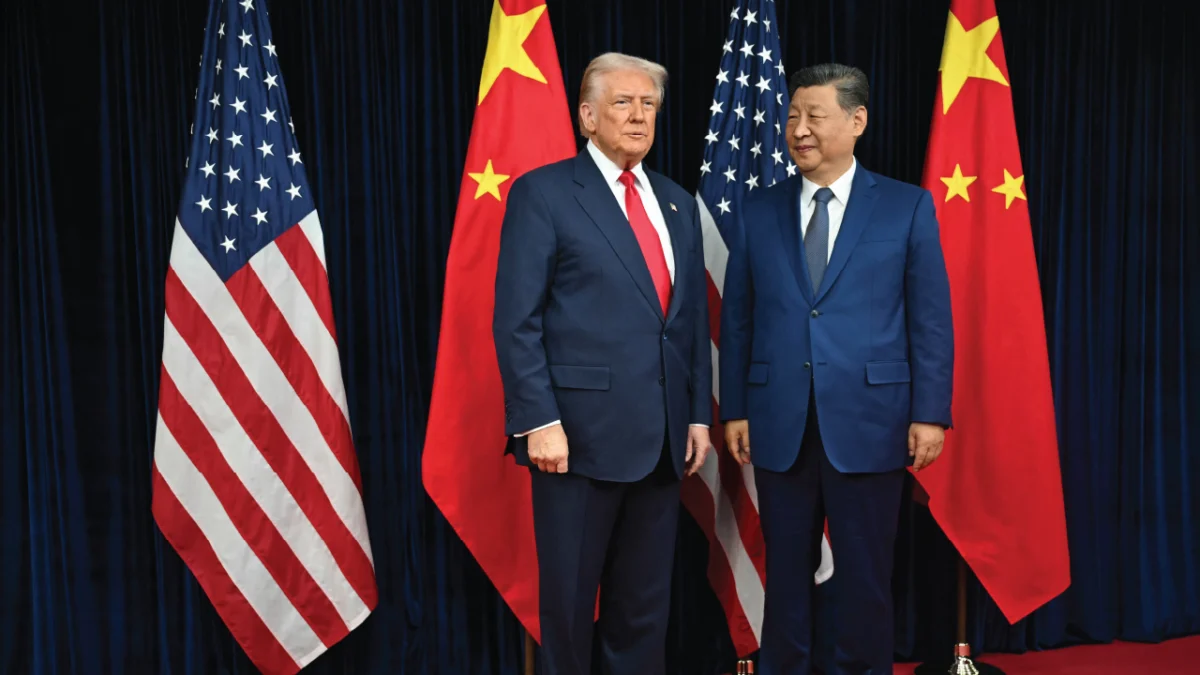
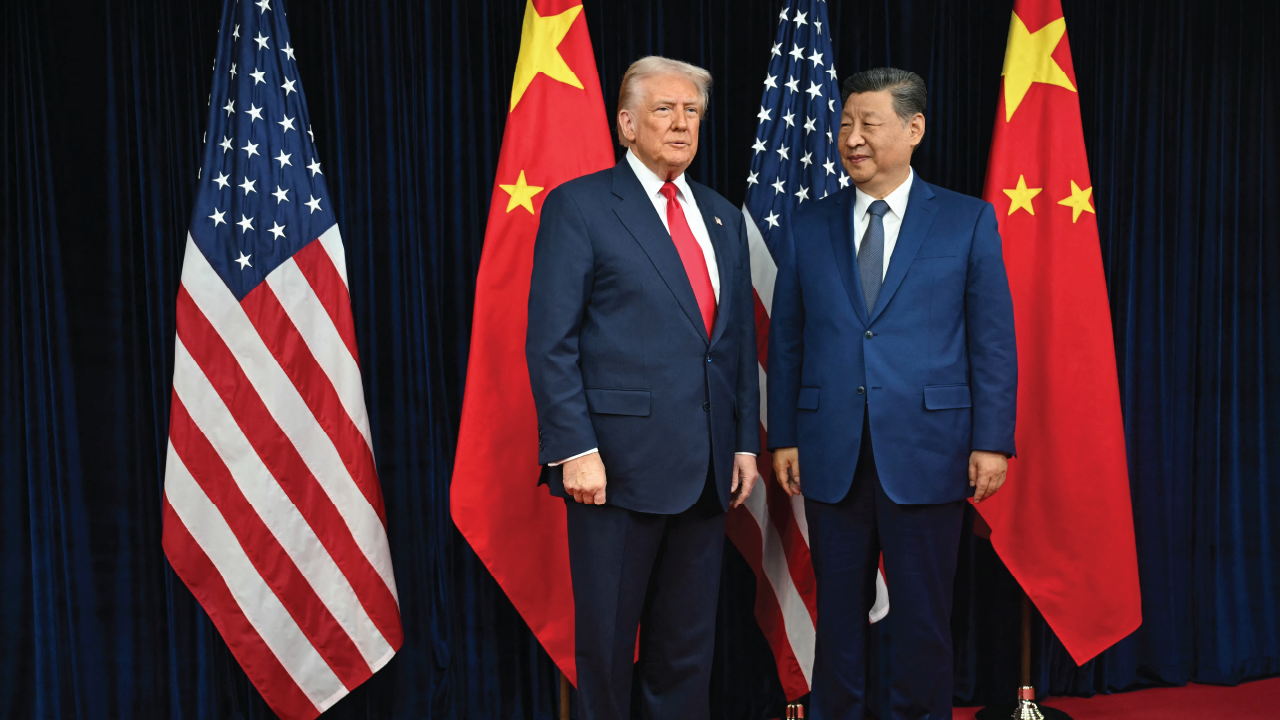
As U.S. President Donald Trump prepares for a significant summit with Chinese President Xi Jinping in May 2026, public confidence in their respective leadership on international affairs comes under scrutiny. American perceptions of President Trump’s ability to make sound policy decisions regarding China reveal a waning confidence. In March 2026, only 39% of Americans expressed confidence in Trump’s handling of U.S. policy toward China, a decline from 45% in August 2025 and 48% in July 2024.
This decline in confidence is not uniform across the political landscape. While 71% of Republicans express confidence in Trump’s decisions on China policy, this sentiment is held by only 11% of Democrats. Confidence has seen a notable drop among Republicans, decreasing by 7 percentage points, while Democratic views on this matter have remained largely unchanged. Younger adults also exhibit less confidence in Trump’s China policy compared to older adults, a trend particularly evident among Republicans, where 64% of those under 50 and 78% of those 50 and older express confidence. This mirrors broader trends in Americans’ confidence in Trump’s decision-making on other foreign policy issues, including North Korea, Cuba, and Venezuela.

In parallel, Americans continue to express broad skepticism regarding Chinese President Xi Jinping’s capacity to act appropriately in global affairs. However, confidence in Xi has seen a modest increase over the past two years, rising by 4 percentage points each year. Similar to general favorability trends, Democrats and younger adults tend to express more confidence in Xi Jinping than Republicans and older adults do. In March 2026, 17% of U.S. adults expressed a high degree of confidence in Xi’s handling of world affairs, up from 13% in Spring 2025 and 9% in Spring 2024.
Context and Methodology
This analysis draws upon data from two Pew Research Center surveys. The primary survey, conducted from March 23-29, 2026, involved 3,507 U.S. adults. A supplementary survey of 8,512 U.S. adults was conducted from January 20-26, 2026. All participants were members of the Pew Research Center’s American Trends Panel, a nationally representative online survey panel. The surveys are designed to reflect the views of the entire U.S. adult population.
The research aims to provide timely insights into evolving public opinion on critical international issues, contributing to the Center’s extensive body of work on global attitudes and the international image of countries. The detailed survey questions, responses, and methodologies for both the March and January surveys are publicly available, allowing for further examination and verification of the findings.

Implications and Future Outlook
The observed shift in American public opinion towards China, while subtle, carries potential implications for U.S. foreign policy and diplomatic engagement. The increasing favorability, particularly among Democrats and younger demographics, might create a more conducive environment for diplomatic initiatives and nuanced policy approaches. The growing perception of China as a "competitor" rather than an "enemy" could also inform discussions around trade, security, and international cooperation.
However, the persistent partisan divide, especially regarding confidence in leadership and the characterization of the relationship, highlights the enduring challenges in forging a unified national stance on China. The generational differences also suggest that future American attitudes towards China may continue to evolve as younger cohorts gain greater influence in shaping public discourse and policy priorities.
As the United States navigates an increasingly complex geopolitical landscape, understanding these evolving public sentiments is crucial for policymakers seeking to effectively engage with China and manage the multifaceted relationship between the two global powers. The Pew Research Center’s ongoing monitoring of these trends will provide valuable data for tracking these shifts and their potential impact on the future of U.S.-China relations.

This report was authored by Laura Silver, an associate director focusing on global attitudes at Pew Research Center, and Laura Clancy, a research analyst focusing on global attitudes research at Pew Research Center.