The Equality Trust, one of the United Kingdom’s leading advocacy organizations dedicated to reducing social and economic inequality, has announced the departure of long-standing Trustee Gerry Boyle. Following the completion of two consecutive three-year terms—the maximum tenure permitted under the organization’s constitution—Boyle’s exit marks the conclusion of a pivotal era for the Trust. His tenure, spanning from 2020 to 2026, coincided with some of the most volatile economic periods in modern British history, including the long-term fallout of the COVID-19 pandemic, a protracted cost-of-living crisis, and significant shifts in the international development and philanthropic sectors.
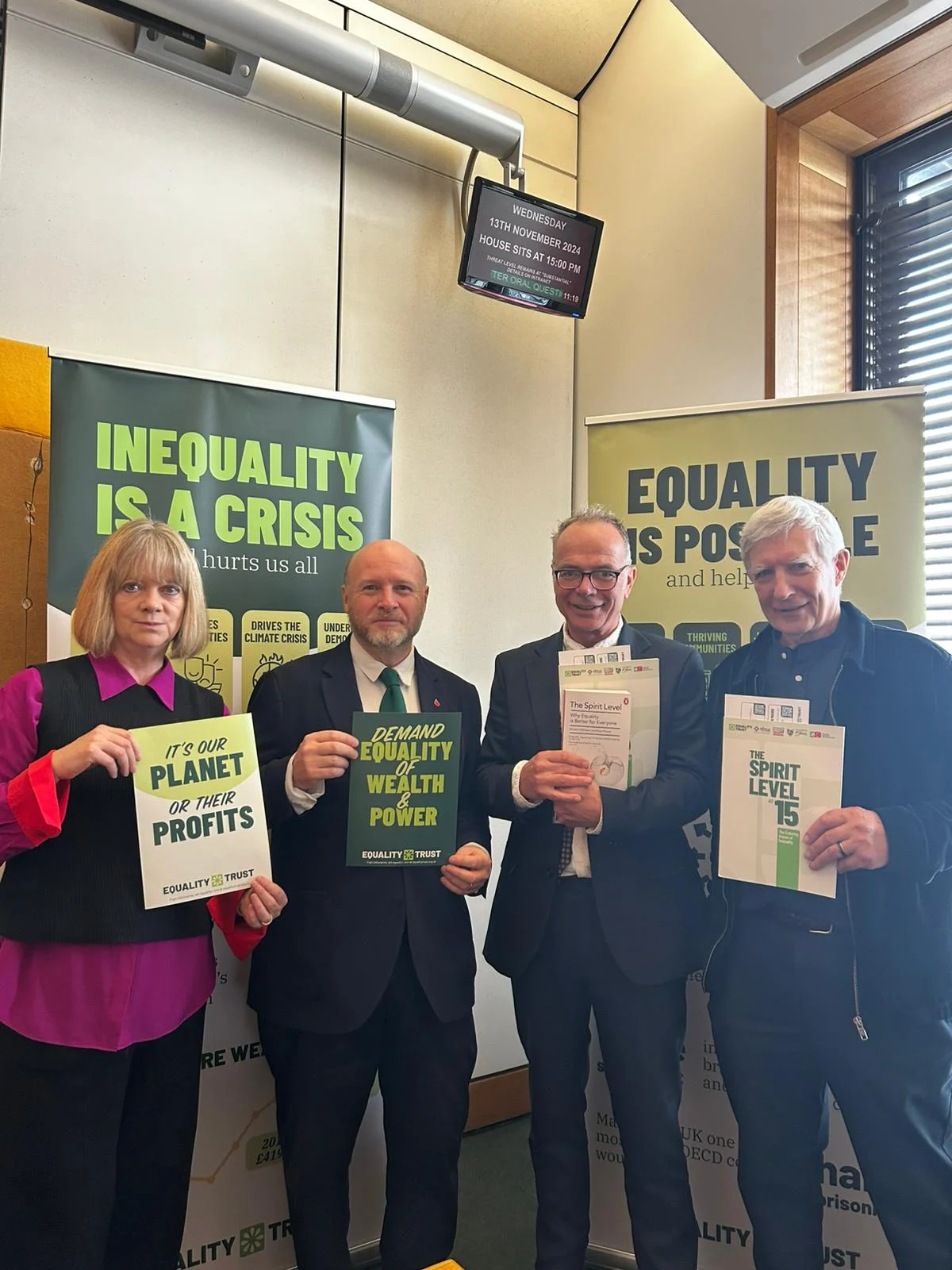
Boyle, whose professional background bridges the gap between private sector business management and international development, joined the Board of Trustees driven by the empirical evidence presented in The Spirit Level: Why More Equal Societies Almost Always Do Better. Authored by the Trust’s founders, Professors Richard Wilkinson and Kate Pickett, the book remains the foundational text for the organization, arguing that high levels of inequality correlate with a wide range of social ills, from decreased life expectancy to increased crime rates. Boyle’s departure highlights both the internal evolution of the Trust and the external pressures currently facing the UK’s third sector.
A Chronology of Advocacy and Institutional Growth: 2020–2026
The period of Boyle’s service began during the onset of the global pandemic in 2020, a time when structural inequalities in the United Kingdom were laid bare. During the initial years of his first term (2020–2022), the Equality Trust focused heavily on the disproportionate impact of the health crisis on low-income households and minority communities. Boyle’s experience in international development provided a global lens through which the Trust could view the UK’s domestic challenges, particularly as supply chain disruptions and inflation began to squeeze the nation’s poorest.
By the mid-point of his tenure (2023–2024), the focus shifted toward the implementation of the Socio-Economic Duty, a provision of the Equality Act 2010 that successive governments had failed to fully commence. Under the guidance of its board, the Trust successfully campaigned at the local authority level, encouraging councils across the UK to voluntarily adopt the duty, thereby ensuring that public policy decisions are made with a specific focus on reducing the gap between the most and least affluent.
The final phase of Boyle’s tenure (2025–2026) was characterized by a focus on youth engagement. Recognizing that younger generations face a unique set of hurdles—including housing unaffordability and the "intergenerational wealth gap"—the Trust expanded its programs to amplify the voices of those at the "sharp end" of inequality. Boyle’s departure comes at a time when the Trust is transitioning its operational model to meet the challenges of an increasingly fragmented socio-political environment.
The Financial Landscape: Navigating the "Funding Gap"
One of the most significant contributions of Boyle’s tenure was his service on the Board’s finance committee. His departure brings to light the systemic financial challenges facing advocacy-based charities in the current economic climate. Boyle noted that the UK’s "difficult funding environment" has been exacerbated by a decade of austerity, which has simultaneously increased the demand for charitable services while depleting the resources available to them.
Data from the National Council for Voluntary Organisations (NCVO) indicates that while public concern for social issues remains high, the financial stability of the sector is under threat. The Equality Trust has historically relied on "lumpy" funding—large, multi-year grants from a small number of major foundations. Boyle warned that such a model carries inherent risks; if a single major donor shifts their strategic focus, the resulting deficit can threaten the continuity of long-term campaigns.
Furthermore, the Trust has had to contend with the "double blow" of domestic austerity and international aid cuts. In 2021, the UK government’s decision to reduce the Official Development Assistance (ODA) budget from 0.7% to 0.5% of Gross National Income had a ripple effect across the sector. Although the Equality Trust is primarily domestic in its focus, the reduction in global aid pools increased competition for private philanthropic funds, as organizations previously funded by government grants sought alternative revenue streams.
Supporting Data: The Widening Gap in the United Kingdom
The work of the Equality Trust remains urgent, as evidenced by recent economic data. According to the Office for National Statistics (ONS), wealth inequality in the UK has remained stubbornly high throughout the 2020s. As of 2024, the richest 1% of households held more wealth than the bottom 70% of the population combined.
The Gini coefficient, a standard measure of income inequality where 0 represents perfect equality and 100 represents perfect inequality, has seen the UK hovering around 34 to 35 for several years. While this is lower than the United States (approx. 41), it remains significantly higher than more egalitarian European neighbors such as Norway or Denmark (approx. 25-27). The Equality Trust argues that this gap is not merely a matter of fairness but a public health crisis.
Key metrics highlighting the impact of this inequality during Boyle’s tenure include:
- The Pay Ratio: The gap between CEO pay and average worker pay in the FTSE 100 reached an average of 118:1 in 2023, up from 79:1 in 2020.
- Child Poverty: Estimates for 2025 suggest that approximately 4.3 million children in the UK are living in relative poverty, a figure that the Trust links directly to stagnant wage growth and the rising cost of essentials.
- Health Outcomes: Research supported by the Trust indicates a ten-year gap in life expectancy between the most deprived and most affluent deciles in the UK.
Official Responses and Organizational Legacy
In response to Boyle’s departure, representatives from the Equality Trust emphasized the value of his professional diversity. "Gerry brought a unique blend of business acumen and a deep-seated commitment to social justice," a spokesperson for the Trust stated. "His work on the finance committee provided the stability needed to navigate a period of unprecedented economic uncertainty. While we lose a dedicated Trustee, the frameworks he helped establish for diversified funding will sustain our mission for years to come."
The Trust’s leadership also acknowledged the difficulty of the current "hands-off" nature of board membership, a sentiment echoed by Boyle himself. In a governance structure, Trustees are responsible for strategy and oversight rather than day-to-day management. Boyle’s ability to transition from a high-level project management background to a strategic advisory role has been cited as a model for future board members.
The organization is currently seeking to replace Boyle with a candidate who can continue the push for a more resilient funding model. The Trust is increasingly looking toward a "grassroots" financial strategy, encouraging a higher volume of smaller, recurring donations from individual supporters to offset the volatility of large institutional grants.
Broader Impact and Implications for Social Justice Campaigning
The departure of a long-term Trustee like Gerry Boyle is more than a routine administrative change; it reflects a broader shift in how social justice organizations must operate in the late 2020s. The "fight getting harder," as Boyle described it, refers to a political and intellectual climate that has become increasingly polarized.
Analysis of the Trust’s trajectory suggests that the next five years will be defined by three major themes:
- The Localization of Reform: With central government policy often slow to change, the Trust is likely to double down on local and regional initiatives, using the Socio-Economic Duty as a tool for "bottom-up" equality.
- The Financial Pivot: The transition from grant-dependency to a supporter-led model is a high-stakes move. If successful, it will grant the Trust greater independence to pursue controversial or systemic critiques of the economic system without fear of alienating large donors.
- The Intersectional Approach: Under the influence of the diverse board Boyle described, the Trust is moving toward a more intersectional understanding of inequality, recognizing that economic status is inextricably linked to race, gender, and disability.
As Gerry Boyle steps down, his six-year journey serves as a testament to the endurance required in the field of social advocacy. His tenure spanned a period where the "Spirit Level" arguments moved from the fringes of academic debate into the center of local policy-making. While the economic data suggests that the gap between the "haves" and "have-nots" remains wide, the institutional growth of the Equality Trust during this period provides a blueprint for how organizations can survive and thrive amidst systemic adversity.
The Equality Trust continues its operations with a renewed focus on its 2030 targets, aimed at reducing the UK’s wealth gap through legislative change and public education. Boyle’s exit, while a loss of institutional memory, opens the door for a new generation of governance to tackle the evolving challenges of the British economic landscape.