The surge in sports betting across the United States, particularly noticeable during events like the NCAA Men’s College Basketball Tournament, commonly known as March Madness, has brought the nation’s attitudes toward gambling into sharper focus. A comprehensive 2025 Pew Research Center survey, encompassing 25 countries, reveals a distinct American perspective: a significantly lower proportion of adults perceive gambling as morally objectionable compared to their counterparts in many other parts of the world. This finding comes as legal sports wagering continues its rapid expansion, making it more accessible and integrated into popular culture than ever before.
Shifting Perceptions of Gambling Morality
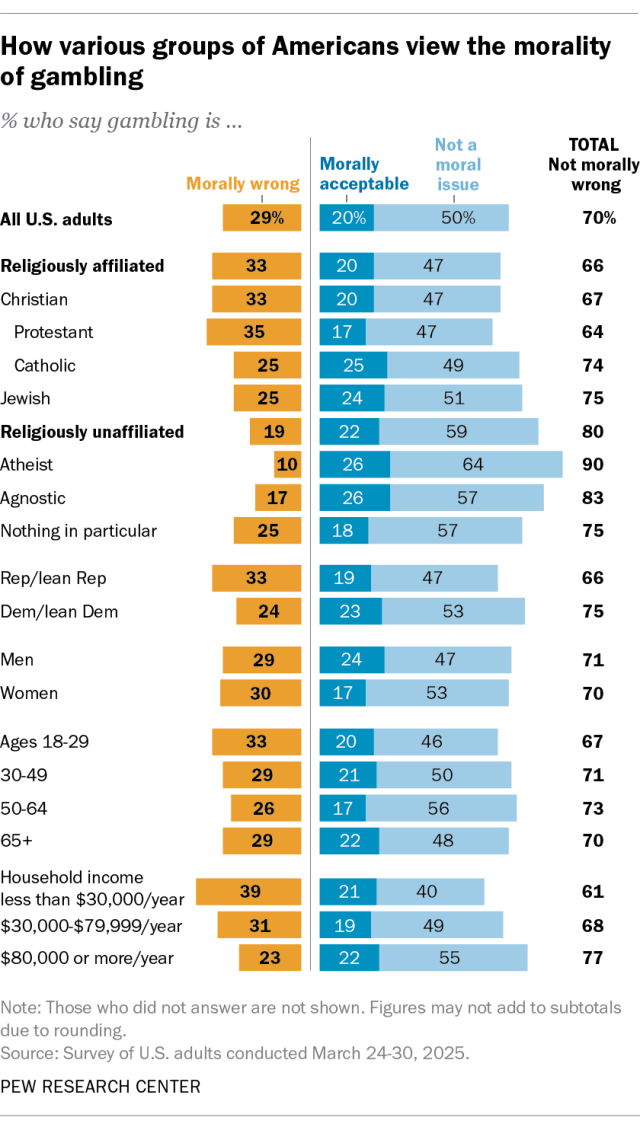
The Pew Research Center’s latest findings indicate that only 29% of U.S. adults consider gambling to be morally wrong. This figure places the United States in a comparatively liberal stance on the issue among the surveyed nations. For context, substantial majorities in several countries view gambling as immoral, including 89% in Indonesia, 83% in India, 71% in Italy, and 61% in Brazil. These stark differences suggest varied cultural, religious, and historical influences shaping societal norms around wagering.
The survey offered respondents three distinct choices: to classify gambling as morally acceptable, morally unacceptable, or not a moral issue. In the United States, 20% of adults adhere to the view that gambling is morally acceptable. However, a notable 50% of Americans fall into the category of believing that gambling is not a moral issue. This latter group’s significant size is unique among the surveyed countries, suggesting a prevailing sentiment in the U.S. that gambling, while potentially having its drawbacks, does not inherently cross a moral threshold for a large segment of the population. This perspective may contribute to the increasing acceptance and normalization of gambling activities, including the booming online and in-person sports betting markets.

A Decade of Evolving Views
While the current data highlights a relatively tolerant American attitude, there has been a slight, yet discernible, shift in public opinion over the past decade. When Pew Research Center first posed a similar question in 2013, 24% of U.S. adults considered gambling to be immoral. The increase to 29% in 2025, though modest, suggests a gradual, yet consistent, trend towards a more critical view of gambling among a segment of the American populace. This evolution in sentiment may be influenced by ongoing discussions about the societal impacts of gambling, including addiction rates, financial consequences for individuals and families, and the integrity of sports.
The expanding legal sports betting landscape, with state after state enacting legislation to permit and regulate such activities, has undoubtedly played a role in these evolving perceptions. As gambling becomes more accessible through online platforms and physical establishments, it moves from the fringes of society to a more mainstream, and for some, a more scrutinized, activity. This increased visibility prompts public discourse and, consequently, can lead to shifts in moral judgments.
International Comparisons: A Global Snapshot
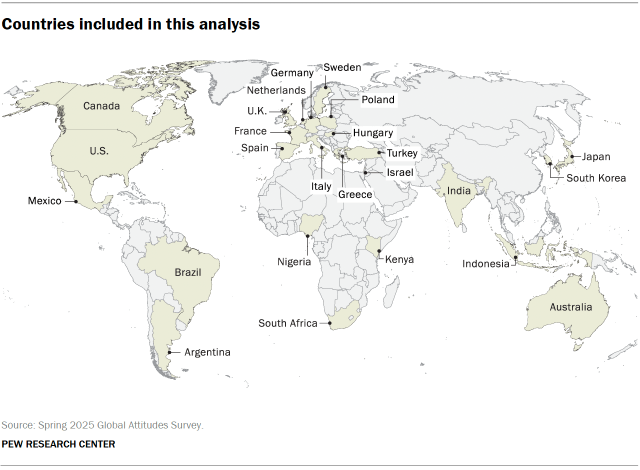
The Pew Research Center’s global survey provides a crucial comparative lens, underscoring the uniqueness of the American perspective on gambling morality. The survey, conducted from January 8 to April 26, 2025, involved nationally representative samples of 28,333 adults across 25 countries. The methodology employed rigorous standards to ensure the reliability and comparability of the data across diverse cultural contexts.
Countries with predominantly Muslim populations, such as Indonesia and India, exhibit exceptionally high rates of viewing gambling as morally wrong, aligning with religious doctrines that often prohibit such activities. In European nations like Italy, a majority also views gambling negatively, perhaps reflecting a blend of historical attitudes and concerns about social welfare. Brazil, a country with a significant Catholic population, also shows a strong majority disapproval of gambling on moral grounds.
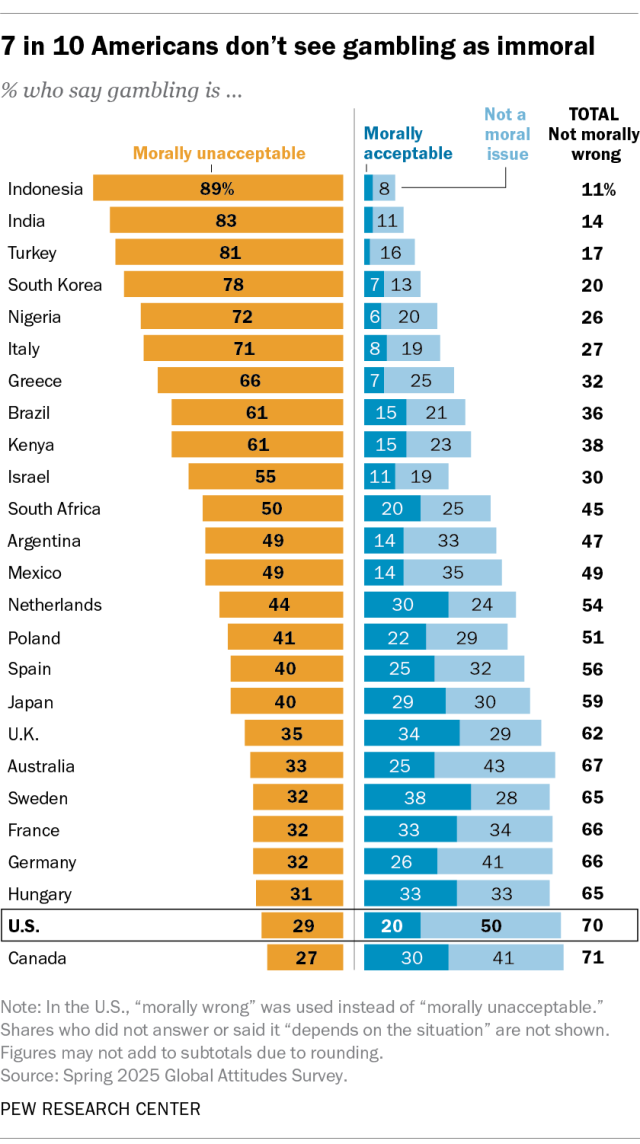
The widespread perception of gambling as a moral issue in these countries contrasts sharply with the American tendency to categorize it as "not a moral issue." This suggests that in many cultures, gambling is deeply intertwined with ethical frameworks and religious beliefs, whereas in the U.S., it appears to be more often viewed through a lens of personal choice, risk, or entertainment, separate from fundamental moral tenets for a significant portion of the population.
Demographic and Religious Divides within the U.S.
While the overall U.S. sentiment towards gambling is relatively permissive, deeper dives into demographic and religious affiliations reveal nuanced differences in opinion. Within the United States, men and women are almost equally likely to deem gambling morally wrong. However, a notable divergence emerges when considering views on gambling as morally acceptable. Men, across all age groups, are more inclined than women to express this permissive view. For instance, 24% of men under 30 consider gambling morally acceptable, compared to 16% of women in the same age bracket. This gender gap persists among older Americans, with 26% of men aged 65 and older holding this view, versus 19% of women in that age group.
These gender-based differences in perceived acceptability may stem from a variety of factors, including historical societal roles, differing exposure to gambling-related media and marketing, and varying levels of engagement with sports culture, which is often closely linked to sports betting.
When examining views on gambling as morally unacceptable, some demographic variations are observed:
- Age: Younger Americans, particularly those under 30, are less likely to view gambling as morally unacceptable compared to older age groups. This could reflect a greater exposure to and normalization of gambling in contemporary society.
- Education: Individuals with higher levels of education tend to be less likely to consider gambling morally unacceptable. This might suggest a correlation between educational attainment and a more secular or pragmatic view of such activities.
- Race/Ethnicity: While not as pronounced as gender or age, there are some variations in how different racial and ethnic groups perceive the morality of gambling.
Religious affiliations also play a significant role in shaping attitudes toward gambling in the United States:
- Religious Affiliation: Protestants, particularly evangelical Protestants, are more likely to view gambling as morally unacceptable compared to Catholics or those with no religious affiliation. This aligns with traditional religious teachings in some Christian denominations that caution against activities involving chance and financial risk.
- Religious Observance: Individuals who attend religious services more frequently are also more likely to hold negative views on gambling. This indicates that the degree of religious engagement can be a stronger predictor of moral stance than mere affiliation.
- Atheists/Agnostics: Those who identify as atheists or agnostics are the least likely to consider gambling morally unacceptable, and conversely, are more likely to view it as morally acceptable or not a moral issue. This group often exhibits a more secular approach to moral questions, prioritizing personal autonomy and individual choice.
The Broader Implications of Evolving Attitudes
The data from the Pew Research Center survey offers critical insights into the societal underpinnings of the burgeoning U.S. sports betting industry. As more states legalize and regulate sports wagering, and as companies invest heavily in marketing and advertising, the perception of gambling as a normal, even mundane, activity is likely to continue to grow. The significant portion of Americans who view gambling as "not a moral issue" provides fertile ground for this expansion, as it removes a potential ethical barrier for many.
However, the slight increase in those who view gambling as immoral warrants attention. This suggests that alongside the growing acceptance, there is also a concurrent increase in public concern. This rising concern may be fueled by increased media coverage of problem gambling, the financial strains experienced by individuals and families affected by addiction, and the potential for gambling to negatively impact the integrity of sporting events. As the industry matures, policymakers, regulators, and the public will likely grapple with balancing the economic benefits of legal gambling with the imperative to protect vulnerable populations and maintain fair play in sports.
The demographic and religious divides observed within the U.S. also highlight potential fault lines in the ongoing debate about gambling. Understanding these differences is crucial for developing targeted public health initiatives, responsible gaming programs, and effective regulatory frameworks. For example, religious communities that have traditionally opposed gambling may need specific outreach and support services, while younger demographics, who appear more accepting, may require education on the risks associated with excessive wagering.
Ultimately, the American approach to gambling morality is a complex tapestry woven from cultural influences, individual beliefs, and evolving societal norms. As the landscape of legal wagering continues to transform, ongoing research and public dialogue will be essential to navigate its multifaceted implications. The Pew Research Center’s survey serves as a vital benchmark, illuminating the current state of public opinion and providing a foundation for understanding future trends and challenges in the American approach to gambling.