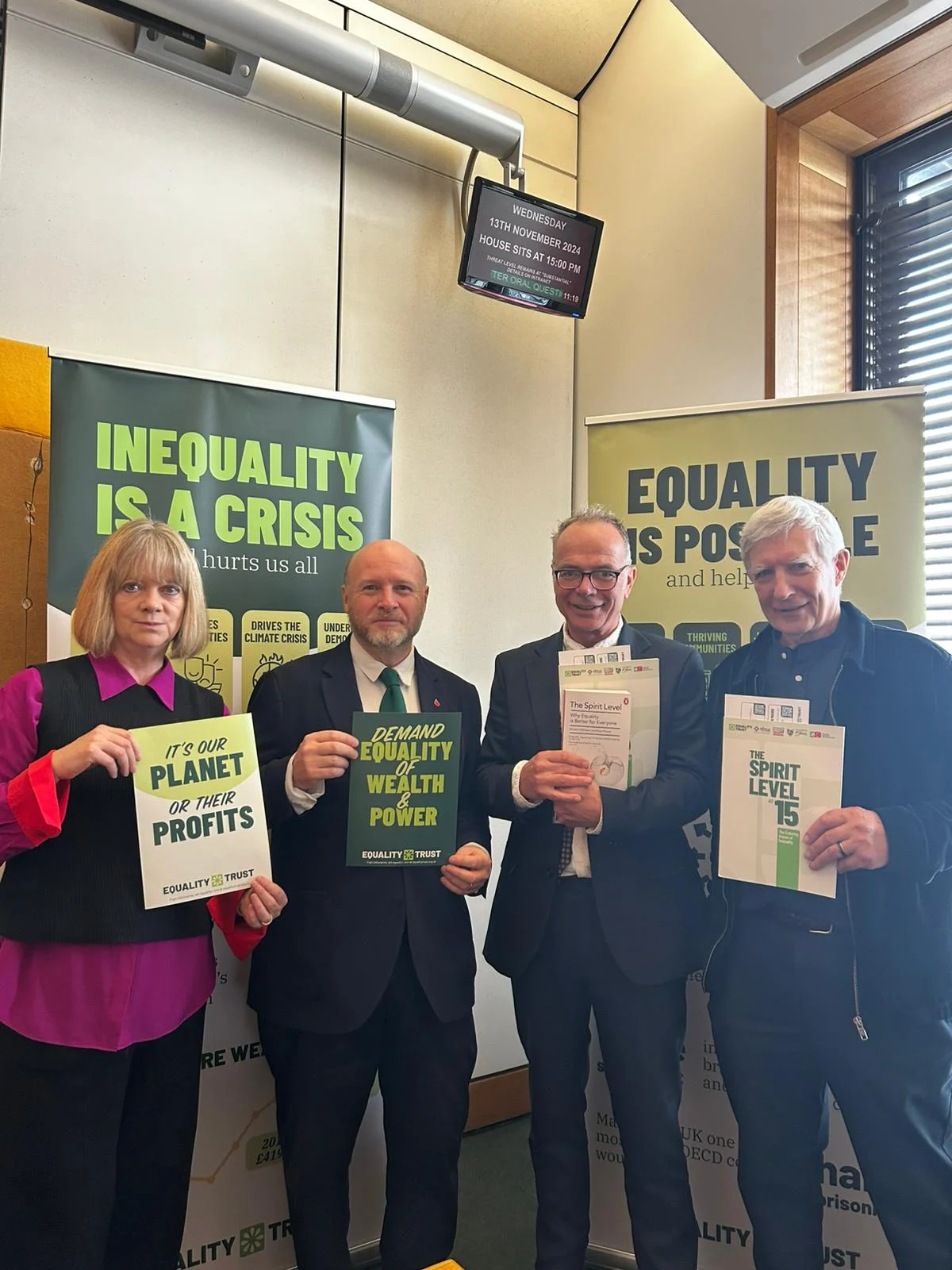
In a significant intervention regarding the United Kingdom’s socioeconomic landscape, Priya Sahni-Nicholas, Co-Executive Director of The Equality Trust, addressed the Public Policy Exchange on January 13, 2026. Her analysis focused on the government’s recently unveiled Child Poverty Strategy, titled Tackling Child Poverty: Improving Welfare, Security and Future Prospects. While the strategy has been lauded for signaling a departure from over a decade of austerity-driven policy, Sahni-Nicholas and other advocates argue that the framework remains incomplete. Specifically, they contend that while the government has shown a renewed commitment to income redistribution, it has failed to address the systemic concentration of wealth and power that continues to drive structural inequality.
The strategy, released in December 2025, represents the first UK-wide effort to address child poverty since the late 2000s. It arrives at a critical juncture: by the start of 2025, an estimated 4.5 million children—one in three across the nation—were living in poverty. Furthermore, nearly 20% of UK households reported inconsistent access to adequate food. The new government framework explicitly identifies these figures as a "moral and economic failure" inherited from policy choices made post-2010.
A Timeline of UK Child Poverty Policy and the Current Crisis
To understand the weight of the 2025 strategy, it is necessary to examine the chronological shift in UK welfare policy. Between 1997 and 2010, the previous Labour administration oversaw a period where child poverty fell by approximately 600,000, largely due to the introduction of tax credits, significant investment in public services, and the establishment of the Sure Start program.
However, following the 2010 general election, the UK entered a period of "fiscal consolidation" or austerity. Key policy changes included the introduction of the benefit cap and the controversial two-child limit on welfare payments, which restricted support to the first two children in a family. By 2024, the UK had become an outlier among advanced economies; while child poverty rates were declining across much of Europe, they continued to climb in Britain.
The December 2025 strategy was designed to halt this trajectory. It sets a long-term goal to "end child poverty" and a medium-term goal to achieve measurable reductions within the current parliament. This marks a stark contrast to the preceding decade, where the very definition of poverty was often contested by policymakers who favored "work-readiness" metrics over income-based deprivation scales.
Core Components of the New Strategy
The Tackling Child Poverty strategy introduces several high-impact measures that have been welcomed by social advocacy groups. The most significant among these is the abolition of the two-child limit. Economic modeling suggests this single move will lift approximately 450,000 children out of relative poverty.
Other key pillars of the strategy include:

- The Living Wage and In-Work Poverty: Recognizing that employment is no longer a guaranteed escape from poverty, the strategy includes an increase in the National Living Wage and the uprating of Universal Credit to align with inflation.
- Cost-of-Living Interventions: The government has committed to expanding free school meals, establishing universal breakfast clubs, and implementing caps on the costs of school uniforms.
- Dignity and Lived Experience: In a departure from previous bureaucratic approaches, the government collaborated with organizations like Changing Realities, incorporating the voices of parents with direct experience of the benefits system. This has shifted the strategy’s focus toward reducing the "mental load" and stigma associated with welfare.
- A Spatial and Intersectional Lens: The strategy acknowledges that poverty is not uniform, highlighting how deprivation intersects with disability, ethnicity, and geography. It places a heavy emphasis on devolution, granting local authorities more power to implement place-based solutions.
The Wealth Gap: The Omitted Variable in Poverty Reduction
Despite these advancements, The Equality Trust’s analysis highlights a "narrow understanding" of inequality within the government’s framework. The most glaring omission, according to Sahni-Nicholas, is the word "wealth." While the strategy addresses income (the flow of money) and costs (the outflow of money), it remains silent on assets (the stock of money).
This distinction is vital for long-term economic stability. Families with identical incomes can experience radically different levels of security depending on their access to assets, such as homeownership, savings, or inherited wealth. The Equality Trust argues that poverty is the "lower expression" of an economy where wealth is increasingly concentrated at the top.
To support this, analysts point to Thomas Piketty’s economic principle of r > g—where the return on capital grows faster than the economy as a whole. When wealth grows faster than wages, structural inequality widens. A strategy that focuses only on wages and benefits without addressing the taxation of assets is, as Sahni-Nicholas described it, "trying to empty a bath while leaving the taps running."
Fiscal Policy and the "Austerity Argument"
A recurring theme in the discussion of the strategy is the government’s reliance on economic growth to fund public services. Historically, UK government revenue has been heavily dependent on income tax. Under this model, if wages do not grow, investment in social safety nets remains constrained.
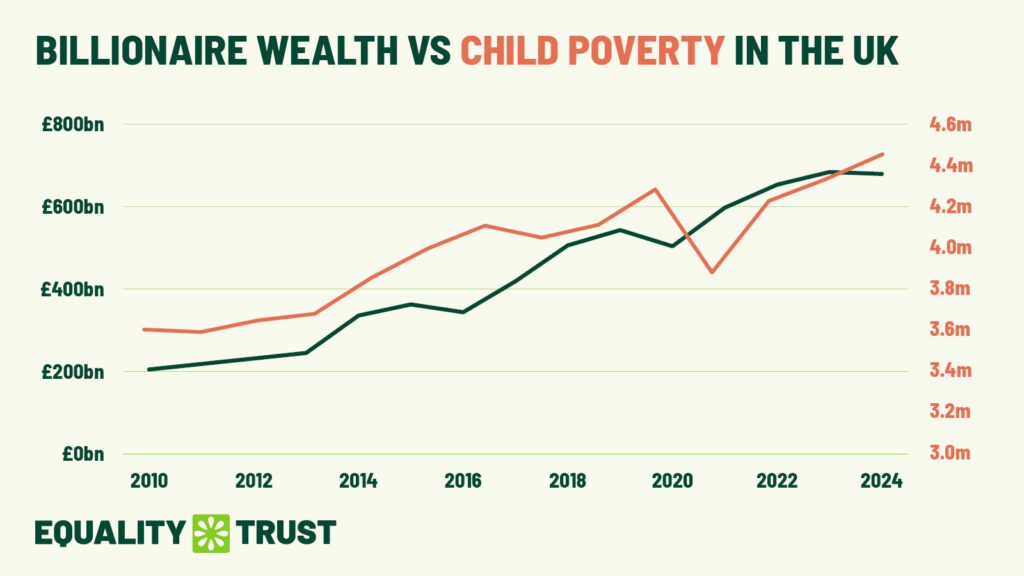
However, data indicates that while wages have stagnated, returns on assets—such as dividends and capital gains—have remained robust. Currently, these forms of wealth are taxed at a lower rate than labor. Critics argue that by failing to reform the tax system to target wealth, the government is missing the primary source of revenue needed to sustain a long-term reduction in child poverty.
Historical Precedent for Structural Change
The Equality Trust draws parallels to the post-World War II era to demonstrate that reducing poverty requires more than targeted programs; it requires a shift in power. Between 1945 and the late 1970s, the UK saw a sustained narrowing of the gap between the richest and poorest. This was achieved through:
- Progressive Taxation: High marginal tax rates on top earners and corporate profits.
- Strong Labor Protections: High rates of unionization that ensured wages kept pace with productivity.
- Universal Public Assets: Massive investment in social housing and the creation of the National Health Service (NHS), which decommodified essential needs.
The current strategy, while redistributive, does not yet attempt to reshape the economic model in this way. It seeks to mitigate the harms of the market rather than restructuring the market itself.
Reactions from Stakeholders and Policy Experts
The reaction to the strategy has been a mix of cautious optimism and a demand for greater accountability. The Joseph Rowntree Foundation (JRF) and the Child Poverty Action Group (CPAG) have both praised the abolition of the two-child limit as a "landmark moment." However, they have also noted that for the strategy to be "weather-proof," it needs to be enshrined in law with binding targets, similar to the 2010 Child Poverty Act which was later repealed.

From a corporate perspective, some business leaders have expressed concern over the rising National Living Wage, suggesting it could impact small-to-medium enterprises (SMEs). Conversely, progressive economists argue that increasing the purchasing power of the bottom 20% of households provides a more reliable stimulus to the local economy than top-down tax incentives.
Implications and Future Outlook
For the Tackling Child Poverty strategy to evolve from a "corrective" measure into a "transformative" one, future iterations will likely need to address several key areas:
- Binding Accountability: Implementing a ten-year plan with transparent reporting and political consequences if milestones are missed.
- Housing Reform: Addressing the private rental sector, where high costs often swallow up any increases in household income provided by the state.
- Wealth Taxation: Exploring reforms to Capital Gains Tax and Inheritance Tax to create a more equitable fiscal base.
- Corporate Accountability: Looking at how executive pay ratios and corporate power influence the prevalence of low-wage work.
The Equality Trust concludes that while the strategy marks a welcome shift in the national conversation—reinstating child poverty as a core priority—it stops short of confronting the power structures that sustain inequality. The consensus among social researchers is clear: the UK cannot permanently end child poverty while ignoring the vast disparities in wealth that define the modern British economy.
As the government moves toward implementation, the success of this strategy will be measured not just by whether children are lifted above a statistical line, but by whether the gap between the nation’s wealthiest and its most vulnerable begins to close for the first time in decades. The December 2025 strategy is, in the eyes of many, the "floor" of what is required, rather than the "ceiling."