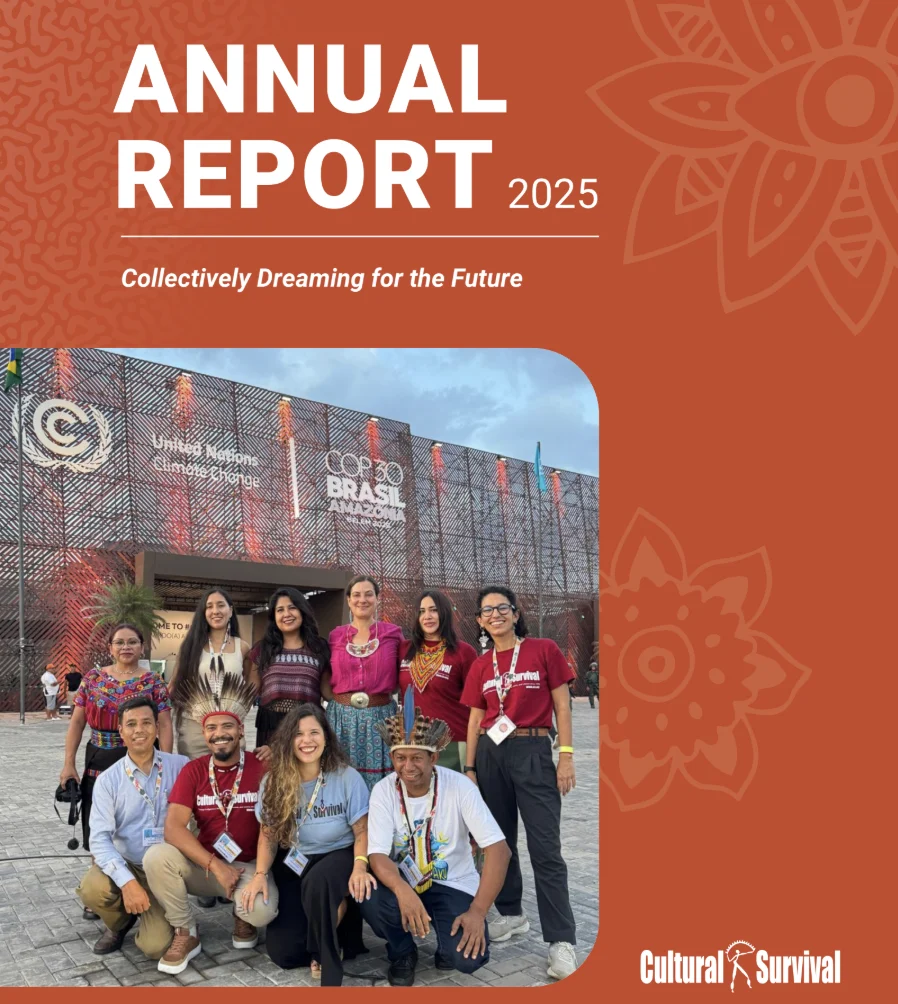
Boston, MA – Cultural Survival has released its comprehensive 2025 Annual Report, detailing a year of significant advancements in Indigenous Peoples’ rights, with a particular highlight being the successful demarcation of ancestral lands for the Pataxó and Arara peoples in Brazil. The report, released by Executive Director Aimee Roberson (Choctaw and Chickasaw), underscores the organization’s deep commitment to supporting Indigenous communities in their efforts to defend their territories, languages, cultures, and lifeways against the pressures of extractive industries and the escalating impacts of climate change.
The 2025 Annual Report, available online, serves as a testament to the collaborative efforts between Cultural Survival and Indigenous partners worldwide. It chronicles a year of deepened relationships and impactful achievements, emphasizing the organization’s role in amplifying Indigenous voices on the global stage.
A Pivotal Moment at COP30: Amplifying Indigenous Voices on Climate Action
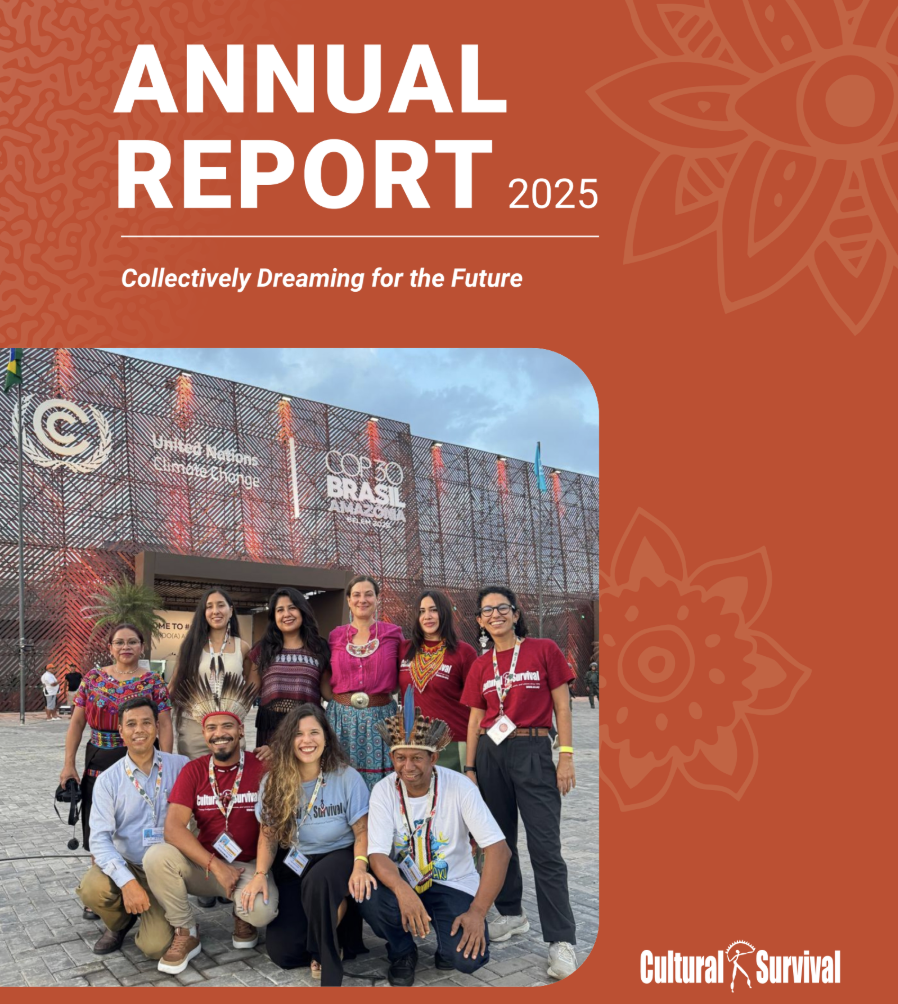
A significant achievement highlighted in the report is the pivotal role Cultural Survival played in supporting representatives of the Pataxó and Arara peoples at the United Nations Climate Change Conference (COP30) held in Brazil. This landmark event provided a crucial platform for Indigenous leaders to directly engage with global policymakers and advocate for their rights and the protection of their ancestral territories, which are vital for biodiversity conservation and climate resilience.
Cultural Survival facilitated the participation of Pataxó and Arara delegates, providing them with the logistical and media support necessary to effectively present their case. Through its robust media channels, the organization amplified the Pataxó people’s urgent advocacy for the defense and demarcation of their lands, which have been under increasing threat from deforestation, illegal mining, and agricultural expansion.
A Hard-Won Victory: Land Demarcation Achieved
The report details that following intensive engagements and ceremonies during COP30, where Pataxó representatives held meaningful dialogues with government authorities, a critical objective was realized: the demarcation of one of their ancestral lands. This victory represents not only a triumph for the Pataxó people but also a significant win for Indigenous land rights and environmental stewardship in the Amazon region.
The demarcation process is a complex legal and bureaucratic undertaking that can span years, if not decades. It involves the formal recognition by the state of Indigenous ownership and territorial boundaries, providing a legal bulwark against encroachment and exploitation. For the Pataxó and Arara, this achievement is the culmination of generations of struggle and advocacy, underscoring the critical importance of sustained international support for Indigenous land claims.
Broader Impact of Cultural Survival’s 2025 Initiatives
Beyond the specific success in Brazil, Cultural Survival’s 2025 Annual Report outlines a broad spectrum of accomplishments made possible by the unwavering support of its funders and donors. While the report itself provides a detailed account, key areas of impact often include:
- Indigenous Rights Advocacy: Supporting Indigenous communities in asserting their rights to self-determination, land, and resources through legal aid, policy advocacy, and participation in international forums.
- Media and Communications: Utilizing radio, online platforms, and print to disseminate Indigenous perspectives, raise awareness about critical issues, and counter misinformation. This includes the production of documentaries, news articles, and educational materials.
- Cultural Revitalization: Funding and supporting initiatives that preserve and promote Indigenous languages, traditional knowledge, arts, and ceremonies, crucial for intergenerational transmission and cultural resilience.
- Community-Led Development: Providing grants and technical assistance to Indigenous-led projects focused on sustainable livelihoods, environmental conservation, education, and healthcare.
- Emergency Response: Offering support to Indigenous communities facing immediate crises, such as natural disasters, political violence, or humanitarian emergencies.
The Ongoing Struggle: Facing Extractive Industries and Climate Change
Despite the celebrated victories of 2025, the report unequivocally states that the fight for Indigenous rights is far from over. Aimee Roberson emphasizes the persistent challenges Indigenous Peoples face globally, particularly in the face of relentless pressures from extractive industries and the accelerating climate crisis.
"In these challenging times, Cultural Survival continues to walk alongside Indigenous Peoples on the front lines of protecting their communities and biodiversity while also facing disproportionate climate change impacts and the deeply harmful greediness of extractive industries," Roberson stated in her message accompanying the report.
The report highlights that Indigenous territories often overlap with areas rich in natural resources, making them prime targets for mining, logging, oil and gas extraction, and large-scale agricultural projects. These activities frequently lead to environmental degradation, displacement of communities, loss of cultural heritage, and increased social conflict.
Furthermore, Indigenous communities are on the front lines of climate change, experiencing its impacts—such as extreme weather events, rising sea levels, and changes in traditional food sources—more acutely than many other populations, despite contributing the least to its causes. Their traditional knowledge, however, offers invaluable insights and solutions for climate adaptation and mitigation.
A Legacy of Resilience: Indigenous Wisdom for the Future
The report draws a powerful parallel between the historical resilience of Indigenous Peoples and their ongoing capacity to navigate complex global challenges. "Over millennia, Indigenous Peoples have seen empires and economic systems rise and fall, and yet we remain, continuously returning to the wisdom of our ancestors for solutions as we collectively dream and co-create a future of mutual flourishing," Roberson’s message conveys.
This enduring spirit of resilience is rooted in deeply ingrained cultural values, traditional ecological knowledge, and strong community bonds. Indigenous philosophies often emphasize a holistic relationship with the natural world, advocating for sustainable practices and intergenerational responsibility that contrast sharply with the exploitative models of many modern economic systems.
Call for Continued Collaboration and Support

As Cultural Survival looks ahead, the organization reiterates its commitment to standing in solidarity with Indigenous Peoples. The report serves as both a celebration of past successes and a clear call to action for continued engagement and support.
"I hope we can also count on you for continued support and collaboration," Roberson urges, emphasizing the indispensable role of donors and partners in sustaining this vital work. The organization relies on a global network of individuals and foundations who believe in the inherent right of Indigenous Peoples to self-determination and to protect their lands, cultures, and environments.
The release of the 2025 Annual Report marks a significant moment for Cultural Survival, not just as a record of achievements, but as a powerful affirmation of the ongoing struggle and profound importance of Indigenous-led solutions for a more just and sustainable world. The success in demarcating Pataxó and Arara lands at COP30 stands as a beacon of hope, illustrating the tangible impact that sustained advocacy and international solidarity can have in the fight for Indigenous rights.
Background Context: COP30 and Indigenous Rights
The United Nations Climate Change Conference (COP) is an annual summit where parties to the United Nations Framework Convention on Climate Change (UNFCCC) meet to assess progress in combating climate change. COP30, hosted in Brazil in 2025, was particularly significant due to Brazil’s role as a steward of a substantial portion of the Amazon rainforest, a critical global ecosystem for climate regulation and biodiversity.
Indigenous Peoples have long been recognized by international bodies and climate scientists as crucial partners in climate action and conservation. Their ancestral territories often harbor the world’s most biodiverse ecosystems, and their traditional knowledge systems offer profound insights into sustainable resource management. However, Indigenous Peoples worldwide face systemic discrimination, land dispossession, and violence, which are often exacerbated by climate change and the expansion of extractive industries.
Chronology of Key Events Leading to Demarcation (Inferred)
- Pre-2025: Decades of advocacy by the Pataxó and Arara peoples for the recognition and demarcation of their ancestral lands. This likely involved legal challenges, grassroots organizing, direct action, and appeals to national and international bodies.
- Early 2025: Cultural Survival begins supporting Pataxó and Arara representatives in their preparations for COP30, including developing advocacy materials, facilitating communication strategies, and securing travel and participation logistics.
- Mid-2025 (Leading up to COP30): Intensified campaigning and awareness-raising efforts by Cultural Survival and its partners to highlight the specific land rights issues faced by the Pataxó and Arara peoples in the context of global climate discussions.
- November 2025: Pataxó and Arara delegates attend COP30 in Brazil. They engage in formal sessions, side events, and crucial informal meetings with government officials, international organizations, and civil society groups. Cultural Survival actively uses its media platforms to amplify their testimonies and demands.
- During COP30: Through persistent dialogue and engagement, facilitated by the presence and advocacy at the conference, authorities commit to advancing the demarcation process.
- Post-COP30 (Likely late 2025 or early 2026): Official recognition and legal demarcation of one of the ancestral lands is achieved. This typically involves cadastral surveys, legal documentation, and official state pronouncements.
Fact-Based Analysis of Implications
The demarcation of ancestral lands for the Pataxó and Arara peoples has profound implications:
- Environmental Protection: Indigenous-controlled territories are demonstrably more effective at preventing deforestation and preserving biodiversity than unprotected areas. The demarcation secures a vital ecological corridor, contributing to global climate mitigation efforts.
- Sovereignty and Self-Determination: Land demarcation is a critical step in recognizing Indigenous sovereignty and their right to govern their own territories and resources according to their own customs and laws.
- Cultural Preservation: Secure land tenure is essential for the continuity of Indigenous cultures, languages, and traditional lifeways, which are inextricably linked to their ancestral territories.
- Economic and Social Well-being: Demarcated lands can provide a stable foundation for sustainable economic development, food security, and improved social services for Indigenous communities.
- Precedent for Other Communities: This success can serve as a powerful precedent and inspiration for other Indigenous communities in Brazil and globally who are fighting for their land rights. It reinforces the efficacy of collective action and international solidarity.
- Climate Justice: By protecting lands that sequester carbon and harbor biodiversity, this victory directly contributes to climate justice, recognizing the vital role Indigenous Peoples play in global climate solutions.
The successful demarcation underscores the strategic importance of supporting Indigenous participation in high-level international forums like COP. It demonstrates how platforms designed for global policy can directly translate into tangible victories for local communities when Indigenous voices are amplified and their rights are prioritized. The ongoing commitment of organizations like Cultural Survival, coupled with the unwavering determination of Indigenous Peoples, remains critical in navigating the complex landscape of environmental protection and human rights in the 21st century.