A federal appeals court has delivered a stinging rebuke to Florida, finding the state’s "widespread" violation of the civil rights of children with severe disabilities has forced scores of youngsters into sterile institutions, far from their families. The 11th U.S. Circuit Court of Appeals has affirmed that Florida’s persistent failure to provide adequate in-home nursing care has led to at least 139 children, some as young as infants, being placed in nursing homes typically reserved for the elderly. An additional 1,800 children remain at imminent risk of similar institutionalization due to the state’s systemic shortcomings.
The ruling, which upholds a lower court’s decision, highlights the profound consequences of Florida’s approach to caring for its most vulnerable citizens. U.S. Circuit Judge Adalberto Jordan, in an opinion co-signed by Circuit Judge Nancy G. Abudu, emphasized the critical nature of around-the-clock care for medically vulnerable children. "Medically vulnerable children – for example, those who require specialized care like breathing tubes – require around-the-clock care or they may sustain significant injuries and even die," Judge Jordan wrote. The dissenting opinion from Circuit Judge Andrew L. Brasher argued the ruling overstepped judicial authority by attempting to overhaul state programs.
The appeals court’s decision underscores the agonizing choices faced by families. "That so many of these families have found ways to keep their children at home – often at great personal sacrifice – does not lessen the imminence of the future risk they face. Placing one’s child in an assisted care facility is not a choice that families take lightly," the opinion stated. It further noted, "And… some parents may justifiably fear that their children will face neglect at such a facility."
A History of Systemic Failures and Legal Battles
This landmark ruling is the culmination of years of legal wrangling and advocacy. The current decision by the 11th U.S. Circuit Court of Appeals directly affirms a July 2023 ruling by U.S. District Judge Donald M. Middlebrooks. Judge Middlebrooks meticulously detailed how Florida’s "unwieldy system of funding and providing care for children with medical complexities," largely reliant on unaccountable managed-care providers, has trapped families in "a maze almost impossible for parents to escape."
In his original order, Judge Middlebrooks mandated significant improvements to community-based care, aiming to decrease reliance on institutions. Key provisions included a requirement for health administrators to ensure children with complex medical needs receive at least 90% of the private duty nursing care outlined in their care plans. Furthermore, the injunction mandates the appointment of an independent monitor, at the state’s expense, to oversee compliance. This monitor possesses the authority to hire staff, engage consultants, interview stakeholders, and gather data to track Florida’s progress in meeting its obligations.
The roots of this legal challenge extend back to 2013, when the U.S. Justice Department’s Civil Rights Division filed a class-action lawsuit. The department argued that Florida had deliberately made it so arduous for parents of children with complex medical needs to care for them at home that institutionalization became the only perceived option. Federal laws, including the Americans with Disabilities Act (ADA), mandate that states provide care in the least restrictive settings, allowing individuals with disabilities to participate in community life alongside their non-disabled peers.
The appeals court echoed this principle, referencing the historical stigmatization of disabilities and the resulting segregation of individuals in institutions. "Congress therefore identified ‘isolation and segregation’ of disabled persons by society as a form of discrimination," the court noted.
Justice Department attorneys detailed how Florida’s system actively discouraged home-based care. Parents were often forced into untenable situations, such as staying awake all night to monitor vital equipment like ventilators, or facing the devastating consequence of a child’s death. The unreliability of poorly compensated private duty nurses, who frequently failed to show up for shifts, further compelled parents to abandon their jobs and incomes to provide care themselves.
This federal action followed an earlier, similar lawsuit filed in 2012 by Florida children’s and disability advocates. Though dismissed by a federal judge, that initial suit highlighted the plight of children confined to nursing facilities.
The Human Cost of Inadequate Care
Matthew Dietz, a disability rights attorney who played a pivotal role in the original lawsuit, articulated the fundamental right at stake: "Children deserve, and have a right under the Americans with Disabilities Act, to live in their homes, and families should not be left with impossible choices to fill complex medical gaps themselves or institutionalize their child."
Despite the gravity of the court’s findings, the Agency for Health Care Administration, which oversees Florida’s Medicaid program for low-income individuals and those with disabilities, declined to comment on the ruling. Medicaid serves as the primary financial backer for the medical care of most children with severe disabilities in the state.
Florida has consistently resisted mandates to increase in-home nursing care or implement other measures that would reduce institutionalization. The state’s primary defense has centered on principles of federalism, arguing that the Justice Department’s intervention infringes upon Florida’s sovereign right to govern its own affairs. In legal filings, state lawyers have asserted that federal courts lack the authority to dictate how Florida manages its child welfare programs.
However, the appeals court firmly rejected this argument. "Federalism does not allow the state to break the law or violate the rights of children," the ruling stated. While acknowledging that federal courts generally cannot compel states to create new programs or allocate substantial new funds, the opinion clarified that even if an injunction pressures Florida to seek appropriations, it does not necessarily violate federalism principles. The court also made it clear that "inadequate funds excuse a state’s violation of federal law."
Further compounding the issue, state leaders have suggested that parents of children with severe disabilities should be trained to provide complex medical care at home, including managing ventilators. They have even proposed that teenage siblings should be equipped to care for children with critical medical needs, such as breathing and feeding tubes. The appeals court, however, affirmed Judge Middlebrooks’ finding that such expectations are "unrealistic."
"Florida’s crabbed view," the opinion stated, "ignores the realities of life on the ground." The court further elaborated, "Florida’s assertion that trained parents can provide a similar level of care as private duty nurses fundamentally misunderstands the reality that many of these parents face. When private duty nurses fail to show up, parents often need to call out of work in order to stay home and care for their children – causing them to lose income and even their jobs."
Devastating Consequences: Loss of Life and Home
The core of both Judge Middlebrooks’ ruling and the appeals court’s affirmation revolves around the critical shortage of in-home nursing care for children with complex medical needs. Judge Middlebrooks found that a staggering 94% of children with severe disabilities living with families were unable to access all of the approved private duty nursing hours, creating dangerous gaps in care.
The ruling detailed harrowing testimonies illustrating the tragic consequences of these deficiencies. "One witness testified regarding a baby who had a (breathing tube) and was supposed to receive 24-hour private duty nursing," the appeals court recounted. "Because of (nursing) staffing gaps, the mother was left alone with her baby. According to the witness, the mother left the room to do laundry, and when she returned, the baby had pulled his trach out, causing him to die."
Another parent described the constant vigilance required: "staying awake all night, setting alarms every 15 to 20 minutes, to ensure that her daughter’s trach remains in place and that she is still breathing."
The lack of reliable in-home nursing care also inflicts severe financial hardship on families. "Parents may miss shifts at work or be forced to give up their jobs," the opinion stated. "The lost income in turn can affect a family’s ability to make rent, therefore placing its members at risk of eviction. For example, one mother testified that due to persistent gaps in (nursing) she was forced to care for her son herself, causing her to miss work, which ultimately reduced her income to such an extent that she lost her home – and her son had to be placed in a nursing home."
Judge Middlebrooks’ 2023 order also aimed to improve the effectiveness of "care coordinators," individuals tasked with assisting parents in transitioning their children out of institutions or preventing institutionalization altogether. However, many coordinators reported having limited options beyond "calling agencies to try and fill open" nursing shifts. They also testified that higher reimbursement rates for private duty nurses would likely alleviate staffing shortages.
A Shrinking Landscape of Institutional Care
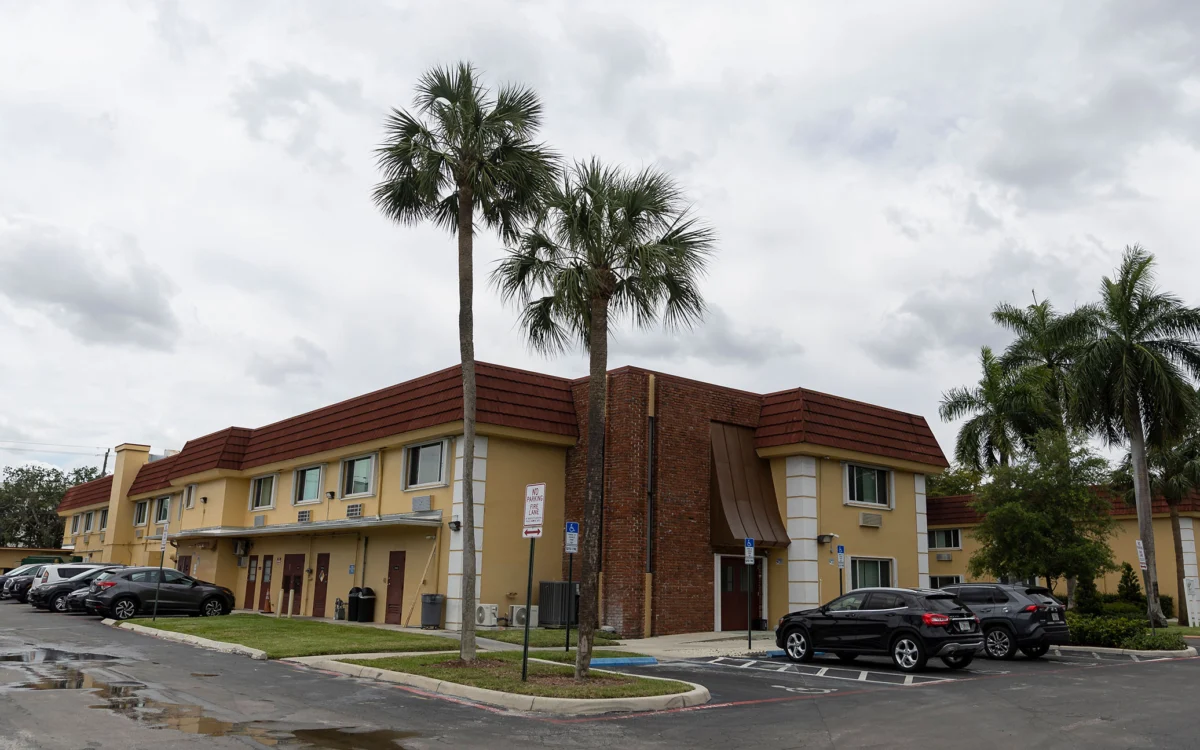
The scarcity of institutional options itself exacerbates the problem. When the Justice Department filed its lawsuit in 2013, Florida had six nursing homes with dedicated units for children with complex medical needs. Today, that number has dwindled to three, with two located in Broward County. This reduction in facilities means that families may be forced to travel significant distances to visit their children, further contributing to the children’s isolation.
In his dissent, Judge Brasher argued that Judge Middlebrooks’ order, while framed as an effort to keep children out of institutions, was fundamentally an attempt to compel Florida to overhaul its entire system of care for children with disabilities – a reform he believes is beyond the purview of the courts. "The government’s attorney made clear that the point of the litigation was to overhaul Florida’s programs…," Brasher wrote. "We’re not suing on behalf of an individual. We’re suing to change the policies and practices of the state of Florida." He concluded that such "program-overhauling proposals" cannot be mandated by federal courts.
Broader Implications and Future Outlook
The 11th Circuit’s ruling represents a significant victory for disability rights advocates and families who have long struggled against Florida’s systemic failures. It reinforces the legal framework established by the ADA and other federal laws, emphasizing the right of individuals with disabilities to live in the community. The decision also serves as a clear signal that states cannot use financial constraints or claims of federalism as justifications for violating federal civil rights laws.
The implications of this ruling extend beyond Florida. It sets a precedent for how other states manage the care of children with complex medical needs and underscores the importance of robust community-based services. The continued implementation of Judge Middlebrooks’ injunction, overseen by an independent monitor, will be crucial in determining whether Florida genuinely transforms its approach to caring for its most vulnerable children. The state’s response to this judicial mandate will be closely watched, as it will define the future for thousands of children and families in Florida.