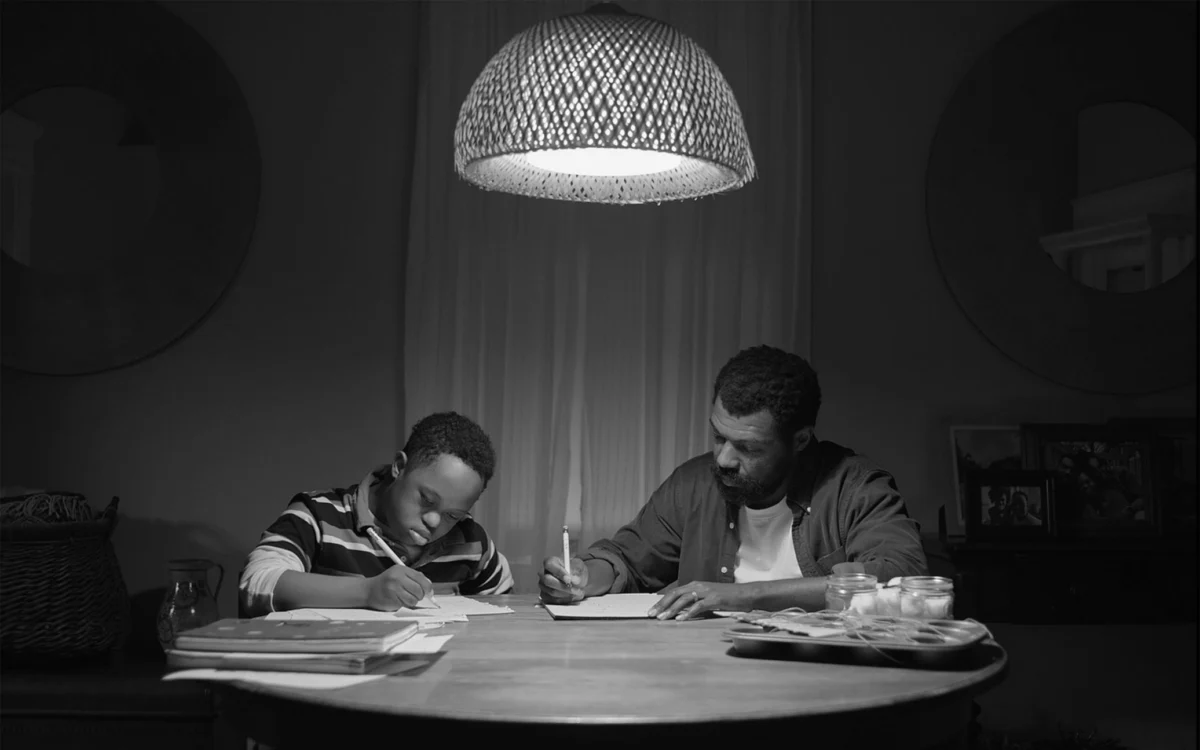
An award-winning film that sensitively explores the profound bond between a father and his son with Down syndrome, "Color Book," is now accessible to a global audience on Netflix, marking a significant moment for inclusive storytelling in cinema. The black and white drama, which has garnered critical acclaim and numerous accolades since its premiere, delves into the complexities of family, love, and resilience as a widower navigates the journey of raising his son independently.
The narrative centers on Lucky, portrayed by Will Catlett, a father grappling with the recent loss of his wife and the daunting task of parenting his 11-year-old son, Mason, who has Down syndrome. Played by Jeremiah Daniels, an actor with Down syndrome himself, Mason’s character embodies a spirit of joy and curiosity that guides their shared adventure. The film’s central plot follows Lucky and Mason as they embark on a road trip across metro Atlanta, aiming to attend their first baseball game together. This journey, however, is far from a simple outing; it becomes a series of challenges and triumphs, mirroring the everyday hurdles and profound moments that define their relationship. The cinematography, deliberately rendered in black and white, accentuates the emotional depth and stark reality of their experiences, allowing the audience to focus on the characters’ inner lives and their evolving connection.
The genesis of "Color Book" is rooted in a desire to present an authentic and moving portrayal of a father-son relationship that is often underrepresented or misrepresented in mainstream media. Director David Fortune, who also penned the screenplay, has expressed his commitment to telling stories that foster empathy and understanding. His vision for "Color Book" was realized through a substantial $1 million grant from the AT&T Untold Stories Award in 2023, a program dedicated to supporting diverse filmmakers and amplifying marginalized voices. This financial backing was instrumental in bringing Fortune’s deeply personal project to fruition, enabling him to assemble a talented cast and crew committed to the film’s sensitive subject matter.
A Journey of Discovery and Connection
The film’s storyline unfolds as Lucky and Mason traverse the vibrant, yet sometimes challenging, landscape of metro Atlanta. Their quest to reach the baseball game serves as a powerful metaphor for their broader journey of connection and mutual understanding. Along the way, they encounter various individuals and situations that test their patience, strengthen their resolve, and ultimately deepen their bond. These encounters are not merely plot devices; they are meticulously crafted to reveal the societal perceptions and potential barriers that individuals with Down syndrome and their families may face, while simultaneously highlighting the inherent strengths and unwavering love that can overcome them.
Jeremiah Daniels’ performance as Mason has been particularly lauded for its naturalism and authenticity. His portrayal offers a nuanced perspective on childhood, aspirations, and the simple pleasures of life, often serving as the emotional anchor for the narrative. Will Catlett, as Lucky, delivers a performance that is both raw and tender, capturing the anxieties, frustrations, and immense love of a father striving to do his best. The chemistry between the two actors is palpable, forming the heart of the film and resonating with audiences who have experienced the joys and complexities of family life.
Critical Acclaim and Festival Recognition
"Color Book" has not only found a home on Netflix but has also enjoyed a distinguished career on the festival circuit, underscoring its artistic merit and universal appeal. The film made its world premiere at the prestigious Tribeca Film Festival in 2024, a platform renowned for showcasing groundbreaking and socially relevant cinema. This initial exposure generated significant buzz, paving the way for further recognition at esteemed international film festivals.
Subsequent to its Tribeca debut, "Color Book" continued to amass accolades, securing awards at the Austin Film Festival, the Deauville American Film Festival, the Chicago International Film Festival, and the Denver Film Festival, among others. This consistent recognition from diverse cinematic bodies speaks to the film’s ability to transcend cultural and geographical boundaries, connecting with audiences and critics alike through its universal themes of family, love, and acceptance. The awards received are not merely symbolic; they represent a validation of the film’s artistic vision and its significant contribution to fostering a more inclusive and understanding cinematic landscape.
The Director’s Vision and Impact
David Fortune, the creative force behind "Color Book," has articulated his motivations and aspirations for the film. " ‘Color Book’ is a heartfelt story about love, family, and the communities we come from," Fortune stated. "I’m truly excited for audiences around the world to experience this emotional journey on Netflix and connect with these characters in a real and meaningful way." This sentiment underscores the film’s intended impact: to foster genuine emotional engagement and create a lasting connection between the audience and the characters.
Fortune’s background and the journey leading to "Color Book" are also noteworthy. The AT&T Untold Stories Award, which provided the crucial $1 million grant, is a testament to the program’s commitment to empowering filmmakers from underrepresented backgrounds. This initiative aims to identify and support compelling narratives that might otherwise struggle to find funding and distribution, thereby enriching the cinematic tapestry with diverse perspectives. The success of "Color Book" serves as a powerful example of how such programs can elevate important stories and provide a platform for emerging talent.
Supporting Data and Broader Implications
The release of "Color Book" on a global streaming platform like Netflix arrives at a time when representation of individuals with disabilities in media is increasingly recognized as a critical issue. Data consistently shows that authentic portrayals can significantly influence public perception and foster greater inclusion. For instance, a 2022 study by the Geena Davis Institute on Gender in Media found that audiences are more likely to hold positive attitudes towards people with disabilities after viewing content that features them in realistic and empowering roles. "Color Book" directly contributes to this positive shift by presenting a nuanced and humanizing portrait of a family navigating the realities of Down syndrome.
Furthermore, the film’s success on the festival circuit and its subsequent distribution on Netflix highlight a growing demand for diverse narratives. The increasing accessibility of such content through streaming services democratizes access to stories that resonate with a wider range of experiences, moving beyond traditional Hollywood fare. This trend is crucial for dismantling stereotypes and promoting a more equitable representation of society in popular culture. The fact that "Color Book" was filmed in metro Atlanta also brings a local flavor to its universal themes, showcasing the region’s diverse landscapes and communities as a backdrop for this intimate story.
Reactions and Future Outlook
While specific reactions from advocacy groups or disability organizations directly tied to the film’s Netflix release are still emerging, the critical acclaim and festival awards suggest a positive reception. The film’s debut at Tribeca and subsequent wins indicate that it has already resonated with industry professionals and audiences familiar with the nuances of disability representation. It is reasonable to infer that organizations dedicated to supporting individuals with Down syndrome and their families will view "Color Book" as a valuable contribution to raising awareness and promoting understanding. Such films often serve as conversation starters, encouraging dialogue about inclusion, accessibility, and the importance of seeing individuals with disabilities not just as recipients of care but as active participants in life with their own unique stories and aspirations.
The implications of "Color Book" extend beyond entertainment. By bringing this story to a mainstream platform, the film has the potential to influence how society perceives and interacts with individuals with Down syndrome. It offers a powerful counter-narrative to outdated stereotypes, emphasizing the strength, individuality, and inherent worth of every person. The film’s focus on the father-son relationship, a universal theme, allows viewers to connect with the characters on a deeply human level, fostering empathy and breaking down perceived barriers. The continued success of films like "Color Book" suggests a positive trajectory for more inclusive and authentic storytelling in the film industry, a trend that is likely to be sustained as audiences increasingly seek out diverse and meaningful content. The film’s availability on Netflix ensures that its powerful message of love, resilience, and family can reach a vast and diverse global audience, potentially inspiring countless viewers and contributing to a more inclusive world.