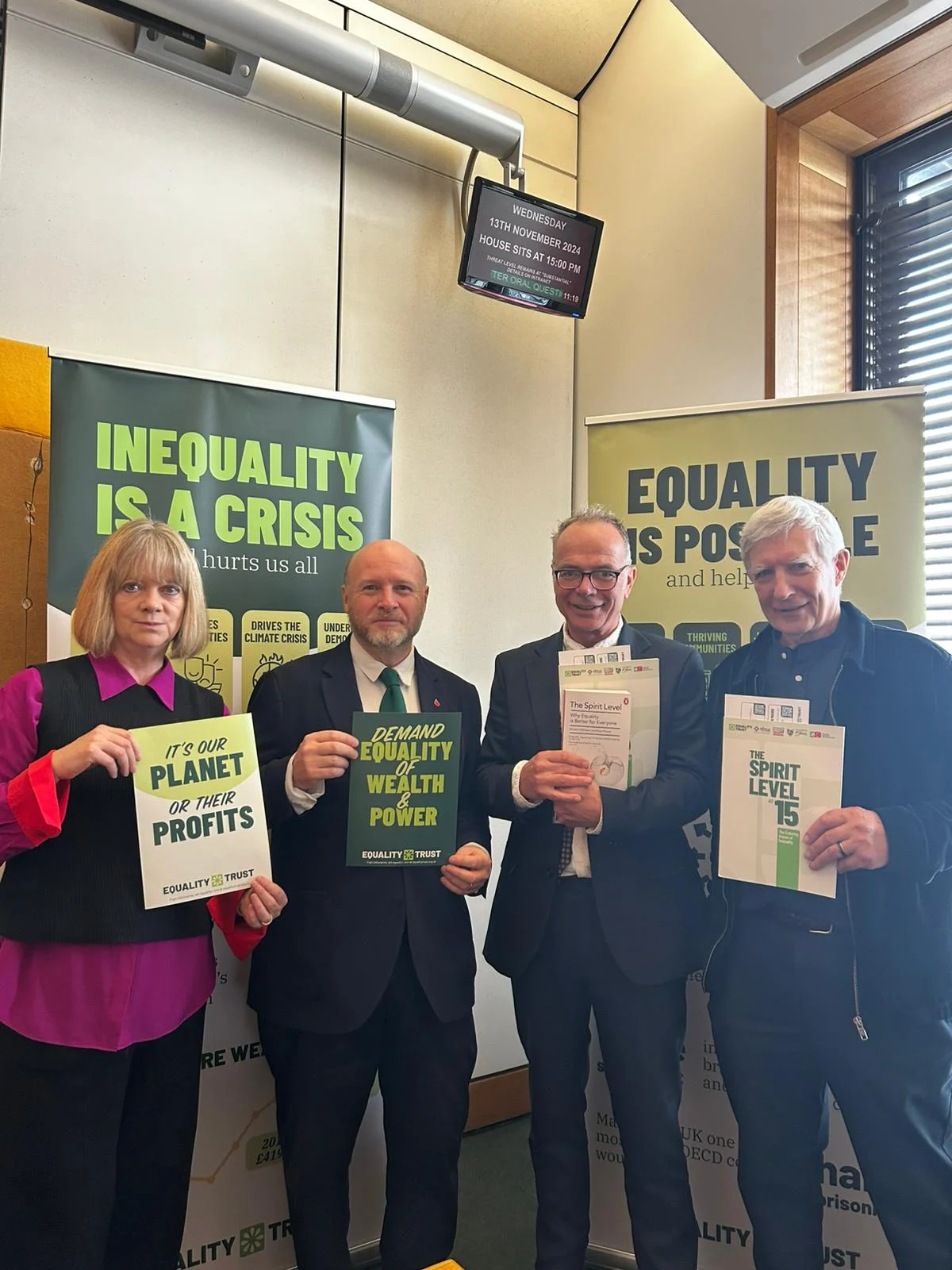
The launch of the Community Economist project marks a significant shift in how economic narratives are constructed and understood within the United Kingdom, moving away from high-level abstract data toward a model rooted in the lived realities of citizens. Developed by The Equality Trust, the initiative seeks to bridge the gap between complex financial systems and the people they impact, operating on the foundational principle that the economy should function as a tool for societal wellbeing rather than an incomprehensible force beyond public influence. By training a cohort of volunteers from diverse geographical and socio-economic backgrounds—ranging from the urban centers of London to the rural regions of Scotland—the project aims to democratize economic discourse and foster a movement for inclusive economic justice.
The core of the initiative lies in the recognition that for a vast majority of the population, "the economy" is often perceived as a series of external pressures—such as inflation, interest rate hikes, and market fluctuations—that occur without their input or understanding. The Equality Trust argues that this alienation is a barrier to systemic change. By reframing the economy as something "people make," the project seeks to empower individuals to critique existing structures and propose alternatives that prioritize human needs over purely fiscal metrics.
The Methodology of Community Reporting and Training
The Community Economist project utilizes a specialized form of community reporting, a methodology designed to capture unfiltered, grassroots perspectives that are often overlooked by traditional economic research. Unlike standard academic studies that rely on quantitative surveys or top-down data sets, this project prioritizes qualitative narratives. The recruitment process for the first cohort was highly competitive, drawing applications from across the UK. Ultimately, ten volunteers were selected based on their diverse experiences with economic inequality and their commitment to social change. Notably, none of the participants possessed formal training in economics, a deliberate choice intended to ensure that the findings remained grounded in everyday language and experience.
Over a structured 12-week period, these volunteers underwent intensive training workshops. The curriculum focused on three primary pillars: storytelling, interviewing techniques, and thematic analysis. This training was designed to transform personal grievances into structured insights, allowing the volunteers to act as conduits for their communities. The central inquiry guiding their work was: "What would it be like if everyone had what they needed to live a good life, and how would that be different from how things are now?" This question served as the catalyst for hours of interviews, resulting in a rich tapestry of data that highlights the intersection of financial policy and personal life.
Contextualizing Economic Inequality in the United Kingdom
The launch of the Community Economist project comes at a time of heightened economic scrutiny in the UK. According to data from the Office for National Statistics (ONS), wealth inequality has remained stubbornly high, with the wealthiest 10% of households holding approximately 43% of all wealth, while the bottom 50% hold less than 5%. Furthermore, the Joseph Rowntree Foundation has consistently highlighted that millions of UK citizens are living in poverty, exacerbated by the rising costs of essentials such as housing, energy, and food.
In this context, the Community Economist project serves as a qualitative counter-narrative to traditional indicators like Gross Domestic Product (GDP). While GDP may show growth, the stories collected by the project suggest that such growth is not being felt equitably. The volunteers reported that economic decisions—often made in isolation by policymakers—have direct, cascading effects on housing security, educational opportunities, career aspirations, and even the quality of interpersonal relationships. By documenting these links, the project provides a human-centric map of the UK’s economic landscape.
Chronology of the Initiative
The development of the Community Economist project followed a phased timeline designed to build sustainable community power:
- Recruitment and Orientation (Late 2025): The Equality Trust identified and selected ten volunteers from a large pool of applicants, focusing on those with lived experience of economic hardship and a desire for advocacy.
- The 12-Week Training Intensive (Autumn/Winter 2025): Volunteers engaged in weekly workshops, learning the ethics of reporting, the art of the interview, and how to identify recurring themes in community narratives.
- Data Collection and Interviewing (Winter 2025 – Early 2026): Volunteers conducted over ten hours of filmed and recorded interviews within their local communities, capturing a wide array of perspectives on the current state of the economy.
- Analysis and Curation (January 2026): The Equality Trust and the volunteers collaborated to synthesize these hours of footage into a cohesive insight report and a documentary film, which were officially released on January 29, 2026.
- Current Status (Phase 2): The project is currently entering a phase of focused workshops, message testing, and coalition building to translate these insights into a broader advocacy platform.
Findings and Narratives of Economic Disparity
The resulting insight report and film illustrate the profound impact of economic policy on the daily lives of UK residents. The narratives collected by the Community Economists suggest that the current system often feels punitive rather than supportive. Recurring themes identified in the thematic analysis include:
- Housing as a Barrier: A significant number of storytellers identified the cost and quality of housing as the primary obstacle to a "good life." The lack of affordable, stable housing was linked to increased mental health struggles and a reduced ability to engage in local community life.
- The Erosion of Aspiration: Economic inequality was frequently described as a weight that stifles long-term planning. For many, the necessity of surviving the "now" precludes the ability to invest in education or career development for the "future."
- The Economy of Relationships: Participants noted that financial stress often leads to the breakdown of family and social bonds, suggesting that economic inequality has a social cost that is rarely quantified in government budgets.
The report emphasizes that these are not merely "private worries" but are systemic issues that require collective action. The storytellers did not just identify problems; they offered visions for a reformed economy where the provision of basic needs is guaranteed, and the success of the system is measured by the health and happiness of the populace rather than market indices.
Future Phases: From Insight to Social Action
The Equality Trust has outlined a clear trajectory for the project’s next steps. Having established a baseline of qualitative evidence, Phase 2 will focus on "turning community conversations into community power." This involves running focused workshops to refine the project’s messaging and testing these messages with wider audiences to ensure they resonate across the political and social spectrum. This phase is critical for building the advocacy and coalition networks necessary to influence policy.
In Phase 3, the project will culminate in direct social action. This stage is intended to use the gathered evidence and the energy of the volunteer network to push for tangible legislative and structural changes. The goal is to shift the national conversation from a passive acceptance of economic inequality to an active pursuit of an economy that serves the public good.
Analysis of Broader Implications
The Community Economist project represents a growing trend in "participatory economics," where the boundaries between the researcher and the subject are blurred. By positioning regular citizens as "economists," The Equality Trust is challenging the technocratic monopoly on economic discourse. This approach suggests that expertise is not solely found in academic credentials but also in the lived experience of navigating a system.
The potential impact of this project extends beyond the immediate findings. If successful, the model could be replicated by other NGOs and community groups to address various social issues. Furthermore, it provides a template for how policymakers could better engage with the public. By integrating qualitative community reporting into the policy-making process, the government could create more resilient and responsive economic strategies that address the root causes of inequality rather than just the symptoms.
As the UK continues to grapple with the long-term effects of the cost-of-living crisis and regional disparities, initiatives like the Community Economist project provide a vital platform for those most affected. The report and film released today are not just a record of current struggles; they are a call to rethink the purpose of the economy and a demand for a system where everyone has what they need to live a life they value. The work ahead involves turning these insights into a sustained movement for change, ensuring that the voices of the ten original volunteers—and the hundreds they interviewed—remain at the forefront of the national agenda.