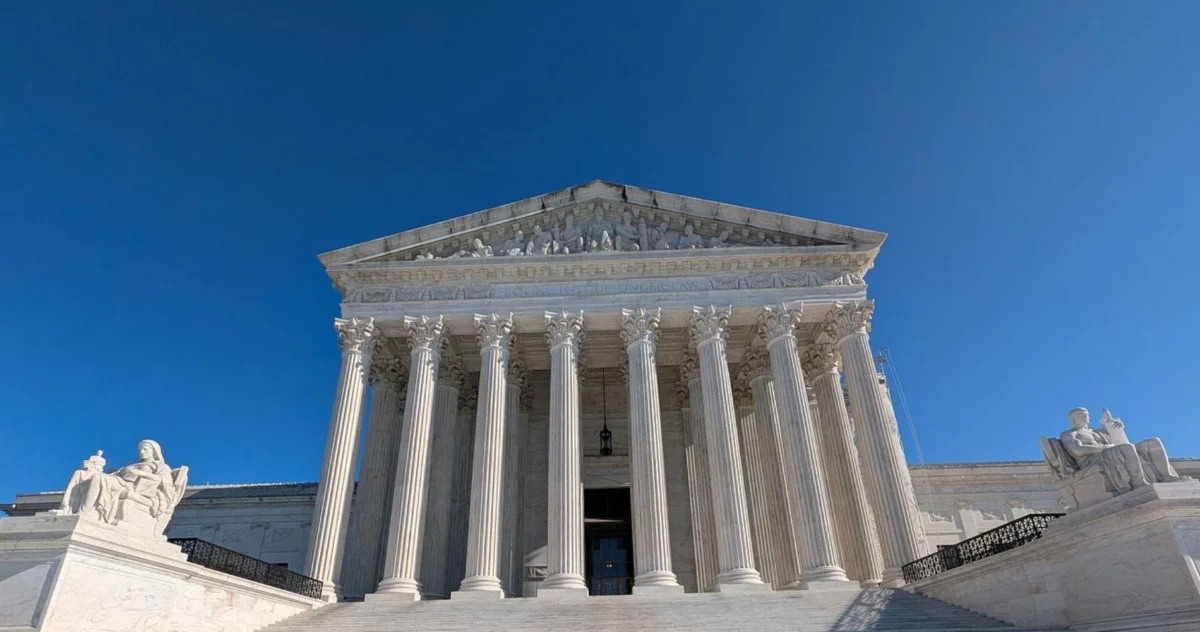
The Supreme Court on Thursday delivered a significant ruling, vacating the death sentence of Terry Pitchford, a Black man from Mississippi, after finding that his constitutional right to a fair jury selection process was violated due to racial discrimination by the prosecution. In a 5-4 decision authored by Justice Brett Kavanaugh, the Court upheld a lower court’s finding that Pitchford was denied the opportunity to adequately challenge the prosecutor’s peremptory strikes against Black prospective jurors, a critical safeguard against racial bias under the landmark 1986 ruling of Batson v. Kentucky. This decision marks the second time the nation’s highest court has overturned a capital conviction linked to District Attorney Doug Evans, known for a long history of controversial jury selections in Mississippi.
The Foundational Principles of Batson v. Kentucky
Central to the Supreme Court’s ruling is the application and enforcement of Batson v. Kentucky, a pivotal 1986 Supreme Court decision that prohibits prosecutors from exercising peremptory challenges to exclude prospective jurors on account of their race. The Batson ruling established a three-step framework for evaluating claims of racial discrimination in jury selection:
- Step One: Prima Facie Case: The defendant must first make a prima facie showing that the prosecutor has exercised peremptory challenges on the basis of race. This requires demonstrating that the totality of the relevant facts gives rise to an inference of discriminatory purpose.
- Step Two: Race-Neutral Explanation: If a prima facie case is established, the burden shifts to the prosecutor to offer a race-neutral explanation for the challenged strikes. This explanation does not need to be persuasive or even plausible, but it must be clear and not inherently discriminatory.
- Step Three: Pretext Determination: The trial court must then determine whether the defendant has proven purposeful racial discrimination. At this final step, the court evaluates the prosecutor’s explanation in light of all the circumstances, including the credibility of the prosecutor’s race-neutral reasons, to determine if those reasons were merely a pretext for discrimination. Defense counsel is afforded the opportunity to argue why the stated reasons are pretextual.
The integrity of this three-step process is paramount to ensuring that jury selection, a cornerstone of American justice, remains free from racial prejudice. The Supreme Court’s decision in Pitchford underscored that a failure to fully execute all three steps undermines the very purpose of Batson.
Chronology of the Pitchford Case: A Journey Through the Courts
The case of Terry Pitchford began in tragic circumstances in 2004 when he was just 18 years old. Pitchford and another Black teenager, Eric Bullins, then 16, attempted to rob a grocery store near Grenada, Mississippi. During the robbery, the white store owner was fatally shot three times by Eric Bullins, while Pitchford fired a single shot into the floor.
Due to his age at the time of the offense, Eric Bullins was not eligible for the death penalty. He subsequently pleaded guilty to manslaughter and was sentenced to 20 years in prison, a stark contrast to the capital murder charge faced by Pitchford.
Pitchford was charged as an accomplice with capital murder in Grenada County. At the time, Grenada County had a significant Black population, approximately 40% of its residents. During jury selection for Pitchford’s trial, 40 Black residents reported for jury service. Of these, five were excused for statutory causes, and 30 were excused for cause, primarily due to their expressed views on the death penalty, which rendered them ineligible to serve on a capital jury.
This left a pool of five Black prospective jurors. The prosecution, led by District Attorney Doug Evans, utilized four of its peremptory strikes to remove four of these five remaining Black individuals, leaving only one Black person on Pitchford’s jury. Defense counsel promptly raised a Batson objection, arguing that the strikes were racially motivated.
The trial court acknowledged the prima facie showing of racial discrimination (Step One) and required the prosecutor to provide race-neutral reasons for the strikes (Step Two). However, the crucial breakdown occurred at Step Three. The trial court, in what Justice Kavanaugh described as "things broke down," concluded its Batson analysis at Step Two, denying the challenge without allowing Pitchford’s defense attorneys the opportunity to argue that the prosecutor’s asserted race-neutral reasons were merely pretextual for racial discrimination.
On February 8, 2006, the nearly all-white jury found Terry Pitchford guilty of capital murder. The very next day, he was sentenced to death.
Pitchford’s appeals through the Mississippi state courts proved unsuccessful. The Mississippi Supreme Court rejected his Batson claim, asserting that his lawyers had failed to rebut the prosecutor’s stated reasons, despite the trial court having cut off their attempts to do so. This procedural misstep became the focal point of subsequent federal review.
In 2023, a federal district court granted Pitchford’s petition for federal habeas relief. The district court meticulously reviewed the trial record and found that defense counsel had indeed attempted to argue pretext, but the trial court had explicitly prevented them from doing so, effectively stopping the Batson analysis at Step Two. Concluding that the trial court had "full-stop ended its Batson analysis" prematurely, the federal court vacated Pitchford’s conviction and death sentence, remanding the case for a new trial.
However, this victory was short-lived. The U.S. Court of Appeals for the Fifth Circuit reversed the district court’s decision, leading Pitchford to seek review from the Supreme Court of the United States.
The Supreme Court, in its decision, sided with Pitchford, agreeing that the Mississippi trial court never conducted the essential third step of the Batson inquiry. Justice Kavanaugh’s opinion highlighted the trial court’s failure: "In this case, whether due to confusion, oversight, an overly hurried jury selection process, or some other cause, things broke down, and the ordinary trial-court procedure for resolving Batson claims at step three never occurred—notwithstanding the repeated efforts of Pitchford’s counsel to pursue and preserve the Batson objection."
The Court’s ruling reversed the Fifth Circuit’s decision and remanded Pitchford’s case, clearing the path for a new trial.
The Troubling History of District Attorney Doug Evans
This is not the first time District Attorney Doug Evans’s jury selection practices have come under intense scrutiny from the nation’s highest court. The Supreme Court previously vacated a capital conviction based on a Batson claim against Evans in the highly publicized case of Curtis Flowers.
In 2019, the Court reversed the conviction of Curtis Flowers, a Black man who endured six trials for the same offense in Winona, Mississippi, beginning in 1996. Across these six trials, Evans struck an astonishing 41 of the 42 Black prospective jurors he could have struck. Justice Kavanaugh, again writing for the majority in a 7-2 decision, stated unequivocally, "The numbers speak loudly. The State’s relentless, determined effort to rid the jury of Black individuals strongly suggests that the State wanted to try Flowers before a jury with as few Black jurors as possible, and ideally before an all-white jury."
In Flowers’s sixth trial, Evans removed five of six Black prospective jurors. Like Pitchford, Flowers was convicted and sentenced to death by a jury predominantly composed of white individuals. Justice Kavanaugh admonished the Mississippi Supreme Court in the Flowers case for its failure to consider Evans’s extensive and documented record of racially biased jury selection. "We cannot ignore that history," he wrote. "We cannot take that history out of the case."
The federal district court in Pitchford’s case explicitly acknowledged this "troubling case history… by the same district attorney in the same judicial district." It found that this pattern of conduct was well known when Pitchford’s case reached the Mississippi Supreme Court and should have been thoroughly examined as part of the "totality of the circumstances" analysis required by Batson. The repeated pattern under the same prosecutor in the same judicial district raises profound questions about the systemic nature of racial bias in jury selection within that jurisdiction.
Broader Context: Racial Discrimination in the American Justice System
The Pitchford ruling reverberates against a backdrop of deeply entrenched racial disparities within the American criminal justice system, particularly in the Southern states. Studies and reports from organizations like the Equal Justice Initiative (EJI) have consistently documented how racial bias, both overt and implicit, continues to influence every stage of the legal process, from policing and arrests to sentencing and jury selection.
Historically, jury selection in the South was often a tool for racial exclusion, ensuring that Black defendants faced all-white juries, a practice that continued long after Batson was intended to put an end to it. While Batson was a crucial step, its effectiveness has been debated. Critics argue that the "race-neutral" explanations allowed in Step Two are often easily fabricated, making it difficult for defendants to prove purposeful discrimination at Step Three. This difficulty is compounded by the fact that trial judges, who are often colleagues of the prosecutors, are tasked with assessing the prosecutor’s credibility.
The Supreme Court’s insistence on the proper execution of Step Three in Pitchford is a critical affirmation that mere superficial adherence to the Batson framework is insufficient. It underscores that the opportunity for defense counsel to challenge the veracity of a prosecutor’s stated reasons is not a mere formality but an indispensable component of the constitutional guarantee against racial discrimination in jury selection.
In Mississippi, a state with a profound history of racial injustice, these issues are particularly acute. The death penalty itself has been disproportionately applied to Black defendants, especially in cases involving white victims. Terry Pitchford’s case, involving a Black defendant, a white victim, and a jury selection process that resulted in a nearly all-white jury despite a significant Black population in the county, exemplifies many of these systemic concerns.
Implications of the Ruling and Future Outlook
The Supreme Court’s decision in Terry Pitchford carries significant implications:
- Reinforcement of Batson: The ruling strengthens the procedural safeguards of Batson, reminding trial courts that they cannot bypass Step Three of the inquiry. It emphasizes that the defense must have a genuine opportunity to expose pretextual reasons for peremptory strikes.
- Accountability for Prosecutors: For prosecutors like Doug Evans with documented histories of problematic jury selection practices, this decision further highlights the need for increased scrutiny and accountability. The Court’s willingness to consider historical patterns, as noted in the Flowers case, is a powerful deterrent against repeat offenders.
- Impact on Death Penalty Cases: The decision offers a ray of hope for other defendants, particularly those on death row, whose convictions may have been secured through racially biased jury selection. It could open avenues for new appeals or federal habeas petitions if similar procedural flaws can be demonstrated.
- Judicial Training and Vigilance: The case underscores the need for continuous training and heightened vigilance among trial judges regarding Batson challenges. The Court’s acknowledgment of potential "confusion, oversight, [or] an overly hurried jury selection process" suggests that even unintentional missteps can lead to grave constitutional violations.
- Broader Racial Justice Dialogue: The ruling contributes to the ongoing national conversation about racial bias in the criminal justice system. Civil rights advocates and legal experts are likely to cite this decision as evidence that systemic issues persist and require constant judicial oversight.
Legal analysts infer that this ruling will be welcomed by civil rights organizations and defense attorneys as a crucial victory for fair trials and racial justice. It signals the Supreme Court’s continued commitment to addressing racial discrimination in the courtroom, particularly in death penalty cases where the stakes are highest. For Terry Pitchford, now 40 years old, the decision offers a profound second chance, nearly two decades after his initial conviction and death sentence. While he remains incarcerated, the path is now clear for a new trial, one that will hopefully be conducted under a jury selection process free from the taint of racial prejudice. The state of Mississippi will now face the challenge of retrying a nearly 20-year-old case, or potentially seeking a plea agreement. The Supreme Court’s action sends a clear message: the integrity of the justice system demands that all parties adhere strictly to the constitutional principles designed to ensure fairness and prevent racial discrimination.