The humanitarian catastrophe unfolding across the Iranian plateau has become the defining global crisis of 2026, marking a grim milestone in 21st-century warfare. As civilian casualties mount and the displacement of millions creates a regional vacuum, the international community finds itself at a profound moral and strategic impasse. For the United Kingdom, however, the conflict is serving as more than just a foreign policy challenge; it has become the catalyst for a fundamental domestic interrogation. After decades of aligning its economic and social structures with the American model, Britain is facing a moment of clarity regarding its future as a sovereign economic power and its long-standing reliance on the "Anglosphere."
The Humanitarian Reality and the Iranian Crisis
The conflict in Iran, which escalated sharply in early 2026, has resulted in a human toll that defies easy quantification. Reports from international aid agencies suggest that the destruction of critical infrastructure—including water treatment plants and power grids—has left over 15 million people in a state of acute vulnerability. The psychological and physical impact on the civilian population is immense, with families being systematically fractured by the violence.
While the geopolitical implications are vast, analysts stress that the human reality must remain the primary focus. The displacement of families and the loss of life represent a failure of international diplomacy that transcends mere economic considerations. However, the nature of the conflict, and specifically the unilateralist posture adopted by the United States, has forced America’s closest allies to reconsider the stability of their strategic partnerships. For the UK, this has meant an abrupt confrontation with the reality of its post-Brexit economic gamble.
A Chronology of Strategic Drift
The current tension in British policy is the culmination of a forty-year trajectory. Following the economic shifts of the 1980s, the United Kingdom increasingly adopted the tenets of Washington-style capitalism. This model prioritized the deregulation of financial markets, the weakening of organized labor, and the privatization of essential public services. By the mid-2010s, the UK’s technology sector had become largely subservient to American platforms, and its national defense was inextricably linked to American hardware and strategic priorities.
The 2016 decision to leave the European Union accelerated this trend. The "Global Britain" strategy was built on the premise that the UK could thrive as a junior partner in a revitalized Anglosphere, leveraging a special relationship with the United States to offset the loss of the European Single Market. This bet was predicated on a predictable and collaborative United States. However, the events of the mid-2020s—characterized by an American administration that is increasingly erratic, indifferent to international institutions, and focused on an aggressive brand of economic nationalism—have rendered that premise obsolete.
The Economic Crossroads: Washington vs. Northern Europe
As the war in Iran deepens the divide between Washington and its traditional allies, Britain is facing a genuine crossroads. The question is no longer merely about diplomatic alignment but about the very structure of the British economy. The alternative models, seen in countries such as Germany, the Netherlands, and the Scandinavian states, offer a starkly different vision of capitalism.
In these Northern European economies, inequality is significantly lower than in the UK. This is not a result of chance but of intentional policy design. These nations utilize economic models defined by:
- Stronger Labor Rights: Collective bargaining and worker representation on corporate boards are standard, ensuring that productivity gains are shared more equitably.
- Regulated Finance: Financial sectors are geared toward supporting the productive economy—manufacturing, infrastructure, and services—rather than speculative market activity.
- Broader Ownership: A focus on cooperative and state-supported ownership models prevents the extreme concentration of wealth seen in the Anglo-American system.
Data from the 2025 Global Inequality Report highlights this disparity. The UK’s Gini coefficient—a measure of statistical dispersion representing income inequality—remains among the highest in the OECD, significantly higher than that of Denmark or Norway. This internal inequality makes the UK more vulnerable to external shocks, as a large portion of the population lacks the financial resilience to withstand rising costs associated with global instability.
The Influence of Concentrated Wealth
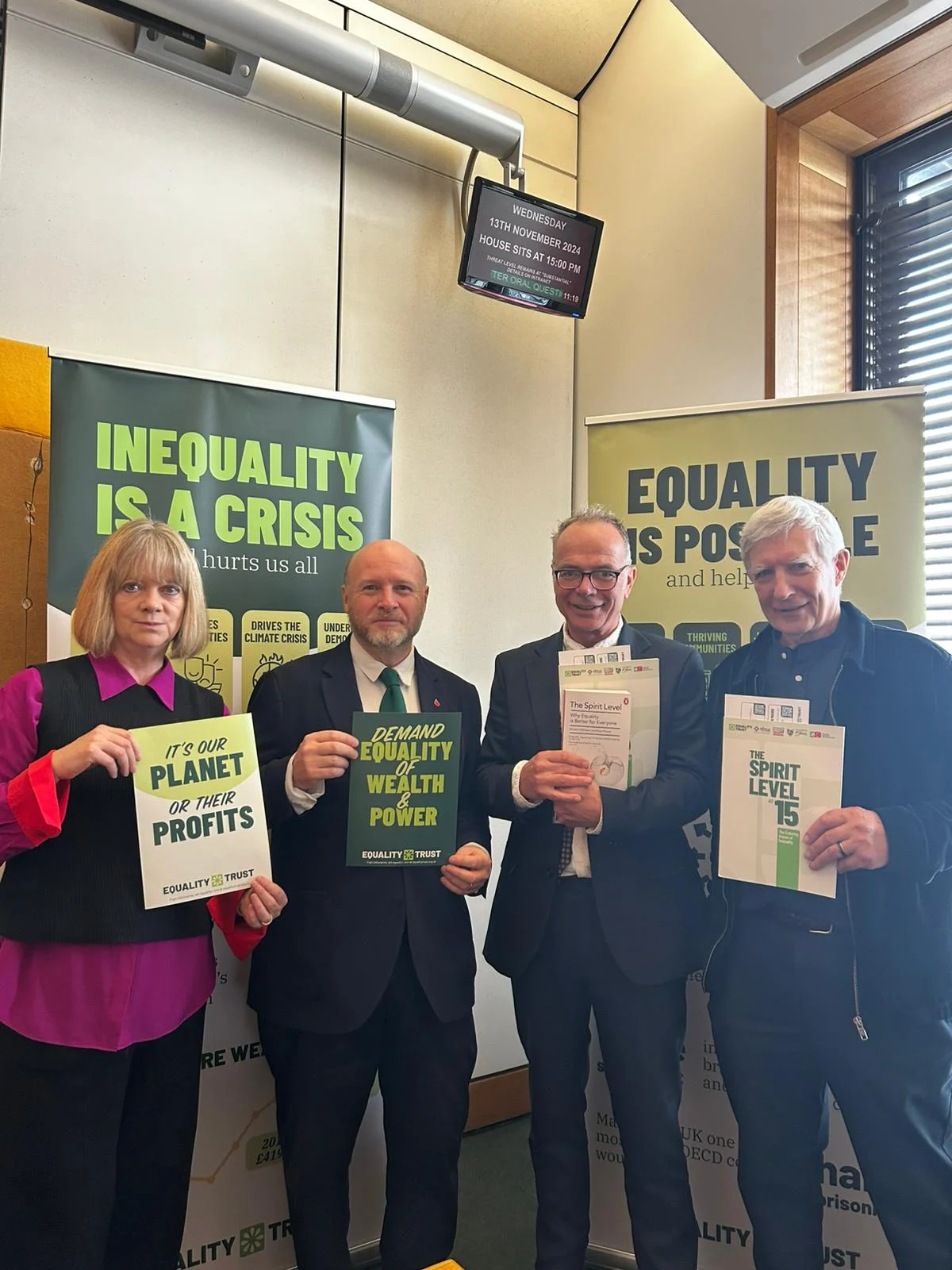
One of the most significant consequences of Britain’s drift toward the American model has been the emergence of a political and economic culture shaped by extreme wealth. Research conducted by organizations like the Equality Trust has identified a "feedback loop" between concentrated corporate power and political influence.
In their recent briefing, Money, Media and the Lords: How the Ultra-wealthy are Shaping Britain, researchers detailed how oligopolies in the UK have reduced competition and extracted value from consumers. This concentration of power is often reinforced by lobbying structures that bend regulation toward the interests of the largest players. The result is an economy where market power is held by a handful of corporations and their owners, making it increasingly difficult for the government to enact policies that serve the broader public interest.
The war in Iran has highlighted the dangers of this concentration. When defense and energy policies are influenced by a narrow set of corporate interests, the national response to global crises can become skewed, prioritizing profit and strategic positioning over humanitarian concerns and domestic stability.
Reactions from Industry and Governance
The pressure to reorient British policy is being felt across multiple sectors. Within the business community, there is a growing consensus that over-reliance on American technology and financial markets is a strategic liability.
"The erratic nature of US trade policy over the last twenty-four months has made long-term planning nearly impossible for UK firms," says Dr. Elena Rossi, an analyst at the London School of Economics. "We are seeing a shift in sentiment where British businesses are looking back toward Europe, not necessarily for political reintegration, but for the stability of a more regulated and predictable economic environment."
Public opinion is also shifting. Recent polling suggests that a majority of the British public favors a move toward a "Northern European" social contract, with higher investment in public services and stronger protections for workers. The humanitarian crisis in Iran has only served to sharpen this desire for a more independent and ethically grounded foreign and economic policy.
A Strategy for Community Wealth Building
If Britain is to break its dependence on the American model, it must implement a comprehensive strategy for domestic renewal. This involves moving beyond rhetoric and adopting specific, actionable policies:
- Community Wealth Building: Implementing strategies that keep money circulating within local economies. This includes "anchor institution" procurement, where local councils, hospitals, and universities prioritize local suppliers.
- Industrial Investment: Redirecting capital toward building capacity in "left-behind" regions. Rather than enriching overseas contractors, the government should focus on developing a domestic industrial base focused on green energy and high-tech manufacturing.
- Technological Sovereignty: Investing in UK-owned technology infrastructure to prevent the extraction of data and value by Silicon Valley platforms.
- Financial Reform: Strengthening financial regulation to ensure that the City of London serves the productive economy. This includes measures to curb speculative bubbles and encourage long-term investment in UK infrastructure.
- Robust Competition Policy: Empowering regulators to break up monopolies and resist the concentration of market power that allows a small elite to control economic policy.
Implications for the Future
The choice facing the United Kingdom is stark. It can continue to drift within the American orbit, maintaining an economic model that benefits a narrow elite while leaving the majority of the population vulnerable to global volatility. Or, it can treat the current geopolitical crisis as an opportunity to build a more independent, equitable, and resilient economy.
The transition toward a Northern European model would not be a radical departure into the unknown; rather, it would be an alignment with the most successful and stable economies in the world. These are nations that have demonstrated that it is possible to maintain high levels of productivity and innovation while ensuring that wealth and power are distributed more fairly across society.
As the war in Iran continues to reshape the global order, the UK’s decision will have long-lasting implications. The path toward strategic autonomy requires more than just a change in diplomatic rhetoric; it requires a fundamental restructuring of the British economy to ensure it works for everyone, rather than a select few. The moment for deferring this question has passed; the human cost of the current crisis and the shifting tides of global power have made a decision unavoidable. Whether the UK has the political will to seize this moment of reorientation remains the defining question of the decade.