A federal court in Massachusetts delivered a significant ruling on Friday, ordering the National Park Service (NPS) to immediately restore interpretive exhibits covering pivotal aspects of American history, including slavery, women’s suffrage, Native American Tribes, and climate change, which had been systematically removed or flagged for alteration under a directive from the Trump administration. The court’s exhaustive 63-page order not only mandates the reinstallation of these materials but also issues a permanent injunction preventing the NPS from further removing or changing interpretive content without reasoned justification, thereby upholding the integrity of historical interpretation within the nation’s treasured park system. The decision marks a substantial legal rebuke to the administration’s efforts to reshape the narrative presented to millions of visitors annually, emphasizing the importance of a comprehensive and unbiased account of the American past.
The Genesis of the Controversy: An Executive Order and its Ramifications
The legal battle stems from an executive order signed by President Donald Trump in March 2025, titled "Restoring Truth and Sanity to American History." This order directed the NPS to remove interpretive materials deemed to "inappropriately disparage Americans," a directive widely interpreted by critics as an attempt to sanitize or selectively present historical facts. Following this presidential mandate, the NPS embarked on a sweeping review, identifying hundreds of signs, displays, and interpretive exhibits for removal or alteration across numerous national parks and historical sites.
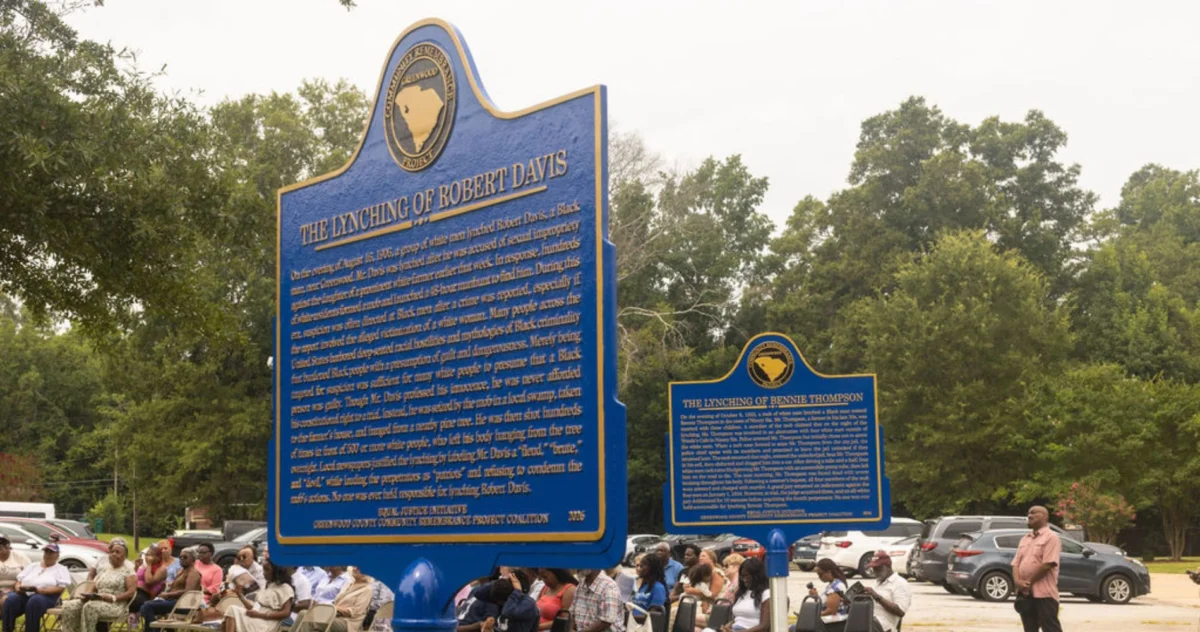
The scope of these removals was extensive, affecting diverse thematic areas. For instance, exhibits detailing the complex legacy of slavery were targeted, including those at Independence National Historical Park in Philadelphia that memorialized individuals enslaved by figures like the nation’s first President, George Washington. Similarly, signage at Fort Sumter in South Carolina, a site highly vulnerable to environmental shifts, that detailed climate threats was removed, aligning with the administration’s broader skepticism towards climate science. Beyond these prominent examples, countless other descriptions of history and science were reportedly altered or erased, impacting the educational experience for visitors nationwide. More than 500 items were ultimately flagged for removal, among them an iconic photograph at Fort Pulaski National Park in Georgia that vividly depicted the brutal violence inherent in the institution of slavery.
The administration’s actions were widely seen as part of a larger ideological effort to counter what it perceived as overly critical or "unpatriotic" interpretations of American history, often echoing themes promoted by initiatives like the "1776 Commission" which sought to present a more triumphalist view of the nation’s founding. This approach clashed sharply with established historical scholarship and the NPS’s long-standing mission to provide accurate, balanced, and context-rich interpretations of the sites under its stewardship.
A Coalition’s Stand: The Legal Challenge to Historical Erasure
In response to these directives and the subsequent removals, a formidable coalition of six prominent organizations filed a lawsuit against the NPS. The plaintiffs included the National Parks Conservation Association, American Association for State and Local History, Association of National Park Rangers, Coalition to Protect America’s National Parks, Society for Experiential Graphic Design, and the Union of Concerned Scientists. Their lawsuit argued that the NPS’s actions were "arbitrary and capricious" and in violation of federal law, specifically citing the Administrative Procedure Act (APA), which requires federal agencies to provide reasoned justifications for their actions.
These groups underscored the critical role national parks play not just as recreational areas but as vital educational institutions that preserve and interpret America’s multifaceted heritage. They contended that selectively editing history undermines public trust, distorts understanding, and deprives visitors of a complete educational experience. The lawsuit highlighted the professional consensus among historians, park rangers, and conservationists that a robust and inclusive historical narrative, encompassing both successes and failures, is essential for a healthy democracy. They argued that the administration’s directive represented an unprecedented act of government-sanctioned censorship, replacing objective historical inquiry with a politically motivated agenda.
The Court’s Scathing Indictment: "Rewriting History with a White-Out Pen"
The U.S. District Court for Massachusetts, in its comprehensive ruling, did not mince words, describing the administration’s efforts as an attempt "to rewrite the Nation’s history with a white-out pen" and setting a "dangerous precedent of censorship and sanitization." The court critically examined the administration’s rationale, noting that "under the guise of promoting American dignity," it sought to "share a limited history by ordering the removal of all signs, displays, and interpretive exhibits at National Parks that do not align with its preferred narrative, thereby telling half-truths."
A key finding of the court was the glaring absence of "any reasoned justification" from the NPS for its directive to review and remove interpretive material, beyond simply stating it was implementing the executive order. This lack of substantive explanation directly violated the APA’s requirement for reasoned decision-making by federal agencies. The court stressed that a "unilateral, unreasoned, and lawless Executive Order of a President cannot be the sole justification for an agency’s actions, lest the country be prepared to entrust its future to the whims of a single individual." This statement serves as a powerful reminder of the judiciary’s role in holding executive power accountable and ensuring adherence to legal and procedural standards.
Overwhelming Public Disapproval and Expert Consensus
The court’s decision also heavily factored in evidence of widespread public disapproval and expert consensus regarding the historical removals. The NPS, the court found, not only failed to explain its actions but also refused to address the significant public outcry. Polls and surveys presented to the court demonstrated "overwhelming, bipartisan support for telling the whole, unbiased history of this Nation." Thousands of park visitors actively used QR codes provided at the sites to voice their vehement opposition to the removal of interpretive materials, underscoring a deep public connection to the authentic historical narratives presented in national parks.
Further supporting this sentiment, the court cited a 2026 Pew Research Center survey, which reported that 66% of all U.S. adults believe it is "extremely or very important to publicly discuss [both] the country’s historical successes and strengths" as well as "the country’s historical failures and flaws." This data highlights a broad societal demand for comprehensive historical education, directly contradicting the administration’s narrow interpretive approach. Historians and educators widely support this view, arguing that understanding the complexities and contradictions of the past is crucial for informed citizenship and societal progress. The American Historical Association, for instance, has consistently advocated for historical interpretations that are evidence-based, inclusive, and nuanced, rather than politically driven.
The Mandate for Restoration: Preventing "Irreparable Harm"
The court’s order goes beyond simply halting future removals; it mandates active restoration. The NPS has been given a strict deadline of 21 days to restore and reinstall all interpretive materials at park sites to their condition prior to May 2025. This decisive action is aimed at preventing "irreparable harm to the American people," a critical legal standard for granting such injunctive relief.
The court meticulously detailed the profound harm caused by the removals: "The weight of this harm bears emphasizing. These park sites are deeply meaningful for many people for multifaceted reasons. The now-removed materials were the product of years of care, stewardship, community collaboration, and public engagement. They commemorate the people who have lived, worked, and died in this Nation; serve as a tribute to their contributions to the ideals of freedom, democracy, and equity; and represent an enduring reminder of the inherent contradictions in our Nation’s history."
The ruling further stated, "Their removal constitutes government-sanctioned erasure and rejection of their histories. It strips the sites of the context that gives them meaning. It degrades the public’s trust in the government, as the Executive Order ignores congressional directives and carelessly razes decades of efforts in the pursuit of its unilateral agenda. These harms are, in all senses of the word, irreparable." By setting July 3 as the deadline for restoration, the court deliberately underscored the importance of having "our shared history be honestly told and fully restored by the 250th Anniversary to properly honor the remarkable achievements of the United States," linking the contemporary legal battle to the enduring legacy and foundational principles of the nation.
The Administration’s Appeal and the Road Ahead
In a swift counter-move, the Trump administration, through the Department of Justice, filed an appeal on Monday evening, seeking to block the court’s order. This appeal signals an intent to continue the legal battle, potentially escalating the case to higher courts. The administration’s legal team will likely argue that the executive order falls within the President’s constitutional authority to direct federal agencies and that the court overstepped its bounds in dictating specific content for historical interpretation. They may also challenge the court’s finding of "irreparable harm" or the scope of the injunction.
The appeals process could be lengthy, potentially involving oral arguments and further legal briefs. In the interim, the immediate impact of the district court’s order remains significant, as the NPS is legally bound to begin the restoration process unless a stay is granted by the appeals court. The legal proceedings will undoubtedly draw further attention to the broader debate about historical truth, censorship, and the role of government in shaping public understanding of the past.
Broader Implications for Historical Integrity and Agency Oversight
This federal court ruling carries profound implications beyond the immediate restoration of park exhibits. It reaffirms the principle that federal agencies cannot act arbitrarily or capriciously, even when responding to presidential directives. It underscores the judiciary’s vital role in overseeing executive power and ensuring that administrative actions are grounded in reasoned decision-making and adherence to federal law.
Moreover, the decision reinforces the professional standards of historical interpretation and the importance of presenting a complete, nuanced, and evidence-based account of American history. It serves as a powerful testament to the value of diverse perspectives in understanding the national narrative, acknowledging both the triumphs and the tribulations that have shaped the United States. For institutions dedicated to historical preservation and education, the ruling offers a measure of protection against politically motivated attempts to rewrite or sanitize the past.
The case also highlights the ongoing cultural and political tensions surrounding how American history is taught and understood. As the nation approaches its 250th anniversary, the debate over historical memory and national identity is likely to intensify, with national parks remaining critical battlegrounds in this ideological struggle. The court’s order ensures that for now, the stories of slavery, women’s suffrage, Native American experiences, and the challenges of climate change will continue to be told in America’s national parks, reflecting a commitment to historical truth over politically convenient narratives. The unfolding legal drama will continue to define the parameters of historical interpretation within public institutions for years to come.