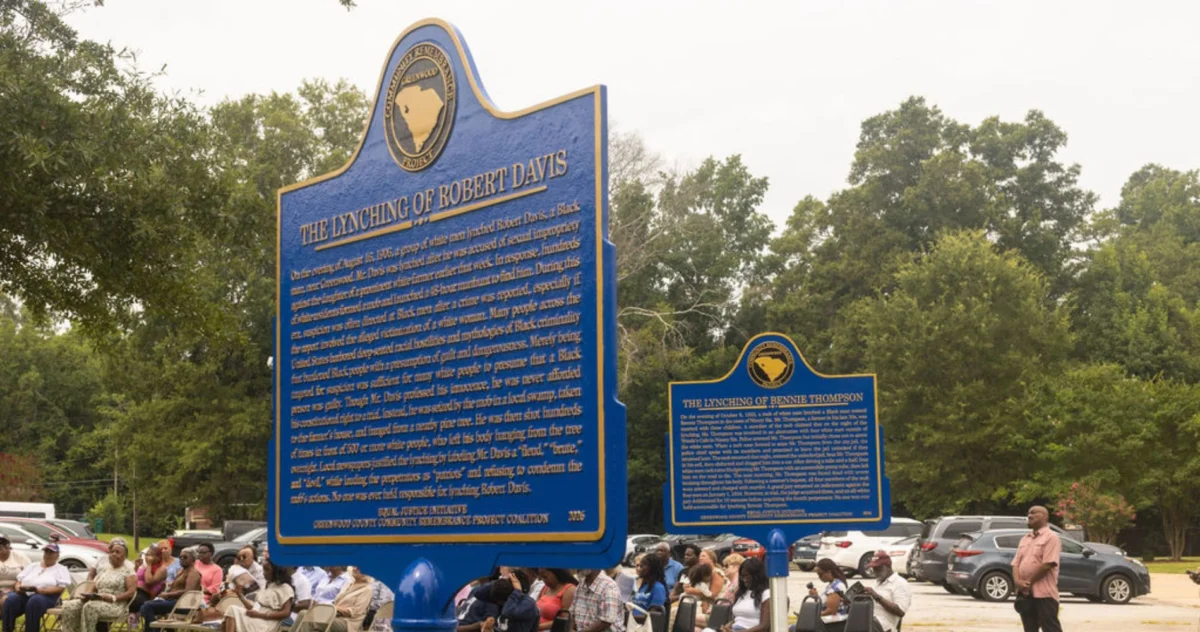
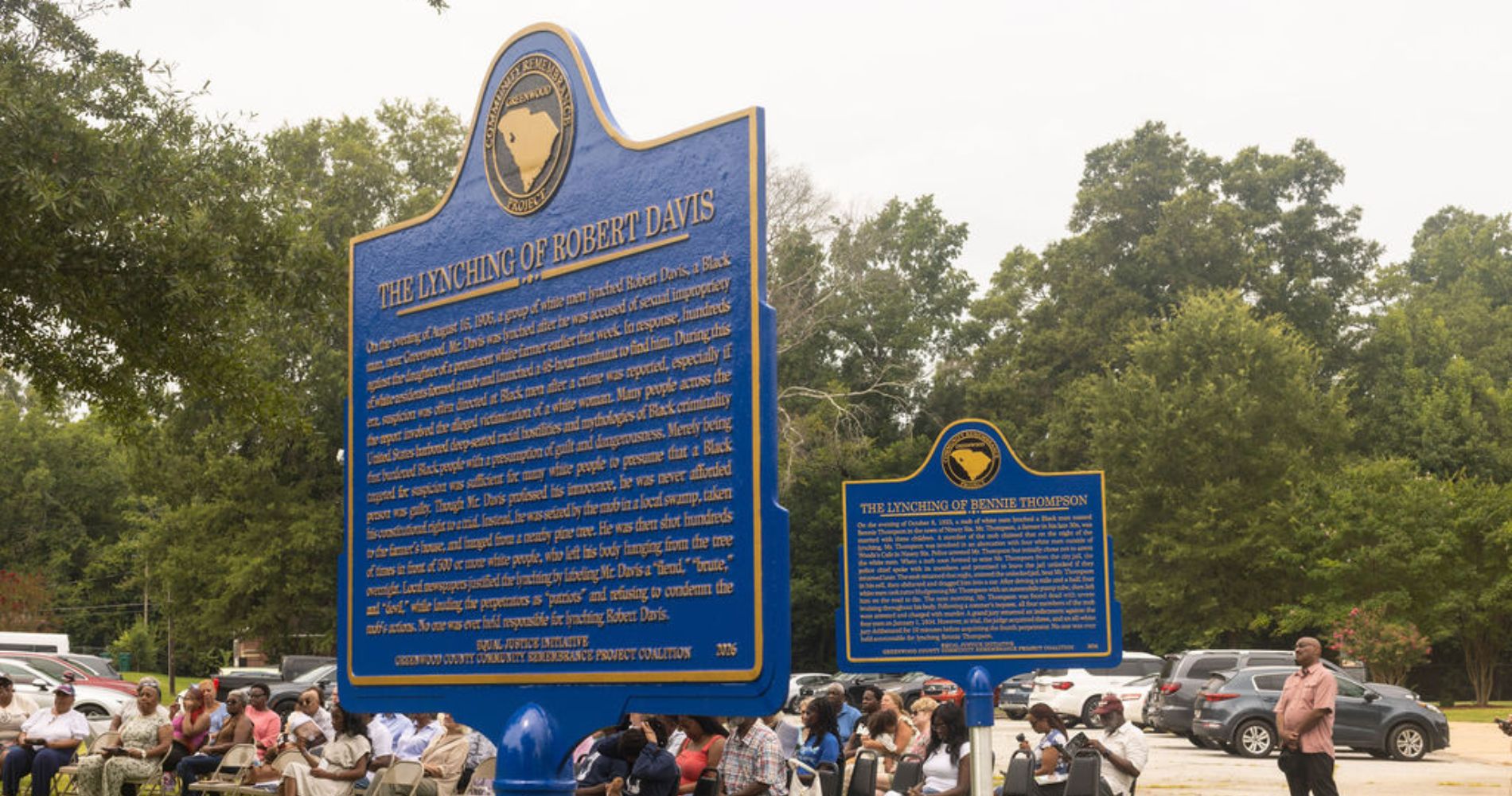
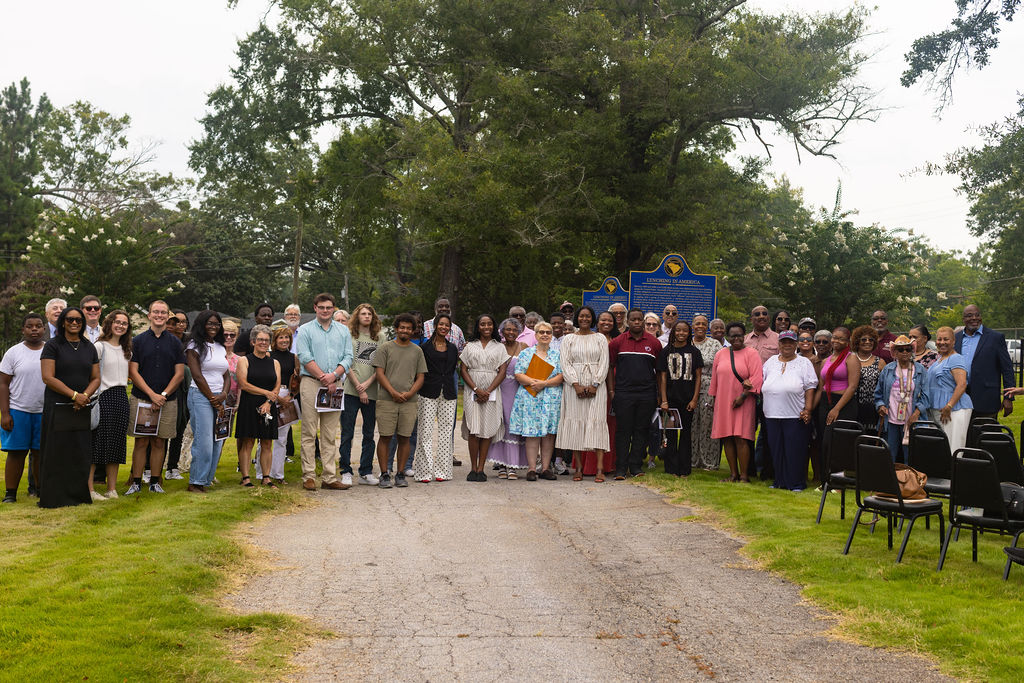
On August 1, a coalition of community members, local officials, and civil rights advocates gathered at the GLEAMNS Dr. Benjamin E. Mays Historic Preservation Site in Greenwood, South Carolina, to dedicate two new historical markers. These markers serve as permanent public testaments to the lives and deaths of Robert Davis and Bennie Thompson, two Black men who were victims of racial terror lynching in the early 20th century. The ceremony, held on the birthday of the late civil rights icon Dr. Benjamin E. Mays, drew approximately 70 attendees, ranging from local youth to community elders, underscoring a multi-generational commitment to confronting the darker chapters of American history.
The installation of these markers is part of an ongoing collaboration between the Equal Justice Initiative (EJI) and local stakeholders under the Community Remembrance Project. This initiative seeks to facilitate truth-telling, historical acknowledgment, and public reflection on the legacy of slavery, Jim Crow laws, and racial violence in the United States.
A Legacy of Racial Violence in Greenwood County
Greenwood County holds a somber distinction in South Carolina’s history, recording the highest number of documented racial terror lynchings in the state. Between 1865 and 1950, at least 17 Black individuals were killed by white mobs in the county. Historians note that these acts of violence were rarely spontaneous outbursts of anger; rather, they were calculated tools of social control designed to enforce racial hierarchy and instill terror within Black communities.
The case of Robert Davis, who was lynched on August 16, 1906, illustrates the extreme nature of this violence. Accused of sexual impropriety—an allegation frequently weaponized during the Jim Crow era to justify extrajudicial killing—Davis became the target of a massive, 48-hour manhunt involving hundreds of white residents. Despite his professions of innocence, Davis was denied due process and seized from a local swamp. He was subsequently taken to the property of a prominent white farmer, hanged from a pine tree, and subjected to a gruesome display of violence that was witnessed by an estimated 500 people. Local media at the time actively fueled this cycle of violence, dehumanizing the victim with inflammatory language while characterizing the perpetrators as "patriots."
Decades later, the case of Bennie Thompson further highlights the failure of the legal system to protect Black citizens. On October 8, 1933, in the town of Ninety Six, Thompson was arrested following a minor altercation with white men. Despite the police department’s duty to ensure his safety, the city jail was left unlocked, effectively granting a mob access to the prisoner. Thompson was beaten, abducted, and fatally bludgeoned with an automobile pump tube. Although four men were eventually indicted for his murder, an all-white jury and a sympathetic judiciary ensured that no one was ever held accountable.
The Chronology of Remembrance
The recent dedication ceremony represents a significant milestone in a years-long effort to bring these histories to light. The Greenwood Community Remembrance Project was established in 2019, building on the broader work of the EJI to catalog the thousands of lynchings that occurred across the American South.
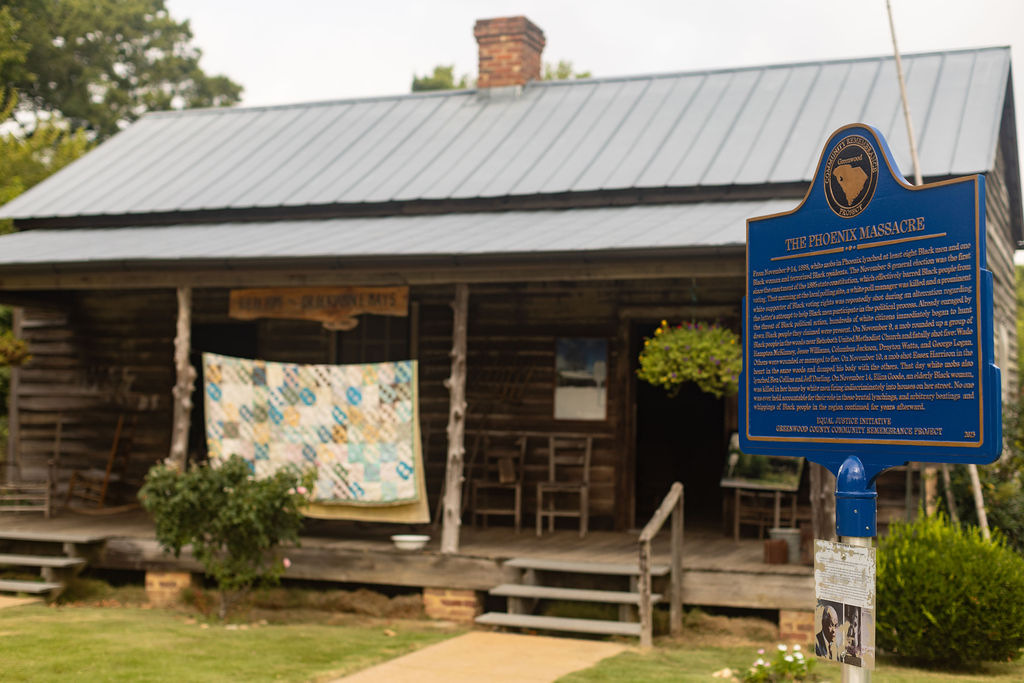
A key moment in this effort occurred in 2023, when the coalition unveiled a marker commemorating the victims of the Phoenix Riot, a massacre that took place on Election Day in 1898. That event, which saw the killing of at least nine Black citizens, served as a precursor to the systemic suppression of Black political power in the region. The addition of the markers for Davis and Thompson signifies an expansion of the county’s public memorialization, moving from large-scale historical events to the specific, individual stories of those whose lives were extinguished by racial hatred.
Future plans at the GLEAMNS Dr. Benjamin E. Mays Historic Preservation Site include the construction of a dedicated pathway that will lead visitors to a series of markers documenting every known lynching in Greenwood County. This "path of truth" is intended to provide a physical space for contemplation and education, ensuring that the names of victims are no longer relegated to the margins of local history.
Education and Youth Engagement
Central to the success of the Greenwood coalition is its focus on youth outreach. The Rev. Christopher B. Thomas, director of the Mays Site, has been instrumental in bridging the gap between the past and the present through student engagement. As part of the program, five local students were awarded $1,000 college scholarships for their participation in internships and educational programming.
These students were among 100 local youth who visited the EJI’s Legacy Sites in Montgomery, Alabama, including the National Memorial for Peace and Justice and the Legacy Museum. For many, these trips provided a profound shift in perspective, moving their understanding of history beyond textbook summaries to a visceral realization of the human cost of racial terror. By involving the younger generation, the coalition aims to ensure that the process of reckoning with the past remains a sustained, long-term endeavor rather than a one-time event.
Official Responses and Coalition Statements
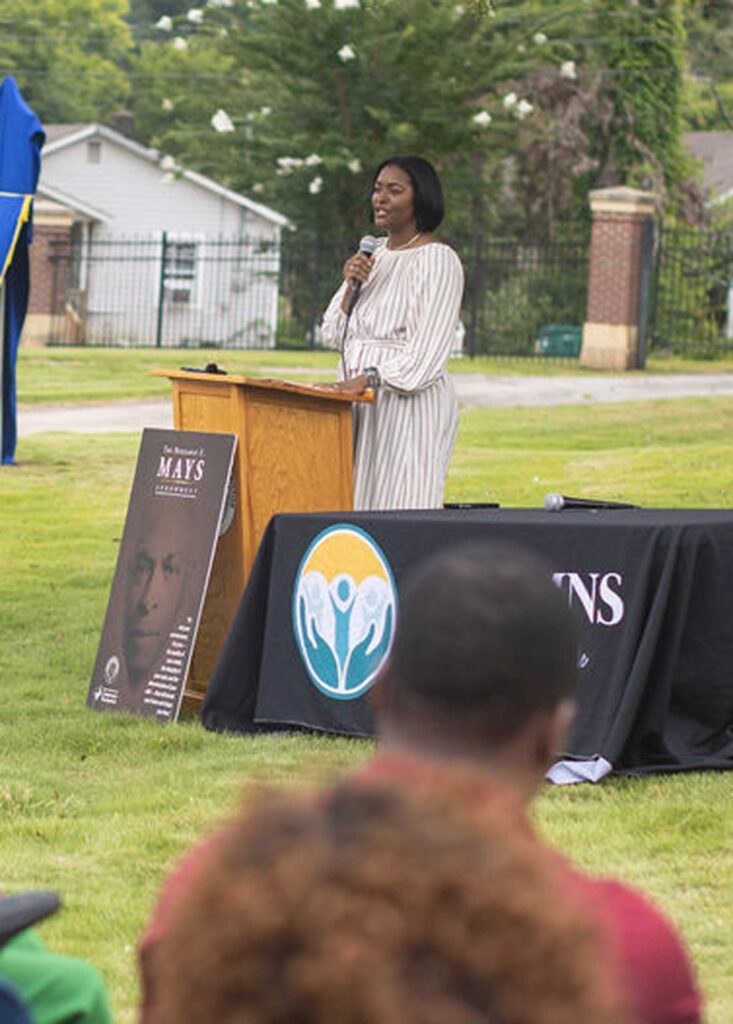
The dedication ceremony was marked by a series of formal addresses reflecting the weight of the occasion. Dr. Anika Thomas, CEO of the GLEAMNS Human Resources Commission, emphasized the necessity of truth-telling, stating that the preservation of history must be handled with integrity, honesty, and a profound respect for the victims’ dignity.
Jennifer Harris, EJI Senior Project Manager, lauded the Greenwood coalition for its persistent efforts. "Acknowledging and taking the steps to honor these people who were victims of racial injustice is extraordinary work," Harris noted during the event. She highlighted that the EJI partners with dozens of communities across the country to undertake the "challenging work" of public history, which often requires confronting deeply entrenched local narratives.
The ceremony concluded with a prayer of dedication led by the Rev. Doug Kauffman of Connie Maxwell Baptist Church, followed by a benediction and musical tribute from the Rev. Annette Edwards, a Greenwood City Councilwoman and pastor of Weston Chapel AME Church. The interfaith nature of the event reflected a broad-based community desire to seek moral clarity regarding the county’s history.
Broader Implications and Historical Context
The national context of these events is significant. Between 1865 and 1950, more than 6,500 Black men, women, and children were killed in racial terror lynchings. Nearly 25% of these acts were sparked by unsubstantiated allegations of sexual misconduct, which served as a convenient pretext for mob violence. In many instances, law enforcement officials were not merely passive; they were active participants, failing to secure jails or even facilitating the seizure of victims from custody.
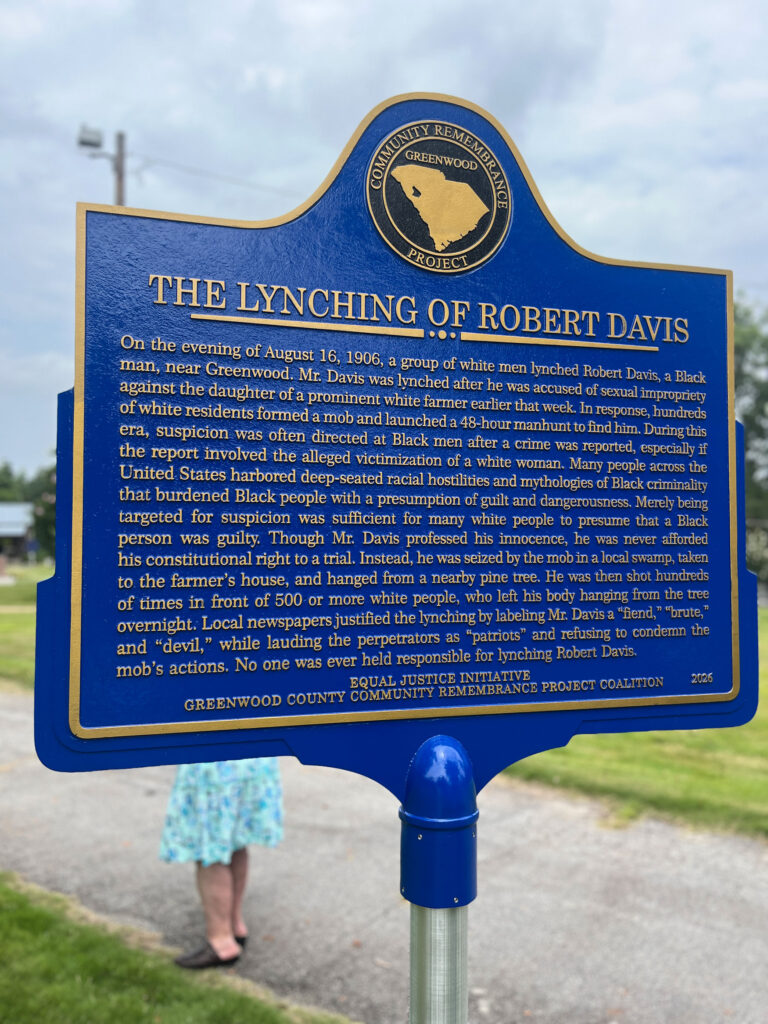
The significance of these markers extends beyond the specific names inscribed upon them. By forcing a community to physically confront the location and details of a lynching, these memorials challenge the silence that has historically protected perpetrators. According to sociologists and historians, this process of memorialization is a necessary prerequisite for reconciliation. Without an honest acknowledgment of the past, communities remain susceptible to the lingering effects of systemic racial inequality.
The work being done in Greenwood County is a model for how localities can engage with their history. By documenting soil collection, erecting markers, and prioritizing youth education, the community is shifting the narrative from one of concealment to one of enlightenment. The path being built at the Mays Site serves as a physical metaphor for the journey toward justice—a slow, deliberate process of uncovering truths that have been suppressed for over a century.
As these historical markers stand in the soil of Greenwood, they offer a stark reminder that the history of racial terror is not a distant, abstract phenomenon, but a local reality that shapes the present. Through the efforts of the Greenwood Community Remembrance Project, the county is signaling a commitment to a future that is informed, rather than haunted, by its past. This dedication is not merely about honoring the dead, but about reclaiming the integrity of the community for the living, providing a foundation for a more inclusive and truthful civic life.