The small village of Murrupula in Mozambique’s northern Nampula Province represents the complex realities of public health delivery in resource-constrained settings, where the margin between disease prevention and preventable outbreak is often determined by the strength of local communication networks. For Odete, a local mother seeking routine immunization for her young child, a routine trip to the Kazuzo Health Center initially ended in frustration. Upon arrival, she discovered that the facility was experiencing a temporary stock-out of essential vaccines. Left unaddressed, this encounter would have been classified simply as a missed opportunity for vaccination, a statistical metric that contributes to under-immunized populations and leaves vulnerable children exposed to vaccine-preventable diseases.
However, the intervention that followed at the Kazuzo Health Center illustrates a growing shift in Mozambique’s public health strategy—one that relies on synchronized tracking systems, community-level mobilization, and structured supervisory feedback loops to reclaim patients who might otherwise fall out of the healthcare continuum. Through the coordinated efforts of local health workers, facility managers, and regional support partners such as JSI, Odete’s initial disappointment was transformed into a successful public health engagement, highlighting the resilience and adaptability required to achieve universal immunization coverage.
The Anatomy of a Missed Opportunity and Community Recovery
Missed opportunities for vaccination remain a persistent challenge in sub-Saharan Africa’s rural healthcare landscapes. When caregivers travel long distances—often on foot across difficult terrain—only to find that clinics lack supplies, the immediate consequence is a loss of time and resources. More critically, repeated stock-outs risk eroding community trust in public health institutions, leading to long-term drop-outs from essential immunization schedules.
In Odete’s case, the potential breakdown in trust was averted due to the Kazuzo Health Center’s drop-out tracking mechanism. Designed to monitor attendance patterns and identify missing patients, the system immediately alerted local community health workers—known in Mozambique as Agentes Polivalentes de Saúde (APS)—once vaccine stocks were replenished.
These community mobilizers operate as vital bridges between formal medical infrastructure and the populations they serve. Trusted figures within their neighborhoods, APS personnel disseminate accurate medical information directly within community gathering spaces, including local markets, places of worship, and private residences. Upon receiving word that the cold chain at the Kazuzo Health Center had been restored and vaccine inventories restocked, an APS member contacted Odete directly.
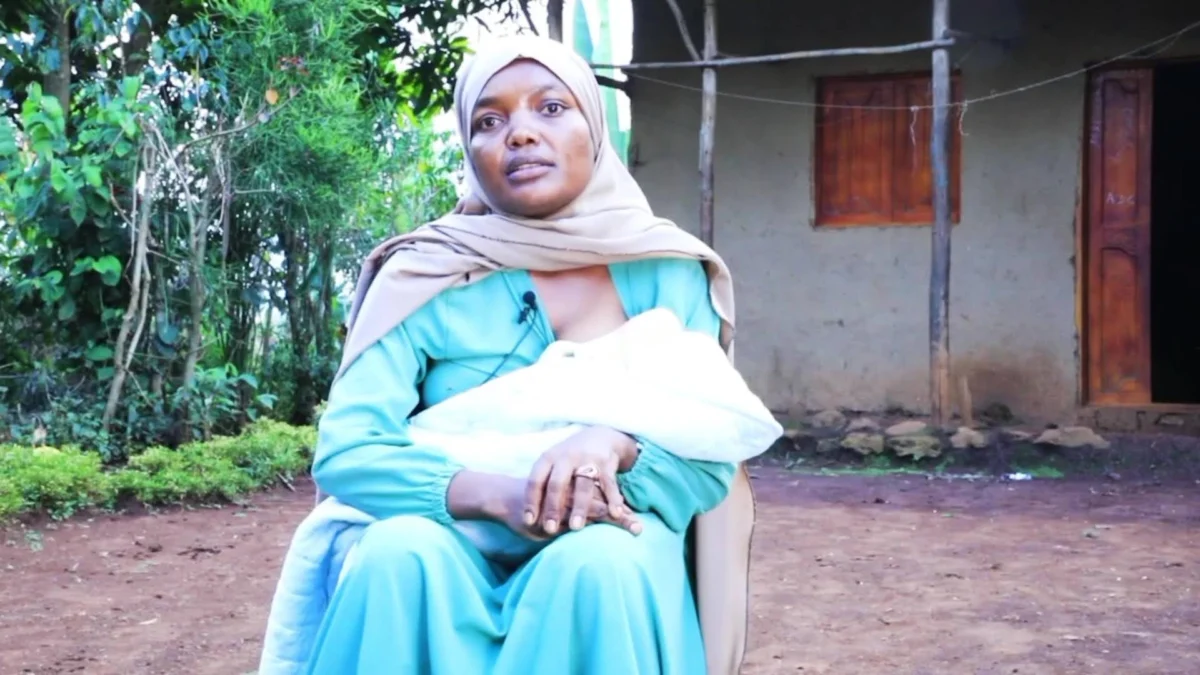
Empowered by this outreach, Odete returned to the clinic. During this secondary visit, her child received a comprehensive package of immunizations, including the first dose of the measles-rubella vaccine (MR1), the third dose of the pneumococcal conjugate vaccine (PCV3), the second dose of the inactivated polio vaccine (IPV2), and the third dose of the RTS,S malaria vaccine. In alignment with modern life-cycle immunization approaches, Odete herself received a tetanus toxoid booster, demonstrating an integrated model of healthcare delivery that addresses the needs of both infants and mothers simultaneously.
Supportive Supervision and the Role of Exit Interviews
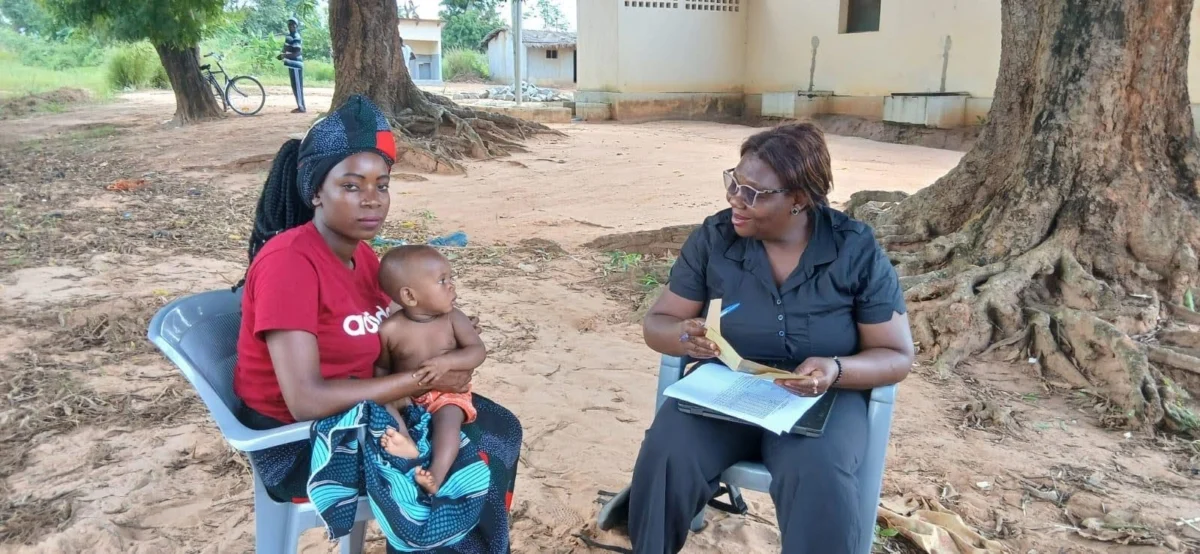
The documentation of Odete’s successful re-engagement with the health system came to light through the routine operations of regional health monitors. Ilda Bila, an immunization officer with JSI, encountered Odete during an exit interview conducted as part of a supportive supervision initiative spanning 15 districts across Nampula Province.
Supportive supervision differs significantly from traditional inspection models by focusing on collaborative problem-solving, mentorship, and quality improvement at the facility level. As part of this framework, health officers conduct brief, standardized exit interviews with caregivers as they leave clinics. Endorsed by the Mozambican Ministry of Health, these interviews serve as an early-warning system for the Expanded Program on Immunization (EPI). By systematically gathering qualitative data from patients regarding their clinic experience, health authorities can isolate operational bottlenecks—such as supply chain failures, administrative inefficiencies, or communication gaps—before they manifest as broad-scale drop-outs.
Bila’s interview with Odete yielded dual insights: it underscored the tangible negative impact of systemic vaccine stock-outs on rural mothers, while simultaneously validating the efficacy of the APS network in reversing those gaps. Armed with this empirical feedback, Bila was positioned to collaborate directly with the facility’s EPI manager to address inventory management issues while commending the local health team for their successful patient-tracking protocols.
Systemic Challenges and Broader Public Health Implications
Public health analysts note that achieving sustainable immunization coverage in Mozambique requires addressing both supply-side logistics and demand-side engagement. While supply chain reliability remains an ongoing priority for national health authorities, the integration of community-based tracking systems represents a measurable step toward closing equity gaps in rural districts like Murrupula.
Data from public health evaluations consistently indicate that decentralized community mobilization significantly increases follow-up rates after supply interruptions. In regions where geographic isolation and transportation barriers complicate healthcare access, relying solely on passive clinic-based attendance is insufficient. The active outreach model deployed in Nampula Province demonstrates that when community health workers are integrated into formal monitoring systems, temporary supply chain disruptions do not automatically translate into permanent immunization drop-outs.
Furthermore, the implementation of integrated service delivery—exemplified by the simultaneous administration of pediatric vaccines and maternal tetanus immunization during a single clinical encounter—maximizes efficiency for both patients and healthcare providers. By reducing the number of required visits, health facilities lower the opportunity costs for caregivers, who often sacrifice agricultural or domestic labor to seek medical care.
Collaborative Pathways Forward
The successful resolution of Odete’s case reflects the outcome of a multi-tiered partnership involving local communities, facility-based health staff, regional supervisory bodies, and international public health implementers. Stakeholders emphasize that while structural challenges—particularly regarding consistent vaccine distribution—require continued investment and logistical refinement, existing frameworks are demonstrating functional resilience.
As Mozambique continues to refine its national immunization strategies, experiences from facilities like the Kazuzo Health Center provide empirical models for scaling community linkage programs nationwide. By combining rigorous supportive supervision, actionable exit-interview data, and the trusted reach of community health agents, health authorities are progressively narrowing the operational distance between rural families and essential, life-saving medical services.