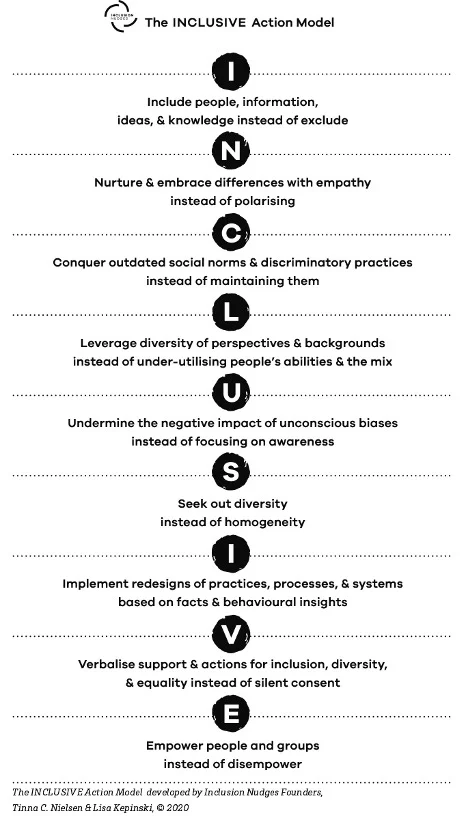
Unconscious bias awareness training, a pervasive and multi-billion dollar global industry, has become the dominant, often knee-jerk, response to systemic discrimination and the pursuit of equity and inclusion within organizations. Despite its widespread adoption and the significant resources poured into it, a growing body of evidence suggests that this approach is, at best, ineffective, and at worst, counterproductive, potentially exacerbating the very biases it aims to mitigate. This critical examination reveals why a fundamental shift from individual awareness to systemic design is imperative for fostering a truly just and inclusive world.
The Rise and Pervasiveness of Bias Training
The concept of unconscious bias entered mainstream corporate discourse decades ago, gaining significant traction in the early 2000s as diversity and inclusion became more prominent organizational priorities. Initially, the premise was compelling: if individuals could be made aware of their inherent, often subconscious, biases, they could then consciously override them, leading to fairer decisions and more inclusive environments. This theory resonated particularly strongly in the wake of significant social justice movements and heightened public awareness campaigns.
Following the #MeToo movement, which shone a harsh light on workplace harassment and power imbalances, and the global #BlackLivesMatter protests, which amplified calls for racial justice and equity, organizations worldwide rushed to implement unconscious bias training programs. These trainings became a visible, often immediate, response to public pressure, employee grievances, and the desire to demonstrate commitment to diversity, equity, and inclusion (DEI). From Fortune 500 companies to educational institutions and government agencies, the pattern became strikingly familiar: a critical incident or social movement would emerge, and the default organizational response would often be to mandate bias training for all employees. It offered a seemingly straightforward, scalable solution, a "quick fix" to complex, deeply entrenched issues. The statement, "we’re offering bias training across the organization," frequently served as a public relations shield, conveying an image of proactive change, even if the substantive impact remained elusive.
The industry supporting these trainings has blossomed into a substantial economic force. Estimates suggest the global DEI market, of which unconscious bias training is a significant component, is worth several billion dollars annually, with projections for continued growth. Consultants, specialized firms, and internal HR departments have invested heavily in developing and delivering these programs, creating a robust ecosystem predicated on the belief in their efficacy.
Why Awareness Alone Falls Short: The Cognitive Dilemma
The fundamental flaw in relying on unconscious bias awareness training lies in its misapplication of cognitive psychology. Human cognition operates largely through two distinct systems, as popularized by Nobel laureate Daniel Kahneman: System 1 and System 2.
- System 1 (Unconscious, Intuitive): This system is fast, automatic, emotional, and largely unconscious. It relies on heuristics, mental shortcuts, and associations to make rapid judgments and decisions. Unconscious biases reside predominantly within System 1.
- System 2 (Conscious, Rational): This system is slow, effortful, logical, and conscious. It is responsible for deliberate thought, reasoning, and self-control.
Traditional bias training primarily targets System 2. It aims to educate individuals, provide knowledge about biases, and encourage conscious reflection. The assumption is that by knowing about biases, individuals can actively suppress or correct them. However, the vast majority of human cognitive functioning, including the activation of biases, occurs in System 1. Simply "knowing" about a bias in System 2 often does not translate into lasting behavioral change in System 1. The conscious mind, even with the best intentions, struggles to continuously override the automatic processes of the unconscious mind, particularly under conditions of stress, time pressure, or cognitive load.
Empirical Evidence of Ineffectiveness and Backlash
The skepticism surrounding unconscious bias training is not merely theoretical; it is increasingly supported by empirical research and real-world outcomes. Studies over the past two decades have consistently questioned its long-term impact.
- Mental Overload and Paradoxical Effects: Constantly striving to be "consciously aware of the unconscious" demands significant cognitive effort. This mental overload can ironically strengthen the impact of bias. When System 2 is fatigued or overwhelmed, individuals are more likely to revert to System 1 heuristics, thus increasing reliance on default, often biased, behaviors. This creates a vicious cycle where the very attempt to mitigate bias can reinforce it.
- Enhancing Bias and Stereotypes: Counterintuitively, some research suggests that unconscious bias awareness training can backfire by unintentionally enhancing biased thinking and strengthening stereotypes. A 2014 study published in Psychological Bulletin (e.g., Forscher & Devine) highlighted that interventions aimed at reducing bias often have minimal or short-lived effects, and in some cases, can make biases more salient, inadvertently reinforcing them.
- Strengthening Misconceptions of Inequality: More recent research, such as a 2020 study in Personality and Social Psychology Bulletin, indicates that making individuals in privileged positions aware of racial prejudice and inequality does not necessarily alter their belief in a largely fair society. Instead, it can sometimes strengthen this belief and even lead to a more optimistic, and often inaccurate, perception of past inequalities. Awareness, in these contexts, can trigger defensive mechanisms rather than genuine introspection and change.
- Complacency and "Bias is Natural": When training frames biases as "natural" human tendencies, individuals may become less motivated to actively challenge or change their own biases. The narrative that "everyone is biased" can lead to a sense of fatalism or permission, reducing the perceived urgency for personal or organizational transformation.
- Activating Shame, Fear, and Resistance: The very terminology of "Unconscious Bias Awareness Training" or "Inclusion & Diversity Training" can trigger counterproductive emotional responses. For some, it can activate anxiety ("I am going to be fixed"), loss aversion ("I’ll lose privilege, status, and power"), or even resentment ("Now, I’ll get them and show them how wrong they are"). These defensive reactions erect significant barriers to genuine learning and behavioral modification.
- Moral Licensing: Perhaps one of the most insidious negative effects is "moral licensing." Attending bias training can create a self-perception of being a "good person" who is now "aware" and "in control" of their biases. This positive self-image can unconsciously license individuals to subsequently behave in less inclusive or even discriminatory ways. Studies, such as those by Monin and Miller (2001) on "moral credentials," have shown that individuals who express strong disagreement with sexist or racist statements are sometimes more likely to subsequently make sexist comments or unconsciously discriminate against minorities, precisely because their self-image as "non-sexist" or "non-racist" provides a perceived buffer against moral transgression. They feel they have "earned" the right to be less vigilant.
These cumulative findings paint a stark picture: the prevailing approach to bias mitigation is not only often ineffective but carries a significant risk of doing more harm than good, reinforcing the very problems it seeks to solve. Any positive effects, such as a shared language or brief "aha-moments," are typically short-lived, rarely translating into sustainable organizational change.
The Path Forward: Designing for Inclusion with "Inclusion Nudges"
Given the limitations of awareness-based training, a paradigm shift is urgently needed. The solution lies not in attempting to fundamentally redesign the human mind, but in strategically redesigning environments, processes, and systems to mitigate the influence of unconscious bias by default. This is where the concept of "Inclusion Nudges" becomes critically important.
An Inclusion Nudge is a specific, actionable design that influences the unconscious mind to make inclusive behavior easy, automatic, and the default choice in daily actions. Drawing insights from behavioral and social sciences, nudge theory (pioneered by Richard Thaler and Cass Sunstein), and an understanding of hidden barriers to inclusion, these nudges work by minimizing the impact of cognitive shortcuts (biases) without relying on the conscious mind to drive change. They make the desired behavior automatic, aligning actions with stated values and intentions, often at minimal cost, and crucially, without coercion or infringement on freedom of choice.
Practical Application: The Power of Anonymous Auditions
A powerful and long-standing example of an Inclusion Nudge is the implementation of anonymous auditions in symphony orchestras. Starting in the 1970s, spurred by internal questioning regarding the predominant demographic of white males, several orchestras began requiring musicians to perform behind a screen, preventing selection committees from seeing the candidates. The results of these pilot programs were transformative: the number of women selected for orchestras increased by as much as 50%, and the ethnic diversity of successful candidates also saw a significant shift. This simple design intervention, by removing visual cues that could trigger gender or racial bias, ensured that evaluations were based purely on merit – the musical performance. Some orchestras even went as far as placing carpets behind the screens to muffle the sound of shoes, as even this subtle cue could unconsciously prime committee members about a candidate’s gender and potentially influence their perception of the music.
This evidence has been available for over 40 years, yet its broader adoption in other hiring contexts has been painstakingly slow. While anonymized CVs and structured interview processes are gaining traction, facilitated by new technological platforms, the slow pace of implementation highlights the persistent challenge of shifting from traditional, less effective methods to empirically validated, design-based solutions.
Broader Impact and Implications for Organizations
The continued over-reliance on ineffective bias training carries significant implications:
- Financial Waste: Billions of dollars are spent annually on programs that yield little to no lasting return on investment, representing a colossal misallocation of resources.
- Opportunity Cost: These resources could otherwise be invested in proven, systemic interventions that genuinely advance DEI goals.
- Erosion of Trust and Cynicism: When organizations repeatedly implement trainings that fail to deliver tangible change, employees, particularly those from underrepresented groups, can become cynical and lose trust in the organization’s commitment to DEI. This can lead to disengagement, increased turnover, and a hostile work environment.
- Perpetuation of Inequality: By focusing on individual awareness rather than systemic redesign, organizations inadvertently allow biased structures and processes to persist, hindering true progress towards equity.
- Legal and Reputational Risk: While training might be seen as a defensive measure, its ineffectiveness can leave organizations vulnerable to legal challenges and reputational damage if discrimination continues unchecked.
The future of diversity, equity, and inclusion demands a more sophisticated, evidence-based approach rooted in behavioral science and design thinking. Organizations must move beyond the superficiality of awareness training and commit to actively redesigning their processes, from hiring and promotion to performance evaluations and team dynamics, to make inclusivity the default. This involves embedding Inclusion Nudges into the fabric of the organization, ensuring that equitable outcomes are achieved not through constant conscious vigilance, but through intelligently designed systems that mitigate bias automatically.
The goal is not to "fix" individuals, but to create environments where inclusive choices are the easiest and most natural choices for everyone. By embracing systemic design and leveraging the power of Inclusion Nudges, organizations can finally transition from merely acknowledging bias to actively engineering a more just and equitable reality for all.