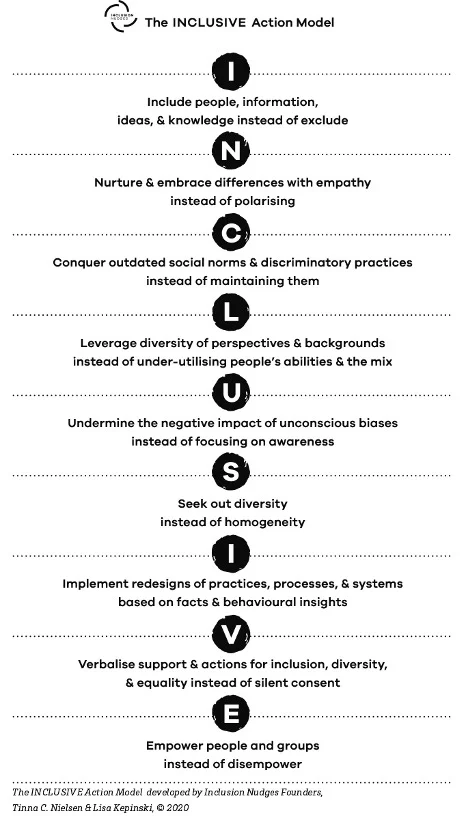
For years, organizations have invested heavily in DEBI programs, training, and targets, often with mixed results. A common pitfall identified by experts and echoed in numerous organizational surveys is the disconnect between the stated intent of DEBI efforts and the actual perceptions and reactions of employees. When terms like "diversity," "equity," and "inclusion" are introduced, they can evoke a spectrum of responses, from genuine curiosity and support to weary cynicism, misunderstanding, or even defensiveness. This disparity in understanding often stems from vague, abstract, or historically misapplied definitions that fail to resonate with individuals’ lived experiences or appear disconnected from their daily work.
The Perceptual Minefield: Why DEBI Language Can Backfire
Imagine an organizational setting where the mere mention of "diversity" conjures a range of unexpressed thoughts: "Oh, diversity isn’t my issue! It only applies to people from minority groups, not me!" or "I am the one being discriminated against. Don’t ask me how to fix it – it’s your problem." These are not uncommon sentiments. Other reactions might include "Diversity and inclusion are not my day job, so I don’t really have time for that. Someone else has got to fix it," or a more insidious interpretation: "If we are going to promote women and minorities, then we have to exclude others." Such internal monologues reveal a landscape fraught with hidden tripwires, where well-intentioned language inadvertently fosters division rather than unity.
These perceptions are deeply rooted in how DEBI initiatives have historically been conceived and implemented. Many early approaches focused on compliance, quotas, or "fixing the minority" by providing targeted programs for underrepresented groups without addressing systemic issues or engaging the majority. For instance, gender equality programs might target women exclusively, inadvertently signaling that women are the "problem" to be fixed, rather than recognizing gender inequality as a systemic issue requiring collective action. This narrow framing often creates an "us versus them" dynamic, where DEBI becomes the responsibility of a specific group, alienating others who feel either blamed, excluded, or simply irrelevant to the conversation.
Research from organizations like McKinsey & Company and Deloitte consistently highlights that while many companies aspire to be diverse and inclusive, the execution often falls short. Employee surveys frequently reveal that while senior leadership expresses commitment, middle management and frontline employees often lack a clear understanding of what DEBI means for them personally or professionally. This gap in understanding leads to a lack of accountability, inconsistent application of policies, and ultimately, a failure to embed inclusive practices into the organizational culture. The result is often performative DEBI efforts that attract "diversity talent" without retaining it, or create "diversity networks" that operate in silos, unable to influence broader organizational change.
The Unseen Power of Words: Psychological Underpinnings
The profound impact of language on human cognition and behavior is well-documented in psychological science. Words are not merely labels; they are powerful tools that shape our perceptions, influence our emotions, and even unconsciously direct our actions. This phenomenon is vividly illustrated by the "priming effect," where exposure to certain words or images can subtly influence subsequent thoughts and behaviors. A classic study, for example, showed that participants exposed to words associated with the elderly (e.g., "wrinkle," "forgetful") subsequently walked slower than those exposed to neutral words. This demonstrates how linguistic cues, even when processed unconsciously, can alter physical behavior.
Beyond unconscious priming, words carry significant emotional weight, triggering deeply ingrained psychological biases that can either facilitate or obstruct change.
- Loss Aversion: When DEBI is perceived as a zero-sum game – where one group’s gain necessitates another’s loss – it activates the powerful bias of loss aversion. Research by Nobel laureates Daniel Kahneman and Amos Tversky has shown that individuals are generally more motivated to avoid losses than to acquire equivalent gains. If promoting equity is framed as requiring those in positions of power or privilege to "give up" something, it triggers resistance and a strong inclination to maintain the status quo. This can manifest as pushback against affirmative action policies or resistance to changes in hiring and promotion criteria.
- Tribalism and Fear of the Unknown: Humans are inherently social creatures, hardwired with an innate tendency towards tribalism, distinguishing between "in-groups" and "out-groups." When DEBI language inadvertently reinforces this dichotomy, it can activate an unconscious fear of the "unknown" or "other." This can lead to unintentional exclusion, where knowledge and perspectives from "out-group" members are unconsciously devalued or dismissed, while those from "in-group" members are readily accepted and trusted. This tribal mentality hinders genuine collaboration and the leveraging of diverse perspectives.
- Shame and Backlash: A less discussed but equally potent emotional trigger is shame. When DEBI conversations are framed in a way that implies blame or moral failing, individuals who perceive themselves as beneficiaries of existing inequalities, or who have unknowingly perpetuated discriminatory practices, may experience shame. This can lead to defensive reactions, including passive-aggressive behaviors, micro-aggressions, or outright backlash, effectively shutting down constructive dialogue and change efforts. The feeling of not knowing what to do to contribute to change, coupled with the discomfort of privilege, can create a powerful barrier to engagement.
These psychological responses underscore why the abstract articulation of DEBI terms, no matter how well-intentioned, often falls flat. Without a clear, universally understood framework that mitigates these biases, efforts to foster inclusive workplaces can inadvertently create division and resistance.
The Absurd Reality of Undefined Terms
The absence of formally articulated, shared definitions for DEBI terms within an organization creates an "absurd reality" where expectations for aligned action are fundamentally misguided. When "diversity," "equity," "belonging," and "inclusion" are left open to individual interpretation, people draw upon their unique lived experiences, social constructs, and knowledge bases, leading to wildly divergent understandings. For some, "diversity" might exclusively mean "women" or "racial minorities"; for others, "inclusion" might be limited to social events or "diversity networks." "Equity" might be simplistically equated with "minority hiring targets" rather than systemic fairness.
This lack of a common framework means that despite shared strategic objectives, employees are operating from different mental models. The assumption that everyone understands the same frame of reference is a critical flaw. Consequently, actions taken in the name of DEBI often lack coherence, leading to fragmented initiatives, wasted resources, and a pervasive sense of stagnation. Progress gets stuck because the collective understanding necessary for unified action is absent.
Inclusion Nudges: Guiding Stars for Action
Recognizing this critical definitional gap, initiatives like Inclusion Nudges advocate for a precise, action-oriented framing of DEBI. The founders, Lisa and Tinna, emphasize that these definitions serve as "guiding stars" for designing inclusive actions, behaviors, systems, and cultures. Their approach centers on definitions that are universal, empowering, and focused on collective responsibility:
- Diversity: The Mix of All of Us. This definition deliberately broadens diversity beyond specific demographic groups to encompass all people, recognizing the myriad differences in backgrounds, multiple identities, unique experiences, perspectives, knowledge, and abilities. It reframes diversity as a collective asset, shifting away from the notion of "the minority" as the sole focus. By asserting that diversity is "the mix of all of us," it inherently includes everyone, fostering a sense of shared ownership.
- Equity: The Fairness Frame for the Mix. Equity, in this framework, is about ensuring fair access to opportunities and fair treatment for all, actively working to eliminate discriminatory practices, systems, laws, policies, social norms, and cultural traditions. It emphasizes balancing power and correcting historical and ongoing inequalities. Crucially, it distinguishes equity from mere equality, recognizing that true fairness may require different approaches to achieve equitable outcomes, especially where systemic disadvantages exist. Its core intent is fairness to all, not just a select few.
- Belonging: I Feel Valued as a Part of the Mix. This definition centers on the individual’s experience: feeling welcomed, safe, seen, heard, and valued enough to be their authentic self without having to "cover" or downplay personal traits. Belonging is presented as the desirable outcome of effective diversity, equity, and inclusion practices. It speaks to psychological safety and the human need for connection and acceptance within a group or culture. When DEBI is done well, belonging naturally follows.
- Inclusion: Welcoming and Applying the Mix. Inclusion is framed as the active process of fostering structures, systems, processes, culture, behaviors, and mindsets that embrace and respect all people and all their diversity. It’s about actively seeking out diverse knowledge, perspectives, and ideas, challenging exclusionary norms, and creating environments where everyone can participate and contribute to their fullest. Inclusion is not passive acceptance; it is an active, ongoing effort to ensure that the rich "mix of all of us" is truly welcomed and leveraged.
These definitions are designed not just for rational understanding but to prime individuals towards desired behaviors. They offer a comprehensive framework that moves beyond abstract ideals to practical application, aligning DEBI with broader organizational goals such as performance, innovation, agility, and global mindset.
From Words to Actions: Co-Creating Inclusive Realities
While clear definitions are a vital foundation, simply articulating them is insufficient. Rational understanding, residing in the conscious "System 2" thinking, does not automatically translate into inclusive behavior, which is often driven by unconscious biases and habits (System 1). This is why the Inclusion Nudges approach emphasizes engaging "the people it’s about" in defining DEBI, not through abstract discussions of words, but through the identification of concrete, observable actions.
The most effective strategy involves inviting all employees to participate in defining what inclusive, respectful, empathetic behaviors look like in their specific context. This participatory approach achieves several critical objectives:
- Contextual Relevance: Definitions are tailored to the unique culture and challenges of the organization.
- Ownership and Engagement: By co-creating these definitions, employees develop a sense of ownership and are onboarded into the change initiative from the outset.
- Action-Oriented Focus: The emphasis shifts from theoretical concepts to practical, everyday actions that individuals can embody.
- Leveraging Diversity: The process itself becomes inclusive, drawing on the diverse perspectives within the group to build a robust understanding.
Once these inclusive behaviors are identified, the next crucial step is to make them visible and celebrated. Instead of relegating them to abstract documents or spreadsheets, these real-life examples and personal stories should be prominently displayed throughout the workplace – on factory floors, office walls, meeting rooms, and internal communication channels. This continuous exposure to positive, peer-driven examples leverages the principle of social proof, demonstrating that inclusive actions are not only valued but are already being practiced by "people like us." For instance, communicating "8 out of 10 of your colleagues are doing X" can be far more powerful than a top-down mandate.
Achieving Inclusion Without Talking About Inclusion
Ultimately, the goal is to embed DEBI so deeply into the organizational fabric that it becomes "how work gets done here" or "how people experience being in the group," rather than a standalone initiative. This means shifting the focus from the buzzwords themselves to the desired outcomes. Instead of saying "we need more inclusion," a leader might say, "we need the thinking from everyone for new solutions" or "we need our systems designed to enable our most objective decision-making."
By consistently referencing the positive outcomes of DEBI and making inclusive behaviors visible, organizations can cultivate an environment where a shared understanding of diversity, equity, belonging, and inclusion naturally takes shape over time. While formal definitions may still be necessary for strategies, KPIs, and external communications, their overuse should be avoided to prevent them from becoming hollow buzzwords.
The challenge of translating definitions into reality for thousands of people simultaneously is formidable, but it is precisely why approaches like Inclusion Nudges, grounded in behavioral science and human psychology, are essential. By carefully framing the conversation, engaging all stakeholders in defining actionable behaviors, and making those behaviors visible, organizations can move beyond abstract ideals to create genuinely inclusive cultures that leverage the full potential of "the mix of all of us."
This systematic approach is not merely about achieving social good; it is a strategic imperative. Organizations with robust and genuinely inclusive cultures consistently outperform their peers in innovation, employee retention, decision-making quality, and financial returns. When language is used thoughtfully to bridge understanding, mitigate psychological barriers, and foster collective action, DEBI transforms from a compliance checklist into a dynamic force for organizational excellence and societal progress. The invitation is clear: join forces and make inclusion the norm – everywhere, for everyone.