In an increasingly volatile, uncertain, complex, and ambiguous (VUCA) world, marked by global pandemics, geopolitical shifts, rapid technological advancements, and economic fluctuations, the imperative for organizational resilience and adaptive problem-solving has never been more pronounced. While the discourse around diversity, equity, and inclusion (DEI) has rightfully gained significant traction, often spotlighting demographic aspects such as gender, race, and ethnicity, a crucial dimension frequently remains overlooked: cognitive diversity. This distinct form of diversity, encompassing varied ways of thinking, processing information, and approaching challenges, is emerging as a powerful differentiator for teams striving to innovate, mitigate risks, and navigate the intricate landscape of modern business.
The Evolving Landscape of Diversity and Inclusion
For decades, the business case for diversity has been built on a foundation of fairness, social justice, and the moral imperative to ensure equitable representation. Initial corporate DEI efforts largely focused on achieving demographic parity, driven by compliance requirements and a desire to reflect broader societal demographics within the workforce. This focus, while undeniably vital for addressing systemic inequalities and fostering a sense of belonging for underrepresented groups, has sometimes inadvertently overshadowed the deeper, more subtle, yet profoundly impactful, benefits of cognitive diversity.
As organizations matured in their understanding of DEI, the conversation broadened to include "inclusion" – the active creation of environments where diverse individuals feel valued, respected, and empowered to contribute fully. Research from institutions like Deloitte Australia highlights that inclusive leadership behaviors can account for up to a 70 percentage point difference in how employees perceive their inclusion within an organization, with an even greater impact on minority group members. This evolution underscores that diversity without inclusion risks becoming a mere headcount exercise, failing to unlock the full potential of varied perspectives.
However, even with a strong emphasis on demographic diversity and inclusive cultures, many teams still struggle with "groupthink," slow decision-making, or an inability to generate truly novel solutions. This gap points to the need for a more nuanced approach, one that intentionally cultivates a diversity of thought patterns, mental models, and problem-solving styles.
Unpacking Cognitive Diversity: Beyond Surface-Level Differences
Cognitive diversity refers to the differences in how individuals perceive, process, and apply information, solve problems, and make decisions. It transcends observable characteristics like gender or ethnicity, delving into the varied intellectual approaches individuals bring to a task. These differences can manifest in several ways, including preferences for detail versus big-picture thinking, inductive versus deductive reasoning, convergent versus divergent thinking, or a bias towards experimentation versus consolidation of existing knowledge.
Academic research has increasingly illuminated the profound impact of cognitive diversity. Notably, professors Alison Reynolds and David Lewis have dedicated decades to studying how individuals engage with new, uncertain, and complex situations. Their extensive work, spanning numerous teams across various industries, consistently demonstrates that the highest-performing teams in problem-solving scenarios are characterized by two key elements: high cognitive diversity and a strong culture of psychological safety. These teams exhibit a collective curiosity and a propensity for experimentation, contrasting sharply with teams low on these traits, which often succumb to group conformity or unproductive internal conflict.
Reynolds and Lewis, building on assessment tools developed by psychiatrist Peter Robertson, categorize cognitive diversity into two primary dimensions:
-
Knowledge and Information Processing: This dimension assesses an individual’s preference when confronted with novel, uncertain, or complex issues. Do they tend to consolidate and implement existing knowledge, drawing upon established frameworks and proven solutions? Or do they lean towards generating new knowledge, exploring uncharted territories, and developing innovative approaches from scratch? A balance of both is critical for navigating complex challenges, requiring both foundational understanding and forward-looking exploration.
-
Perspective and Expertise Facilitation: This aspect examines whether an individual prefers to apply their own specialized expertise to a problem or whether they are inclined to orchestrate the ideas and insights of others. Teams benefit from both deep subject matter experts who can provide authoritative guidance and facilitators who can synthesize diverse viewpoints, fostering collaborative problem-solving and ensuring a holistic understanding of the issue.
Teams that exhibit a high degree of diversity across both these parameters consistently outperform their less diverse counterparts when tackling ambiguous and complex situations. This is because they inherently possess access to a broader spectrum of knowledge, perspectives, and problem-solving strategies. When combined with an environment of psychological safety – where team members feel safe to take risks, voice concerns, and admit mistakes without fear of negative consequences – this cognitive richness translates into constructive conflict, vigorous exploration of alternatives, and ultimately, more robust and innovative solutions.
The Crucial Role of Psychological Safety
While cognitive diversity provides the raw material for superior problem-solving, psychological safety is the catalyst that enables its full activation. Research, most famously exemplified by Google’s Project Aristotle, identified psychological safety as the single most important factor distinguishing high-performing teams. In its absence, even the most cognitively diverse teams may falter. Members might self-censor, fearing ridicule or punishment for expressing dissenting opinions, unconventional ideas, or admitting errors. This stifles the very exploration and constructive conflict necessary to leverage diverse thinking.
When psychological safety is present, team members are more likely to engage in behaviors such as:
- Asking clarifying questions: Preventing misunderstandings and ensuring shared understanding.
- Challenging assumptions: Uncovering blind spots and encouraging critical thinking.
- Offering dissenting opinions: Introducing alternative viewpoints that can lead to better outcomes.
- Experimenting with new ideas: Fostering innovation and learning from failure.
- Seeking help and admitting mistakes: Promoting a culture of continuous improvement and collective learning.
Therefore, the synergy between cognitive diversity and psychological safety is paramount. One without the other is insufficient for sustained high performance in complex environments.
The Overlooked Challenge: Prioritizing Visible Diversity Over Cognitive Depth
Despite the compelling evidence, cognitive diversity often receives insufficient attention in organizational team formation. The focus on demographic diversity, while important for other strategic and ethical reasons, can inadvertently overshadow the deliberate cultivation of varied thinking styles. It is easier to measure and track demographic metrics than it is to assess and integrate cognitive profiles. This often leads to an "illusion of diversity," where teams may appear diverse on the surface but lack the underlying cognitive richness needed for complex problem-solving.
Furthermore, leaders may find it challenging to actively recruit and integrate individuals based on their cognitive styles, as traditional hiring processes are often geared towards specific skills, experiences, and cultural fit. Assessing cognitive preferences requires different tools and a more nuanced understanding of individual contributions beyond their explicit expertise.
Implications for Talent Acquisition and Team Design
Recognizing the value of cognitive diversity necessitates a shift in how organizations approach talent acquisition and team design.
- Broader Talent Sourcing: Recruitment efforts should look beyond traditional backgrounds and qualifications, actively seeking individuals with different educational paths, varied career experiences, and unconventional problem-solving approaches.
- Behavioral Assessments: Incorporating psychometric assessments and behavioral interviews that reveal cognitive preferences (e.g., analytical vs. intuitive, detail-oriented vs. conceptual, creative vs. pragmatic) can help create more balanced teams.
- Intentional Team Formation: Instead of simply assembling individuals based on availability or specific technical skills, leaders should proactively map the cognitive profiles of potential team members to ensure a complementary mix. This might involve identifying potential gaps in thinking styles and seeking individuals who can fill those voids.
- Leadership Training: Leaders need to be equipped with the skills to identify, value, and integrate diverse cognitive styles. This includes fostering open dialogue, mediating constructive conflict, and ensuring all voices are heard and considered, regardless of their dominant thinking pattern.
Cultivating Inclusive Leadership and Culture for Cognitive Diversity
Achieving the full benefits of cognitive diversity demands more than just assembling a diverse group; it requires a deeply inclusive culture and leadership that actively fosters it. Inclusive leaders act as orchestrators, ensuring that every team member feels treated with fairness and respect, feels valued for their unique contributions, belongs to the group, is invited and encouraged to speak up, and feels empowered to take action.
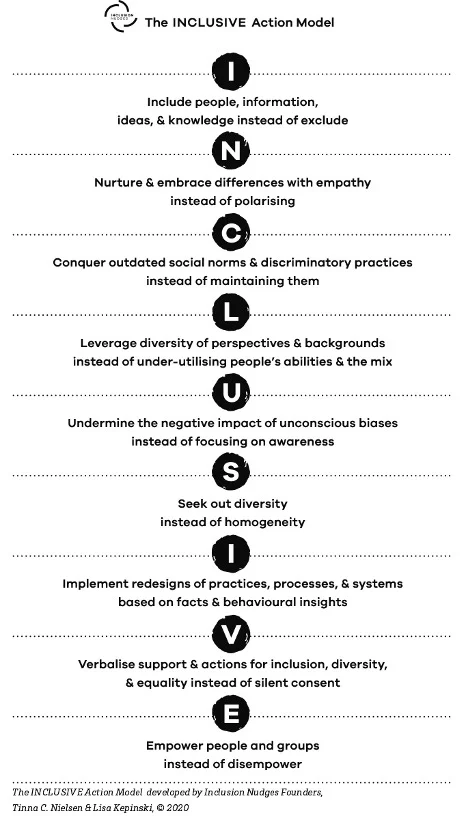
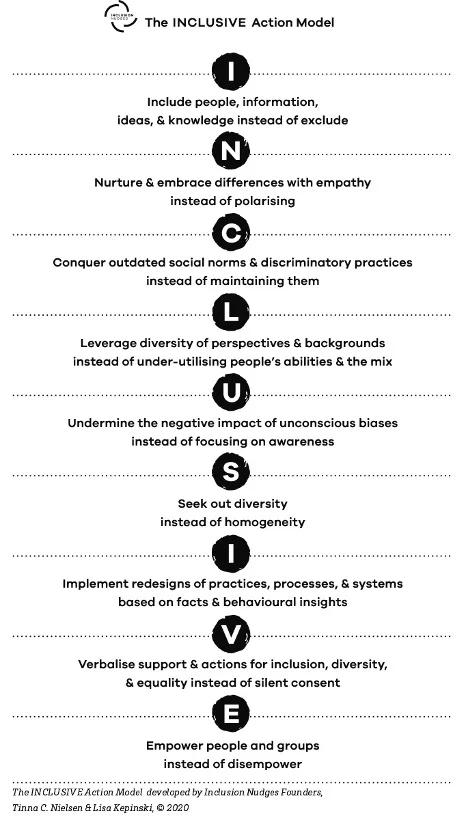
This is a multi-faceted challenge, requiring leaders to work on several fronts simultaneously. For instance, the "Inclusion Nudges Inclusive Action Model" developed by Tinna C. Nielsen and Lisa H. Rasmussen, offers a holistic approach to creating inclusive cultures, structures, and behaviors. Their work underscores that while executive-level support for DEI is growing, the critical challenge lies in cascading this support across all levels of management and translating it into concrete, everyday actions.
Despite increasing awareness, many leaders report feeling "ill-equipped" to act inclusively, particularly when it comes to facilitating difficult conversations about exclusion or discrimination. This sentiment highlights a critical gap between intent and capability. Leaders often lack practical, actionable strategies for fostering an environment where cognitive diversity can thrive without leading to unproductive conflict.
To address this, resources like the "Inclusion Nudges for Leaders" Action Guide provide 30 easy-to-apply inclusive actions. These behavioral designs empower leaders to make inclusion the default and norm in their daily interactions. By offering step-by-step descriptions, these guides build leaders’ confidence, enabling them to take initial actions and then progressively more, sparking a wider culture change. The goal is to break the cycle of leaders feeling paralyzed by uncertainty or fear of missteps, providing them with proven tools to foster truly inclusive and cognitively diverse environments.
Broader Impact and Future Outlook
The intentional cultivation of cognitive diversity has far-reaching implications beyond immediate team performance.
- Enhanced Innovation: By combining different ways of thinking, organizations can generate more novel ideas, challenge existing paradigms, and develop breakthrough solutions.
- Robust Risk Management: Diverse cognitive perspectives help identify a wider range of potential risks and blind spots, leading to more comprehensive risk assessment and mitigation strategies.
- Improved Decision-Making: With a broader set of insights and analytical approaches, teams can make more informed, well-rounded decisions that stand up better to scrutiny and unexpected challenges.
- Organizational Agility: In rapidly changing markets, the ability to quickly pivot and adapt depends on the collective intelligence and varied problem-solving capacities of an organization’s workforce.
- Employee Engagement and Retention: When individuals feel their unique way of thinking is valued and utilized, it boosts engagement, job satisfaction, and reduces turnover, particularly among those who might otherwise feel marginalized for their unconventional approaches.
As the global business environment continues to intensify in complexity, organizations that proactively embrace and cultivate cognitive diversity will possess a distinct competitive advantage. It’s not merely about having people who look different, but about consciously assembling teams whose minds work differently, and then creating the conditions for those diverse minds to collaborate effectively and safely. This strategic shift from merely "checking boxes" on demographic diversity to intentionally harnessing the power of diverse thought represents the next frontier in building resilient, innovative, and future-ready organizations.