The terminology used to describe diversity, equity, and inclusion (DEI) initiatives functions as more than mere administrative shorthand; it acts as a psychological catalyst that determines whether organizational change efforts succeed or falter. For decades, practitioners have observed that the absence of precise, universally understood definitions leads to fractured outcomes, widespread employee disengagement, and the inadvertent triggering of cognitive biases. Recent behavioral science research confirms that when organizations fail to define these core concepts, employees fill the void with their own subjective interpretations, often rooted in personal, social, and cultural constructs that can undermine the very goals of the initiative.
The Linguistic Trap: How Words Trigger Behavioral Barriers
A primary challenge in DEI strategy is the "priming effect," a phenomenon where exposure to specific words or images influences subsequent behavior without the subject’s conscious awareness. Empirical studies have long demonstrated that language is not neutral. A landmark experiment by Yale researchers showed that participants primed with words associated with the "elderly"—such as "wrinkle" or "forgetful"—physically walked more slowly upon exiting the study, mirroring the stereotype they had been exposed to.
In an organizational context, the words "diversity" and "inclusion" often serve as similar psychological triggers. When corporate communications frame diversity solely as a mechanism to "help the minority" or "fix the women," the language inadvertently signals to majority-group members that they are excluded from the process. This creates a "zero-sum" perception, where equity is erroneously interpreted as a loss of power or privilege. This loss-aversion bias—a well-documented behavioral economic principle—compels individuals to resist change and cling to the status quo, effectively stalling progress before it begins.
Historical Context and the Evolution of DEI Frameworks
The modern DEI movement, which gained significant corporate traction in the late 1990s and early 2000s, initially focused on compliance and representational targets. While this era established the legal necessity of non-discrimination, it often relied on a "fix the person" model rather than a "fix the system" approach.
By the mid-2010s, the conversation shifted toward "belonging," as organizations realized that achieving numerical diversity targets did not automatically equate to a productive or inclusive culture. However, this transition was often hampered by a lack of standard nomenclature. Throughout 2020 and 2021, the global surge in social justice awareness prompted many firms to formalize their DEI commitments. Yet, internal audits from numerous global corporations suggest that even as budget allocations for these initiatives grew, the "definitional gap" remained. Employees frequently reported confusion, with "diversity" being viewed by some as a synonym for "hiring quotas" and by others as "social justice activism," highlighting a profound misalignment between leadership intent and workforce perception.
Deciphering the Core Concepts: A Functional Taxonomy
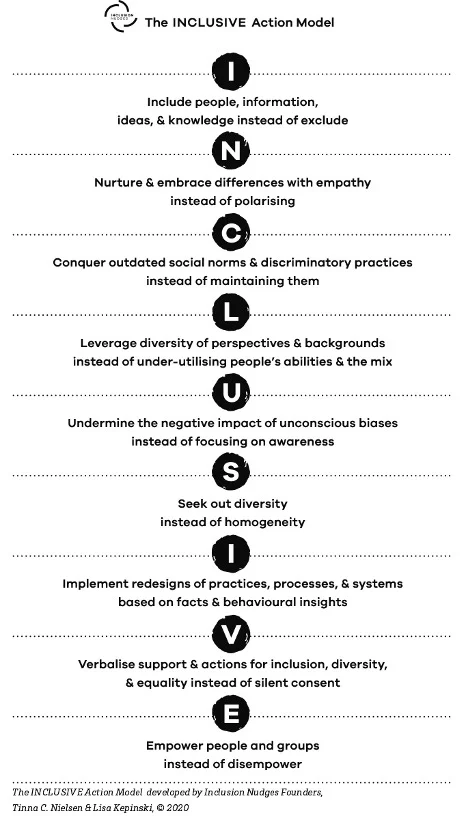
To bypass the pitfalls of ambiguous language, experts in the Inclusion Nudges global initiative have proposed a framework that moves beyond abstract concepts and into functional, actionable definitions:
- Diversity: Defined as the aggregate mix of all individuals. It encompasses the full spectrum of demographic identities, experiences, knowledge bases, and cognitive styles. Critically, it is not a descriptor of a specific subset or "minority," but rather a description of the entire workforce.
- Equity: Defined as the structural framework for fairness. This includes the elimination of systemic barriers—such as biased hiring processes, opaque promotion criteria, and inequitable compensation structures—to ensure that all individuals have equal access to opportunity.
- Belonging: The experiential outcome of an inclusive environment. It is the state in which an individual feels valued, safe, and empowered to contribute their authentic self without the "cognitive load" of covering or assimilation.
- Inclusion: The active practice of welcoming and leveraging the "mix." It is the system of behaviors, norms, and processes that ensure the diversity of perspectives is not only present but utilized in decision-making.
Behavioral Science and the Failure of Communication
The disconnect between high-level strategy and frontline behavior is often exacerbated by the medium of communication. Standard corporate practice involves disseminating long policy documents or slide decks, which rely on "System 2" thinking—the slow, analytical, and effortful mode of cognition. However, daily behavioral choices are driven by "System 1," which is fast, instinctive, and emotional.
When DEI strategies are communicated through complex, abstract, or jargon-heavy documents, they fail to reach the System 1 level. Consequently, the brain defaults to existing heuristics, such as tribalism. When employees hear language that reinforces "in-group" vs. "out-group" dynamics, their natural tendency is to trust and prioritize information from their own demographic or social circle. This explains why traditional, lecture-based diversity training often fails to reduce bias—and in some cases, can inadvertently increase it by reinforcing the very stereotypes the training aims to dismantle.
Strategies for Effective Implementation
To move from abstract policy to sustainable culture change, organizations are increasingly adopting the "Inclusion Nudges" approach, which focuses on small, choice-architecture changes rather than grand, sweeping mandates.
- Engagement over Definition: Instead of issuing top-down definitions, organizations should engage teams in identifying the specific behaviors they perceive as "inclusive." By involving employees in the process, they gain ownership of the outcome, transitioning from passive recipients of policy to active participants in culture building.
- Visible, Real-Life Examples: Rather than internalizing DEI in a spreadsheet, firms are finding success by displaying tangible, peer-driven examples of inclusive behavior in high-traffic areas. By highlighting that "eight out of ten colleagues" engage in a specific, objective-oriented behavior, firms leverage social proof to normalize the desired conduct.
- Outcome-Oriented Framing: Language should shift from "doing inclusion" to "how work gets done." By framing inclusive behavior as a prerequisite for high-performance, innovation, and objective decision-making, leaders can bypass the defensive reactions that the word "inclusion" sometimes triggers.
- Actionable Feedback Loops: Leaders are encouraged to avoid overusing buzzwords. Instead of discussing the need for "diverse perspectives," they might state, "we need input from every department to ensure we aren’t missing critical risks in our data." This anchors the behavior to a concrete business necessity.
The Broader Impact on Global Productivity
The implications of this reframing are significant. Research from McKinsey & Company and other global consultancies has consistently shown a positive correlation between diverse, inclusive teams and financial outperformance. However, the mechanism of this success is not the presence of diversity itself, but the application of diverse knowledge. When employees feel they belong and that the organization’s systems are equitable, they are more likely to share dissenting opinions, challenge groupthink, and engage in the critical thinking necessary for innovation.
Conversely, when the language of DEI creates an "us vs. them" narrative, it stifles communication, increases turnover, and diminishes the psychological safety required for high-stakes problem solving. As organizations navigate an increasingly globalized and complex marketplace, the ability to foster a cohesive culture—where the "mix" is utilized as a strategic asset—will serve as a key differentiator.
Conclusion: Moving Toward a New Standard
The evidence is clear: the words used to frame diversity, equity, and inclusion efforts are not merely descriptive—they are structural. They either build a foundation for collective action or they create tripwires that cause well-intentioned initiatives to collapse. By shifting the focus from abstract terminology to concrete, shared behaviors, organizations can move past the limitations of traditional, compliance-focused models.
Success in this field requires a transition from viewing DEI as an HR initiative to understanding it as a fundamental component of organizational design. When inclusion is framed as "how work gets done," it ceases to be an external burden and becomes an inherent part of the institutional fabric. Ultimately, the goal is to create environments where the complexity of the human experience is not something to be managed, but a resource to be leveraged for the success of all.