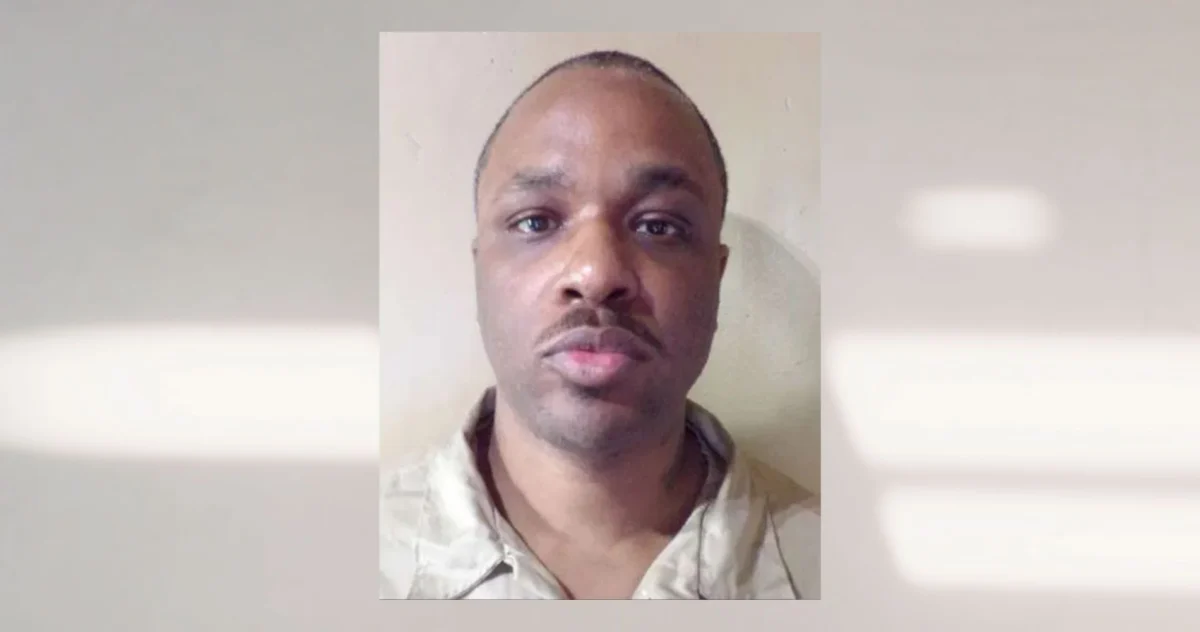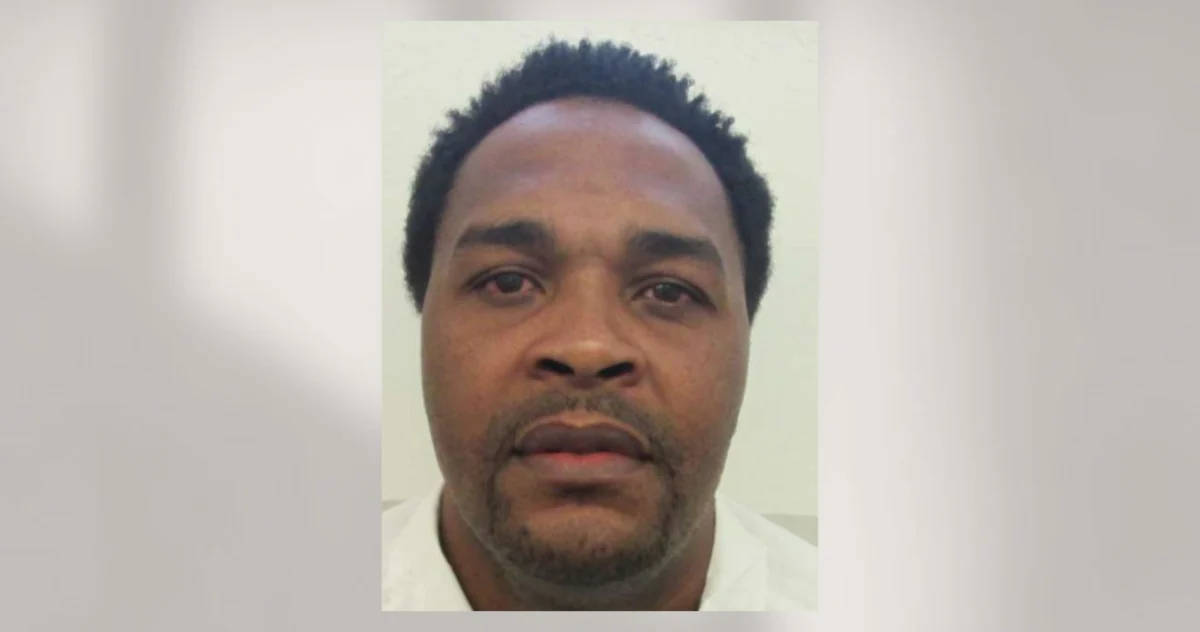
Alabama Governor Kay Ivey has officially scheduled the execution of Jeffery Lee for June 11, 2026, by nitrogen suffocation, a decision that reignites long-standing debates over judicial override, racial bias in capital sentencing, and the ethics of novel execution methods. The 49-year-old Mr. Lee’s case is particularly contentious because his capital jury, in a 7-5 vote, explicitly rejected the death penalty, opting instead for a sentence of life imprisonment without parole in 2000. This jury recommendation was subsequently overridden by the trial judge, who imposed the death sentence, a practice unique to Alabama at the time and since abolished within the state.
The Genesis of a Contested Sentence: Judicial Override in Alabama
Mr. Lee’s path to death row stems from a legal anomaly that once positioned Alabama as an outlier in the American justice system. For decades, Alabama was the only state where judges routinely overrode jury verdicts of life imprisonment to impose the death penalty. This controversial practice, known as judicial override, allowed a single elected judge to disregard the collective judgment of a jury of peers in capital cases. Records from the Equal Justice Initiative (EJI) indicate that since 1976, Alabama judges overrode jury life verdicts in more than 100 cases, leading to nearly 20% of the state’s current death row population being sentenced by judges despite their juries choosing life without parole.
The origins of judicial override in Alabama can be traced to a complex interplay of legal interpretations following the Supreme Court’s reinstatement of the death penalty in 1976. While many states moved towards systems where jury recommendations were binding or carried significant weight, Alabama maintained a statute granting judges the ultimate authority in sentencing. Proponents of the override system argued it served as an important safeguard, allowing judges to correct what they perceived as lenient jury decisions. However, critics, including numerous legal scholars and human rights organizations, contended that it undermined the fundamental role of the jury, particularly in a system where judges faced re-election and could be swayed by political pressures to appear "tough on crime."
The international community also weighed in, with bodies like the United Nations Human Rights Committee expressing concerns that judicial override contravened international fair trial standards. Domestically, as other states reformed their capital sentencing procedures, Alabama’s practice became increasingly isolated. Florida and Delaware, the only other states that had permitted some form of judge override, both ended the practice in 2016. Alabama finally followed suit on April 11, 2017, abolishing judicial override. However, this critical legislative change was not applied retroactively, leaving individuals like Mr. Lee, whose trials occurred before 2017, in a legal limbo. Had Mr. Lee’s trial taken place just a few years later, he would have been sentenced to life imprisonment without parole, precisely as his jury had recommended. This non-retroactivity underscores a profound arbitrary element in Alabama’s application of capital punishment.
A Call for Fidelity to Justice: Voices Against the Execution
The scheduled execution has prompted renewed calls for clemency, notably from former Chief Justice of the Alabama Supreme Court, Drayton Nabers Jr. In a recent op-ed, Nabers Jr. articulated a compelling argument for Governor Ivey to commute Mr. Lee’s death sentence. He emphasized that the Alabama Legislature and Governor Ivey herself abolished judge override because they recognized its inherent flaws and injustices. Nabers Jr. urged the governor to act out of "fidelity to the conservative principles of limited government, respect for the jury system, and the rule of law."
"A jury of Alabamians voted for life," Nabers Jr. wrote, highlighting the core democratic principle at stake. "The state of Alabama later agreed that juries, not judges, should make that call. Governor Ivey can honor both of those judgments—the jury’s and the Legislature’s—by commuting Jeffery Lee’s sentence to life imprisonment without the possibility of parole." His statement reflects a growing sentiment among legal professionals and advocates that upholding the spirit of the law, even if not its letter in a non-retroactive application, is crucial for justice. The argument posits that if the state has acknowledged a practice as wrong and abolished it, executing someone under the shadow of that now-discredited practice diminishes the integrity of the justice system.
An Unreliable Capital Trial: Systemic Flaws and Racial Disparities
Jeffery Lee, who is Black, was charged with the 1998 shooting deaths of Jimmy Ellis and Elaine Thompson and the attempted murder of Helen King during the robbery of a pawn shop near Orrville in Dallas County, Alabama. All three victims were white. The circumstances surrounding his conviction in 2000 reveal several deeply concerning systemic issues that are frequently cited in critiques of capital punishment.
Dallas County, situated in Alabama’s historically significant Black Belt, carries a profound legacy of racial injustice. This historical context provides a critical backdrop to the conduct of Mr. Lee’s trial. Reports from the EJI and other civil rights organizations have extensively documented the pervasive racial bias within Alabama’s criminal justice system, particularly in regions with such histories. One of the most glaring issues in Mr. Lee’s trial was the prosecution’s use of peremptory strikes. The prosecutor utilized all 21 of his peremptory strikes against Black potential jurors, a practice that has been widely criticized as a mechanism to create racially homogenous juries, often leading to disproportionate outcomes for Black defendants. While such strikes are theoretically meant to remove biased jurors, their systematic use against a single racial group raises serious questions about fairness and equal protection, echoing concerns first articulated in cases like Batson v. Kentucky.
Furthermore, Mr. Lee, having lived his entire life in chronic poverty, could not afford private legal representation. He was appointed counsel who reportedly had no prior experience trying a capital case and, according to legal reviews, did "almost nothing to prepare for trial." In capital cases, the stakes are literally life and death, necessitating highly experienced and dedicated legal defense. The U.S. Supreme Court, in Strickland v. Washington (1984), established a standard for effective assistance of counsel, requiring that attorneys provide representation that does not fall below an objective standard of reasonableness and that any deficiencies must prejudice the defendant. Cases involving inexperienced or under-resourced counsel in capital trials are unfortunately common and often form the basis of subsequent appeals, highlighting a critical flaw in the provision of justice for indigent defendants.
The trial itself was remarkably brief, lasting less than two days. Following the conviction, a sentencing hearing was held where defense counsel reportedly presented no additional evidence in support of a life sentence. It was after this abbreviated process, and despite the jury’s clear recommendation for life, that the trial judge overrode their verdict and sentenced Mr. Lee to death. This confluence of factors—racialized jury selection, inadequate legal representation, a swift trial, and judicial override—paints a picture of a capital trial far from the ideal of justice and fairness.
A Life Transformed: Redemption on Death Row
Despite spending more than 25 years under a death sentence, Jeffery Lee, now 49, has undergone a profound personal transformation. His journey on death row has seen him emerge as a leader within the Kairos ministry, serving as an assistant chaplain and a mentor to other men facing similar fates. The Catholic Mobilizing Network, an organization actively campaigning for clemency in Mr. Lee’s case, describes him as "a man of strong Christian faith." They highlight his impeccable record within the prison system, noting that he has had no violent infractions during his quarter-century of incarceration.
Such transformations, while not legal grounds for overturning a conviction, are frequently cited by clemency advocates as evidence of rehabilitation and a compelling reason to spare a life. They challenge the notion that certain individuals are irredeemable and underscore the human capacity for growth and change, even in the most restrictive environments. For many, Mr. Lee’s dedication to faith and ministry, and his positive impact on others on death row, represent a testament to his evolved character, arguing that society’s retributive goals have been met by his long incarceration, and further punishment would be excessive.
The Cruelty of Nitrogen Hypoxia: A Contentious Execution Method
Adding another layer of controversy to Mr. Lee’s scheduled execution is Alabama’s choice of method: nitrogen suffocation, also known as nitrogen hypoxia. Alabama became the first state in the U.S. to carry out an execution by this method in January 2024, with the death of Kenneth Eugene Smith. The method involves forcing an inmate to breathe pure nitrogen gas through a facemask until they die from lack of oxygen.
Mr. Lee himself filed a federal lawsuit challenging nitrogen suffocation as cruel and unusual punishment, arguing that it "causes inmates to experience prolonged air hunger and feelings of suffocation, which evoke severe anxiety, fear, and physiological distress." The lawsuit contended that the method "cruelly superadds pain" in violation of the Eighth Amendment because it triggers the person’s survival instincts to breathe oxygen while simultaneously preventing them from doing so. Medical experts and human rights organizations have voiced strong concerns about the method’s potential to cause significant and lengthy suffering. Justice Sonia Sotomayor, in a dissenting opinion regarding the method, recognized that it inflicts the "unnecessary psychological terror" of "conscious, excruciating suffocation" and "severe emotional suffering" while "consciously experiencing the ‘primal urge to breathe.’"
Despite these concerns, U.S. District Court Judge Emily Marks ruled on May 28 that "[w]hile Lee establishes that death by nitrogen hypoxia involves some suffering, he fails to show that the protocol is cruel and unusual in violation of the Eighth Amendment." The court acknowledged that individuals executed by nitrogen suffocation "likely experience severe air hunger," leading to "profound physiological discomfort and distress, as well as anxiety, fear, and dread," and noted that this suffering "can be worse than pain." However, the ruling concluded that this suffering is not unconstitutional because consciousness is lost "in not significantly more than one to three minutes" after nitrogen flow begins.
This determination, however, directly contradicted unrebutted expert testimony presented during the bench trial. Experts cited purposeful movements—including rolling, attempting to sit up to breathe, lifting legs and head, clenching fists, and pulling against restraints—observed in four individuals previously executed in Alabama, suggesting they remained conscious for between three and seven minutes. The discrepancy between expert testimony and the court’s finding highlights the ongoing legal and scientific debate surrounding this novel method. Critics argue that the state is essentially experimenting with human lives, and that the lack of definitive scientific consensus on the precise experience of death by nitrogen hypoxia should preclude its use. The prolonged and visibly distressed execution of Kenneth Smith further fueled these concerns, with witnesses describing a protracted process marked by convulsions and gasping. Mr. Lee’s appeal against this ruling is currently pending, adding another layer of uncertainty to his scheduled execution.
Broader Implications and the Future of Capital Punishment
The case of Jeffery Lee stands as a microcosm of many enduring controversies surrounding capital punishment in the United States. It brings into sharp focus the arbitrariness that can result from non-retroactive legal reforms, the indelible stain of racial bias in the justice system, the critical importance of competent legal counsel, and the ethical quandaries posed by new execution protocols.
Nationally, the death penalty continues to decline in usage and public support. Only a handful of states actively carry out executions, and the number of death sentences handed down annually has reached historic lows. Alabama, however, remains one of the most active death penalty states, often pursuing executions with vigor, even as the method itself comes under increasing scrutiny. The push to use nitrogen hypoxia, driven in part by a shortage of drugs for lethal injection, reflects a desperate attempt by states to continue capital punishment in the face of pharmaceutical boycotts and legal challenges.
The implications of Mr. Lee’s case extend beyond his individual fate. It serves as a stark reminder of how historical injustices, once embedded in legal frameworks, can continue to affect individuals years after those frameworks are dismantled. It also forces a critical examination of what constitutes "cruel and unusual punishment" in the 21st century, particularly when states resort to unproven methods. As advocacy groups continue their efforts for clemency and legal challenges proceed, the scheduled execution of Jeffery Lee will undoubtedly remain a focal point in the ongoing national conversation about justice, fairness, and the ultimate penalty.