A year after the National Park Service (NPS) implemented a controversial directive to solicit public feedback on "negative" historical content within its vast network, a comprehensive analysis of over 35,700 submitted comments unequivocally reveals a strong and widespread public opposition to any attempts to censor or remove historical narratives from national parks. The findings, primarily highlighted by the Center for Western Priorities (CWP), a nonpartisan conservation and advocacy organization, underscore a public that is "vehemently opposed to attempts to erase history and censor national parks." This public outcry comes in direct response to a federal initiative aimed at promoting a more "positive" interpretation of American history within these cherished natural and cultural sites.
Genesis of the Directive: The "Restoring Truth and Sanity" Executive Order
The origins of this contentious policy trace back to March 2025, when then-President Donald Trump issued an executive order titled "Restoring Truth and Sanity to American History." This order was a direct reflection of a broader political movement prevalent during his administration, which often criticized what it perceived as overly negative or "woke" interpretations of American history, particularly those highlighting uncomfortable aspects such as slavery, colonial injustices, or systemic inequalities. The executive order specifically directed the National Park Service, an agency within the Department of the Interior, to undertake a thorough review and subsequent removal of any materials deemed to "inappropriately disparage Americans past or living (including persons living in colonial times)."
This directive emerged amidst a heightened national debate over how history, particularly its more challenging chapters, should be presented in public spaces and educational curricula. Proponents of the executive order argued for a narrative that emphasizes American exceptionalism, patriotism, and the positive contributions of historical figures, often downplaying or omitting aspects that might cast a shadow on the nation’s past. Critics, conversely, warned that such an approach risked sanitizing history, fostering historical illiteracy, and undermining the very principles of academic freedom and comprehensive historical understanding. The executive order was seen by many as an attempt to codify a particular ideological viewpoint into federal policy, directly influencing the interpretive strategies of one of the nation’s most significant cultural and historical custodians.
Implementing the Mandate: QR Codes and Visitor Feedback
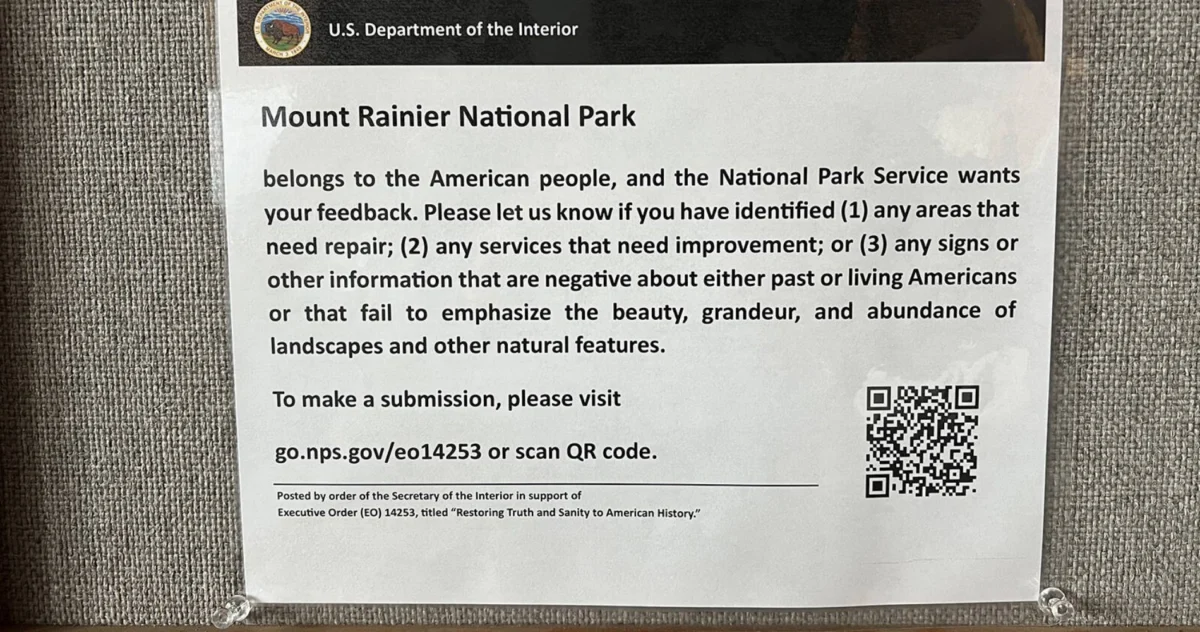
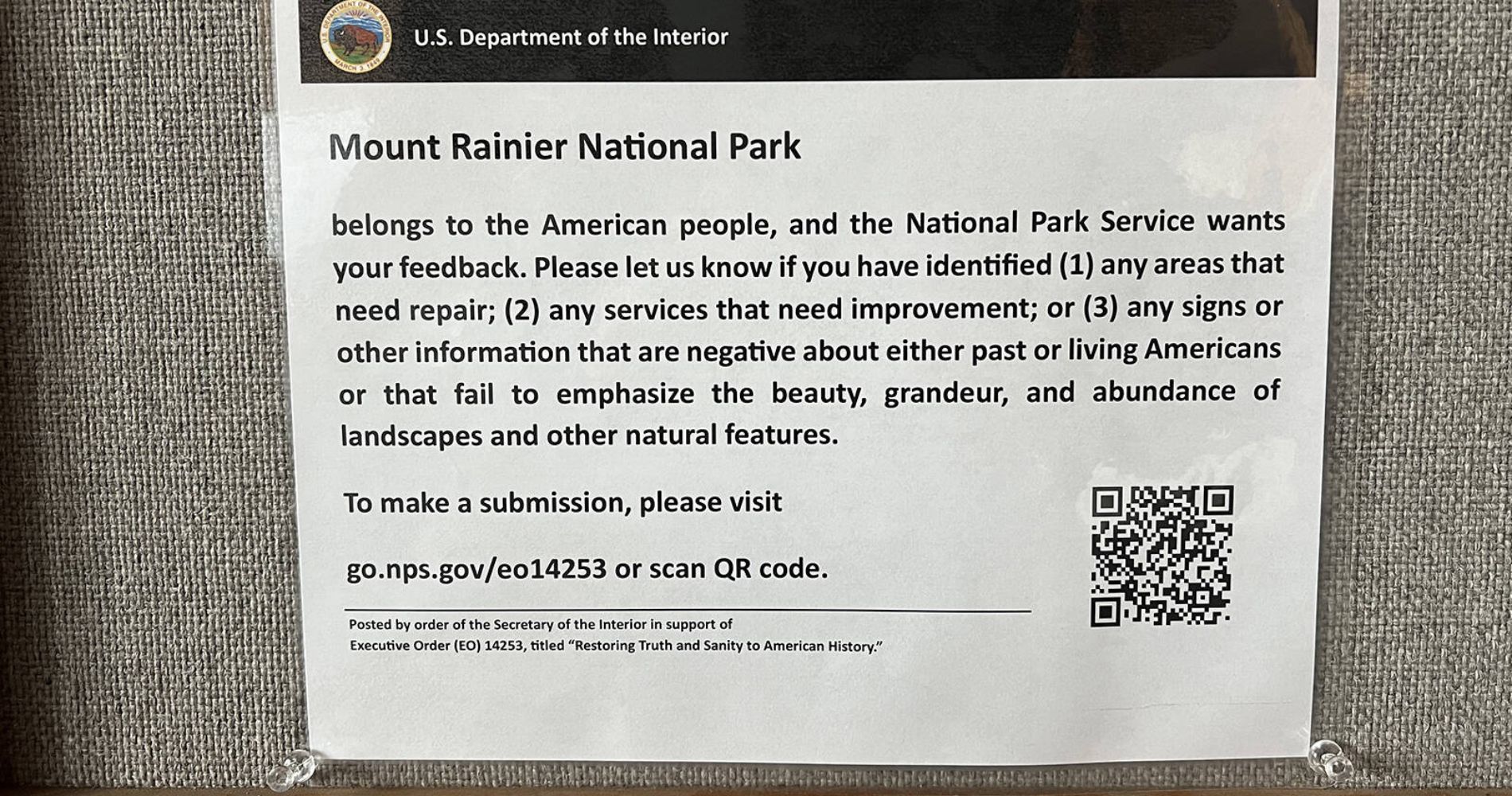
To operationalize the President’s executive order, Interior Secretary Doug Burgum issued Secretary’s Order 3431, reiterating the directive to "Restoring Truth and Sanity to American History." This departmental order specifically instructed NPS staff across all properties to post QR code signs. These signs were designed to enable visitors to directly report "any signs or other information that are negative about either past or living Americans or that fail to emphasize the beauty, grandeur, and abundance of landscapes and other natural features." The implementation of QR codes represented a novel, if controversial, method of public engagement, decentralizing the identification of "negative" content and placing the onus, at least partially, on the visiting public.
The deployment of these QR codes was met with skepticism by many historians, park interpreters, and civil liberties advocates. Concerns were immediately raised about the subjective nature of what constitutes "negative" content, the potential for politically motivated reporting, and the capacity of an agency dedicated to conservation and interpretation to effectively manage and adjudicate such a vast and potentially biased feedback mechanism. The system was perceived by some as an invitation for visitors to act as "snitches" on historical narratives, fostering an environment of self-censorship within park staff and potentially chilling the presentation of complex historical truths.
The Data Speaks: Overwhelming Opposition to Narrative Control
After a year of collecting public input, the Interior Department released the raw data comprising 35,700 comments submitted through these QR codes. While the sheer volume of comments might appear substantial, the Associated Press rightly characterized the response as "tepid," especially when contextualized against the staggering 323 million visits recorded across more than 400 National Park Service sites in the preceding year. This suggests that only a minuscule fraction of visitors chose to engage with the QR code system, indicating either a lack of awareness, disinterest, or perhaps a tacit disapproval of the initiative itself.
However, the true significance of the data emerged not from its volume, but from its content. The Center for Western Priorities (CWP) undertook a meticulous analysis of the full dataset, revealing a stark contrast between the administration’s intent and the public’s sentiment. CWP’s analysis identified a mere 47 comments—an astonishingly small proportion—that either flagged a sign for removal or expressed broad support for the overall removal effort.
A Deeper Dive into Visitor Responses
Further dissecting these 47 comments, CWP found that:
- 20 comments used the form not to support censorship, but to advocate for more inclusive history and better representation in signage. Examples included demands to address racial slurs in historical markers or to include previously marginalized voices. This highlights a desire among a significant segment of the public for a more comprehensive and accurate historical narrative, rather than a sanitized one.
- 13 comments were categorized as unclear, satirical, or merely pointed out factual inaccuracies, suggesting a lack of serious engagement with the administration’s stated objective or an attempt to subvert the system.
- This leaves an incredibly small number: only 14 visitors out of 35,700 total comments who actually used the form to flag "negative" content in a manner consistent with the administration’s original intent.
The implications of these numbers are profound. Even after accounting for "form letters" from advocacy groups that coordinated opposition to the executive order—a common tactic in public comment processes—CWP found that an overwhelming 99.8% of the comments "defended historical accuracy, expressed support for the NPS, or pushed back against the order." This near-unanimous rejection of the content removal initiative speaks volumes about the public’s values regarding historical preservation and interpretation.
Independent corroboration of these findings came from an analysis conducted by the Associated Press, which similarly concluded that the majority of comments were critical of the effort itself. The AP cited several illustrative examples:
- One visitor to a North Carolina park candidly labeled the administration’s efforts "un-American," directly challenging the patriotic veneer often associated with such directives.
- Another visitor objected to the divisive nature of "having Americans call in and snitch on each other," highlighting concerns about social cohesion and trust.
- A particularly poignant comment from a visitor to Gateway Arch National Park in St. Louis articulated a common sentiment: "We had a great time learning about the development of this site including the difficult parts of our American story. We need those reminders to help us become even better in the future." This reflects a public desire for learning from history in its entirety, embracing both its triumphs and its tragedies as essential for national growth.
These comments collectively paint a picture of a public deeply invested in a truthful and comprehensive understanding of their nation’s past, even when that past is uncomfortable or challenging. They underscore a widespread belief that national parks serve as crucial educational institutions, not merely as venues for aesthetic appreciation or uncritical celebration.
Despite Feedback, Signs Removed: A Watchdog’s Documentation
Despite the overwhelming public opposition evidenced by the very data the Interior Department collected, the National Park Service has reportedly proceeded with altering or removing dozens of signs across the national park system. This continued action, seemingly in defiance of public sentiment, has raised further questions about the agency’s adherence to its mission and its responsiveness to stakeholder feedback.
A dedicated watchdog group, "Save Our Signs," founded by a coalition of librarians, public historians, and data experts, has taken on the critical task of documenting these changes. University of Minnesota librarian and group member Jenny McBurney informed the Associated Press that the group has cataloged the removal or modification of at least 59 signs to date. The nature of the removed content is particularly telling, encompassing vital historical topics such as slavery, women’s rights, and Native American history. These are precisely the narratives that often present complex, sometimes challenging, aspects of American history, and their removal suggests a systematic effort to reshape the interpretive landscape of the parks.
"Save Our Signs" is actively building a "People’s Archive" of content at the parks, inviting visitors to submit photos of existing signs and exhibits. This grassroots effort aims to create a public record of historical interpretation, serving as both a safeguard against further historical erasure and a resource for future understanding, should official records be altered or become inaccessible. Ms. McBurney emphasized the group’s motivation, stating, "We hear from folks all over the country that history matters, that our national parks matter and that this is important to them." This sentiment resonates with the overwhelming public feedback captured by the QR codes, highlighting a shared commitment to preserving the integrity of historical narratives within the parks.
Broader Implications for National Parks and Historical Integrity
The controversy surrounding the "negative content" initiative and the subsequent public backlash carries significant implications for the National Park Service, the interpretation of American history, and the broader relationship between government agencies and the public they serve.
The Peril of Sanitizing History
One of the most profound implications is the risk of sanitizing or whitewashing American history. By focusing solely on "positive" narratives or attempting to remove content deemed "negative," the initiative threatens to create an incomplete and misleading portrayal of the nation’s past. A comprehensive understanding of history, including its struggles, injustices, and difficult compromises, is essential for civic education, critical thinking, and fostering a society capable of learning from its past mistakes. Removing references to slavery, the complexities of westward expansion, or the challenges faced by women and indigenous peoples does not erase these events; it merely obscures them, denying future generations the opportunity to engage with the full scope of their national heritage. Such actions can inadvertently contribute to historical illiteracy and a superficial understanding of national identity.
Public Trust and the NPS Mission
The National Park Service holds a unique and revered position in the American consciousness. Its mission encompasses not only the preservation of natural wonders but also the protection and interpretation of cultural and historical sites. For generations, the NPS has been seen as an objective and reliable steward of these narratives. The "negative content" initiative, however, has placed the agency in a difficult and politically charged position, potentially undermining public trust. When the public’s overwhelming feedback—advocating for historical accuracy and comprehensiveness—is seemingly disregarded in favor of a politically motivated directive, it erodes confidence in the agency’s ability to uphold its mission impartially. This tension between political mandates and professional historical standards creates a crisis of credibility for the NPS.
A Precedent for Future Interpretive Policies
The current situation also sets a troubling precedent for future interpretive policies within federal agencies. The idea that historical narratives can be subject to political litmus tests or public opinion polls, particularly those skewed by a specific administrative agenda, raises concerns about academic freedom and the professional autonomy of historians and park interpreters. If historical interpretation can be dictated by political convenience, it opens the door for a continuous reshaping of public memory based on prevailing political winds, rather than on rigorous historical scholarship and evidence. This could lead to a constant state of revisionism, undermining the stability and reliability of historical accounts presented to the public.
Furthermore, the public’s strong reaction, as demonstrated by the CWP analysis, highlights the critical role citizens play in safeguarding historical integrity. The engagement of groups like "Save Our Signs" underscores the power of grassroots movements in pushing back against perceived historical censorship and ensuring that diverse narratives continue to be told.
Conclusion: A Battle for America’s Narrative
The analysis of visitor comments regarding "negative" content in national parks reveals a clear and resounding message from the American public: history, in all its complexity, must be preserved and presented accurately. Despite the executive order’s intent to cultivate a more uniformly "positive" narrative, the overwhelming majority of visitors expressed a deep commitment to historical truth, inclusivity, and the educational value of confronting the difficult aspects of the nation’s past.
The ongoing removal of historical signage, even in the face of this widespread public opposition, signals a persistent tension between political agendas and the principles of comprehensive historical interpretation. As watchdog groups continue to document these changes, and as public discourse around historical memory remains vibrant, the national parks stand as a crucial battleground in the ongoing effort to define and preserve America’s narrative for generations to come. The future of historical interpretation in these iconic sites will depend on whether the voices advocating for accuracy and completeness ultimately prevail over pressures to sanitize and simplify the rich, often challenging, tapestry of American history.