Prediction markets, platforms where individuals can bet on the outcomes of real-world events, have experienced a dramatic surge in activity. As of April 2026, the two leading platforms, Polymarket and Kalshi, collectively saw monthly trading volumes approach $24 billion. This burgeoning "prediction economy" prompts a deeper examination of who participates and how. To gain insight into the behavior of ordinary users on these novel financial instruments, Pew Research Center conducted an in-depth analysis of nearly 12,000 Polymarket accounts. The study focused on publicly available trading data for these accounts over a six-week period, from May 7 to June 19, 2026, specifically examining trades placed on 10 high-volume events. The findings reveal a diverse spectrum of user engagement, from highly active traders to those making infrequent bets, with a notable concentration of activity in sports, politics, and cryptocurrency markets.
The Rise of Prediction Markets and the Scope of the Research
Prediction markets represent a relatively new frontier in financial speculation, allowing participants to trade contracts whose value is tied to the occurrence or non-occurrence of specific future events. These events can range from political election outcomes and economic indicators to sporting event results and even scientific breakthroughs. The exponential growth in trading volume underscores a growing public interest and a significant influx of capital into this sector. Polymarket and Kalshi, at the forefront of this trend, have become hubs for this activity, attracting a diverse user base.
The Pew Research Center’s investigation into Polymarket users was motivated by a desire to understand the demographics and trading habits of individuals engaging with these platforms. This research builds upon previous work by the Center on gambling, sports betting, and broader public attitudes towards the morality of gambling. By analyzing the trading activity of a substantial sample of Polymarket accounts, the study aims to provide a data-driven portrait of the typical user, their investment patterns, and their engagement with different market categories.
The methodology involved collecting data from the Polymarket user activity API, specifically excluding its newer U.S. platform, as detailed user data from Kalshi is not publicly accessible. Researchers identified 10 high-volume trading events across various topics in early May 2026 and collected the 4,000 most recent trades for each event. The 16,836 unique accounts that placed these trades formed the initial sample. This sample was then monitored 15 times between May 7 and June 19, 2026, resulting in a final dataset of 11,989 active wallets. It is important to note that this method might have missed a small percentage of trades from accounts that exceeded the API’s retrieval limits. Polymarket transactions are denominated in USD Coin (USDC), a stable cryptocurrency pegged to the U.S. dollar, simplifying the conversion of trading values to familiar monetary terms.
The Profile of the Typical Polymarket Trader
The analysis of nearly 12,000 Polymarket accounts reveals a median user who engages with the platform with a moderate level of frequency and relatively modest stakes. The typical trader placed a total of 46 trades over the six-week study period, spread across 10 active trading days. The average value of each trade was a modest $6.50. This suggests that for the majority of users, participation in prediction markets is more akin to a casual speculative hobby rather than a high-stakes investment strategy.

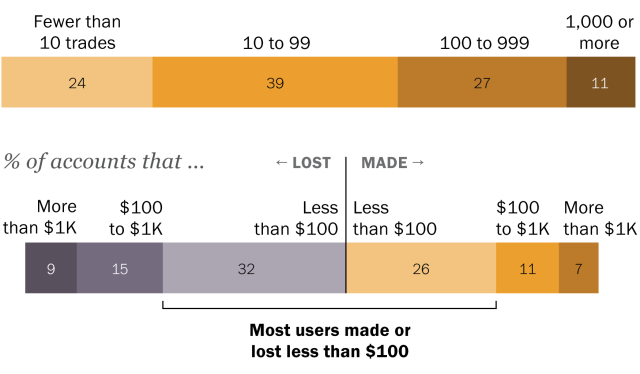
However, this "typical" profile masks significant variations in user behavior. A substantial portion of accounts, approximately 24%, engaged in fewer than 10 trades during the entire six-week period. These users represent the more infrequent participants, perhaps testing the waters or making occasional bets on events of particular interest. On the other end of the spectrum, a more dedicated group, comprising 11% of the analyzed accounts, exhibited remarkable activity, executing 1,000 trades or more within the same six-week timeframe. This segment of highly active traders likely approaches prediction markets with a more intensive and systematic strategy.
When it comes to financial outcomes, the data indicates that the majority of Polymarket users experienced minimal gains or losses. The median trader spent just over $600 on the platform during the study period, resulting in a net loss of less than $2. This near breakeven scenario for the average user suggests that the markets, on aggregate, are not consistently rewarding or punishing participants. A significant majority, 58% of traders, saw their net gains or losses fall within the $100 range, either positive or negative.
Despite the general trend of modest financial outcomes, a subset of traders experienced more substantial profits and losses. Approximately 7% of users achieved net profits exceeding $1,000 over the six weeks, demonstrating the potential for significant returns for some participants. Conversely, a similar proportion, around 9%, incurred net losses of $1,000 or more, highlighting the inherent risks associated with speculative trading on these platforms. These findings underscore the polarized nature of outcomes, with a small but notable group experiencing both substantial success and significant financial setbacks.
Trading Behavior Across Different Market Categories
Polymarket offers a diverse array of markets, covering a wide range of potential future events. However, the data indicates that trading volume is heavily concentrated in a few key categories: sports, politics, and cryptocurrency. These three areas collectively account for the vast majority of trading activity on the platform. This concentration suggests that users are primarily drawn to events with readily available information, widespread public interest, and a clear binary or quantifiable outcome.
A key characteristic of Polymarket user behavior is a tendency towards specialization. The median trader placed approximately three-quarters of their trades within a single topic area. Furthermore, 24% of the analyzed accounts exclusively traded on markets within one specific category. This indicates that many users develop a focus on particular domains, suggesting an interest in the subject matter itself or a perceived advantage in predicting outcomes within their chosen area.
The trading patterns differ significantly based on the primary topic of focus. Among users who dedicated at least 75% of their trades to a single area, those specializing in sports exhibited the highest level of activity, with a median of 69 trades over the six-week period. Cryptocurrency traders were also highly active, averaging 59 trades. In contrast, users primarily focused on politics engaged in significantly fewer trades, with a median of only 13. This disparity in trading frequency suggests different levels of engagement and perhaps different speculative strategies across these market categories.
Furthermore, the average trade size also varied by topic. Sports traders tended to place larger bets, with an average of $9 per trade. This contrasts with political traders, whose average trade was $6, and cryptocurrency traders, who averaged less than $4 per trade. These differences in trade size, combined with the frequency of trading, paint a picture of distinct user profiles for each major market category. Sports traders appear to be more frequent and place larger individual bets, while crypto traders are also frequent but bet smaller amounts, and politics traders are less active and bet moderately.
The Habits of the Most Active Traders
The analysis of the 11% of Polymarket users who placed 1,000 or more trades during the six-week study period reveals distinct characteristics that set them apart from less frequent participants. These highly active traders represent the most engaged segment of the Polymarket user base, and their behavior offers insights into potential advanced trading strategies and motivations.
These prolific traders are not only making a large number of transactions but also tend to be more diversified in their market engagement. While many users focus on a single topic, the most active traders are more likely to spread their bets across a wider range of events. This suggests a strategy focused on identifying opportunities across various domains rather than deep specialization in one. This diversification could be a tactic to mitigate risk or to capitalize on perceived arbitrage opportunities across different prediction markets.
Moreover, the financial outcomes for this group are more polarized. While the typical user largely broke even, the most active traders were more likely to experience either substantial profits or significant losses. This suggests that their intensive trading activity is associated with higher stakes and a more aggressive approach to market participation. The sheer volume of trades likely leads to a more pronounced impact of wins and losses on their overall portfolio.
The motivation behind such intense trading activity remains a subject for further exploration. It could stem from a genuine belief in their ability to predict outcomes, a pursuit of high-frequency trading strategies, or even a form of entertainment derived from constant engagement with the platform. Understanding these drivers is crucial for a comprehensive grasp of the prediction market ecosystem.
Broader Implications and Future Outlook
The rapid expansion of prediction markets like Polymarket and Kalshi signals a broader shift in how individuals engage with information and express opinions about future events. These platforms offer a novel mechanism for aggregating dispersed knowledge and for individuals to financially back their convictions. The insights gleaned from this research on user behavior, market concentration, and the polarization of outcomes are crucial for policymakers, regulators, and the platforms themselves.

The concentration of trading in sports, politics, and cryptocurrency suggests that these are the areas where the concept of prediction markets has resonated most strongly with the public. The ability to bet on the outcome of a football game or the result of a political election provides a tangible and often engaging way for individuals to participate in events they care about. The inclusion of cryptocurrency markets further highlights the intersection of this new financial frontier with the existing digital asset landscape.
The significant variation in user activity and financial outcomes underscores the inherent risks and rewards associated with prediction markets. While many users engage casually and experience minimal financial impact, a substantial minority are highly active and encounter more extreme gains or losses. This mirrors patterns seen in other forms of speculative trading and gambling, emphasizing the need for user awareness regarding potential financial risks.
As prediction markets continue to evolve and attract more participants, ongoing research into their societal impact, regulatory considerations, and the long-term behavior of users will be essential. Understanding the dynamics of this emerging "prediction economy" is critical for navigating its future development and ensuring its responsible integration into the broader financial and informational landscape. The data from this Pew Research Center study provides a foundational understanding of the typical user, but the highly active traders and the evolving nature of the markets themselves warrant continued observation and analysis.