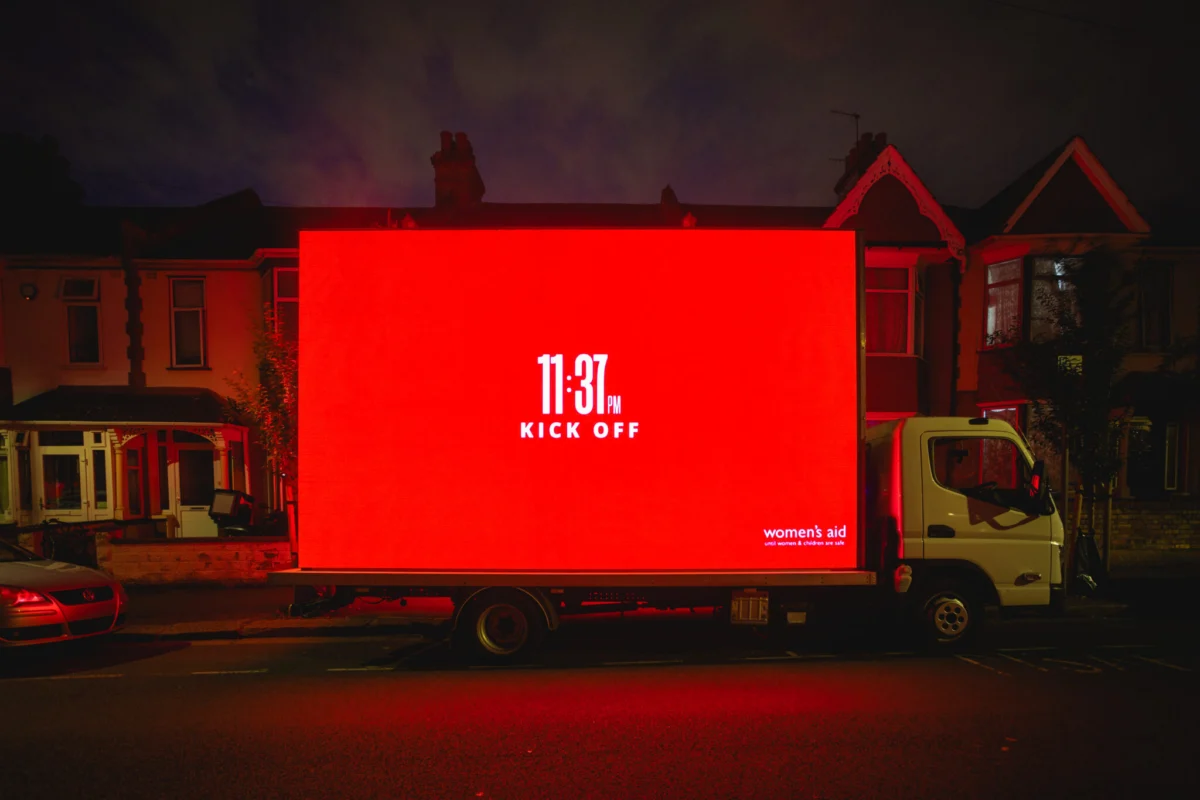
London, UK – As England gears up for its pivotal opening World Cup match on June 17, 2026, the national domestic abuse charity Women’s Aid has unveiled a poignant and hard-hitting campaign titled "The Other Kick Off." This initiative aims to cast a stark light on the devastating reality that for many women and children, the euphoria of a major football tournament is overshadowed by a predicted surge in domestic abuse. The campaign dramatically highlights a "sinister" kick-off time of 11:37 pm, representing the estimated moment domestic abuse incidents are projected to escalate after the final whistle of England’s games.
The campaign’s launch coincides with the 9 pm official kick-off for England’s first match, deliberately drawing a harrowing contrast between national excitement and private terror. Women’s Aid has strategically hijacked the widely anticipated question, "What time is kick-off?", redirecting public attention to a much later, more ominous hour. This calculated timing, 11:37 pm, is not arbitrary; it signifies the moment many survivors dread most – when abusive partners return home, often after consuming alcohol and experiencing heightened emotions related to the match outcome. The late-night nature of many World Cup fixtures this year further exacerbates the isolation and fear for those living with abuse, making escape or seeking help even more challenging.
A Visual and Digital Call to Action Against Hidden Abuse
To amplify its crucial message and ensure it penetrates the national consciousness, Women’s Aid has deployed "The Other Kick Off" across a range of high-impact platforms. Digital billboards, mobile vans, and strategically placed fly posters have appeared near major fan zones and prominent football hotspots throughout London. These striking visuals are designed to halt passers-by, compel them to confront the uncomfortable truth, and crucially, direct those in need to vital support services. Each "Kick Off" poster features a prominent QR code, offering immediate access to Women’s Aid’s website. This digital gateway provides comprehensive resources for survivors, including information on the signs of domestic abuse, avenues for seeking help, and options for donating to support the charity’s life-saving work. The campaign serves as a powerful, sobering reminder of the realities faced by thousands, echoing the charity’s impactful 2022 "He’s Coming Home" campaign, which similarly underscored the link between major football events and increased domestic violence.
The choice of outdoor media ensures maximum visibility during a period of intense public focus on football. By placing these messages directly within the celebratory environments of fan zones, Women’s Aid forces a confrontation between the collective joy of the sport and the hidden suffering it can unwittingly amplify. The mobile vans, in particular, ensure the message reaches diverse communities beyond static locations, maximizing the campaign’s reach and potential impact.
The Troubling Link: Football Tournaments and Domestic Abuse Statistics
The foundation of "The Other Kick Off" campaign rests upon longstanding and well-documented research illustrating a disturbing correlation between major football tournaments and a rise in domestic abuse incidents. Studies, including a pivotal 2014 research paper by Kirby and Francis published in the Journal of Research in Crime and Delinquency, have consistently demonstrated this pattern. Specifically, incidents of domestic abuse are shown to increase by a staggering 38% when England’s national team loses a match, and by a still significant 26% even when they win.
While football itself is emphatically not a direct cause of domestic abuse, the environment surrounding these major sporting events can act as a potent catalyst for existing abusive behaviours. Factors such as heightened emotional intensity, increased alcohol consumption, gambling-related stress, and the communal nature of viewing matches often create a volatile cocktail. Abusers may use the outcome of a game, whether a win or a loss, as a pretext for violence, leveraging the charged atmosphere to exert control and inflict harm. The consensus among experts and advocates is unequivocal: irrespective of the match’s result, domestic abuse is an unacceptable crime that cannot be tolerated or excused.
Beyond the specific tournament-related spikes, the broader landscape of domestic abuse in the UK remains a grave concern. According to the Office for National Statistics (ONS), an estimated 2.4 million adults aged 16 to 74 experienced domestic abuse in England and Wales in the year ending March 2023. Women are disproportionately affected, accounting for a majority of victims. The long-term physical and psychological trauma inflicted by domestic abuse has profound consequences for individuals, families, and society as a whole, often leading to mental health issues, homelessness, and, in tragic cases, fatalities. Campaigns like "The Other Kick Off" are therefore critical not just for immediate crisis intervention during tournaments, but for continually elevating public awareness of this pervasive societal issue.
A Chronology of Advocacy: Women’s Aid’s Enduring Fight
Women’s Aid has been at the forefront of the fight to end domestic abuse against women and children in the UK for over five decades. Established as a national charity, it operates as a federation of 183 organisations, collectively providing over 300 local, life-saving services across the country. Their history is marked by consistent campaigning, policy shaping, and tireless advocacy on behalf of survivors and their member organisations.
The 2022 "He’s Coming Home" campaign, which graphically depicted the stark reality of domestic abuse coinciding with the popular football anthem, set a precedent for using major sporting events to highlight this hidden crisis. It demonstrated Women’s Aid’s innovative approach to cutting through the noise of national celebration to deliver a vital message. This year’s "The Other Kick Off" builds on that legacy, refining the message and expanding its reach.
Over its 50-year history, Women’s Aid has been instrumental in driving significant legislative and societal changes. From advocating for the Domestic Abuse Act 2021 to establishing crucial support services like the Survivors’ Forum, the No Woman Turned Away Project, and the Survivor’s Handbook, the charity has consistently worked to provide practical help and amplify the voices of those affected. Their dedication extends to dedicated resources for young people through "Love Respect" and the national Women’s Aid Directory, ensuring comprehensive support for various demographics impacted by abuse. The recurring nature of their World Cup campaigns underscores the persistent challenge and the need for continuous public education and intervention.

Official Responses and Collaborative Action
The campaign has garnered strong support from both the charity sector and government officials, underscoring the urgency and gravity of the issue.
Farah Nazeer, CEO at Women’s Aid, articulated the charity’s perspective: "The World Cup is a wonderful opportunity for us to come together and cheer on our team. However, for women and children living with domestic abuse, ‘kick-off’ has a different meaning. For those living with abuse, the final whistle of the game signals the beginning of something frightening and potentially life-threatening. While we know that domestic abuse isn’t caused by football, we also know that heightened emotions and alcohol consumption can lead to a rise in domestic abuse frequency and severity. Whether England wins, loses or draws, no woman or child should live in fear of that final whistle blow. We hope that our campaign helps raise awareness of this heinous crime, while also signposting people to support, not only for themselves, but for loved ones they’re concerned about."
Women’s Aid Ambassador Charlie Webster, herself a survivor of domestic abuse, added a powerful personal dimension: "The World Cup is one of those rare moments when the whole country holds its breath together – united, hopeful, alive! That joy is real, and it’s precious. But for women and children living with domestic abuse, tournament time brings something very different: heightened fear, and heightened danger. That is a reality we cannot look away from. Football is our game. It belongs to all of us, and it should be a place of safety. I am proud to be raising awareness to change that, and make sure that when England plays, every woman at home is safe." Her statement encapsulates the campaign’s aim to reclaim the spirit of football for all, free from the shadow of violence.
Minister for Safeguarding and Violence Against Women and Girls, Natalie Fleet, reinforced the government’s commitment to addressing this issue: "Nobody should live in fear because of a football match. As a Mum and a Nana, I find it heartbreaking that while many families come together to enjoy the World Cup, some women and children are left dreading the final whistle. The latest Women’s Aid campaign shines a powerful light on this reality." Minister Fleet further detailed governmental efforts: "We know domestic abuse can escalate during major sporting events, and there is never any excuse for it. Tackling this is central to our VAWG Strategy – including placing domestic abuse specialists in 999 control rooms through Raneem’s Law, rolling out Domestic Abuse Protection Orders, and working with partners to challenge harmful behaviours. We are clear that enough is enough. We will deploy the full power of the state to halve violence against women and girls in a decade."
These statements highlight a multi-faceted approach involving charity-led awareness, survivor advocacy, and governmental policy implementation, all working in concert to combat domestic abuse. The mention of Raneem’s Law and Domestic Abuse Protection Orders signifies concrete legislative tools being deployed to safeguard victims and hold perpetrators accountable.
The Precision of 11:37 PM: Symbolism Meets Calculation
The precise timing of "The Other Kick Off" at 11:37 pm is a carefully calculated figure designed to underscore the immediate post-match threat. This time was derived by factoring in the average duration of a football match, including standard ninety minutes plus injury time, a typical half-time interval, and crucially, an allowance for post-match drinking and the journey home. This meticulous calculation transforms an abstract statistic into a tangible, dreaded moment for those living with abuse.
It represents the shift from a public, shared experience of football to the enclosed, often dangerous, private space of the home. The late hour means fewer opportunities for escape, less visibility for neighbours or friends to intervene, and a heightened sense of vulnerability for women and children trapped in abusive environments. By pinpointing this exact moment, Women’s Aid aims to create a powerful, visceral understanding of the fear and isolation experienced by survivors, moving beyond general awareness to a specific, actionable call for vigilance.
Broader Societal Implications and a Collective Call to Action
"The Other Kick Off" campaign extends beyond immediate crisis intervention, prompting a broader societal reflection on how national celebrations intersect with hidden suffering. It challenges the public to consider the responsibilities that accompany collective joy and to recognize the signs of abuse, even when masked by everyday events.
The campaign’s success hinges on public engagement and a willingness to confront uncomfortable truths. By offering clear pathways to support through QR codes and the Women’s Aid website, the charity empowers individuals to seek help for themselves or for loved ones they may be concerned about. Education on the signs of domestic abuse is a critical component, fostering a more informed and proactive community.
The collaboration with leading out-of-home media partners like The Outernet and Ocean Outdoor is vital in ensuring the campaign’s pervasive reach. Their donated billboard placements provide invaluable public space for a message that might otherwise struggle to compete with mainstream World Cup narratives.
Ultimately, "The Other Kick Off" is a powerful reminder that while football unites nations in passion and hope, it can simultaneously plunge others into fear and despair. It calls for a collective commitment to ensuring that the joy of the game does not come at the cost of safety and well-being for any woman or child. The enduring message is clear: no one should have to fear what happens after the final whistle blows.