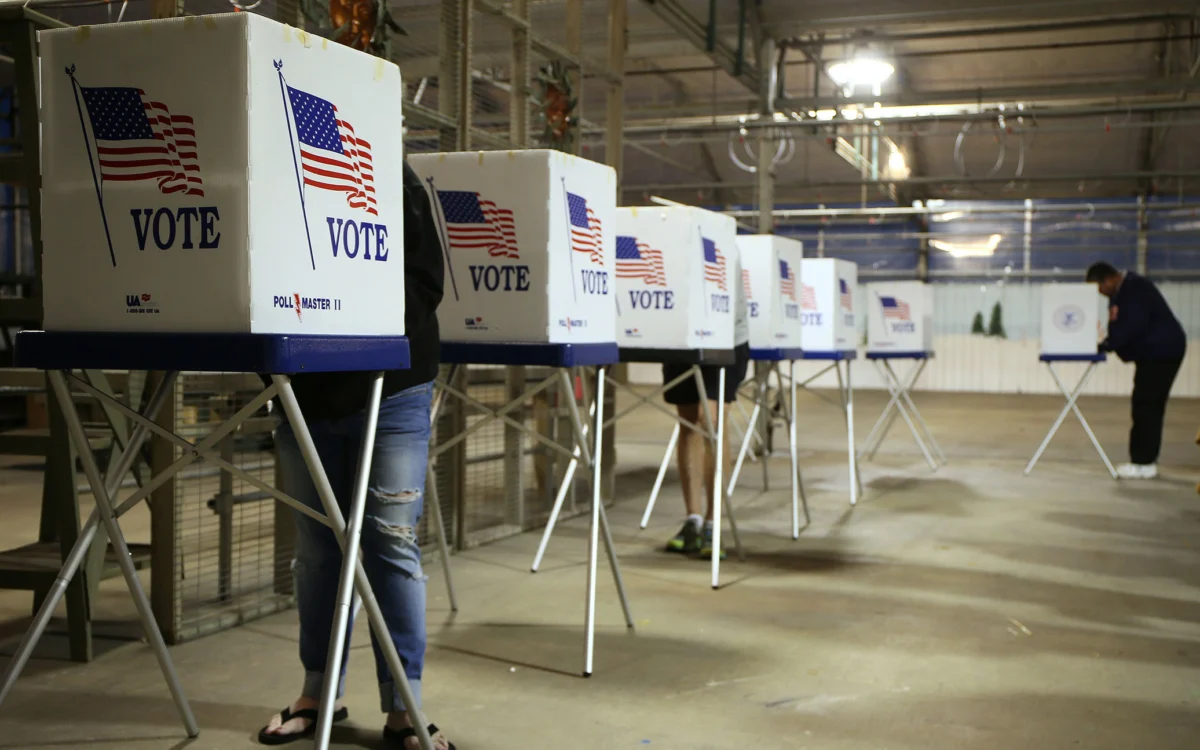
President Donald Trump has declared that changes to voting procedures are his paramount legislative priority, a stance that has ignited significant debate and raised alarm bells among disability rights advocates. The proposed legislation, known as the Safeguard American Voter Eligibility Act (SAVE America Act), passed the U.S. House of Representatives last month and is currently under consideration in the Senate. While proponents assert the bill is crucial for bolstering election integrity and preventing voter fraud, critics contend it poses substantial barriers to voting, particularly for individuals with disabilities, potentially disenfranchising millions of Americans.
The Core Provisions of the SAVE America Act
At the heart of the SAVE America Act are several key provisions designed to alter the landscape of voter registration and casting ballots. Firstly, the bill mandates that individuals seeking to register to vote must provide documentary proof of U.S. citizenship. This proof, which could include a birth certificate or passport, must be presented in person. Secondly, the legislation requires a government-issued photo identification to be presented at the time of voting. Finally, the bill imposes new stipulations on absentee or mail-in voting, a method that has become a vital lifeline for many individuals with disabilities who rely on it to overcome accessibility challenges.
The impetus behind these proposed changes, according to President Trump and his allies, is the persistent concern over voter fraud. Trump has been vocal about his commitment to this issue, stating on social media platform X (formerly Twitter) on a recent Friday, "THERE IS NOTHING THAT IS MORE IMPORTANT FOR THE U.S.A." He has further indicated a strong resolve, suggesting he will not sign any other legislative measures until the SAVE America Act is approved by Congress. This unwavering stance underscores the administration’s prioritization of this electoral reform.
Examining the Evidence on Voter Fraud and Noncitizen Voting
Despite the emphasis on preventing voter fraud, research consistently indicates that instances of noncitizen voting are exceedingly rare. Studies conducted by organizations like the Election Innovation Group have analyzed vast datasets and found no widespread evidence of noncitizens casting ballots in U.S. elections. These findings cast doubt on the premise that the proposed stringent requirements are necessary to address a prevalent problem. The focus on noncitizen voting, in particular, may distract from the real challenges faced by eligible citizens in exercising their right to vote.
Disproportionate Impact on Individuals with Disabilities
The potential ramifications of the SAVE America Act for people with disabilities are a central point of contention. Advocates and researchers highlight that these proposed changes would erect significant hurdles for a demographic already disproportionately affected by voting difficulties. Data from the U.S. Election Assistance Commission (EAC) reveals that in 2020, a substantial 17.7 million Americans with disabilities cast ballots, marking a notable increase from previous years. However, this positive trend is threatened by legislation that could impede their ability to participate.
Advocates argue that the SAVE America Act would exacerbate existing challenges. Maria Town, president and CEO of the American Association of People with Disabilities, expressed deep concern, stating, "The SAVE Act will further disenfranchise disabled voters." She underscored the significant demographic weight of this voting bloc, noting that "disabled people make up roughly one sixth of the total voting age population." This statistic emphasizes the profound impact the bill could have on the electorate if enacted.
Documentation Barriers and Accessibility Concerns
A key challenge lies in the requirement for documentary proof of citizenship and government-issued photo identification. Many eligible American citizens, including a significant number of individuals with disabilities, may not readily possess these documents. Research from the Brennan Center for Justice estimates that approximately 21.3 million eligible voters lack readily available proof of citizenship. Furthermore, a study from the Center for Disability Policy, Research, and Services found that 20% of people with disabilities do not hold a current driver’s license, a common form of government-issued photo ID.
The obstacles extend beyond mere possession of documents. For individuals with disabilities, obtaining these forms of identification can be fraught with difficulties. Factors such as cost, transportation challenges, chronic health conditions, and the physical inaccessibility of government offices where these documents are issued can create insurmountable barriers. These practical impediments, when combined with the proposed in-person registration and voting requirements, create a formidable obstacle course for many eligible voters.
Mail-In Voting: A Critical Avenue for Disabled Voters
The proposed restrictions on mail-in voting are particularly concerning for disability rights organizations. Mail-in voting, for many with disabilities, is not a matter of convenience but a necessity for exercising their fundamental right to vote. It allows them to bypass the physical and logistical challenges associated with polling place accessibility, transportation, and the potential need for personal assistance. The SAVE America Act’s new requirements for mail-in voting could effectively curtail this vital option.
Katy Neas, CEO of The Arc of the United States, articulated this point forcefully. "Mail voting and accessible voting technology aren’t conveniences for disabled voters," she stated. "They’re civil rights." Neas elaborated on the broader implications, explaining that legislation that makes it harder for disabled people to register, vote by mail, or cast a ballot privately and independently "pushes one of the nation’s largest voting blocs out of decisions that shape their health care, education, housing, transportation, employment and community living." This highlights how voting rights are intrinsically linked to policy decisions affecting every facet of life for individuals with disabilities.
Historical Context and Registration Drives
Historically, disability advocacy groups have played a crucial role in ensuring voter participation through targeted outreach. These efforts often involve voter registration drives conducted at disability community events, support groups, and even in congregate settings such as nursing homes. The SAVE America Act’s provisions, particularly those requiring in-person verification of documentation, could significantly hinder these established and effective methods of voter engagement. This disruption could lead to a substantial drop in registration rates among eligible disabled citizens who rely on these community-based initiatives.
The Legislative Journey and Future Implications
The SAVE America Act’s path through the Senate remains uncertain. While it has garnered support in the House, its prospects in the Senate are considered challenging, with bipartisan opposition expected. Nevertheless, President Trump’s vocal commitment to the bill signifies its importance within his legislative agenda.
The broader implications of this legislation, if enacted, are profound. Beyond the direct impact on disabled voters, the bill could serve as a precedent for future legislation that further restricts voting access. It raises fundamental questions about the balance between election security and the fundamental right to vote, particularly for vulnerable populations. The debate surrounding the SAVE America Act underscores the ongoing struggle to ensure that all eligible citizens, regardless of their physical abilities or circumstances, can participate fully in the democratic process. The outcome of this legislative battle will undoubtedly have long-lasting consequences for the accessibility and inclusivity of elections in the United States.