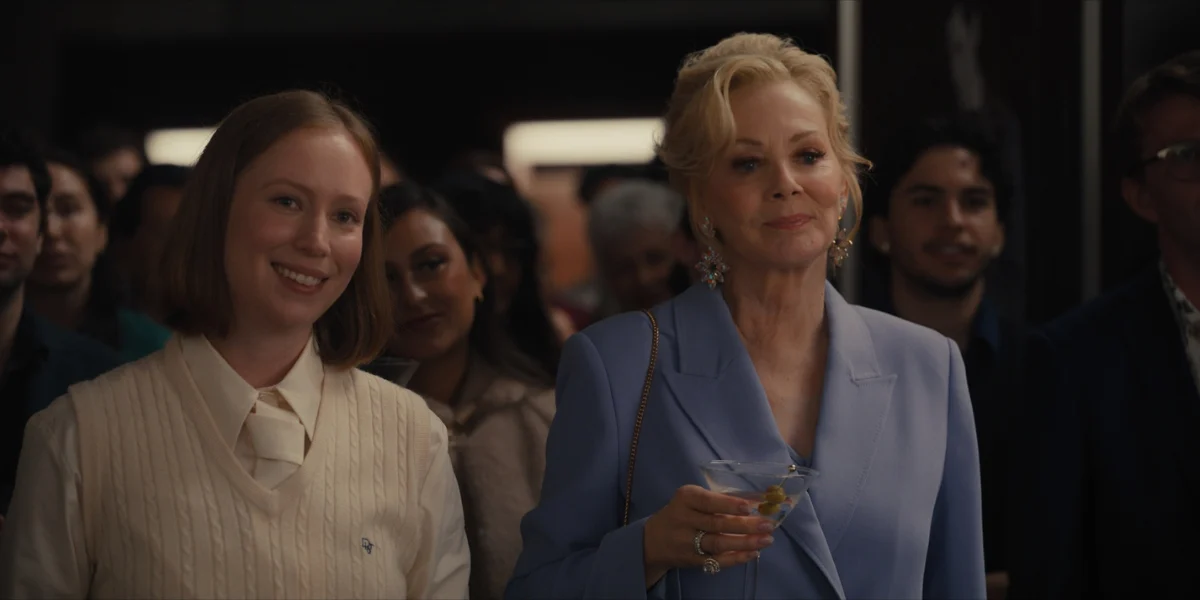
The latest installment of the critically acclaimed Max original series Hacks continues to dissect the intricate layers of comedic legacy, gendered power dynamics, and the evolution of creative partnerships. In the episodes titled "Who’s Making Dinner?" and "D’Amazing Race," the narrative pivots between the historical grievances of legendary comedian Deborah Vance and the burgeoning professional independence of her protégé, Ava Daniels. Directed by Lucia Aniello and Jeff Rosenberg respectively, these episodes serve as a dual study of how the past informs the present in the high-stakes world of professional entertainment. Through a sophisticated blend of industry satire and character-driven drama, the series explores the "substance versus comedy" debate while providing a nuanced look at the cost of fame and the enduring desire for validation from specific figures within one’s personal and professional history.
The PaleyFest Retrospective and the Erasure of Female Creative Labor
In "Who’s Making Dinner?", written by Samantha Riley, the narrative centers on a special event at PaleyFest—a real-world institution dedicated to the celebration of television history—honoring a fictional 1970s sitcom that served as the launchpad for Deborah Vance’s career. The sitcom, also titled "Who’s Making Dinner?", is revealed to be a collaborative effort between Deborah and her late ex-husband, Frank Vance. However, historical records and industry credits have largely attributed the show’s creation solely to Frank, a creative theft facilitated by his betrayal of Deborah during their marriage.
The episode utilizes a non-linear narrative device to illustrate Deborah’s internal state. Rather than employing traditional, extended flashbacks, the production team opted for brief, impressionistic memories that manifest as Deborah navigates the PaleyFest exhibit. This choice allows the audience to experience the sensory triggers of Deborah’s past—the joys of early collaboration and the sharp pain of betrayal—without detaching from the present-day stakes. The exhibit serves as a physical manifestation of Deborah’s "crazy" reputation, a label she has struggled to shed for decades. This reputation was systematically constructed by Frank Vance to discredit her after their professional and personal split, a tactic often cited by historians of 20th-century entertainment as a common method for sidelining female talent.
The Psychology of Validation: The One Person We Want to Impress
A central thematic pillar of the episode is the admission by Ava Daniels that "sometimes there’s just one person we wanna impress." This sentiment underscores Deborah’s confrontation with her own history. Despite her status as a multi-millionaire mogul and comedy icon, Deborah remains haunted by the ghost of Frank Vance’s approval. The realization that she still craves praise from a man who actively undermined her highlights the complex nature of trauma and the difficulty of decoupling professional success from early emotional wounds.
This psychological thread extends to the relationship between Deborah and Ava. While their dynamic is not a direct mirror of the Vance marriage, it possesses parallel tensions. Deborah has historically used Ava as both a creative catalyst and a professional punching bag. The series continues to explore the idea that the most fruitful creative partnerships are often the most volatile. Ava’s desire to reboot "Who’s Making Dinner?" for a modern audience represents a desire to reclaim the narrative, yet her hesitation to approach Deborah reveals the power imbalance that still defines their relationship.
Comparative Analysis of Substance and Comedic Ratio
Hacks has frequently been at the center of a broader industry discussion regarding the "dramedy" genre—specifically, how much "funny" is required for a show to be classified as a comedy. "Who’s Making Dinner?" addresses this meta-commentary directly by balancing heavy emotional beats with high-concept humor. The episode suggests that substance does not have to come at the expense of comedy; rather, the two can exist in a symbiotic relationship where the humor provides the necessary relief for the narrative’s more cynical explorations of the industry.
Supporting this comedic structure are the series’ recurring guest stars and peripheral characters. Anna Konkle’s guest appearance as a PaleyFest administrator introduces a flirtatious sub-plot with Jimmy, Deborah’s manager (played by Paul W. Downs). These "funny for the sake of funny" moments, often involving the character Kayla (Megan Stalter), serve to maintain the show’s comedic momentum even when the primary plot delves into darker territory. The exchange between Kayla and Jimmy regarding her personal life provides the rapid-fire wit that has become a hallmark of the series, ensuring that the show’s pacing remains brisk despite its thematic weight.
Chronology of Character Evolution and Creative Risk
The transition into the week’s second episode, "D’Amazing Race," written by Pat Regan, marks a shift in tone toward more overt physical comedy and reality television parody. In this segment, Deborah and her daughter, DJ (Kaitlin Olson), participate in a celebrity season of a show modeled after The Amazing Race. This narrative choice serves several functions:
- Exploration of Mother-Daughter Dynamics: By placing Deborah and DJ in a high-pressure, televised competition, the show exposes the friction and the underlying affection in their relationship.
- The Performer’s Versatility: Deborah’s commitment to a clown-themed challenge demonstrates her identity as a "showman" who respects the craft of performance, regardless of the venue.
- The Passing of the Torch: The episode concludes with a subtle shift in Deborah’s attitude toward her legacy. Her support for Ava’s reboot project—despite her own lack of ownership of the rights (which remain with her sister, Kathy)—indicates a rare moment of character growth and a willingness to let the next generation lead.
The appearance of J. Smith-Cameron as Kathy Vance further complicates the legacy narrative. The tension between the sisters remains a significant plot point, representing the familial collateral damage of Deborah’s pursuit of stardom.
Industry Implications and Technical Execution
From a technical standpoint, the direction of these episodes highlights the show’s ability to pivot between different visual languages. "Who’s Making Dinner?" uses the sterile, curated environment of a museum to reflect Deborah’s stifled history, while "D’Amazing Race" adopts the frenetic, multi-camera aesthetic of modern reality television. This versatility has been a key factor in the show’s critical success, as evidenced by its consistent presence in the Emmy Award categories for Outstanding Directing and Writing.
Data from television critics and audience metrics suggest that Hacks remains a cornerstone of the Max streaming platform. The series has successfully navigated the "cyclical" nature of its storytelling—the repeated pattern of Deborah and Ava’s falling out and reconciliation—by ensuring that each cycle reveals a new facet of their characters. The "substance to comedy ratio" mentioned in the episodes reflects the show’s own strategy: using the industry’s internal mechanics as a playground for both satire and deep emotional resonance.
Conclusion: The Enduring Impact of the Showman Archetype
The dual release of "Who’s Making Dinner?" and "D’Amazing Race" reinforces the central thesis of Hacks: that the drive to perform is both a gift and a burden. Deborah Vance is portrayed as a woman who can spectacularly bomb at a podium when she is not in control of the narrative, yet can crush an impromptu set in a jail cell or master clown choreography for a reality show. This adaptability is what has allowed her to survive in an industry that was designed to discard her.
The broader implications of these episodes suggest a maturation of the series’ central relationship. The "quiet and passive passing of the torch" regarding the sitcom reboot indicates that the show is moving away from the "knockout fights" of previous seasons toward a more complex form of mutual respect. As Hacks moves forward, the balance between honoring the comedic pioneers of the past and paving the way for the creators of the future remains its most compelling narrative arc. The series continues to provide a factual, if dramatized, account of the evolution of the American comedy landscape, proving that while the jokes are essential, the story behind them is what ensures a lasting legacy.