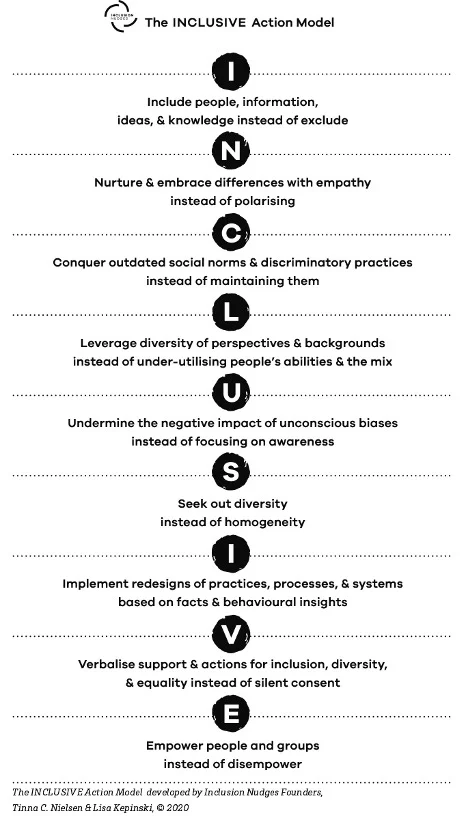
For decades, organizations and social institutions have invested heavily in diversity, equity, and inclusion (DEI) initiatives, yet progress remains stubbornly incremental. While corporate leaders often express a commitment to meritocracy, internal data from multinational firms frequently reveals a persistent "intention-action gap," where stated values fail to manifest in daily decision-making. This discrepancy is increasingly attributed to the limitations of traditional, consciousness-based training, which often ignores the role of the unconscious mind in human behavior. The emerging field of "Inclusion Nudges"—a methodology rooted in behavioral economics, neuroscience, and social psychology—seeks to circumvent these cognitive bottlenecks by redesigning systems to make inclusive behavior the default, rather than the exception.
The Cognitive Architecture of Bias
The fundamental challenge in fostering inclusive environments is the dual-system nature of the human brain. Behavioral scientists identify two primary modes of cognition: the "reflective system," which is slow, logical, and conscious; and the "automatic system," which is fast, instinctive, and largely unconscious. Research indicates that approximately 90% to 99% of human decision-making occurs within the automatic system, which relies on mental shortcuts, associations, and biases to process vast amounts of information under time pressure.
A salient example of this cognitive phenomenon is the "height-leadership effect." Empirical studies have repeatedly demonstrated that tall individuals are disproportionately represented in senior management roles. While data shows that roughly 60% of top executives are at least 185 cm (6’1”) tall, this demographic comprises only 14% of the general population. When asked to evaluate candidates, hiring managers rarely state that height is a criterion for leadership; however, their unconscious minds associate height with traits such as strength, presence, and authority. Once these associations are triggered, the reflective mind often rationalizes the decision after the fact, creating a narrative that the selection was based purely on merit. This process illustrates why awareness-based training alone is insufficient: knowing about a bias does not necessarily empower the brain to deactivate its automatic, intuitive shortcuts.
Evolution of the Inclusion Nudge Movement
The Inclusion Nudge movement originated from the experiences of change-makers in multinational corporations who observed that traditional top-down mandates and awareness seminars frequently resulted in stagnation or "backsliding." By 2010, pioneers in this space began synthesizing insights from behavioral economics and complex systems theory to develop a more effective approach. Unlike traditional training, which focuses on changing the individual’s internal mindset, this method focuses on changing the "choice architecture" of the environment.
The methodology gained international traction as practitioners realized that global networks were struggling with the same fundamental issue: the lack of practical, actionable "how-to" guides. The movement shifted from a proprietary, closed-loop model to an open-source, collaborative framework. By publishing detailed, step-by-step design guides, the initiative has sought to democratize change, allowing organizations to implement inclusive processes without the need for expensive consultants or long-term behavioral reprogramming.

Mechanics of Behavioral Design
Inclusion Nudges function through three distinct design categories, each targeting a specific cognitive driver to steer behavior toward more inclusive outcomes.
- Feel the Need (Motivational Design): These interventions are designed to make invisible patterns of inequality visible. By visualizing data—such as highlighting the disparity in sponsorship opportunities between different demographic groups—these nudges bypass the reflective brain’s tendency to ignore abstract statistics. When leaders are presented with a visual representation of their own internal networks, the emotional impact often creates an immediate "feel-the-need" response, which is far more effective in driving long-term behavioral change than standard diversity presentations.
- Process Design (Structural Intervention): These nudges focus on changing the "how" of daily operations. For example, in group settings, the "Share with a Peer" technique is used to mitigate the tendency for individuals to conform to majority opinions or self-silence due to perceived status hierarchies. By restructuring decision-making processes to include anonymous contributions or small-group peer discussions, organizations can ensure that a broader range of perspectives is captured without requiring participants to consciously "try" to be inclusive.
- Framing Perceptions (Cognitive Reframing): These designs alter how issues are presented to shift the mental anchor. By reversing numbers or changing the language used to describe diversity, practitioners can influence how information is processed. For instance, shifting the framing of diversity from a "compliance burden" to a "critical business asset" can trigger different associative networks, thereby altering the decision-making process at the point of impact.
Broader Implications and Institutional Impact
The adoption of behavioral design in corporate and public sectors carries significant implications for human resources, governance, and public policy. Traditional DEI efforts often rely on "willpower," assuming that if individuals are educated on the benefits of equality, they will inherently behave differently. However, as the demands of the modern, high-pressure workplace increase, so does the reliance on the automatic brain, making traditional education less effective.
Critics and organizational analysts point out that while Inclusion Nudges are highly effective at the tactical level, they must be integrated into broader institutional strategies. The "open-source" nature of this approach encourages cross-industry learning, where techniques developed in the tech sector can be adapted for healthcare or public education. However, this shift also necessitates a change in how organizational success is measured. Instead of focusing solely on training hours or demographic quotas, the success of nudging is measured by the frequency of inclusive behaviors and the removal of systemic bottlenecks.
Future Trajectory: Scaling Inclusivity
The future of inclusive organizational design appears to be moving toward an integrated, "by-design" approach. By treating inclusion as a standard engineering challenge—much like quality control or safety protocols—organizations can create environments that support, rather than contradict, their stated values.
The global movement, currently supported by a network of practitioners, is moving toward greater standardization of these designs. By sharing experiences of what works in diverse cultural contexts, the initiative aims to build a global repository of interventions. This collaborative ethos, rooted in the principles of reciprocity and open access, reflects a significant pivot in how social change is conducted. The focus is no longer on creating a singular, unified policy, but on empowering a distributed network of change-makers to implement small, meaningful, and scalable adjustments that, in aggregate, shift the norms of society.
As organizations continue to grapple with the complexities of global collaboration and rapid technological change, the reliance on mental shortcuts is unlikely to decrease. Consequently, the demand for sophisticated behavioral design will likely grow. The shift from "convincing" people to be inclusive to "designing" for inclusion represents a fundamental change in the methodology of social progress—one that prioritizes practical outcomes and systemic resilience over the abstract pursuit of changing human nature.