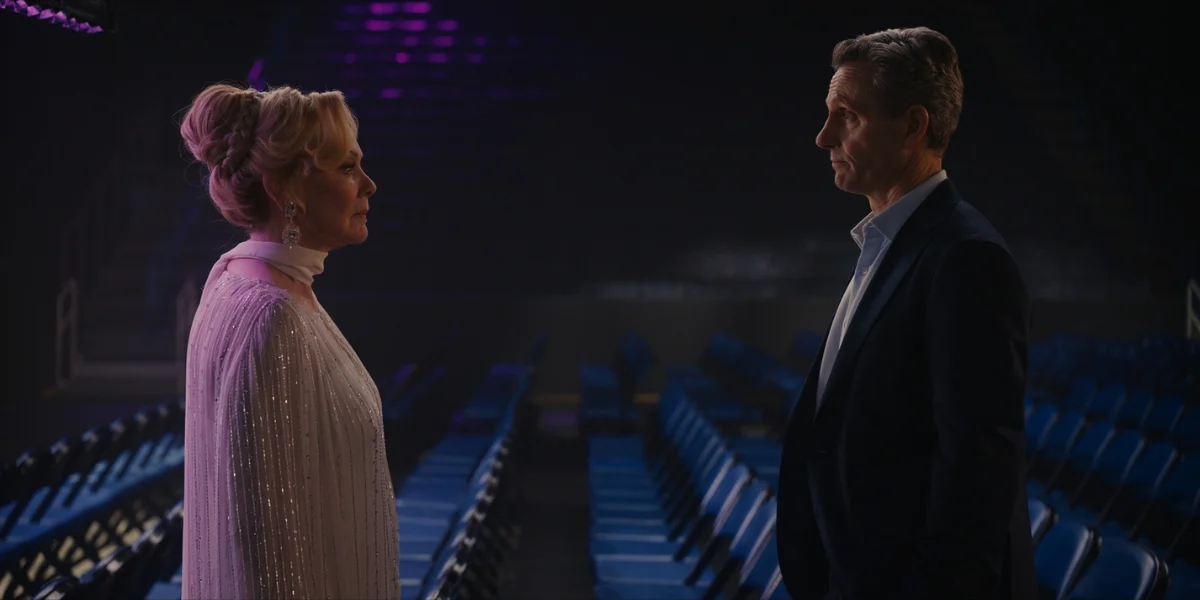
In the penultimate episode of the third season of the critically acclaimed Max original series Hacks, the narrative shifts from a traditional comeback story to a poignant critique of technological over-optimization and the erosion of human connection in the modern era. The episode, which serves as a precursor to the season finale, follows legendary comedian Deborah Vance as she navigates a corporate sabotage attempt by network executive Bob Lipka. This conflict serves as a microcosm for broader societal shifts, specifically the transition from analog interpersonal relations to automated, algorithmically driven experiences. By rejecting a restrictive non-disclosure agreement (NDA) and pivoting from a high-tech Madison Square Garden (MSG) residency to a stripped-down, free performance in Central Park, the protagonist asserts the enduring value of human-centric artistry over corporate "optimization."
The Conflict of Corporate Optimization versus Artistic Autonomy
The narrative tension of the season reaches its zenith when Bob Lipka, portrayed as a quintessential corporate antagonist, reveals his acquisition of the MSG show dates intended for Deborah Vance’s career-defining comeback. Lipka’s motivation is not financial but rather the "optimization" of his own public image and corporate stability. By leveraging his control over the venue, he attempts to coerce Vance into signing an NDA that would legally bar her from disparaging him or the Late Night network.
This move by Lipka represents a form of corporate silencing that mirrors real-world industry trends where brand management often supersedes creative expression. In professional terms, Lipka’s strategy is a risk-mitigation tactic common in high-stakes entertainment contracts. However, within the thematic framework of Hacks, it represents a "flattening" of personality. For Vance, whose career is built on caustic honesty and unfiltered commentary, the NDA is an existential threat. The episode frames this as a choice between a streamlined, "optimized" path to success and a more difficult, "inconvenient" path that preserves her voice.
The Technological Critique: From QR Codes to Artificial Intelligence
Throughout the third season, Hacks has consistently integrated a critique of modern technology’s role in daily life. This episode specifically highlights the ubiquity of QR codes in the hospitality industry. During a scene where Vance attempts to order room service, she expresses frustration with the requirement to scan a code rather than speaking to a staff member via telephone.
While the adoption of QR codes in hotels and restaurants surged by over 750% between 2020 and 2023—initially as a hygiene measure during the COVID-19 pandemic—the show argues that the permanence of these systems serves hotel management more than the guest. Industry data suggests that automation in room service allows hotels to reduce labor costs by approximately 15-20% in the service sector. The episode posits that this "optimization" leads to a loss of mundane but meaningful human interactions, contributing to a rise in social anxiety and a general sense of isolation.
This critique extends to other technological advancements featured in the season, including a previous episode dedicated to the shortcomings of generative artificial intelligence (AI) in creative writing. By juxtaposing Vance’s struggle against Bob Lipka with her disdain for QR codes, the writers suggest that the "shortcuts" offered by modern technology—whether in service or in art—often come at the expense of human nuance.
Chronology of the Central Park Pivot
The logistical core of the episode involves a rapid-response plan to save Vance’s comeback after the MSG cancellation. The timeline of the episode spans a critical 72-hour window:
- The Sabotage (Day 1): Bob Lipka informs Vance and her management team, Jimmy and Kayla, that he has purchased the MSG dates, effectively cancelling her scheduled performance unless she signs the NDA.
- The Rejection (Day 1 Evening): Despite the risk to her career and financial standing, Vance refuses to sign the document, choosing to maintain her right to free speech.
- The Pivot (Day 2 Morning): The team decides to stage a free, televised special in Central Park to maintain momentum and bypass Lipka’s gatekeeping.
- The Logistical Obstacles (Day 2 Afternoon): The team faces bureaucratic hurdles, including the denial of permits by the New York City Parks and Recreation department and the need for a seasoned tour manager.
- The Resolution (Day 3): Through interpersonal negotiation and personal connections, the team secures the necessary permits and staff, leading to a successful live event.
The Role of Interpersonal Connection in Problem Solving
A significant portion of the episode is dedicated to showing how "inconvenient" human interaction solves problems that algorithms cannot. The return of Laurie Metcalf as Weed, the former tour manager, illustrates this. Vance’s decision to re-hire Weed is based on shared history and a mutual, albeit volatile, understanding of the work.
Furthermore, the acquisition of the Central Park permit highlights the importance of cultural shared experiences. When a Parks and Recreation official initially denies the permit, the situation is salvaged not through a digital application or a legal loophole, but through a conversation about the television series Xena: Warrior Princess. Upon discovering the official is a fan of a podcast Jimmy is producing with actress Renee O’Connor, the team is able to build rapport and secure the permit. This sequence serves as a narrative rebuttal to the idea that automated systems are more efficient than human networking.
Broader Implications for the Entertainment Industry
The themes explored in this episode of Hacks resonate with contemporary debates within the global entertainment industry. The 2023 WGA and SAG-AFTRA strikes were largely centered on the "optimization" of the industry through AI and the devaluation of human labor. Vance’s insistence on a "stage and a mic" reflects a broader movement toward "analog" entertainment—live performances that cannot be easily replicated or replaced by digital formats.
Data on Live Performance and Engagement
According to market research from 2023, there has been a 12% increase in consumer preference for live, unscripted events compared to pre-pandemic levels. This suggests a growing public appetite for the "spontaneity" that Vance champions. The "Central Park show" in the series mimics historic events such as Simon & Garfunkel’s 1981 concert, which drew over 500,000 people, proving that "inconvenient" large-scale public gatherings hold a cultural weight that "optimized" digital content often lacks.
Analysis of the "Scenic Route" to Success
The episode concludes with the assertion that creativity thrives on inconvenience. To "streamline" a creative process is to risk flattening the output. By moving the show to Central Park, the production is stripped of its high-tech pyrotechnics and Madison Square Garden prestige. This "scenic route" forces the artist to rely solely on her craft.
From a journalistic perspective, the episode functions as a commentary on the "Luddite" movement—a term often used pejoratively but which historically referred to workers protecting their crafts from the dehumanizing effects of the Industrial Revolution. Vance’s actions align with a modern neo-Luddism: not a total rejection of technology, but a selective divestment from tools that diminish the quality of life and work.
Conclusion and Outlook
As Hacks approaches its series finale, the narrative has positioned Deborah Vance as a defender of the traditional, human-centric model of comedy. Her victory over Bob Lipka is portrayed not just as a personal win, but as a victory for the "old-school" way of doing things—where success is earned through hustle, interpersonal relationships, and raw talent rather than algorithmic metrics or corporate sanitization.
The episode serves as a reminder that while technology offers "hacks" to make life easier, the most meaningful achievements often require the very inconveniences that modern systems seek to eliminate. The successful staging of the Central Park show suggests that the "pivot plan" is often superior to the original when it prioritizes human connection over corporate optimization. The final episode is expected to address the long-term consequences of this choice for Vance’s career and her relationship with her protégé, Ava Daniels, as they navigate an industry that remains caught between its analog past and its digital future.